Eclipse Series 6: Carlos Saura’s Flamenco Trilogy
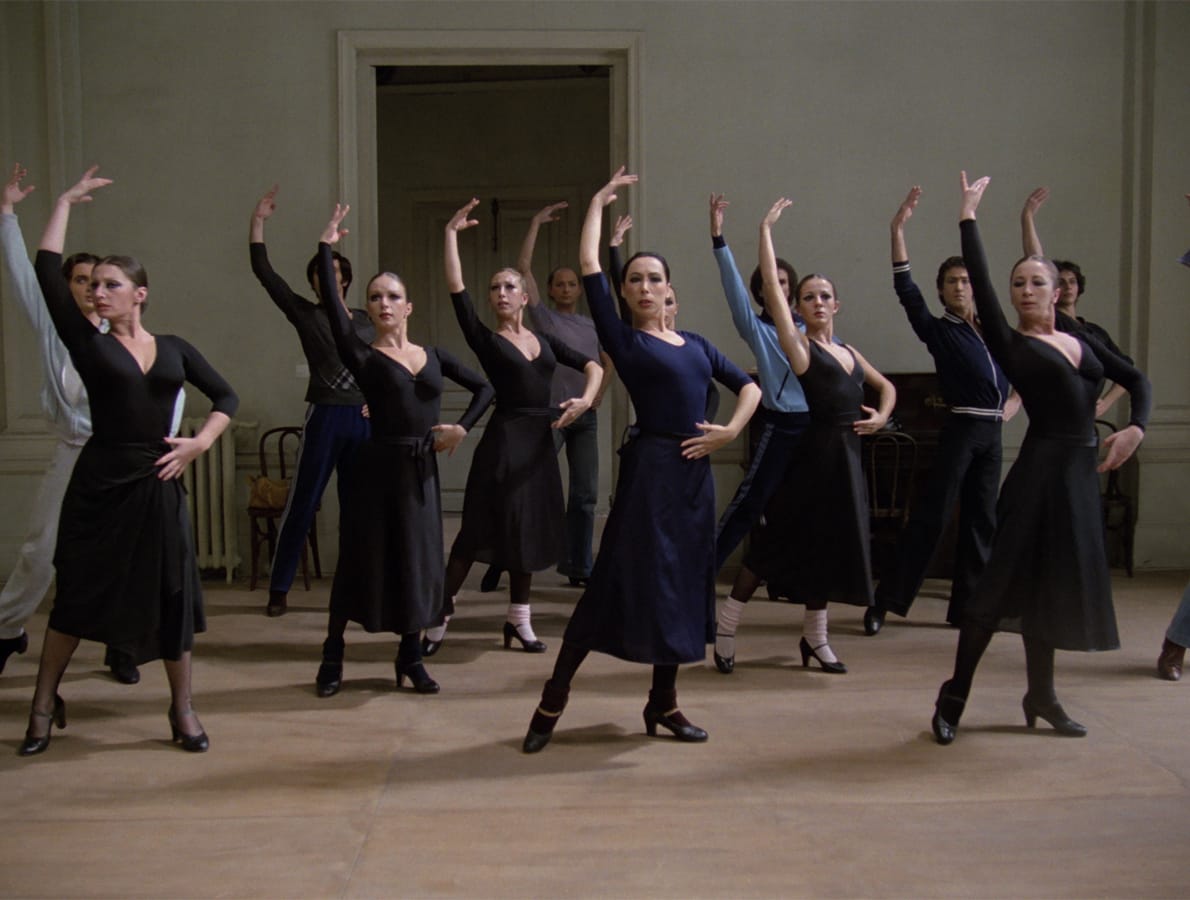
One of Spain’s most accomplished and prolific directors, Carlos Saura emerged as an artist in the late 1950s under Francisco Franco’s dictatorship and immediately made his mark as an incisive, if necessarily allusive, social and political commentator. In such films as Los golfos (1960), a neorealist look at a group of wayward young men, and The Hunt (1966), about three veterans (of the Spanish Civil War, it is unstated but implied) on a weekend hunting trip, Saura revealed his skill at melding the visceral with the heavily allegorical. The director was lauded around the world for his investigations into his nation’s identity, which continued through Spain’s transition to democracy in the mid-1970s and took many forms, from documentary (Cuenca, 1958) to historical and contemporary drama (Cousin Angelica, 1974; Cría cuervos . . ., 1976) to comedy (Mama Turns 100, 1979). Yet he reached the pinnacle of his international acclaim in the 1980s when he made three films that took on the subject—and captured the flavor, motion, and creativity—of the country’s most renowned form of entertainment, flamenco.
Though Saura didn’t set out to create a triptych of dance films, the works that would come to be known as his “Flamenco Trilogy”—Blood Wedding (1981), Carmen (1983), and El amor brujo (1986)—defined him as his nation’s leading visual stylist of dance on film, and the creator of some of its most popular cinematic exports. Flamenco, a multifaceted art form that encompasses song (cante), dance (baile), and guitar (toque), and comprises more than fifty musical styles, emerged from the ethnically diverse region of Andalusia, in southern Spain, and the many traditions found there, including Islamic, Sephardic, and Greek; the Roma people, who entered the region in recent centuries, helped flamenco survive in the modern age. This subject, then, gave Saura a suitable canvas on which to paint a colorful portrait of one part of his country’s rich heritage.
Saura, who had already proved his uncommon facility with various genres, and who showed a constantly gratifying and surprising willingness to defy cinematic expectation throughout his career, was the ideal director to grasp the complexity of this beloved art form: its earthiness and artifice, dazzle and subtlety, grit and grandeur. Over the course of the three films, he would experiment with different styles for capturing the various aspects of flamenco, moving from an organic, vérité approach to an ever more self-conscious theatricality. In each of these kinetically shot and edited films, there is a cinematic thrill to watching the human body in timeless motion, and catching the gestures, both broad and precise, that create the purity of flamenco.
Blood Wedding: The Dress Rehearsal
The impetus for the film that would become the first part of the Flamenco Trilogy came when producer Emiliano Piedra encouraged Carlos Saura to attend a rehearsal of a ballet based on Federico García Lorca’s 1933 play Blood Wedding, by choreographer Antonio Gades, Spain’s most celebrated flamenco dancer and the artistic director of the national ballet. Saura was instantly enchanted by Gades’s populist and unpretentious adaptation of Lorca’s rural Andalusian tragedy, which tells the tale of a wedding undone by family vendettas. He decided to film it, not as a straight narrative but as an unscripted dress rehearsal—a window into the creative process of Gades and company.
Saura had been a photographer earlier in his career, and dancers were among his subjects. Still, in a 1986 interview he said, “I discovered the world of dance with Blood Wedding.” Saura and Gades “collaborated constantly and completely,” Saura later stated, each submitting to the other’s strengths: the dancer never interfering in the camera placement or choice of cuts, and the filmmaker subordinating himself to the choreography. The film opens as a fly-on-the-wall documentary: in an extended prologue, the dancers gradually appear one by one in the dressing room, chatting casually, putting on costumes, and applying their own makeup. Yet Saura deftly, and without fanfare, transitions into the interiorized, folkloric, and indescribably ethereal world of the dance—and of Lorca’s tale of jealousy, madness, and death.
Saura’s instinct for camera placement and movement, and for cutting (in collaboration with Pablo G. del Amo, already his longtime editor), demonstrates his preternatural understanding of what makes dance and music thrilling on film—the pinpoint-precise alternations between full-body shots and close-ups of tapping feet always enhance rather than restrain the emotional expressivity of the dancers and of Gades’s choreography. Saura used just one camera and no crane for this spare, down-to-earth vision, foregrounding the thumping of the dancers’ feet and the corporeality of their slender bodies. The finished product provides a testament to two artists utterly in step with each other’s dazzling showmanship.
The viewer is given such a strong, privileged sense of just being in the rehearsal space with the dancers that it’s easy to forget the film has been so expertly constructed and shaped in the editing room—that the choreography we’re watching is also a cinematic creation; the movements of these ecstatic human beings are not just visions captured on but also created by film. Perhaps no sequence is more indicative of the shared properties of dance and film than the climactic knife battle. Here, Gades and fellow dancer Juan Antonio Jiménez perform the final dance at an agonizingly slow tempo, their arms and legs rising and falling, slicing through the air with virtuosic meticulousness, the soundtrack largely devoid of music. At first, one might assume that Saura, whose camera circles the dancers with intimate fascination, is filming at a higher frame rate, as the men’s movements seem to mimic the properties of slow-motion filmmaking. Yet one realizes with astonishment that the flamenco dancers themselves are producing this gorgeous illusion, all the way to the violent ending that gives Lorca’s play—and Saura’s ravishing film—its title.
Carmen: The Performance
Though he had entered the production cautiously, Carlos Saura found Blood Wedding such a satisfying experience, and his working relationship with choreographer Antonio Gades so invigorating (“It’s been like dealing with a brother”), that it was only two years before the men were devising another film. For the second part of their unplanned trilogy, they collaborated on a screenplay for a very unusual adaptation of Carmen, incorporating Gades’s ideas for a ballet of the 1845 Prosper Mérimée novella with Saura’s metacinematic deconstruction of the widely adapted—most famously in Georges Bizet’s 1875 opera—tale of a Roma woman killed by her jealous lover.
Of the film, Saura said, “I have tried, in a way, to exorcise the kinds of ideas that foreigners have of Spain.” And, indeed, in creating many layers of remove from the traditional characterization of Carmen, Saura reveals it to be an exoticized construct. For his new take on the story, he commissioned mostly new music, by Paco de Lucía, in hopes of fashioning something more authentically Spanish. His intent is made explicit in the opening scene: Gades, as a fictional version of himself in the process of planning his new ballet, plays a recording of Bizet’s music, its blaring sounds clashing with the gentle cante being performed on guitar a few feet away. The musical director, Paco (played by de Lucía himself), then insists, “The rhythm should be more even, like in bulerías.” This sets up perfectly the film’s series of head-to-head battles: between classical and modern music traditions, as well as between men and women, the romanticized and the authentic, myth and reality.
Mixing the vérité feel of Blood Wedding with a more fanciful, character-based exploration of the narcissism of the dance world, Carmen unfolds in an ambiguous, insular realm where the real dissolves into the artificial. The film shifts from lengthy rehearsals for a staging of the flamenco ballet to a tempestuous behind-the-scenes romance between Gades’s choreographer and his newly discovered lead dancer (Laura del Sol). As Saura’s modest narrative unfolds, it becomes difficult to decipher whether events are taking place within the dance or in “reality.” The film’s spare studio set—in which a flurry of red scarves, purple leotards, and ominous shadows play—becomes a space where the performers work out their frustrations in violent fictional confrontations.
“I feel an enormous fascination for the world of theater, but within cinema,” Saura said at the time. And he certainly makes theater cinematic in Carmen, following the insistent flamenco rhythms with slow zooms and swooping, gliding camera work. In one eye-popping sequence, he uses forced perspective to transform a flamenco face-off into a disorienting dance of death. From the echo of pounding feet to the gracefully violent knife fight between del Sol and the exquisite Cristina Hoyos (Gades’s longtime dance partner), dance in Carmen truly feels like an elemental force, as much as love or death. So popular was this Cannes Film Festival–feted depiction of the physical and interior lives of dancers that in 1985 Gades mounted a successful touring version, with Saura serving as staging director and lighting technician—another tribute to their medium-transcending collaboration.
El amor brujo: The Denouement
Carlos Saura’s El amor brujo (or Love, the Magician), his final screen collaboration with Antonio Gades, takes us back to the origins of flamenco through the most traditional narrative of the trilogy. Nevertheless, Saura begins the film with a self-conscious flourish that links it stylistically to the previous two works. With a bravura four-minute tracking shot that pans from a descending iron garage door, then moves across a seemingly vacant interior back lot, and finally down to a vast, gorgeously artificial set mimicking a sunny, dusty Andalusian village, the film seems to be foregrounding its and its subject’s artifice, only to ultimately seal us in the warm embrace of the story. Structurally, it’s the opposite approach from Carmen, which establishes a documentary-like verisimilitude before collapsing into fantasy.
“I wanted to suggest an artificial space that little by little becomes a reality,” Saura said in an interview upon the film’s release in 1986. And this trajectory applies to the entire trilogy, which progresses from the austere origins of Blood Wedding to Carmen’s melding of reality and myth to, finally, an acceptance of myth as its own form of reality. El amor brujo is based on the 1925 ballet of the same name, by Spanish composer Manuel de Falla, whose impressionistic work was greatly influenced by Maurice Ravel and Claude Debussy, and who is credited with legitimizing classical Spanish music for international audiences. For this tale of a woman haunted by the ghost of her unfaithful husband, Saura and Gades researched Roma life in the Andalusian city of Granada, the birthplace of flamenco. El amor brujo thus functions as a sort of origin myth for the tradition, and a depiction of the Roma culture that has embodied it in recent centuries.
Saura concocted all manner of colorful cinematic alchemy (purple skies, blazing red bonfires) to provide the backdrop for this epic love quadrangle/ghost story and for the explosive physicality of the four main performers: Gades, Laura del Sol, Juan Antonio Jiménez, and the dazzling Cristina Hoyos. Their profoundly felt movements exemplify flamenco’s internal battle of desire and torment, but even as the dancers use their whole bodies for expression, it’s ultimately their faces, often captured by Saura in close-up, that supply the passion. After all, flamenco dancing is meant to translate, and even transcend, the music.
Though greatly faithful, narratively and musically, to the original ballet, Gades’s staging is adorned with contemporary touches and commentaries. Saura felt it was essential to point out flamenco’s ongoing influence on Spanish culture, a continuity that’s evident during the rumba scene at the wedding, in which the sister duo Azúcar Moreno, major recording stars at the time, perform a modern flamenco pop song, complete with drum machine. Following El amor brujo, Saura remained fascinated by dance, further exploring it in his films Flamenco (1995) and Tango (1998). And he also continued to work in other genres, from political drama (¡Ay, Carmela!, 1990) to biopic (Goya in Bordeaux, 1999). But it is likely that he will be best remembered for the three dynamic films collected here, which made external the internal rhythms of the flamenco.
More: Essays
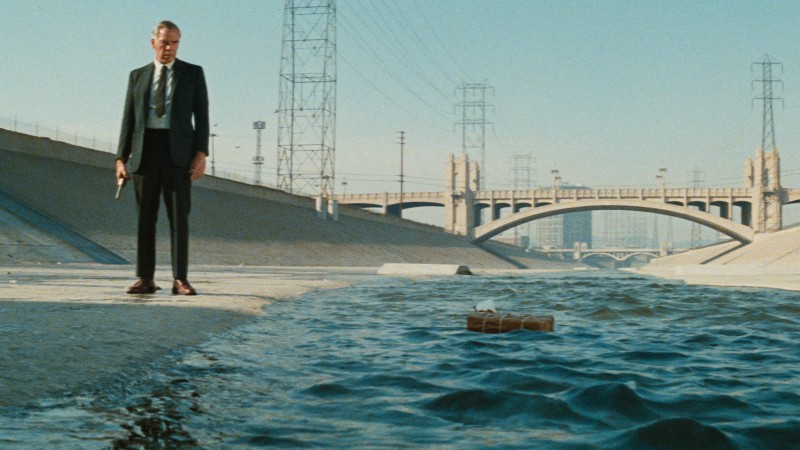
Point Blank: A Dream of Full-Color Noir
A crime-cinema masterpiece whose influence can be seen in such later touchstones as Mean Streets and Reservoir Dogs, this highly stylized portrait of a gangster subordinates the needs of plot to director John Boorman’s saturated aesthetic.
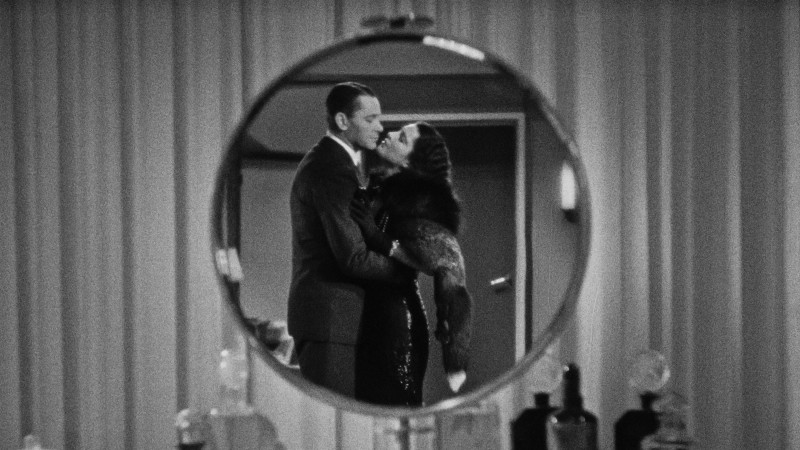
Trouble in Paradise: Pure Style
One of Ernst Lubitsch’s favorites among his own films, this delightful pre-Code whodunit exemplifies the director’s signature European worldliness and his ingenious way of drawing viewers in as if they were coconspirators.
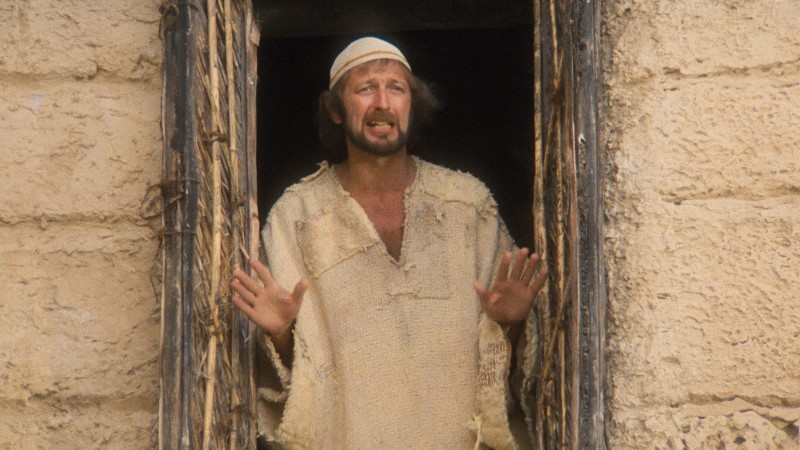
Monty Python’s Life of Brian: The Wrong Messiah
The legendary comedy troupe’s most fully realized film is a hilarious Biblical parody with a streak of overwhelming horror and outrage running through it.
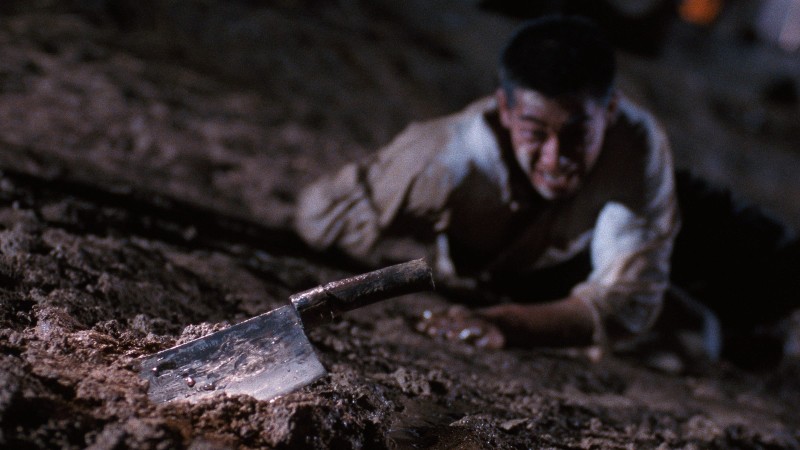
The Blade: Cutting Deep
Violently nihilistic, simultaneously energizing and crushing, Tsui Hark’s remake of the martial-arts classic One-Armed Swordsman captures the zeitgeist of pre–1997 handover Hong Kong.