Point Blank: A Dream of Full-Color Noir
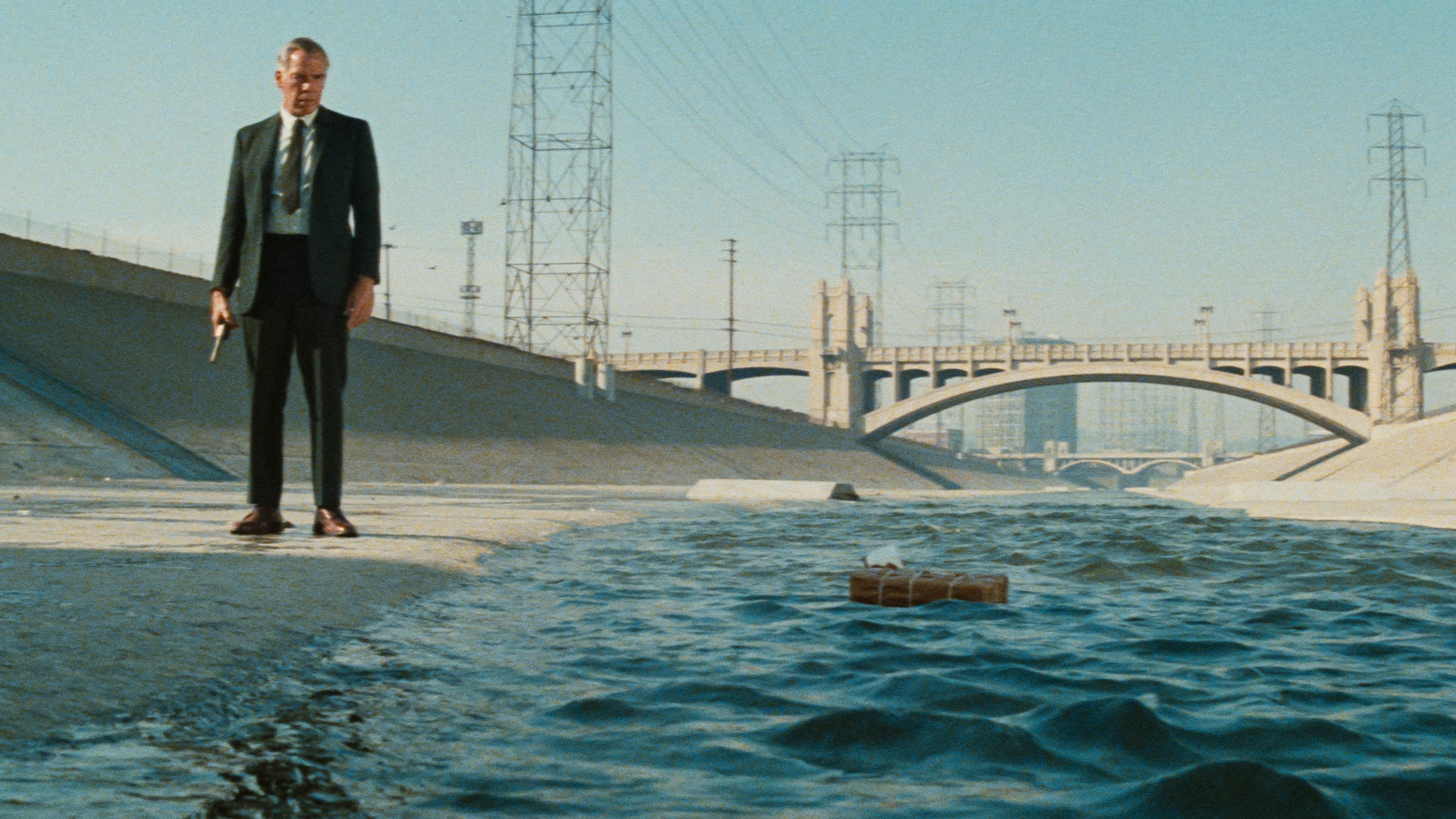
It’s all a bit confusing. Point Blank is based on a novel called The Hunter by Richard Stark, one of several pseudonyms adopted by Donald E. Westlake. The book was republished as Payback in 1999 to tie in with a film adaptation starring Mel Gibson, while the 2019 movie directed by Joe Lynch is a remake of a 2010 French film, À bout portant, directed by Fred Cavayé and retitled Point Blank for its English-language release. Oh, and aside from the title, Bruce Springsteen’s song “Point Blank” has nothing to do with John Boorman’s 1967 film.
The protagonist of The Hunter is called Parker. Of all the changes made to the original script—“appalling,” in Boorman’s opinion, “a collection of clichés,” he told Lee Marvin when they first met; “a piece of shit,” Marvin agreed—none was more fundamental than the switch from Parker to Walker. The hunter, one who hunts, was Parker, one who parks. Marvin does a bit of parking, outside Lynne’s LA apartment building, for example, though we never actually see him park, which is fine because parking can be as difficult to make interesting on film as it is sometimes difficult to do in real life, and if the scene in which Walker takes the convertible for a punishing test-drive from John Stegman’s car lot is anything to go by it’s likely that parking in a tight spot will result in severe damage to any vehicles in the vicinity. So, no parking but plenty of walking. “Walking is a form of thinking,” writes John Berger in Pig Earth, and Walker is always thinking. Even when he’s not walking—just sitting or standing—he’s thinking, and what he’s thinking about is getting his money back. What does he want? His money. What does he really want? I really want my money, he says after a moment of puzzled reflection, really putting the dead in deadpan, but the more he repeats this answer the less convincing it sounds, or the more the quest for his ninety-three thousand takes on the financially incalculable quality of deeper existential questions. It was Pinter rather than Beckett who influenced the “laconic and oblique dialogue” of the rewritten script, but Walker might as well have said he was waiting for Godot, even if he’s not waiting but walking. If walking is a form of thinking it might also be a form of not waiting, the opposite of waiting, and although Walker is so determined to get his money as to seem possessed by a kind of somnambulistic patience, it would be absurd if he’d been called Waiter. So that’s what Walker wants—his money—and does: walks.

More: Essays
God Laughs: Stanley Kubrick’s Cinema
Throughout his enormously influential body of work, the great director explored the conflict between humankind’s obsession with control and our capacity for error and failure.
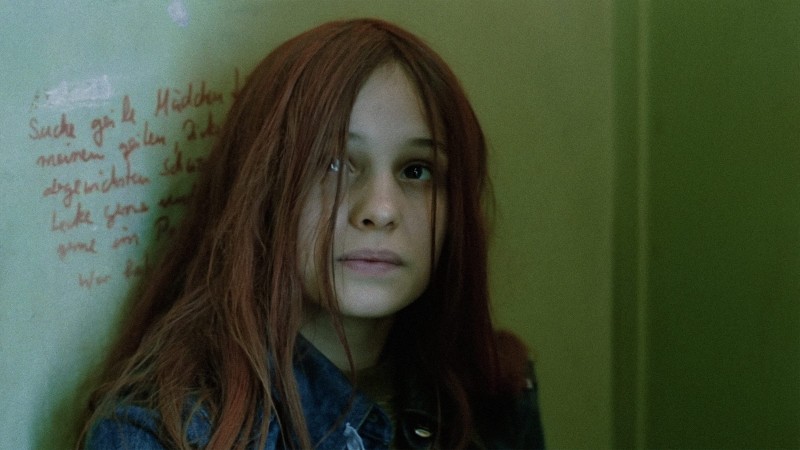
Christiane F.: Up Against the Wall
Uli Edel’s harrowing tale of youth rebellion is one of cinema’s greatest Berlin films, a visceral urban portrait that captures the city’s doom and decadence during the Cold War era.
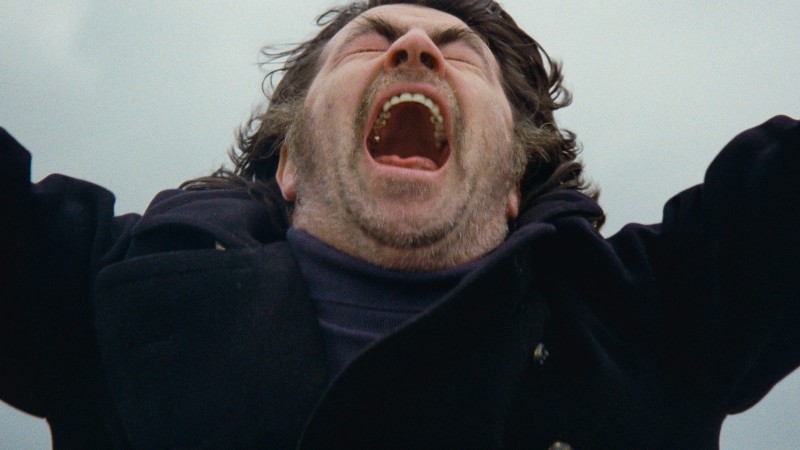
The Shout: Sound and Fury
Blending elements of psychological thriller, social satire, and psychedelic film, Jerzy Skolimowski’s Cannes-award-winning classic uses its audacious sound design to evoke the terror of English civilization.
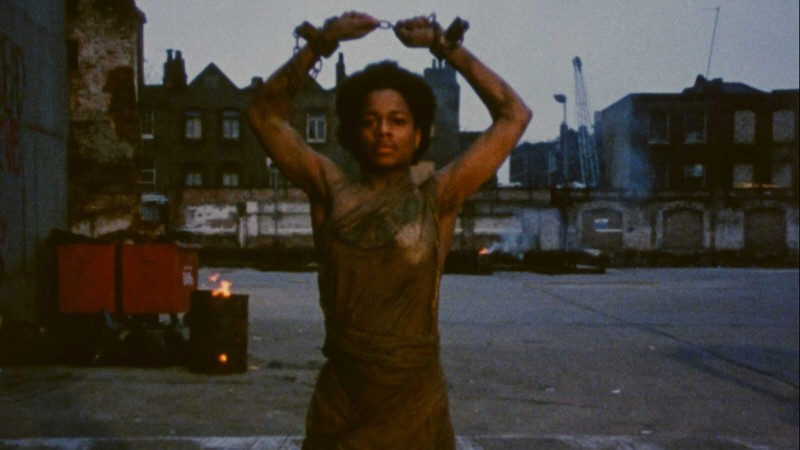
Welcome II the Terrordome: The Future Is Furious
A dystopian drama that draws on the influences of African mythology and hip-hop, Ngozi Onwurah’s debut feature uses a mix of speculative forms to expose anti-Blackness as a system that underpins the modern world.