

Native Nonfiction’s Quest for Self-Determination

Share
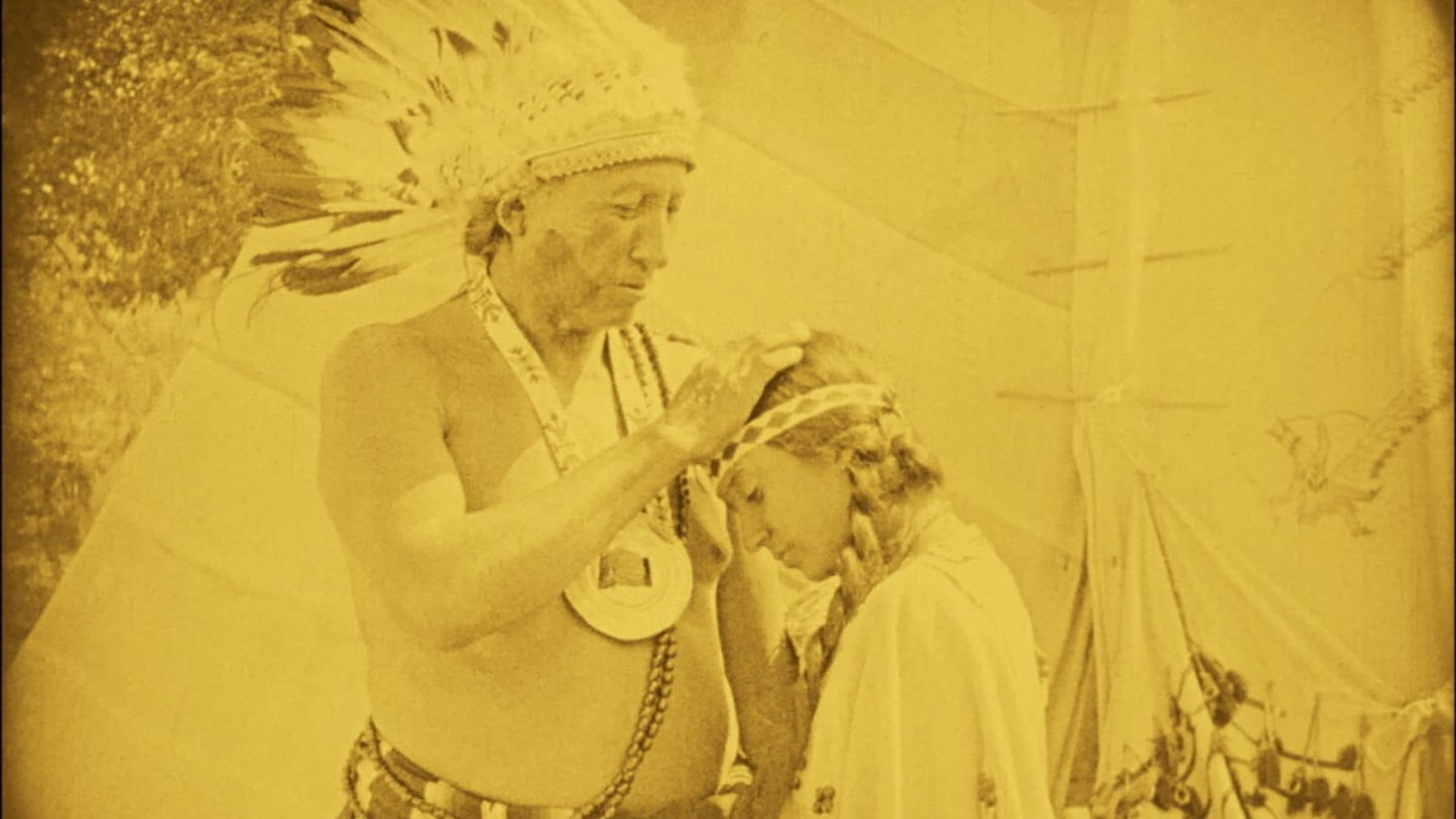
The cinema of the United States, perhaps more than that of any other nation, has acted as its own infinity mirror, its images perpetually bouncing back and forth off one another. At the confluence of the Wild West era and the industrial dawn of the seventh art, the country’s identity and its nascent moving-image culture formed a symbiotic relationship, blurring the lines between reality and construct, history and myth. In this period of transition, the frontier’s stories and iconographies migrated to film, giving the nation an enduring platform on which to consistently revisit, reevaluate, and wrestle with narratives of courage, conquest, and the extermination of its land’s original inhabitants.
Within this self-echoing dynamic, a clear narrative arc emerged, one that juxtaposed perceived Indigenous savagery against the era’s most advanced visual technology. The manufactured result was white supremacy's triumph over Indigeneity, whose antiquation was understood by outsiders to be inevitable and justified. But even though American cinema constructed and disseminated self-affirming nationalist illusions from its earliest days, it is crucial to differentiate between the cultural uses to which film has been put and the inherent qualities of the technology itself. A little less than a century after the birth of cinema, Native Americans began to demonstrate that such exploitation was not an intrinsic requirement of film as a medium.



More: Features

Jacques Rivette Envisions a More Human Joan of Arc
Anchored by an extraordinary performance from Sandrine Bonnaire, the epic historical drama Joan the Maid strips away its saintly protagonist’s mythic aura and gives us a humbler, more intimate version of her life story.

Anthologized: The World of W. Somerset Maugham On-Screen
The elegantly crafted portmanteau films Quartet, Trio, and Encore adapt twelve spellbinding tales of deception and passion from one of the best-selling authors of the twentieth century.

The Inner Worlds of Neon Genesis Evangelion
A Japanese-television phenomenon that sparked a boom in anime production and fandom, Hideaki Anno’s magnum opus is a mind-bending mix of kinetic action, sci-fi spectacle, and introspective human drama.

James Baldwin Looks Back
The illuminating 1982 documentary I Heard It Through the Grapevine follows the celebrated author on a journey through the American South, as he attempts to reckon with the legacy and losses of the civil rights movement.