During the evening rush on a busy Los Angeles boulevard, a man steps into a news-vendor’s stall and scans the out-of-town papers section, where journals offer balm for homesick travelers and transplants. But his hometown, Evanston, Illinois, is missing—no call for it, the vendor says dismissively, before switching on the lights against the deepening dusk. The stranger flinches in the sudden glare, his reaction underscored by a sharp plink of strings on the soundtrack. He warily eyes a police car driving past. Up and down the avenue, neon bar signs bloom, writing their promises of pleasure and escape on the darkness in shimmering cursive, as the lush title ballad of Nightfall swells. This precredit scene distills the essence of Jacques Tourneur’s touch as a director: how he suffuses ordinary moments with an atmosphere of poetry, melancholy, and dread.
Tourneur spent his life in between his native France and America, and many of his best films follow people traveling to unfamiliar places or encountering the foreign at home. These themes are especially strong in three noir films he directed, currently playing on the Criterion Channel. Made nearly a decade apart, Out of the Past (1947) and Nightfall (1956) both open with a man living under a false name, on the run from something that happened in a different place and time. In Berlin Express (1948), a group of travelers in postwar Germany venture into a profoundly unsettled and unsettling landscape.
Whether they are real locations or studio sets, the places in these films are never merely backdrops; they envelop and influence the characters. Tourneur was sensitive and exacting about the lighting of scenes: one might be hearing him speak when the protagonist of Nightfall describes how often he has watched the day’s end from the window of his furnished room: “I know how every shadow falls.” The director also makes us aware of what is unseen and unheard, the paradoxical presence of absence: the “friendly” darkness of Cat People (1942), or the silence of the “Soundless Shore” in Circle of Danger (1951), where an American visitor takes in the eerie stillness beside a Scottish loch and observes, “It’s as if everything is waiting.”
Berlin Express: Displaced Persons
Filmed in 1947, Berlin Express was the first Hollywood feature to be made in Europe after the war, amid the ruins of Frankfurt and Berlin, which were still under Allied occupation. The film opens in Paris, where Tourneur was born in 1904. His father, Maurice Tourneur, was a renowned director during the silent era who worked in the United States between 1914 and 1928. Jacques joined him there at age ten, going to school first in New York and then in California. When Maurice went back to Europe, Jacques went along and worked for his father as an assistant and editor; he directed his first three films in France before returning to Hollywood in the mid-1930s. There, he toiled for a number of years in second-unit work, shorts, and B-movies before his breakthrough, Cat People, made for producer Val Lewton at RKO—a surprise hit that revolves around the troubled marriage between an American man and a European woman. Though Tourneur spoke English with little or no accent, everyone who knew him seems to have agreed that he remained at heart a Frenchman. He was a quiet man, generally popular with actors and crews for his calm temper; Bert Granet, the producer of Berlin Express, said he “kept so much inside of him,” and revealed little about his feelings. (“You just sit there and stay inside yourself,” Kirk Douglas’s character tells Robert Mitchum’s in Out of the Past; another remarks, “You sure are a secret man.”)
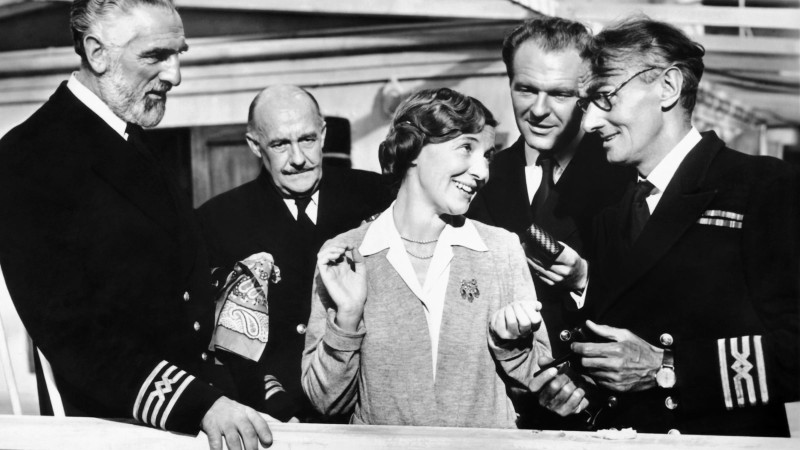
Granet developed the story for Berlin Express with Curt Siodmak—a German Jewish émigré—and Harold Medford. It is a spy thriller that, with its central train journey, recalls Alfred Hitchcock’s The Lady Vanishes (1938) and Carol Reed’s Night Train to Munich (1940). The MacGuffin propelling the story is the Paris-to-Berlin journey of Dr. Heinrich Bernhardt (Paul Lukas), on a sketchily defined mission to reunify Germany—then divided between the Allied powers—a goal that is threatened by a resurgent pro-Nazi “underground” trying to assassinate him. The main characters are schematic national archetypes representing the four Allied powers: a straight-shooting American, Robert Lindley (Robert Ryan); a suave Frenchman (Charles Korvin); a jolly, nattering Englishman (Robert Coote); and a humorless Russian spouting Soviet propaganda (Roman Toporow). Yet the film is deepened and darkened primarily by two things: the astounding footage of the bombed cities, and the uneasy mood that Tourneur instills.
Lucienne (Merle Oberon), Dr. Bernhardt’s secretary, tells Lindley that Europeans are more used to living in a state of “fear, insecurity, suspicion of everyone and everything.” Later, she adds, “Don’t you see, there is nothing one can count on. No one’s address is dependable.” It is Tourneur who makes these words real—far more so than Oberon, who unfortunately essays a French accent as flimsy as a poorly forged passport. (In the Paris scenes, people speak un-subtitled French, perhaps in tribute to the director’s birthplace.) The plot is filled with decoys, doubles, and deception, and Tourneur brings out not a Hitchcockian tone of wit and surprise, but a mournful awareness that a world where no one can be trusted, where nothing is what it seems, is profoundly lonely and disorienting.
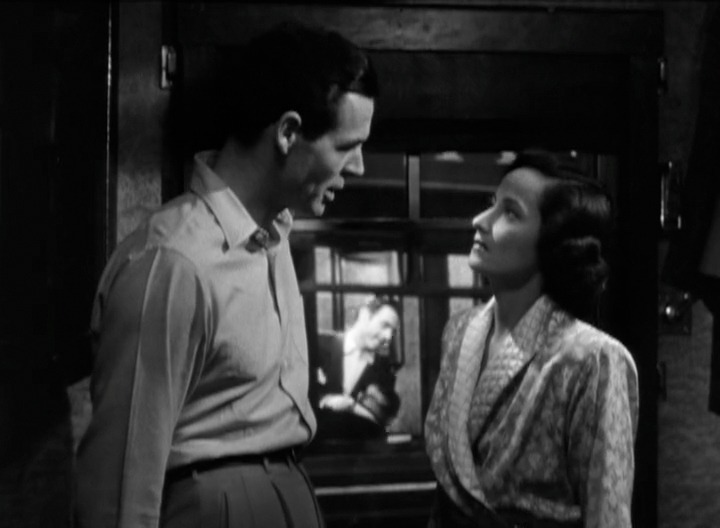
Cinematographer Lucien Ballard, who was married to Oberon, worked with Tourneur to make the ruins disturbingly beautiful, revealing how, in a few short years, modern urban centers had been reduced to archaic skeletons. The train that gives the film its title also has a sinister allure, breathing luminous steam into the black night. Early on, the camera glides alongside the cars, moving from window to window as the characters are introduced, each in his or her own isolating frame. The film’s most remarkable shot shows two characters talking in a compartment while, through the window behind them, we see an attack taking place in the next compartment, reflected in miniature on the window of a train on another track. It is a fancy composition, but it compresses into one frame the sense of how reality and illusion, closeness and distance, can become confused when all reliable markers are dissolved.

The scenes that hit hardest involve a coerced betrayal of an old friend, and a spy disguised as a clown from one of Frankfurt’s illegal, “off limits” nightclubs. Tourneur said that he had a “complex” about clowns: “They’re characters out of a nightmare . . . What’s sadder than a clown all made up?” This figure of false fun, with a painted grin and frightened eyes, is chased through a rubble field at night, lurching bloody and wounded, hiding in the tracery of shattered buildings. The people living in this shell of a town peddle personal belongings out of suitcases to survive, and post notices seeking missing loved ones. They have not left home but become strangers and refugees in their own city.
Out of the Past: Drifting and Dreaming
“You’ve been a lot of places, haven’t you?”
“One too many.”
“Which did you like the best?”
“This one right here.”
“I bet you say that to all the places.”
The very first shot in Out of the Past is of a signpost with arrows listing the distances to various destinations; the camera then places us in an open-top convertible, behind a driver in a black overcoat and fedora, as he motors into a small town in the Sierra Nevadas. A few scenes later, Jeff Bailey (Robert Mitchum) has the above exchange with his girlfriend, Ann (Virginia Huston), as they laze beside a pristine lake under towering peaks. Jeff imagines settling down with Ann in a lakeside cabin and never leaving, but this fantasy is as fleeting as the light scattering over the water.
Out of the Past never stays in one location for long. Jeff drifts from place to place like a sleeper through a series of fitful dreams. The film opens in Bridgeport, a tiny outpost in the mountains with a gas station and a diner, a few stark houses, and a white clapboard church shining like bone in the hard winter sun. In flashbacks, as Jeff tells Ann about his former life as a private detective and how he was hired to find a rich gambler’s runaway mistress, we travel to New York—a penthouse apartment, a smoky Harlem jazz club, a city without daylight—and to Acapulco, where Jeff found the missing woman, Kathie Moffat (Jane Greer). Then on to Lake Tahoe, where a serene view of crystalline waters is the spoils of the gambler’s dirty deals, and to San Francisco, where boogie-woogie piano plays in dim-lit apartments and doomed men mix martinis on terraces with views of headlights crawling across the Bay Bridge.
Cinematographer Nicholas Musuraca was one of the supreme masters of noir lighting, as he established in the deliriously expressionist Stranger on the Third Floor (1940). Here, the Ansel Adams–like panoramas that open the film shrink down to shots of Jeff and Ann meeting in the swamps at night, their bodies caught in a web of shadows from bare, jagged branches. A simple walk down a hall is transformed into nearly abstract, rhythmic patterns of dark and light. In his superb study Jacques Tourneur: The Cinema of Nightfall, Chris Fujiwara cites an early childhood memory that seems a perfect rosebud for the director’s use of chiaroscuro lighting: on Christmas Eve his parents put his presents in a large, spooky room that he had to approach via a pitch-black hallway, where he struggled between desire and fear, the darkness of the passage and the distant brightness of the gifts that took on “a phantom-like appearance.”
In the long central flashback narrated by Jeff, a kind of film-within-a-film, Kathie is repeatedly associated with light and shadow—he describes her walking in “out of the sun” or “out of the moonlight” or “in the headlights”—as if she were a creature of pure celluloid. Kathie is the deadliest of all femmes fatales because she is the most enchanting, and her romance with Jeff is magical, far from the usual spectacle of a temptress reeling in a chump. True, their first kiss is enmeshed in black fishing nets on a beach (one of a series of marine references, along with a bar called La Mar Azul—the Blue Sea—characters named Fisher and Eels, and a hoodlum who is yanked to his death by a fishing line). But Jeff knows, at least on some level, that he is throwing his life away as he falls into Kathie’s embrace, murmuring, “Baby, I don’t care.” Their Mexican idyll—a rhapsody of sunstruck plazas and dim cantinas, moonlit beaches and rainswept bungalows—floats in the unreality of being in a foreign land. “I don’t know what we were waiting for,” Jeff muses. “Maybe we thought the world would end. Maybe we thought it was all a dream.”
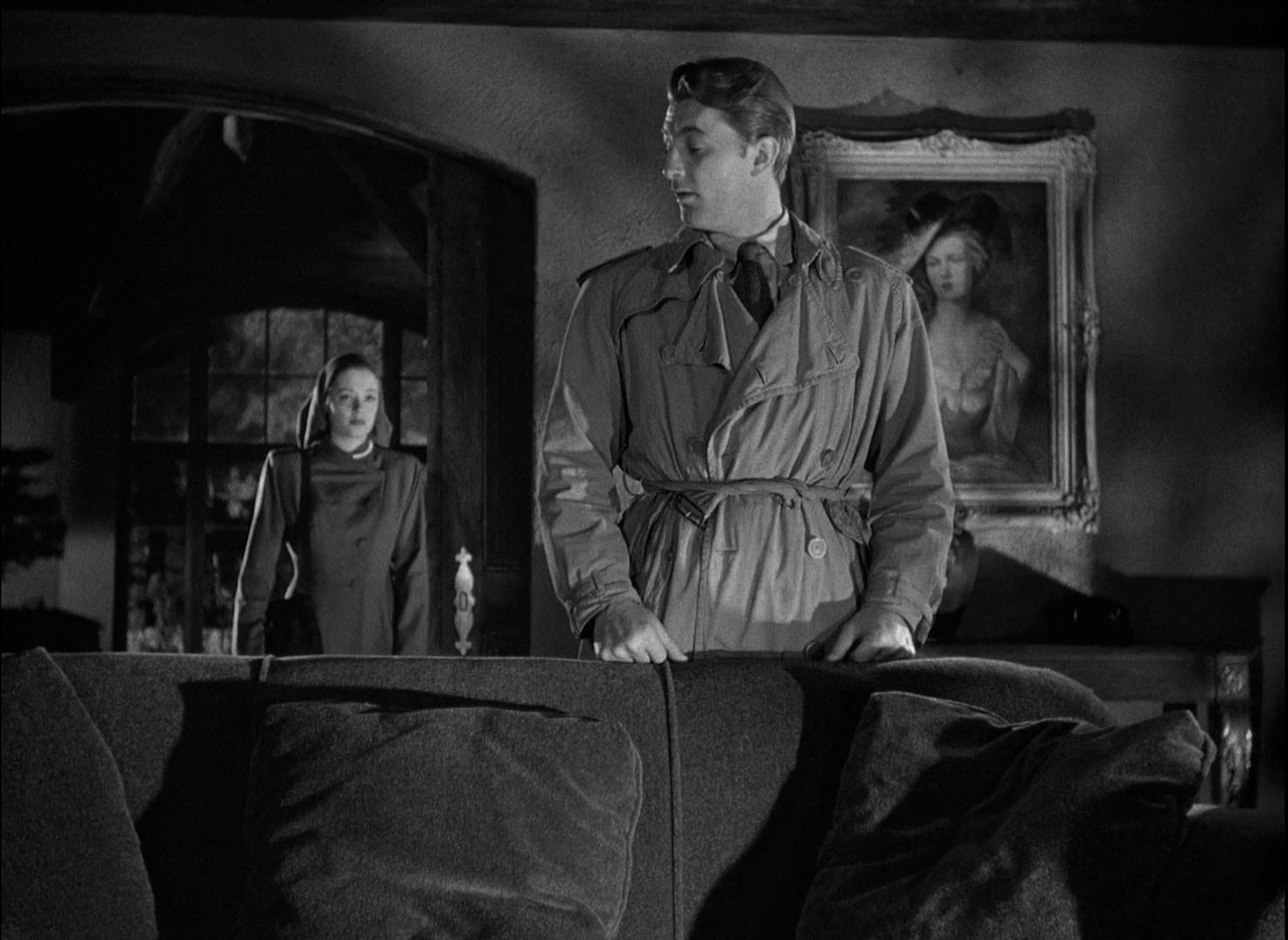
Kathie is different in each place where she appears, connecting the film’s peripatetic structure with its themes of disillusionment and betrayal. In Mexico she is girlish, laughing, luminous in white. In Tahoe, she looks pinched and wary; in San Francisco she is ravishing in an off-the-shoulder black gown and upswept hair, but the fear and desperate lies are visible just under the glistening surface of her beauty. At the end, she is severe in a grey tailored suit and wimple-like head covering, gloating that she is finally running the show. Out of the Past’s plot is famously convoluted, filled with doubles and double-crosses—during the filming, Mitchum cracked to Jane Greer, “Don’t tell anyone, but I think they lost three pages in mimeo.” But everything flows like music. The consistent sound of the dialogue—every line a wisecrack, an aphorism, or a morsel of pulp poetry—is all the more remarkable given that the script, though solely credited to Daniel Mainwaring, had uncredited contributions by James M. Cain and Frank Fenton—the latter contributing many of the best lines.
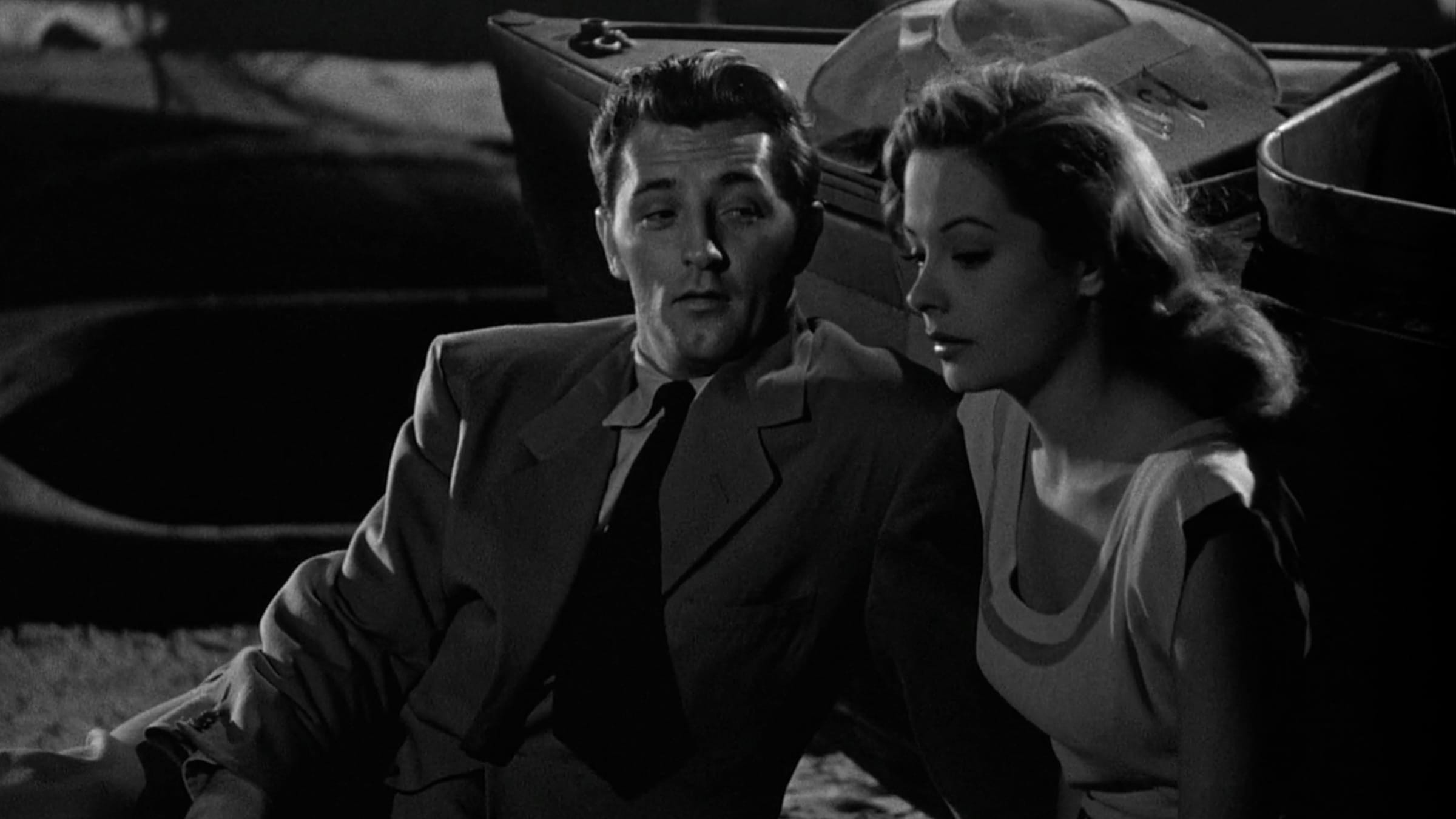
That sound is, above all, Robert Mitchum’s: the whole film is keyed to his rhythm, pacing, and lyricism, his way of delivering his lines behind the beat. He was the perfect actor for Tourneur, who routinely instructed performers to speak more softly and underplay. In Out of the Past, this subdued quality combines with intense stylization to create something effortlessly sublime. Received on its release as just another hard-boiled detective story, it has come to be revered as, arguably, the definitive film noir. The whole movie sustains a laid-back high, like a wee-hours jam session, as if the whole thing were dreamed some winter night in “a little joint on Fifty-Sixth Street.”
But in the end, no amount of wit and grace can undo the consequences of a fatal mistake. The world doesn’t end, just the dream. As Jeff tells Kathie, “There’s no place left to go.”
Nightfall: Wanted Man
“You change inside,” Jim Vanning (Aldo Ray) says of being on the run. He is the man who searched the Home Town Papers for Evanston, and who has memorized how the dying light looks from his window. His name is not really Jim Vanning. Fleeing after an incident during a camping trip in Wyoming—the harrowing nature of which emerges only halfway through the film—he has drifted through New Orleans, Dallas, and now Los Angeles, taking different names and jobs. Innocent or guilty does not matter; he has become a fugitive in his soul, a man who instinctively shrinks from the light and hunches his shoulders at the sight of a police car.
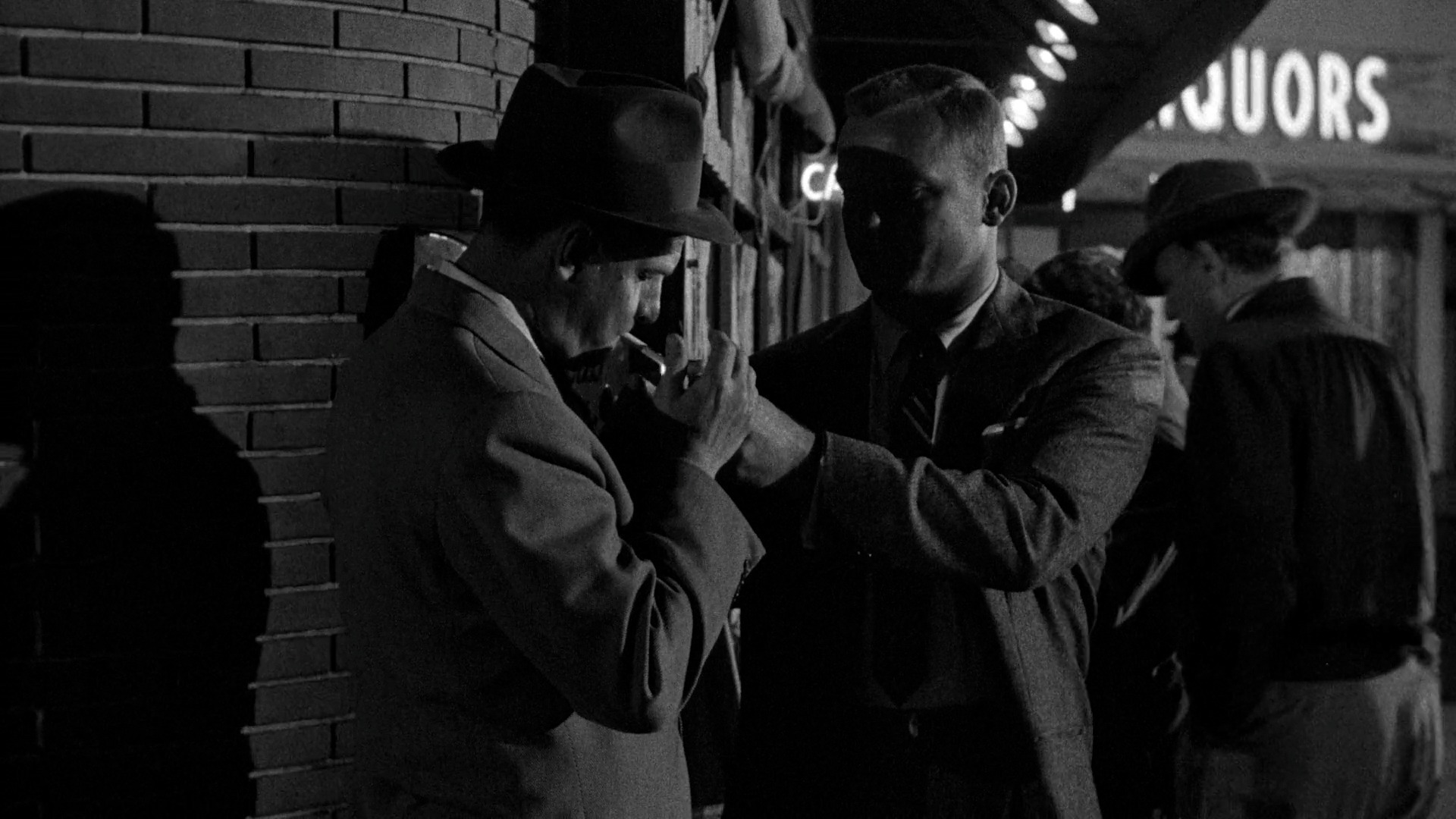
Nightfall is based on a novel by noir master David Goodis, which provides its unabashedly far-fetched plot and tone of hunted, haunted anxiety. Stirling Silliphant, who wrote the screenplay, cocreated the television series Naked City, Perry Mason, and Route 66—the last of which is a paean to rootless wandering, an anthology show built around two young men’s aimless road trip through America. Nightfall’s most famous line of dialogue plays on the glamour of the fugitive, when Marie (Anne Bancroft) tells Jim, “You’re the most wanted man I know.” He is being pursued both by a pair of violent bank robbers who believe he has their loot, and by an insurance detective, Fraser (James Gregory), who has surveilled him so long and closely that he feels he has come to truly know his quarry, almost to be living his life. On a warm evening, at the start of the film, Fraser approaches Vanning at a bus stop and asks for a light; they talk about tropical islands, the detective’s generic fantasy of escape to a remote paradise running up against Jim’s actual experience fighting on Okinawa.

Much later, in the snowy outback of Wyoming, John (Brian Keith), one of the robbers, explains that with his share of the stolen money he plans to buy a boat and sail away to find his own island, where he will live the rest of his life in peace. It is the same dream Jeff Bailey indulged in, of settling down in a cabin by a lake: a place where the past will never find him. The odd-couple pairing of the cerebral, slightly squeamish John and the sniggering, sadistic Red (Rudy Bond), whose partner describes him as “a kind of adult delinquent,” is one of the film’s best features. Their contempt for each other is a ticking time bomb.
Nightfall reverses the trajectory of Out of the Past, not only opening in the city and then moving to the wilderness but beginning as pure noir and gradually lightening in tone, from a scene of torture in an oil field at night to a comically disrupted fashion show. It is ultimately a story about luck, bad and good, more than guilt or fate.
The best scene comes near the beginning, when Jim meets Marie by chance in a chic bar, where she strikes up a conversation by claiming to have forgotten her wallet and asking to borrow five dollars. Is she on the level, or setting him up for a betrayal? Their banter is a cocktail of wariness and weariness, cynicism with a dash of hope. “You’ve told me so little about yourself, you might be any one of several people,” Marie says to Jim—who has indeed been several people. The scene is pure Tourneur because it is awash in the uncertain atmosphere of twilight. It is all seductive ambiguity, veiled hints of risk and possibility. This is the best time: when light merges into dark and desire into fear, when the evening might go anywhere.
More: Features
The Defiant Ironies of Rainer Werner Fassbinder’s The Third Generation
In this delirious and deeply polarizing satire about political violence, the legendary director takes aim at hypocrisy and opportunism at every level of German society.
Sinister Synergies
During a period of rapid deregulation and deindustrialization, Hollywood corporate thrillers depicted ambitious heroes gaining admission to a world of C-suites and private jets at the price of their souls.
The Rolling Stones on the Brink of Superstardom
The first documentary feature about the rock legends, Charlie Is My Darling captures the band as a group of consummate musicians coming into their fame, fully committed to their craft and enjoying one another’s company.
The Marriage Plot
In her riveting documentary Mistress Dispeller, Elizabeth Lo crafts a vividly cinematic exploration of love, marital infidelity, and a drastic form of professional intervention that has become popular in contemporary China.