Out of Your World
Share
Cannes has spent the week setting its jury and screening schedule and lining up its Classics and Cinéma de la Plage programs. We’ll be previewing the seventy-ninth edition, which opens on Tuesday and runs through May 23, early next week. Locarno, in the meantime, has announced that it will present the Pardo d’Onore, its Honorary Golden Leopard, to Darren Aronofsky.
In Berlin, the Arsenal Film Institute—best known to locals for its year-round screenings and to international visitors for running the Forum and Forum Expanded programs during the Berlinale—has reopened at its new location at the silent green Kulturquartier. From today through May 26, the Arsenal will present the city’s first Valerio Zurlini retrospective.
Bleak Week: Cinema of Despair, the series that launched in Los Angeles in 2021 with a gutsy idea and a modest lineup, has expanded to become a global event, rolling out this summer in seventy-three cities. The American Cinematheque has unveiled the schedule for the fifth LA edition, which will open on May 31 with the late Béla Tarr’s Sátántangó (1994) and run through June 7. Special guests will include Isabelle Huppert, Ari Aster, Denis Villeneuve, Werner Herzog, Gregg Araki, Theresa Russell, Louise Weard, and Vera Drew.
On Wednesday, the great poster designer Midnight Marauder passed along the shocking and terrible news that his immensely talented friend and collaborator, Tony Stella, had passed away. All across social media, fans and admirers of Stella’s work—including filmmakers such as Kleber Mendonça Filho and institutions like Japan Society—immediately began sharing their favorite posters, many of them harking back to the era of gloriously hand-painted illustration and all of them shot through with a vibrant immediacy.
“Losing someone so vital to the film world, and so revered by so many of us,” writes Chad Perman at Bright Wall/Dark Room, “leaves a deep and lonely space behind where so much art, passion, and joy used to be.”
This week’s highlights:
- On Monday, Film Comment relaunched as a quarterly digital magazine, and the first issue offers Blair McClendon’s cover story on Boots Riley’s I Love Boosters, Erika Balsom’s essay on Lucrecia Martel, Amy Taubin’s profile of Michaela Coel, Jonathan Rosenbaum’s reflections on writing for the magazine in the 1970s, and an introduction to FC’s latest incarnation from editors Devika Girish, Clinton Krute, and Michael Blair. The bright new site features a critics’ grid and notes on forthcoming articles, and subscribers have access to the entirety of every issue FC has published since its founding in 1962.
- It’s been seventeen years since Richard Kelly directed his last feature, The Box, and like many, Cory Atad has been wondering what he’s been up to. So for GQ, he called Kelly up last month, and the two of them spoke first about Southland Tales, which critics dumped on when it premiered in Cannes twenty years ago. “A cult has steadily grown around the film,” writes Atad, “and while it hasn’t yet achieved the kind of classic status Donnie Darko quickly accrued, its tribe of evangelists is growing. Its vision of a world consumed by capitalism, self-branding, corporate war-making, and potential apocalypse remain depressingly resonant.” Turns out, Kelly has been writing. A lot. “I’m just sitting on an arsenal of screenplays that, once the first one goes into production, I’m pretty confident I’m just going to be making a whole lot of movies back-to-back,” he says. Also, “I have a gigantic novel that I’ve written. It’s gonna be published later this year.”
- Lynne Ramsay’s filmography isn’t quite as sparse as Kelly’s. She’s made five features since her debut short film, Small Deaths (1996), and now, as Mark Smith notes in his profile in the latest issue of the Gentlewoman, she’s got five more projects she’s working on when she isn’t painting, shooting photos, writing songs, picking up her daughter from school, or meditating. And “curiously,” writes Smith, “the director who has given us child drownings, school shootings, and hammer-wielding hit men would like to make ‘the ultimate escapist film,’ as an antidote to our troubled times. ‘Because that’s what I loved as a child—something that just brought you out of your world. There is value to that, and I never thought I’d say that.”
- Braddock, Pennsylvania, a boom town during the heyday of the American steel industry, boasted a population of more than twenty thousand in 1920. One hundred years later, that number had fallen to just over 1700. Filmmaker Tony Buba grew up in Braddock and began making a series of films about his home town in the 1970s. “Tony quickly became one of my favorite living American filmmakers,” writes Steve Macfarlane, who profiled Buba a few years ago for Topic. “If you only watch one of his masterpieces, pick Sweet Sal, his 1979 portrait of neighborhood hustler Sal Carulli. If you watch another, make it Tony’s breakout feature, Lightning over Braddock: A Rust Bowl Fantasy (1988), a rib-bruisingly hilarious meditation on the eponymous town’s decline, and a ruthless interrogation of Tony’s mixed feelings over becoming the preeminent documentarian of said decline.” Buba will be in New York on May 15 and 19 when Spectacle screens Lightning over Braddock.
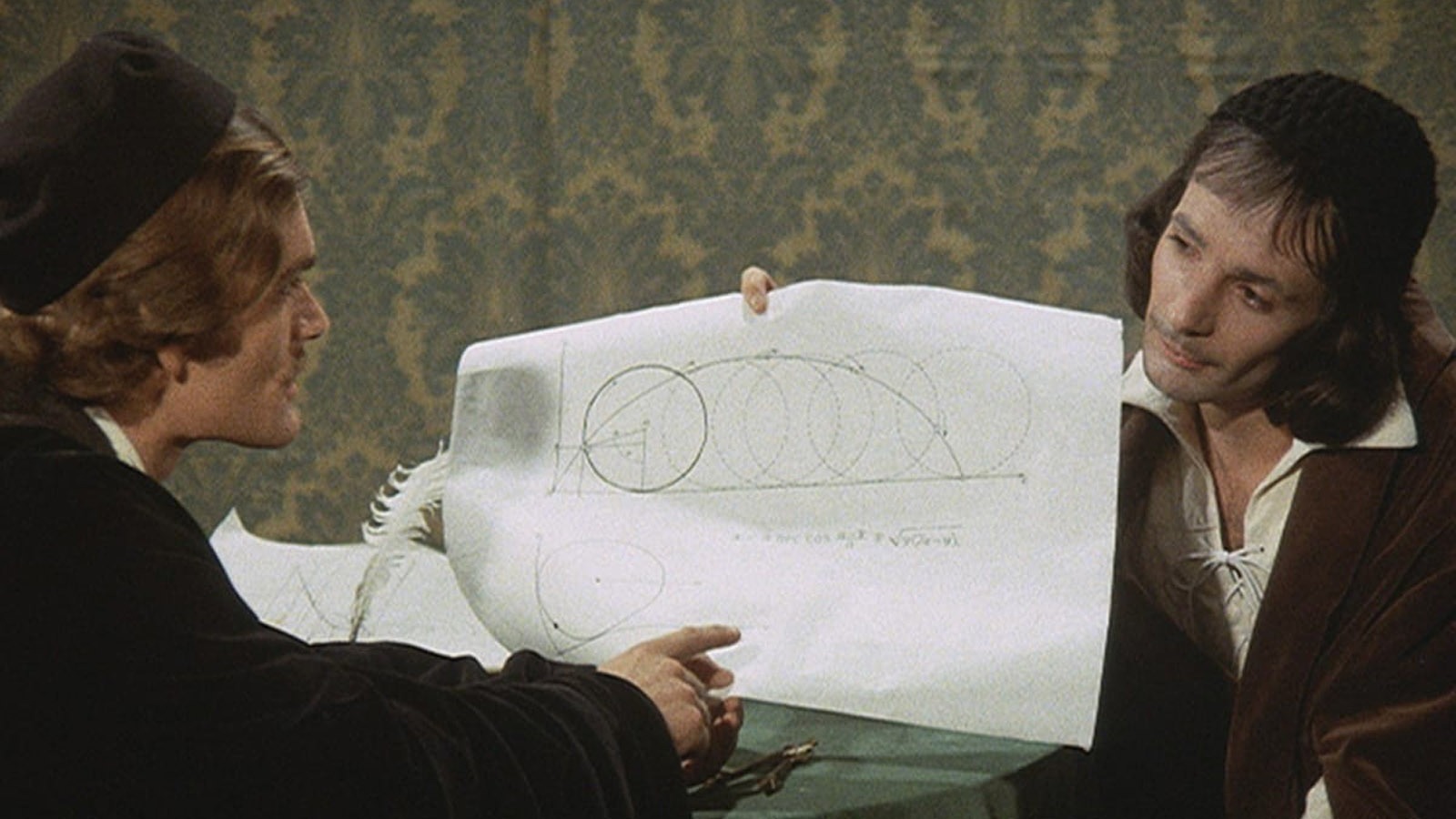
- On the 120th anniversary of the birth of Roberto Rossellini, Sight and Sound is republishing Philip Strick’s 1976 interview. Rossellini was in London to present Year One (1974) and The Messiah (1975), neither of which—at the time, at least—seemed to have won much appreciation for the director’s late all-talk, no-action style. But Rossellini was convinced that the educational films he was making for television were having the desired effect. Blaise Pascal (1972), for example, had Italians reading the works of the philosopher and mathematician. “At the point in any Rossellini film when the individual must weigh his own wishes against the needs of his fellow men, individualism always loses,” observes Strick. “Pietro Missirilli goes to the guillotine, General della Rovere steps before a firing squad, Garibaldi hands Italy over to Victor Emmanuel, Socrates drinks hemlock, Alcide de Gasperi catches a train.”
Don’t miss out on your Daily briefing! Subscribe to the RSS feed.