Slipping Free of the World
Share
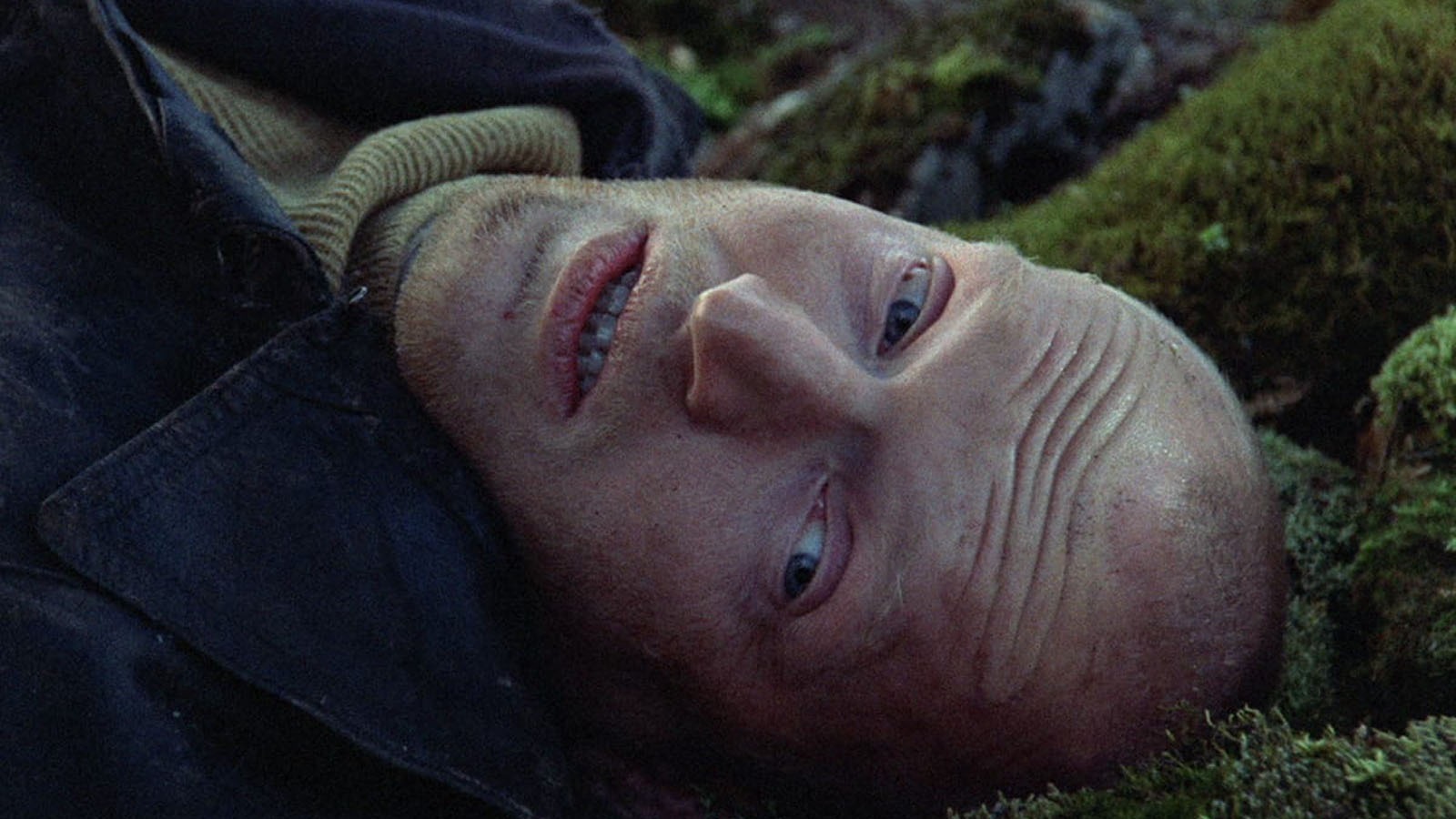
Our Criterion Mobile Closet has arrived in Portland, Oregon! We’ll be in town all weekend, and in partnership with PAM CUT, we’ve lined up a Saturday afternoon screening of Jonathan Demme’s Something Wild (1986). Portlandia creators Fred Armisen and Carrie Brownstein will join us on Sunday evening for a live recording of our Criterion Channel series Adventures in Moviegoing.
In Los Angeles, a screening of the late Béla Tarr’s Sátántangó (1994) at the Aero Theatre will serve as a prelude to the fifth edition of Bleak Week: Cinema of Despair, the American Cinematheque festival running through June 7. We’ll take a look at the lineup next week, and wherever you are, it’s likely that some of these bleak movies are heading to a theater near you within a few days. Bleak Week expands this year to seventy-three cities across the U.S., Canada, Latin America, and the UK.
In the Los Angeles Times, Kenneth Turan writes about nine highlights of this year’s UCLA Festival of Preservation, which opens today and runs through Sunday. The festival “showcases the widest variety of motion pictures in impeccable condition,” notes Turan. “This includes not only Hollywood and foreign-language features but newsreels, shorts, animation, documentary, and experimental work as well as television programming. Admission is free, no reservations necessary, so be bold in your choices.”
Also in the LAT, Mary McNamara previews Marilyn Monroe: Hollywood Icon, the exhibition opening at the Academy Museum on Sunday and on view through February 28. In New York, Film Forum’s thirteen-film series Marilyn 100 is on from today through June 11.
Philip Hartman’s No Picnic (1986) has been held over at Film Forum through Thursday. “Watching it now evokes a certain nostalgia for jukeboxes, cigarette machines, the St. Mark’s Cinema, the Atlas Barber School, and Bleecker Bob’s Records,” writes David Schwartz at Screen Slate. The cinematographer on No Picnic was Peter Hutton, and on Saturday afternoon, the Roxy Cinema will present a series of New York Portraits that Hutton shot on 16 mm from 1972 to 1990.
NYC has a lot to offer this weekend. A series of Urban Odysseys is on from today through Thursday at the Brooklyn Academy of Music, Anthology Film Archives spotlights one of the late great innovators of experimental theater with Robert Wilson on Screen (through Friday), and the Museum of the Moving Image presents By the People, For the People: Real American Tales, a sesquicentennial series running through July 7. On a somewhat related note, Debra Granik is in Berlin for the opening weekend of the Arsenal series On Life in America: The Films of Debra Granik, running through June 12.
This week’s highlights:
- With Cannes wrapped, the New Yorker’s Justin Chang has ranked all twenty-two films in the competition, Pietro Bianchi has posted his two-part dispatch to e-flux, and, in a delightful piece for Notebook, Pedro Emilio Segura Bernal revisits two remarkable Cannes Classics screenings: The Fast and the Furious, which we’ve touched on more than enough here already, and the Pelechian Project, a program of five short films by “the Armenian master” Artavazd Pelechian, all of which—plus one more, Mountain Patrol (1964)—will screen next month at Il Cinema Ritrovato. Called on to introduce his work, Pelechian spoke “in the manner of a man who has always been more interested in images than in words,” writes Segura Bernal, “but who can, when required, construct a sentence that illuminates a decade of thinking.” The power of the films themselves “is not diminished by the small screen. If anything, the intimacy of the [Salle] Buñuel amplified it, the way a small room can sometimes make a sound larger than any concert hall, and with this private proximity allow the audience to lose themselves in the ineffable distance between two frames.”
- Pelechian is eighty-eight, and Pere Portabella, a Catalan filmmaker and former senator who took part in the writing of the 1978 Spanish Constitution, is ninety-nine. Looking back on April’s comprehensive retrospective at the Buenos Aires International Festival of Independent Cinema (BAFICI), Victor Guimarães writes in Documentary Magazine that Portabella’s “oeuvre might suggest a kind of Dr. Jekyll and Mr. Hyde figure. On the one hand, he is the modernist auteur of nonlinear narratives such as Nocturno 29 (1968) and Pont de Varsòvia (Warsaw Bridge, 1989). On the other hand, he’s the man who dared to capture an underground gathering of former political prisoners in El Sopar (1974). This seemingly riven personality—between uncompromising artistry and the commitments of a leftist intellectual—coexists with further contradictions . . . There is no doubt that Portabella is a committed socialist; yet, as an avant-garde artist, he is also a ferocious critic of everything that moves.”
- Fitting “five ghost stories from four directors into a framework that gathers its own supernatural momentum,” Dead of Night (1945) is “the most imaginative British horror film of the postwar era,” writes Malcolm Gaskill in the London Review of Books. “The overall effect of Dead of Night is spectral disorientation, bending the familiar out of shape and reversing the reassuring thrust of time’s arrow. It’s oddly unsettling that the war, which must have loomed large in the characters’ recent lives, is never mentioned or even alluded to,” and that absence “only makes its agonies, invisibly encoded, more traumatic. There’s nothing more horrific than the violent removal of identity, the fate of the characters thus representing the unease of a nation peering unsteadily at the future.” Gaskill wraps with an astonishing true story that begins when a mathematician, an astronomer, and an astrophysicist walk into a screening of Dead of Night.
- Based on the 1970 novel by Arkady and Boris Strugatsky, who would later adapt their Roadside Picnic (1972) as Stalker (1979) for Andrei Tarkovsky, Grigori Kromanov’s Estonian sci-fi whatsit Dead Mountaineer’s Hotel (1979) screens this evening, tomorrow, and on June 5 as part of Metrograph’s Hotel Europa series. “For two thirds of its runtime, Dead Mountaineer’s Hotel operates, quite entertainingly, as a police procedural and a locked-room mystery,” writes Nick Pinkerton in Metrograph’s Journal. “There are anonymous poison pen notes, red herring clues, unaccounted for movements, contradictory testimonials, an unexpected visitor in the middle of the night, a baffling piece of futuristic technology in a dead man’s briefcase . . . and then, shortly after a scene straight out of a Hercule Poirot mystery—[Inspector] Glebsky gathering the dramatis personae around the dining room table with the intention of unmasking the killer—Dead Mountaineer’s Hotel becomes something entirely, for lack of a better word, alien. Things are not what they seem.”
- As it happens, the latest stop on Keith Phipps and Scott Tobias’s climb at the Reveal from #100 to #1 as they talk their way through Sight and Sound’s 2022 Greatest Films of All Time poll is Stalker. “As to where Stalker fits into the tradition of thoughtful 1970s science fiction,” writes Phipps, “it’s tempting to just see Tarkovsky as sui generis, but he wasn’t alone in seeing the philosophical potential in science fiction. The beginning of the decade is filled with examples of pessimistic films that took the era’s headlines to their darker conclusions, but I think Stalker more closely resembles something like René Laloux’s trippy, animated feature Fantastic Planet, Alain Resnais’s Je t’aime, je t’aime, or Agnès Varda’s Les créatures, all films that are less interested in the ‘science’ part of ‘science fiction’ than the places their films could go after slipping free of the world we know.”
Don’t miss out on your Daily briefing! Subscribe to the RSS feed.