African Cinema in New York and Seattle
Share
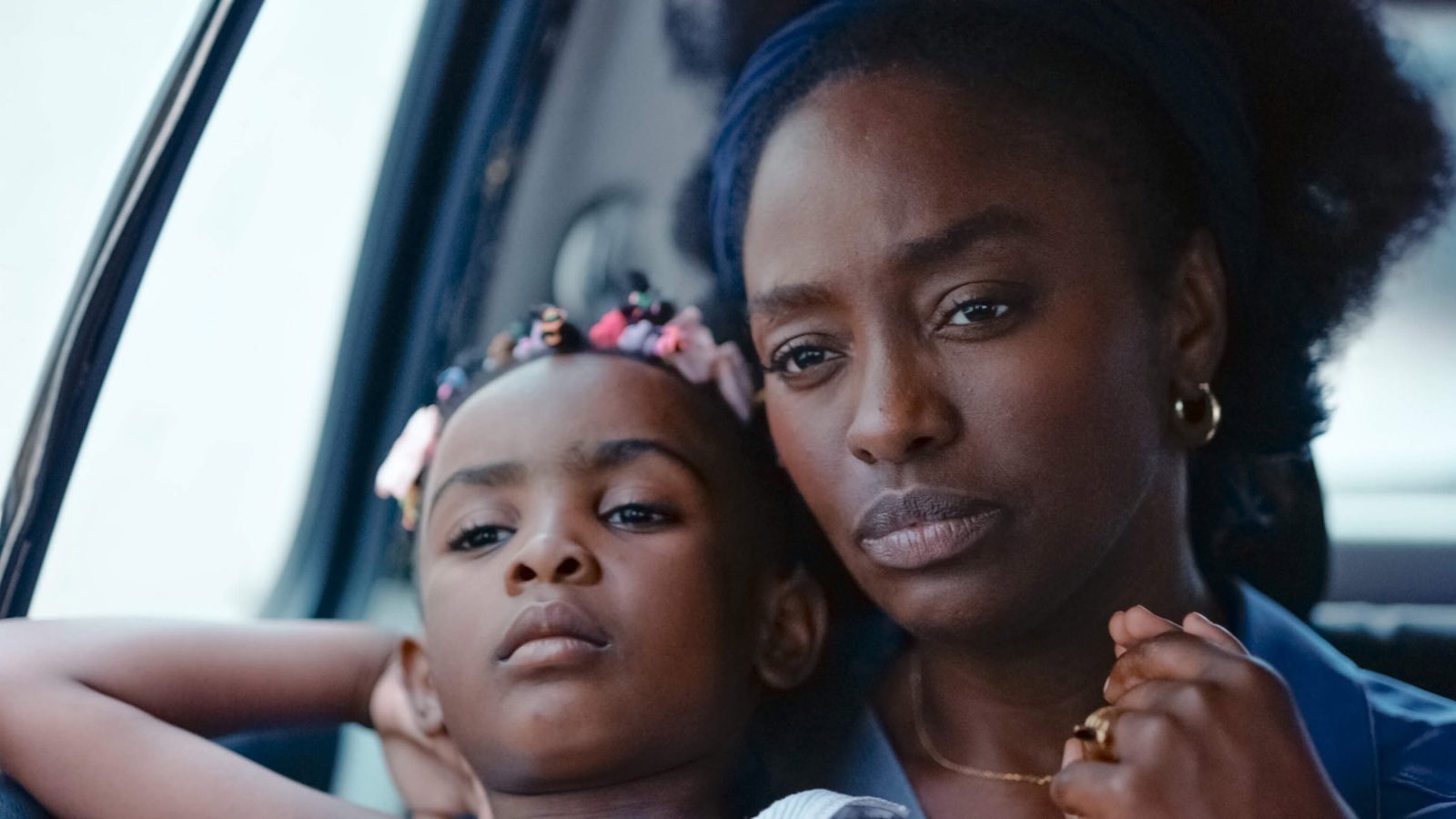
Directed by Erige Sehiri (Under the Fig Trees), Promised Sky begins with a bubble bath in Tunisia. Three Ivorian women—Marie (Aïssa Maïga), a pastor; Naney (Debora Lobe Naney), an undocumented mother; and Jolie (Laëtitia Ky), a student—bathe young Kenza (Estelle Kenza Dogbo) and piece together the girl’s story from her fragmented recollections. When they realize Kenza is a refugee who has survived a shipwreck and is now separated from her family, the women decide to take her in.
When Promised Sky opened the Un Certain Regard program in Cannes last year, Tomris Laffly wrote in Variety that the film “often feels like a mazy tapestry of moods and situations,” but it “adds up to something greater than the sum of its parts, becoming a unique drama about marginalized African immigrant women fighting for their dignity and place not in Europe (the usual setting for many similarly themed films), but on their own continent, Africa.”
Promised Sky will open this year’s New York African Film Festival tonight and then screen on Friday as part of the African Pictures program at the Seattle International Film Festival. At In Review Online, Padaí Ó Maolchalann finds Promised Sky to be “a fundamentally nuanced film, one that calibrates a fine, naturalistic balance between light and dark, comedy and tragedy, perceptive to the limitless implications in and interpretations of any detail that’s rooted in reality. A word here or a glance there may carry a very specific dramatic intent in a more calculated story; in Promised Sky, where these details are designed only to reflect real, complex stories, the intent is infinitely multifaceted.”
New York
Running through Tuesday, NYAFF 2026 will offer new restorations of two documentaries by Férid Boughedir, who will be taking part in Q&As after each screening. Following its Un Certain Regard premiere, Caméra d’Afrique (1983) returned to Cannes to screen in the Classics program in 2019. Boughedir weaves clips from eighteen films through interviews with such prominent figures as Ousmane Sembène and Djibril Diop Mambéty to look back on twenty years in the history of African cinema.
Boughedir’s Caméra arabe (1987) takes a similar approach to Arab cinema, and when Il Cinema Ritrovato screened it last summer, the programmers ran an excerpt from Anthony Yung’s 1987 review for Variety: “A special place is reserved for Egyptian helmer Youssef Chahine. Chahine’s intelligent, anguished battle to describe Arabs’ shaken sense of their own identity in a world rocked by dramatic political events rather sums up the film.”
In an illuminating appreciation of Paulin Soumanou Vieyra that ran in Sight and Sound last year, Tambay Obenson called the filmmaker, critic, historian, and all-round facilitator “the architect working behind the scenes: enabling, documenting, and defending a self-defined cinema that had barely begun to take shape. Though he directed a handful of influential shorts, his deeper legacy lies in what he made possible—a networked African film culture with its own institutions, its own historians and, crucially, its own image.” Ahmad Cissé and Stéphane Soumanou Vieyra will be on hand to discuss Vieyra’s only feature, En résidence surveillée (1981).
The NYAFF’s Centerpiece presentation is The Eyes of Ghana (2025), a portrait of documentarian Chris Hesse directed by Ben Proudfoot, who has won the Oscar for Best Documentary Short Film twice. Now in his nineties and losing his eyesight, Hesse attempts to rescue a trove of more than a thousand reels shot while he served as the personal cameraman of Ghana’s first leader, Kwame Nkrumah. Pat Mullen of POV Magazine calls The Eyes of Ghana “a deeply moving examination of the power of documentary films.”
Another highlight will be My Father and Qaddafi, directed by Jihan, who was six when her father, Libyan opposition leader Mansur Rashid Kikhia, disappeared. Her film is “part tender memorial, part murder mystery, and part family therapy session,” writes Stephen Dalton at the Film Verdict. “Around this deeply personal story, Jihan adds a broader sociopolitical framework sketching out the last tragic century of Libyan history, from genocidal colonial occupation to ongoing postcolonial struggles, from tyranny to anarchy.”
Along with further features and three programs of short films, NYAFF 2026 will also present a digital exhibition of materials from the festival’s archive. Never-before-seen interviews and photographs will spotlight guests who have attended over the past thirty-six years, including Ousmane Sembène, Safi Faye, William Greaves, Harry Belafonte, Danny Glover, and Ossie Davis.
Seattle
Opening tomorrow and running through May 17, Seattle’s fifty-second edition will present five features in its African Pictures program. Screening after Promised Sky on Friday, Suzannah Mirghani’s Cotton Queen “impresses as a taut character study encapsulating Sudan’s current condition and its deep-rooted heritage,” writes David Katz at Cineuropa. Mihad Murtada and Rabha Mohamed Mahmoud lead a cast of nonprofessional actors as a young woman and her matriarchal grandmother facing down the threat of their plantation’s takeover by an ambitious entrepreneur. Cotton Queen will also screen later this month as part of FilmAfrica, which opens at the Brooklyn Academy of Music on May 22 and runs through May 28.
Sarah Goher’s Happy Birthday “illuminates disparities of wealth and class in contemporary Cairo through the affecting story of a resourceful eight-year-old maid whose devoted friendship with the daughter of the household she works for is frowned upon by her employers,” writes Alissa Simon for Variety. Goher “draws a performance of astonishing depth from Doha Ramadan as Toha, the illiterate but street-smart young domestic who doesn’t yet understand her position in Egypt’s complex social hierarchy.”
Sanduela Asanda’s Black Beats Fast is set at an elite South African boarding school, where Luthando (Esihle Ndleleni), a quiet high-achiever, is the token success story. Luthando’s world turns upside down when a lively new student, Ayanda Khumalo (Muadi Ilung), arrives. “Growing up in South Africa, anything outside the norm of heterosexuality wasn’t acknowledged,” Asanda tells Felix Seuffert in Diva. “I feel the urgency in giving young audiences the images and possibilities I never had.”
Andrew Harrison Brown and Bea Wangondu’s Kikuyu Land is a “beautifully composed documentary, which features exceptional photography of the verdant Kenyan countryside,” writes Robert Daniels at RogerEbert.com. Wangondu, a Nairobian journalist, probes the role her family played in the colonization that pushed the Kikuyus off their land in the 1930s. “If you’re unfamiliar with where your tea comes from,” writes Daniels, “this documentary will probably shock and disorientate you.”
Don’t miss out on your Daily briefing! Subscribe to the RSS feed.