Magnanimous!
Share
Australia’s great festival of “screen heritage and preservation,” Cinema Reborn, opens today in Sydney (through May 10) and next week in Melbourne (May 8 through 17). The program is a journey through time and around the world, ranging from musicals (Ernst Lubitsch’s One Hour with You, 1932, and Frank Tashlin’s Artists and Models, 1955) through anti-colonial films (Flora Gomes’s Mortu Nega, 1988, and three short films by Sarah Maldoror) to incisive studies of social dynamics (Satyajit Ray’s Days and Nights in the Forest, 1970, and Kira Muratova’s The Asthenic Syndrome, 1989).
The Chicago Film Society, in the meantime, is throwing a Pre-Code Picture Party this weekend, and among the treats are films by Dorothy Arzner, William A. Wellman, and E. A. Dupont. At the Music Box Theatre, the Chicago Critics Film Festival will roll out more than two dozen Chicago premieres from today through Thursday. Along with recent festival highlights such as John Early’s Maddie’s Secret and Kent Jones’s Late Fame, the festival will also feature 35 mm screenings of David Cronenberg’s The Fly (1986) and Steven Spielberg’s A.I.: Artificial Intelligence (2001).
In Los Angeles, the American Cinematheque series Watch Local: Z Channel (tomorrow through May 30) celebrates one of the country’s early pay television stations, which from 1974 to 1989 “influenced a generation of film lovers and filmmakers alike while popularizing the concept of ‘Director’s Cut’ versions.” On May 14, filmmakers Xan Cassavetes, Stuart Cooper, and Vera Anderson; producers Rick Ross and Marshall Persinger; and Z programmer Tim Ryerson will gather to discuss the 2004 documentary Z Channel: A Magnificent Obsession.
This week’s highlights:
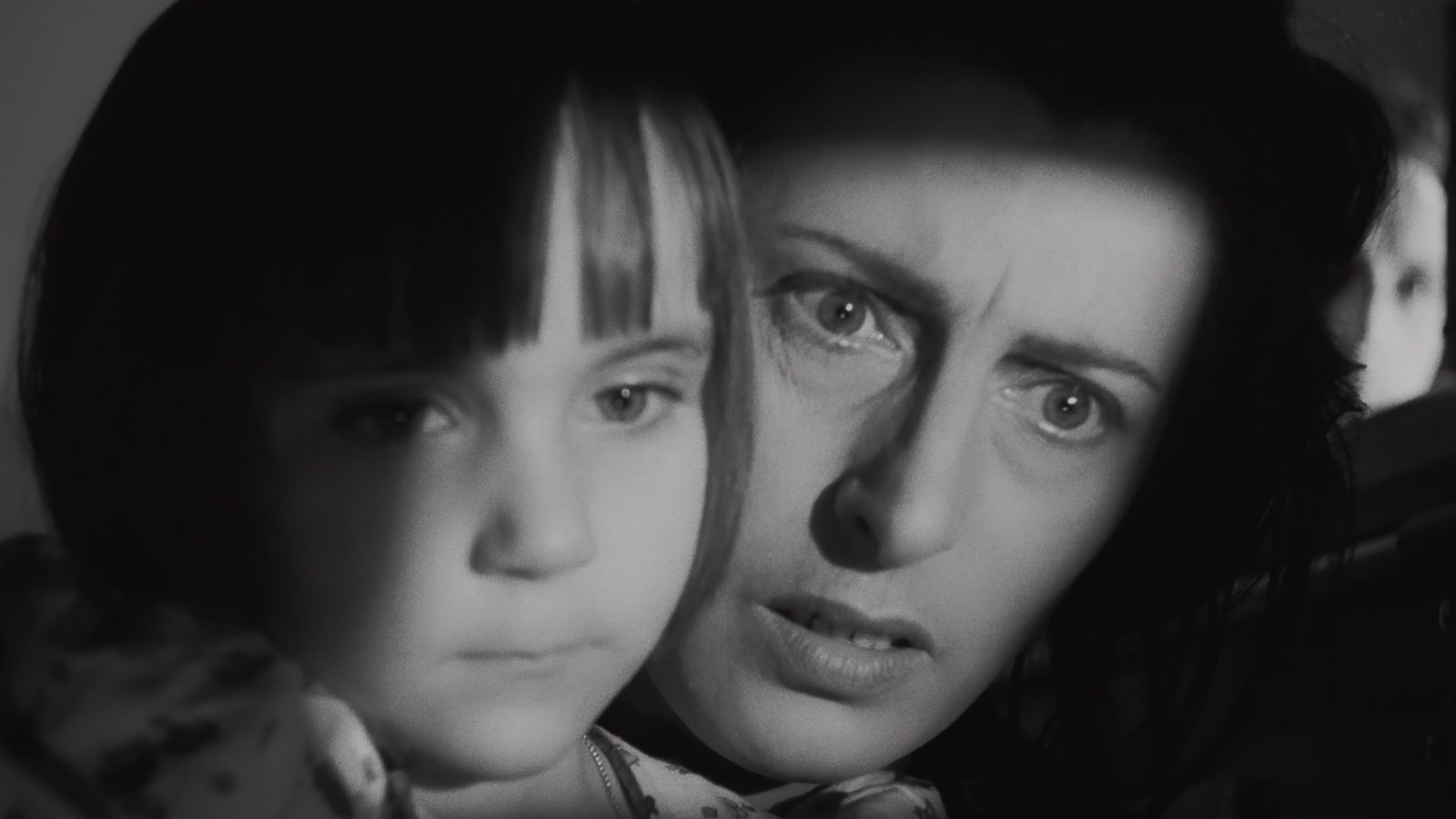
- Luchino Visconti’s 1951 comedy Bellissima is “a case study in maternal obsession, a comic opera with nonmusical solos, and a satire of the Italian movie industry,” writes J. Hoberman in the New York Times as a new restoration opens today at New York’s Film Forum. Anna Magnani delivers “a Pirandellian meta performance” as a working-class mother determined to get her young daughter cast in the lead role of a film director Alessandro Blasetti is setting up at Cinecittà. “Bellissima likely inspired two younger directors, Federico Fellini and Michelangelo Antonioni, to address the film industry in their movies The White Sheik (1952) and The Lady Without Camelias (1953),” notes Hoberman. “Neither delved as deeply as Visconti and Magnani into the nature of acting.”
- Pearl Bowser and the Black Film Series, an exhibition at the Jewish Museum in Manhattan (just a dozen or so blocks south of Harlem), has been extended through Sunday. Guest-curated and produced by Lisa Collins and cocurated by Aviva Weintraub (for the Jewish Museum), who have worked with filmmaking collaborators Mark Schwartzburt and Anthony Jamison, the show is a salute to the 1970 series put together by the late Pearl Bowser, whom Olivia Haynie describes in Forward as “a former cookbook author who became known as the Godmother of Black Independent Cinema for her work in film preservation and scholarship on Oscar Micheaux.” The exhibition features highlights from the fourteen films screened in 1970 and from documentaries on Bowser. “The political environment we’re in right now,” says Schwartzburt, “where there is so much erasure going on and backstepping—taking back civil rights—this couldn’t be more important.”
- While Alexander Kluge, who passed away in March, “has been typecast as the worthy, old-world éminence grise,” writes Luke Dunne for the Los Angeles Review of Books, “his work isn’t so easily pinned down. Kluge’s films and fiction alike are often playful, flamboyant, sentimental (though rarely saccharine), and frequently very funny. That none of this comes at the expense of intellectual or moral seriousness, that Kluge refused to acknowledge this trade-off in the first place, is part of his charm. War and capital-H History, yes, but also angels, opera, and slapstick. For Kluge, there simply was no either-or—only both-and would ever do.”
- Backrooms, the debut feature of twenty-year-old YouTuber Kane Parsons, stars Chiwetel Ejiofor, Renate Reinsve, and Mark Duplass and is set to open on May 29. In a burrowing backgrounder for the MIT Press, Shira Chess, the author of The Unseen Internet, notes that “there’s a surprisingly deep history behind Backrooms. It’s one that touches on everything from Gothic literature to internet folklore to video game culture to ’80s nostalgia. But above all, Backrooms captures a feeling—and one that I would argue has become a defining condition of life under Corporate America: dread.”
- And finally, happy May Day. If you’re looking for something to watch on this International Workers’ Day, Erik Loomis has written up an annotated list of twenty fine candidates for the Nation, and Le Cinéma Club is launching a new series, New American Voices, with Lucy Kerr’s Family Portrait (2023). For weekend listening, you might turn to the latest Outskirts Film Podcast, “Edward Yang’s Confucian Confusions,” and for reading, there’s a whopping new issue of Senses of Cinema with a dossier on the state of the film festival and articles on Lucrecia Martel, Jean-Luc Godard, Krzysztof Kieślowski, and Sergio Corbucci.
Don’t miss out on your Daily briefing! Subscribe to the RSS feed.