Cannes 2026 Awards: Fjord, Minotaur, and More
Share
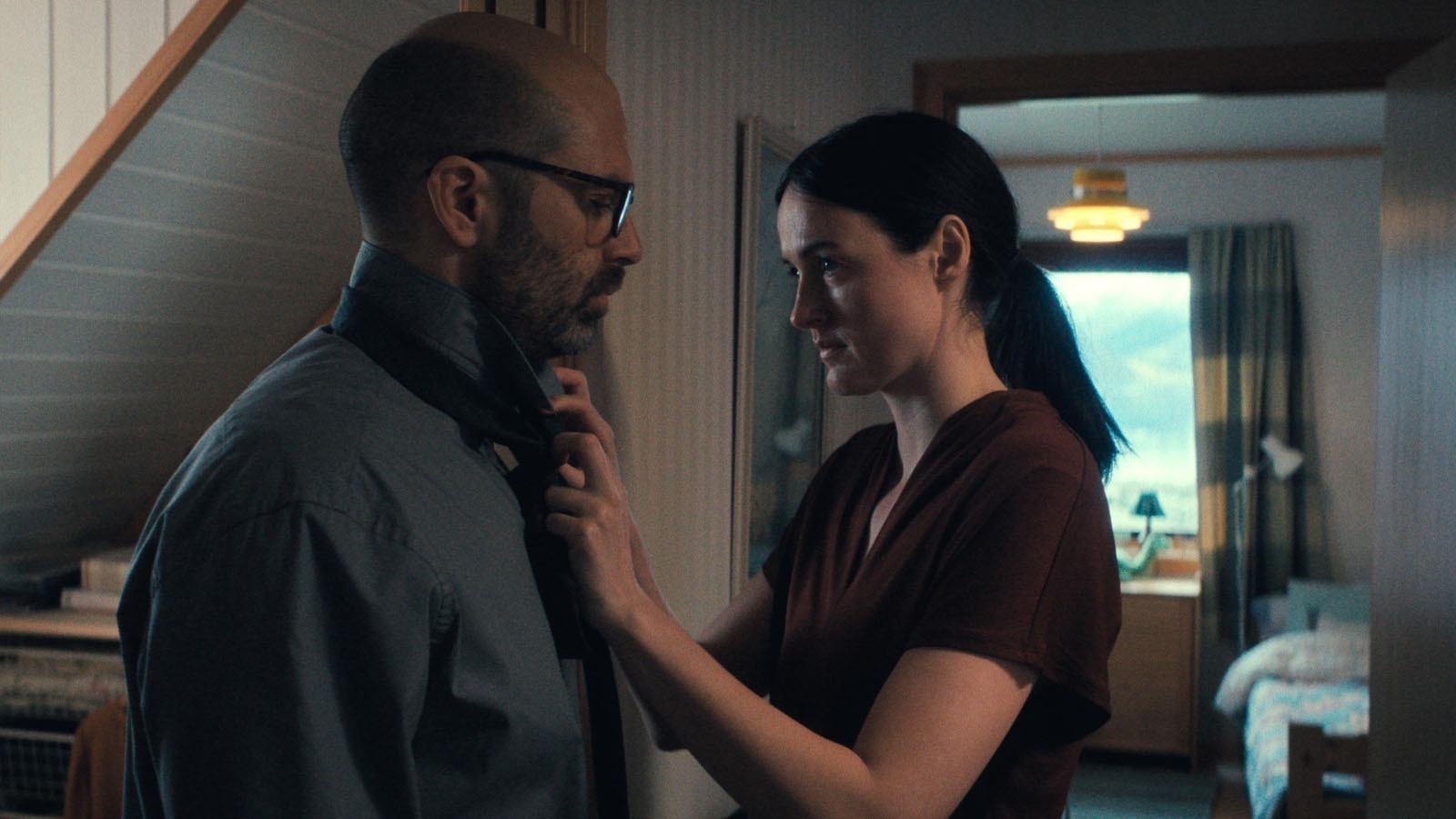
Cristian Mungiu’s Fjord, the winner of the Palme d’Or at this year’s Cannes Film Festival, was “by far the most divisive film in competition,” according to the Telegraph’s Robbie Collin. Not everyone would agree. Just yesterday, the New York Times’ Kyle Buchanan reiterated his assertion that “the most divisive movie by far” was actually Na Hong-jin’s alien invasion movie Hope, whose chases thrilled many while others were thrown off by the jankiness—the bad kind, not the Boots Riley kind—of the effects.
Some welcomed the open questions raised by Arthur Harari’s body-swapping mystery The Unknown, and some simply found the film dark, dull, and inscrutable. Even films widely perceived as critical favorites, such as Paweł Pawlikowski’s Fatherland and Ryusuke Hamaguchi’s All of a Sudden, found their detractors. That’s to be expected. The lack of passionate engagement, one way or the other, not so much. “As is always the case at Cannes,” writes the NYT’s Manohla Dargis, “there was plenty to like and admire, but the word love was not heard all that often.”
“To be completely honest,” quipped jury president Park Chan-wook at the press conference following Saturday night’s awards ceremony, “I didn’t want to award the Palme d’Or to any of the films, because it’s an award that I myself have never gotten. But I had no other choice.”
And so the festival’s top prize went to Fjord, and after it premiered last week, we took a first look at the conflicted critical response. Often in the same review, we’ll find admiration for Mungiu’s assured direction—he won his first Palme d’Or in 2007 for 4 Months, 3 Weeks and 2 Days—and reservations about where, as Fjord’s sole credited screenwriter, he steers his story.
Sebastian Stan and Renate Reinsve star as Mihai and Lisbet Gheorghiu, the parents of five children ranging in ages from infancy to the mid-teens. He’s Romanian, she’s Norwegian, and they have just moved the family from Bucharest to a tiny town in her home country. The neighbors’ warm welcome cools as they discover that the Gheorghius are not only conservative Christians but also believers in corporal punishment. When one of the teen’s bruises are spotted in gym class, Child Protection Services are called in.
Is spanking physical abuse? “Mungiu is not really curious on this front,” writes Sophie Monks Kaufman for Sight and Sound, and “he ushers the very people who could resolve this off stage: the children themselves. He is far more motivated by the chance to vilify the ghouls working for the CPS—they have more in common with the Child Catcher in Chitty Chitty Bang Bang (1968) than with caring professionals.”
“In the butterfly-effect plotting of Mungiu’s films, incidental and ambiguous gestures, often hidden in the blocking of a single long take, acquire load-bearing narrative importance,” writes Mark Asch for Film Comment. “Here in Cannes, art is affirmed as an expression of cosmopolitan, humanist values that are assumed to be universal. Fjord asks whether or not many of these values—secularism, a commodified liberal commitment to free agency—are not simply elite heuristics.”
Grand Prix and Jury Prize
Andrey Zvyagintsev’s Elena (2011), Leviathan (2014), and Loveless (2017) all won awards in Cannes, and on Saturday, Minotaur won the Grand Prix, essentially the festival’s second-highest honor. Zvyagintsev has been telling reporters that his return to the festival is one of “the best things that happened to me” over the past nine years. During the pandemic, he suffered a bout of COVID that kept him immobile for eighteen months, and as he recovered in France, Vladimir Putin launched his full-scale invasion of Ukraine.
Shot in Latvia, Minotaur is the first film Zvyagintsev has made outside of Russia. Set in 2022, it’s an adaptation of Claude Chabrol’s The Unfaithful Wife (1969) starring Dmitriy Mazurov as Gleb, the well-to-do CEO of a shipping company. His wife, Galina (Iris Lebedeva), is having an affair with a young photographer, Anton (Yuriy Zavalnyouk), and his teenage son, Seryozha (Boris Kudrin), wants nothing to do with any of them. Complicating the tension on the home front, Gleb has been charged with selecting fourteen employees to serve in Putin’s “special military operation.”
All of Zvyagintsev’s films “see-saw between the micro and macro, domestic dramas and larger allegories of life under the metastatic cancer of the Putin regime,” writes Leonardo Goi at the Film Stage. “Zvyagintsev is making space for a bourgeois love triangle against the backdrop of a war that’s blotted out everything else, and where domestic stories of such scale, in some fundamental sense, hardly matter. It is this cognitive dissonance that makes Minotaur such a fascinating oddity.”
This year’s Jury Prize went to The Dreamed Adventure, the fourth feature from Valeska Grisebach (Longing, Western). Set in Svilengrad, a Bulgarian town close to the borders of both Greece and Turkey, The Dreamed Adventure seems to begin as the story of Said (Syuleyman Letifov), a former local who has returned to conduct a little shady business. Then Said’s old flame Veska (Yana Radeva), who has been overseeing an archeological dig, takes over the film’s narrative.
The Dreamed Adventure is “a verité social drama, cast with nonprofessionals, that from the improvisational immediacy of small-scale real life, gradually gathers all the elements of a sprawling crime epic,” writes Jessica Kiang for Variety. “It would be difficult to overstate how much the textures and tempo of this film—organically, unobtrusively shot by Bernhard Keller and quite brilliantly edited by Bettina Böhler—are alien to the way we’re used to seeing gangster-movie plotlines develop.”
“As an ultimately warm and feminist voyage to the new frontiers of capitalism,” writes Mark Asch at Little White Lies, “The Dreamed Adventure is as panoramic as Toni Erdmann, and like Maren Ade’s film, it always comes back to the performances at its center: Letifov, with his John Wayne squint and cherubic dimples, and especially Radeva, in her first-ever film performance, with her wise, weathered face and spine of steel.”
Three Directors, One Screenplay, and Four Performances
There was a minor flurry of chaos and confusion when the jury announced that it was awarding the Best Director Prize to the three directors of two films that could hardly be more different in form, content, and tone. Javier Ambrossi and Javier Calvo—Los Javis, formerly a couple and still a team—bounded joyfully up to the stage, followed by a more serene Paweł Pawlikowski, and the three of them wandered around a bit, circling the single prize on a pedestal. “That was a piece of disastrous mise-en-scène,” joked Pawlikowski when it was his turn to speak.
Ambrossi and Calvo’s The Black Ball is “the kind of film that feels weightier during the watching than it does when looked back on the next day,” suggests Vulture’s Alison Willmore. Cowritten with Alberto Conejero, inspired by Federico García Lorca’s unfinished La bola negra, and incorporating Conejero’s play La piedra oscura, The Black Ball opens in 1937 and steps back to 1932 before leaping ahead to 2017 to tell the interconnected stories of three gay men in Spain.
“Los Javis execute this mighty vision with thrilling technical bravado,” writes Richard Lawson in the Hollywood Reporter. “Nearly every shot in the film is a carefully composed wonder, either an eye-popping still-life tableau or a breathtaking bit of camera movement, all done up in lush, expensive-looking period detail. It’s a dazzlingly assured film, delivering the heady satisfaction of seeing something ambitious actually land its nervy attempt.”
“Nearly 160 minutes is rather a long time to spend around the filmmakers’ brashly symphonic style,” finds Variety’s Guy Lodge, especially “in the company of characters who, as neatly as their paths collide over time, remain fairly two-dimensional throughout, played with serviceable sincerity but not much granular detail by an attractive ensemble.”
Pawlikowski’s black-and-white Fatherland, which we took a first look at last week, spends a mere eighty-two minutes with Thomas Mann and his daughter Erika as a speaking tour takes them on a somber journey from Frankfurt to Weimar. Writing for Sight and Sound, Nicolas Rapold suggests that Fatherland is “a dangerous film to have in a festival because it’s such a model of economy, almost casually demonstrating intelligence and cinematic beauty in half the runtime of other pedigreed auteur efforts.”
Virginie Efira and Tao Okamoto won the award for Best Performance for an Actress for their turns as two women who form a fast and deep friendship in Ryusuke Hamaguchi’s All of a Sudden; here’s a quick overview of early reviews. And Emmanuel Macchia and Valentin Campagne won the award for Best Performance for an Actor for playing two Belgian soldiers fighting in the First World War and falling in love in Lukas Dhont’s Coward, a film that, for the Hollywood Reporter’s David Rooney, “reeks of manneristic affectation and phoniness.”
Guy Lodge disagrees. “Coward blossoms as a love story of marked tenderness,” he writes, “but with a queasy, nervy undertow, as we wonder if it can possibly survive the brutality of war, and of men in general. It works in large part because Macchia—a gently stoic, aptly unformed presence with a stolid sadness in his trudging gait, who can go from boy to man with a slight shift in the light—and the far more vocal, focus-pulling Campagne have chemistry visible almost entirely in the different ways their bodies move and balance each other: one still, one quicksilver; one molded by the men around him, one brazenly opposing that physicality.”
Un Certain Regard
When Gilles Jacob became the festival’s delegate general in 1978, he launched Un Certain Regard, a program that has especially lately focused on emerging filmmakers. The Un Certain Regard Prize was established in 1998, and this year’s jury presided over by Leïla Bekhti presented the award to Sandra Wollner’s Everytime. After Jessie (Carla Hüttermann) falls to her death, her mother (Birgit Minichmayr), sister (Lotte Shirin Keiling), and boyfriend (Tristan Lopez) decide to take the trip to Tenerife that the mom and her two girls had been planning.
Gregory Oke’s cinematography “evokes the heady bouquet of suncream and slush puppies as the sort-of family wander around Tenerife in a half-daze,” writes Hannah Strong at Little White Lies. “Much of Everytime’s power comes in the things that these people want to say but can’t, and the enormous burden of regret that they share, as well as the way grief has shaped their worlds since Jessie’s death. It’s a ghost story of a sort, in which a family are finally allowed to pretend, just for a moment, that the unthinkable never happened.”
Elephants in the Fog, the debut feature from Abinash Bikram Shah and the first Nepali film to be selected for UCR, won the Jury Prize. Pirati (Pushpa Thing Lama), the matriarch of a community of transgender women, leads the search when one of her favorite daughters, Apsara (Aliz Ghimire), goes missing.
“Through hazy rural environments,” writes Siddhant Adlakha for Variety, “through gentle, tasteful sex scenes, and through calculated code-switches to navigate social norms (‘Use your deep voice,’ Pirati tells one of her sisters, as they phone Apsara’s family for help), Shah weaves a potent tale of loss, loneliness, and desperation, led by a stunning first-time performance. Lama, a social activist of several decades, sheds any sense of artifice in playing the headstrong Pirati, a woman whose convictions are as compelling as her desires, her vulnerabilities, and even her hypocrisies.”
Louis Clichy’s animated Iron Boy—the story of Christophe, a ten-year-old farm boy who must wear a metal corset to keep his body from falling over—won a Special Jury Prize. “Framing Christophe’s stiff little body against the surrounding green fields or the buildings of his drab provincial enclave, Clichy powerfully captures those eureka moments you have as a kid when your world is suddenly opened up by beauty, and you realize you’re not alone,” writes Jordan Mintzer in the Hollywood Reporter.
Bradley Fiomona Dembeasset won the Best Actor award for his portrayal of Robert, a seventeen-year-old Congolese refugee in Bangui, the capital of Central African Republic, in Rafiki Fariala’s debut feature, Congo Boy. Robert’s parents are in prison, so it’s up to him to look after his four siblings while holding down odd jobs and studying for his upcoming exams. But what he really wants to do is sing.
Fiomona delivers an “open-hearted and entertaining performance, deftly moving between emotionally heavy dramatic scenes and others full of gaiety,” writes Murtada Elfadl in Variety. “His face registers Robert’s many dilemmas, while his physicality and singing show why he can be a star. Despite its uneven writing, Congo Boy succeeds because of Fariala’s emotional clarity, avoiding many pitfalls of the familiar rise-to-fame musical story. Anchored by its charismatic star, the film ends on an acute, genuinely moving note of hard-earned hope.”
A temporarily renamed Best Actresses award was presented to the three leads in Valentina Maurel’s Forever Your Maternal Animal. Having spent a few years in Belgium, Elsa (Daniela Marín Navarro) returns to her home in Costa Rica to find that her parents have split and left the house to her younger sister, Amalia (Mariangel Villegas), and it’s a mess. In the meantime, Elsa’s mother, Isabel (Marina de Tavira), is working on reviving a collection of erotic poetry she wrote in her teens.
“These could be some of the best female characters at Cannes this year,” writes Marta Bałaga at Cineuropa, “completely delulu, infuriating, and fun. They are connected, but they don’t really know—or like—each other. And they don’t know themselves either. Elsa is the very definition of adrift: obviously looking for something and ready for a change, but she has no idea what it would even look like . . . It’s hilarious and so, so relatable, how nobody here approves of anyone else’s choices.”
The Camera d’Or, presented to the best first feature premiering in any section in Cannes, went to another UCR selection, Marie-Clémentine Dusabejambo’s Ben’Imana, which Sheri Linden, writing in the Hollywood Reporter, calls “a searing and intimate portrait of a nation’s reckoning.” In 2012, eighteen years after the Rwandan genocide, one of the last of the community tribunals is held in a village where Vénéranda (Clémentine U. Nyirinkindi) formerly forgives the man accused of killing many of her closest relatives. But her sister insists that Vénéranda has no right to speak for their family.
“Dusabejambo walks a tightrope with formidable grace in her reckoning with the legacy of genocide,” writes Sophie Monks Kaufman at Little White Lies. “She honors the burdens of survivors, distilling hundreds of hours of real testimony . . . One of the many miracles of the structurally refined screenplay, cowritten with Delphine Agut, is that it allows suffering to breathe without languishing in despair.”
To wrap, let’s note that the Critics’ Week Awards were presented last Thursday, and a handful of films premiering in the Directors’ Fortnight won awards on Friday. Critics at Variety, the Hollywood Reporter,Vulture, the Los Angeles Times, and Screen have notes on their favorite films at Cannes this year, and Nick Davis and Tim Grierson as well as contributors to the Film Stage and Sight and Sound offer titles-only ranked lists. Then there’s this nifty feature at Notebook: Seven-Word Reviews.
Don’t miss out on your Daily briefing! Subscribe to the RSS feed.