The Act of Watching
Share
Two weeks after the big lineup announcement and just under three weeks before opening its seventy-ninth edition, Cannes has completed its Official Selection. As widely expected, James Gray’s Piper Tiger, starring Adam Driver, Scarlett Johansson, and Miles Teller, will join twenty-one other contenders for the Palme d’Or in the main competition.
The festival has also added four films to its Un Certain Regard section, including Zachary Wigon’s Victorian Psycho and Judith Godrèche’s A Girl’s Story, which draws from Annie Ernaux’s 2016 memoir; five films to its noncompetitive Cannes Premiere program, including Christophe Honoré’s Mariage au goût d’orange and Maria Martinez Bayona’s The End of It, starring Rebecca Hall, Noomi Rapace, Gael García Bernal, and Beanie Feldstein; one family screening, Olivier Clert’s Lucy Lost; and five special screenings, including Diego Luna’s Ashes.
Cannes has also lined up its Short Films Competition, featuring new work from Phạm Thiên Ân (Inside the Yellow Cocoon Shell), Theo Montoya (Anhell69), and Federico Luis (Simon of the Mountain); unveiled its 2026 poster, a flashback to a shot of Susan Sarandon and Geena Davis on the set of Ridley Scott’s Thelma & Louise (1991); and set an Un Certain Regard Jury to be presided over by Leïla Bekhti.
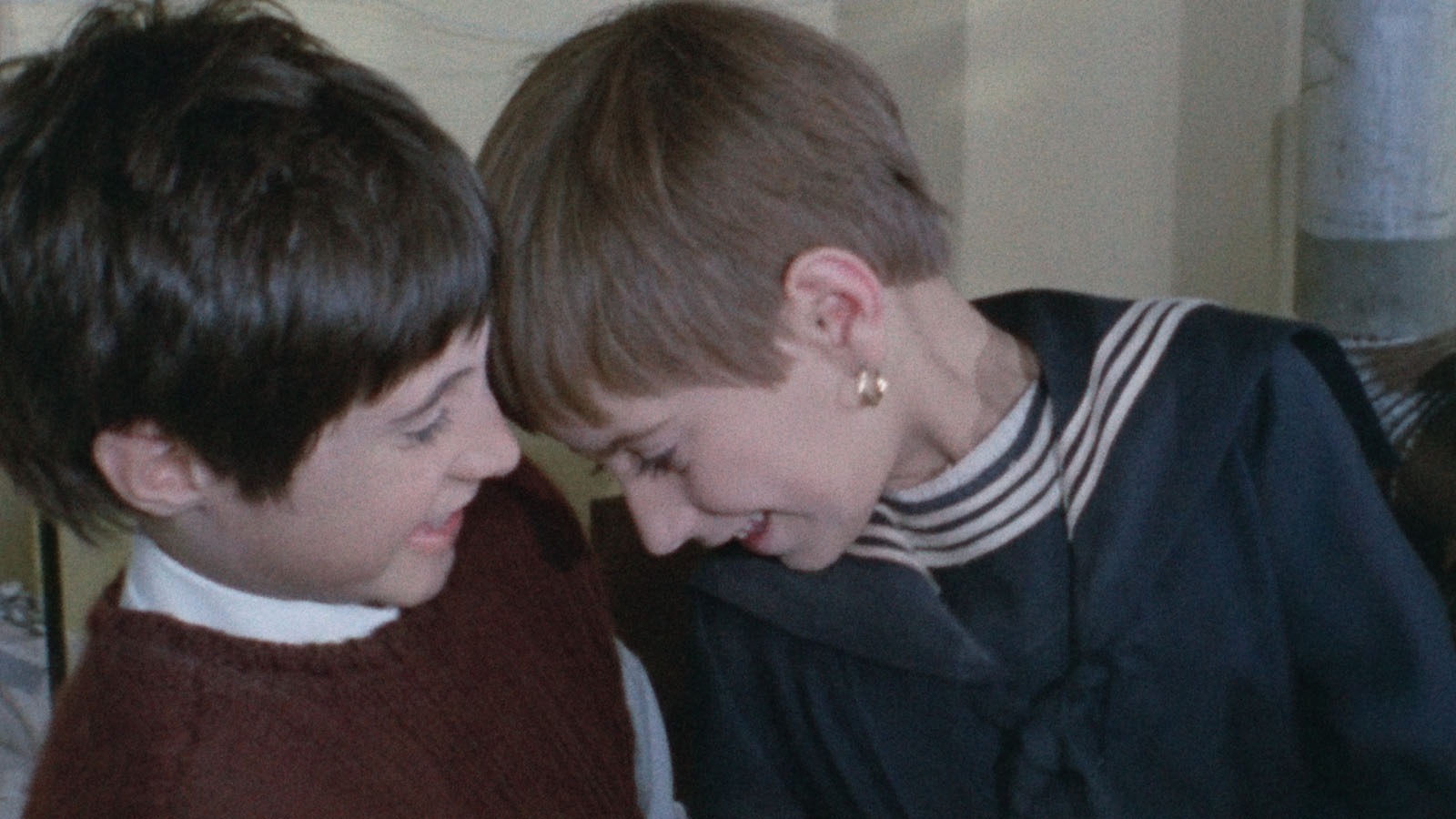
The independent sidebars in Cannes have had a few announcements to make as well. Directors’ Fortnight has added a special screening of Red Rocks, which Bruno Dumont shot with a cast of young kids on the French Riviera, and Payal Kapadia (All We Imagine as Light) will head up the jury for Critics’ Week. And another jury president was named on Thursday: Maggie Gyllenhaal will serve in Venice from September 2 through 12.
From July 3 through 11, Karlovy Vary will celebrate two anniversaries, its sixtieth edition and eighty years since its first. The retrospective program Out of the Past: KVIFF 60/80 will spotlight twenty films that, as artistic director Karel Och says, “are firmly linked to its history as milestones key to the KVIFF’s identity and reputation.” These include Powell and Pressburger’s A Matter of Life and Death (1946), Emilio Fernández’s Río Escondido (1948), and Ken Loach’s Kes (1970). Another highlight will be the world premiere of a new restoration of Tainted Horseplay, a group portrait of friends in their thirties which Věra Chytilová shot in Karlovy Vary in 1988.
Dean Tavoularis, the production designer who worked closely with Francis Ford Coppola on thirteen films as well as with Michelangelo Antonioni, William Friedkin, Wim Wenders, and Arthur Penn, has died. He was ninety-three. Mike Barnes’s obituary for the Hollywood Reporter is a recommended read, peppered with stories about the challenges of realizing such unusual productions as Apocalypse Now (1979) and One from the Heart (1982). “I would be unable to list the many ways he benefited my work and my personal life,” writes Coppola. “He was a beloved uncle to my children. He was a great artist, a great friend, a great production designer, and a great man.”
This week’s highlights:
- Through Tuesday, Film at Lincoln Center is currently launching the first U.S. theatrical run of Maurice Pialat’s seven-episode series La maison des bois (1971). Pialat himself takes a small role as Testard, a teacher overseeing a class of young boys, three of whom are staying at a gamekeeper’s house in the woods near a village far from the front where their fathers are fighting in the First World War. “Scenes of Testard’s students celebrating the signing of the armistice or of a gaggle of boys in motion—whether running, playing, marching in step with armed combatants, or gawping while rushing past an ambulance carrying those wounded in battle—crackle with unpredictability,” writes Melissa Anderson at 4Columns. The series is “a massive achievement, but pointedly not an epic,” writes Steve Macfarlane at Screen Slate. “Like any great film, it teaches you how to better watch it as it goes along . . . Taken as a whole, La maison des bois is an impassioned interrogation of childhood memory, a solemn acknowledgment of the spoils of wartime, and one of the most rewarding (and devastating) experiences a moviegoer can have.”
- The recent passing of Joy Harmon, who shot to fame (albeit briefly) when she washed a car in Cool Hand Luke, happens to coincide with Angelica Jade Bastién’s deeply felt appreciation of Paul Newman, and in particular, his turn in Stuart Rosenberg’s 1967 film. “Witnessing a star-auteur in motion, in full command of voice, gaze, and what their body communicates has reached spiritual heights for me,” she writes. “By star-auteur, I’m not primarily referring to the fact that Newman was also a director. What I’m addressing is that his artistic identity formation in public, tending to his own cinematic image, the greatness of his performances, and the care he put into the work renders him an auteur of his films alongside and sometimes even superseding that of the director or writer.”
- In an essay from the latest issue of Outskirts, “Real Graps: Luchadores, Kaijus, and Wrestling as Folk Poetry,” Alonso Aguilar writes about how such mid-twentieth-century heroes as Santo in Mexico and Godzilla in Japan came to embody the ideals of their respective nations. “These tales were unequivocally a part of industrial capitalist reproduction, with their rushed outputs and erratic quality control,” writes Aguilar. “And yet, at least during this period of postwar existential uncertainty and national reconstruction, they seemed to transcend those characteristics and genuinely exist as popular expressions: reclaimed, repurposed, and resignified without an ounce of whatever cynical intent came from the studio structures.”
- As Sean Gilman has noted, in 2005, Johnnie To named Throw Down (2004), screening tomorrow and Sunday at New York’s Metrograph, as his favorite of the dozens of features the director had yet made. Bruce Bennett in Metrograph’s Journal: “Presenting as a triumph-over-adversity sports melodrama that ends in, at best, a draw; a romantic comedy without the slightest hint of rivalry, ardor, or sexuality; a violent crime picture absent clear-cut villainy, coherent heist film process, or sustained conflict; and a ‘vibes’ movie that restlessly keeps its characters in frantic and erratic motion for most of its running time, Throw Down continually subverts casual expectations.” And yet “the sights and sounds of Throw Down pull you in seductively while logical plot correlatives wriggle away.”
- “Is it actually possible to make a decapitalized film?” asks Sophie Mellor, who, with fellow artist Simon Poulter and seventy collaborators recruited through Instagram, have realized We Are Making a Film About Mark Fisher “with no budget, no studio backing, and no institutional permissions.” Fisher, the late cultural critic and theorist, is best known for his 2009 book Capitalist Realism: Is There No Alternative?, and as Tim Burrows writes at the Quietus, “the effervescence of his prose and online persona reflected the playful, explorative discourse of the internet in the 2000s.” In the Guardian, Lauren Kelly notes the film has been travelling to “universities, back gardens, cinemas, living rooms, and art galleries located everywhere from Coventry to Brisbane, Australia, via Malmö, Sweden. The collective endeavor to undermine capitalism continues, the feature concludes: ‘We are making a film about Mark Fisher and, now that you are watching, so are you.’”
Don’t miss out on your Daily briefing! Subscribe to the RSS feed.