Corbaz, Critics, and Cannes
Share
In the Los Angeles Times, Charles McNulty remembers film critic, interviewer, and talk-show raconteur Rex Reed as “the acerbic embodiment of The Critic.” Reed, who has passed away at the age of eighty-seven, wrote for countless publications over the course of six decades and famously costarred with Raquel Welch, John Huston, and Mae West in Michael Sarne’s Myra Breckinridge. As Clyde Haberman notes in the New York Times, the movie was “so bad that Mr. Reed put it at the top of his own list of the ten worst films of 1970.”
“He didn’t mince words or allow nuance or second thoughts to stand in the way of a zingy phrase or a colorful wisecrack,” writes McNulty. “There’s an element of sadistic, John Simonesque glee to his attacks on the personal appearances of actors . . . But what he loved, he loved with an all-consuming passion.” McNulty quotes a passage from Reed’s appreciation of Geraldine Page in which “he elevated a television review into literary art.”
Reed was easy to ridicule, and Ed Park and Dennis Lim did it succinctly and well in the Village Voice in 2005. But as Farran Smith Nehme points out, “the full story of Reed” is complicated. “Politically incorrect (to put it politely) to an extreme, at times offensive degree,” Reed also stood his ground, and occasionally, that ground was a good place to be.
Reed fiercely defended Peter Davis and Bert Schneider, the director and coproducer of the 1974 Vietnam War documentary Hearts and Minds, when Bob Hope arranged to have Frank Sinatra put some distance between them and the Academy. And even in his eighties, he could be fun. Nehme has a couple of stories to tell.
Before turning to this week’s highlights, let’s note that New Yorkers will have to choose between three tantalizing screenings this coming Tuesday evening: Frank Peregrini’s The Scar of Shame (1929) at Light Industry, Ryusuke Hamaguchi’s Touching the Skin of Eeriness (2013) at the Center for Theatre Research, and a selection of rarely screened shorts by Guy Maddin accompanied live by the Flushing Remonstrance at Cobble Hill Cinemas.
Let’s also flag some fine new writing on the subjects of a few recent roundups. For Filmmaker, Nick Kouhi looks back on the sixth edition of Prismatic Ground, and Forrest Cardamenis has begun posting his thoughts on this year’s San Francisco Silent Film Festival. And Andrew Chan (Film Comment), Bilge Ebiri (Vulture), and Isaac Feldberg (Letterboxd) have each recently spent some time with Tony Leung.
- Patrick Wang, the writer and director of the remarkable films In the Family (2011), The Grief of Others (2015), and the two-part A Bread Factory (2018), has been working on A. Rimbaud for a couple of years, and now, he’s rolling it out slowly and carefully. Tuesday night’s screening at the Roxy in New York was sold out, but there will be two more on May 20 and 26. At Screen Slate, Christopher Bell talks with Wang about casting Blake Draper, who plays the libertine poet from the ages of fifteen through thirty-seven. “There have been people who’ve seen it who have questioned if it’s different actors,” says Wang. “I think that’s a wonderful reflection on his work.”
- A new restoration of Aloïse (1975) is the centerpiece of a Metrograph series focusing on Liliane de Kermadec, who started out as a set photographer for Agnès Varda and Alain Resnais before becoming a prolific writer, director, and producer. Aloïse Corbaz, a Swiss outsider artist championed by Jean Dubuffet and institutionalized as a schizophrenic in 1918, is portrayed as a teen by Isabelle Huppert, then twenty-one, and as an adult by Delphine Seyrig. “Aloïse is a strange, austere film,” writes Melissa Anderson at 4Columns, adding that it showcases “Huppert’s talent for conveying emotional turmoil churning beneath a placid surface—a quality that has come to define many of her greatest roles in the half century since . . . Seyrig’s Aloïse is of a piece with the widowed homemaker she plays in [Chantal Akerman’s Jeanne Dielman] and the languid diplomat’s spouse in [Marguerite Duras’s India Song, both films also from 1975]. All are touched by madness in some way, their psychic disintegration stemming from rules and codes taught to be immutable and created to stifle and oppress.”
- The robust new issue of the Ideas Letter includes Leo Robson’s constructively critical assessment of A. S. Hamrah, the film critic best known for the pithy capsule reviews periodically rounded up in n+1. “Hamrah’s combative posture serves as a rhetorical strength and a source of meaning, especially in his longer ruminative pieces,” writes Robson. “But Hamrah’s work also exhibits the drawbacks of accentuating the negative . . . At times, his work ceases to resemble criticism altogether and functions instead as the portrait of a temperament.” Also in this issue, Kéchi Nne Nomu writes about the implications of producer David L. Wolper’s decision to cut Ousmane Sembène’s segment of an omnibus film shot at the 1972 Summer Olympics in Munich that was to have been called Visions of Nine. “Visions of Eight—despite its absence of Sembène’s vision—is a beautifully made, occasionally ambitious film, much to Wolper’s credit,” writes Nomu. “But it is also a film about Sembène’s erasure.”
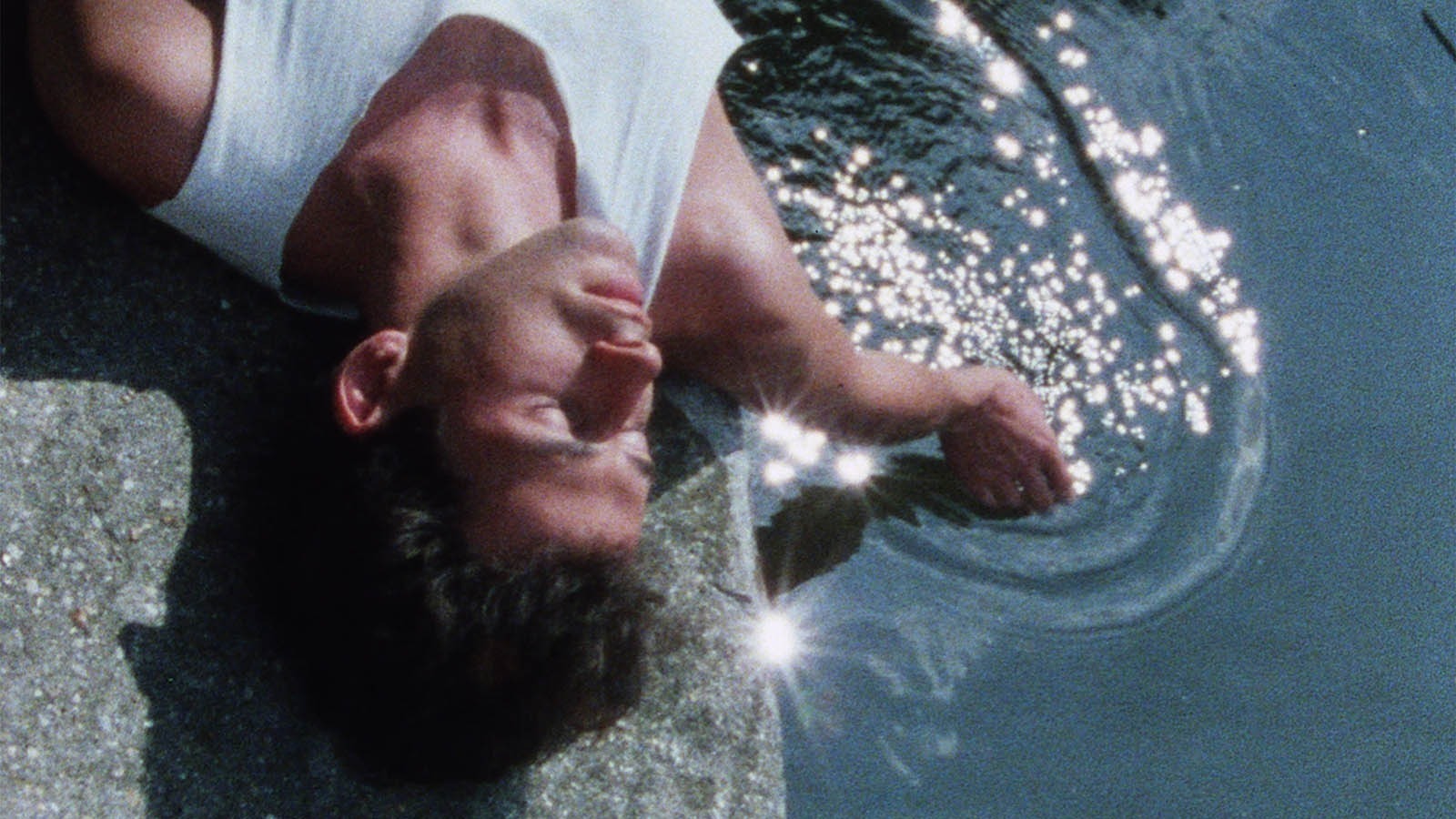
- The nineteen-film retrospective Teo Hernández: A Pomegranate Orchard and the Bitter Well, on now at the Museum of Modern Art through May 26, showcases work that, as Maximilien Luc Proctor writes at Ultra Dogme, “weaved several primary filmmaking pillars into the foundation of his life’s work: the diaristic impulse, a spiritual openness, layering of veils and tableaus throughout the visual field, and a deep connection to the physical human form.” Commenting on the resurgence of interest in these Super 8 films, Phil Coldiron writes at Screen Slate that “there’s a stark distance between Hernández’s opaque, sensual lyricism and the essayistic, even didactic, tendencies that continue to dominate the institutional spaces available for contemporary work outside the conventional narrative feature. His films, in a word, are naïve in a way that had gone entirely out of fashion a generation ago.”
- We’ll wrap with a reminder that there’s a festival going on in France, even if it has “gotten off to a quiet start,” as Manohla Dargis puts it in the New York Times. For the Guardian, Agnès Poirier writes about Cannes as an exhausting yet irresistible experience, and at RogerEbert.com, Lisa Nesselson finds it “as inspiring as it is slightly eerie to see so many stories firmly anchored in WWII” this year. The festival was, after all, founded in response to Leni Riefenstahl winning the Mussolini Cup for Best Foreign Film in Venice in 1938, and Club Ciné founding editor Tom Macklin traces an anti-authoritarian streak running through Cannes from its first full edition in 1946 to the presentation of the Palme d’Or to Jafar Panahi last year. As for this year’s edition, the first podcasts are out from Film Comment, Nicolas Rapold’s The Last Thing I Saw, and the essential critics’ grid Moirée.
Don’t miss out on your Daily briefing! Subscribe to the RSS feed.