Previewing Cannes 2026
Share
Laura Dern, Ben Kingsley, Steve Coogan, Vincent Cassel, Rosie Perez, Sandra Bernhard, Kumail Nanjiani, Heather Graham, and Laura Smet are all expected to show up in Cannes over the coming days and weeks, but not to promote any of their movies. Instead, they have been cast in the fourth season of The White Lotus, which will turn on the rivalry between the teams behind two fictional films set to compete at the festival.
As Elsa Keslassy reports in Variety, the production of Mike White’s satirical skewering of Americans spending and lounging on the French Riviera will keep a low profile during the festival’s seventy-ninth edition, which opens today. A few red-carpet shots will be nabbed here and there, but the team will wait to truly take over the resort town after the festival wraps on May 23.
Previous seasons of The White Lotus have been set in Hawaii, Sicily, and Thailand, and while brainstorming up ideas for the new season, producer David Bernad and his team happened to have a stopover in France. “We went to dinner, and we had a really specific experience with a waiter and a maître d’, and it was the stereotype,” Bernad recalled. “It was a very funny moment . . . We literally canceled all the other places we were going. We were like, okay, we’re shooting here.”
The Guardian’s Xan Brooks has a fun piece about other productions that have used Cannes as a backdrop, including Brian De Palma’s Femme Fatale (2002), a 2017 episode of Call My Agent with Juliette Binoche, and Richard Linklater’s Nouvelle Vague (2025). “But the best films about Cannes generally throw bricks from the wings,” writes Brooks. “They’re the outsiders, the opportunists, the equivalent of those smash-and-grab robbers who stole $130 million worth of gems from the Carlton in 2013.” David Winters’s The Last Horror Film (1982) “remains the ultimate piece of guerrilla Cannes filmmaking, shot on the fly and framing the celebrity circus as a tawdry circle of hell.”
Competition
“Tame” is the word Natalia Keogan used to describe this year’s competition lineup when it was announced last month. “Sure,” she wrote for Filmmaker, “there are several globally renowned directors making anticipated returns—Paweł Pawlikowski, Ryusuke Hamaguchi, Pedro Almodóvar, Asghar Farhadi, Cristian Mungiu, and Ira Sachs—but it all just feels so conventional.”
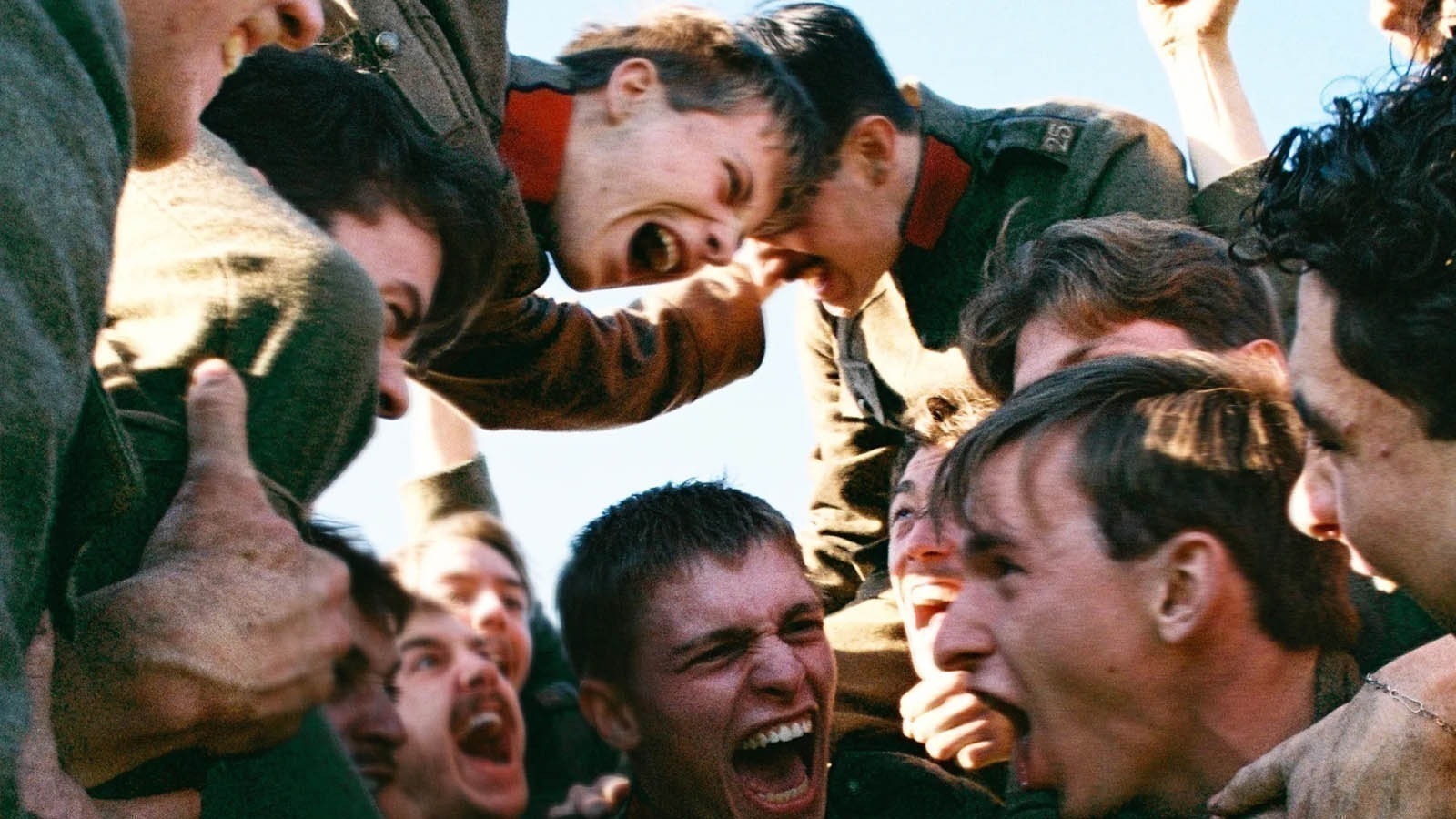
Montclair Film artistic director Tom Hall, on the other hand, points to four films: Pawlikowski’s Fatherland, which tracks Thomas and Erika Mann’s 1949 road trip through a Germany in ruins; Emmanuel Marre’s A Man of His Time, starring Swann Arlaud (Anatomy of a Fall) as a provincial inspector who aims to rescue France from the Vichy regime; László Nemes’s Moulin, which depicts a face-off between French Resistance leader Jean Moulin and Klaus Barbie, the head of the Gestapo in Lyon; and Lukas Dhont’s Coward, which is set in the trenches of the First World War. Hall finds that “it is impossible to ignore the argument this program is making about how the echoes of the past are reverberating like alarm bells today.”
Several publications have put together annotated lists of the films their contributors are looking forward to most. Hamaguchi’s All of a Sudden, starring Virginie Efira and Tao Okamoto as a French director of a nursing home and a Japanese theater director, is on nearly all of those lists. We should note here that Amneisascope will present Hamaguchi’s rarely screened Touching the Skin of Eeriness (2013) at the Center for Theatre Research in New York on May 19.
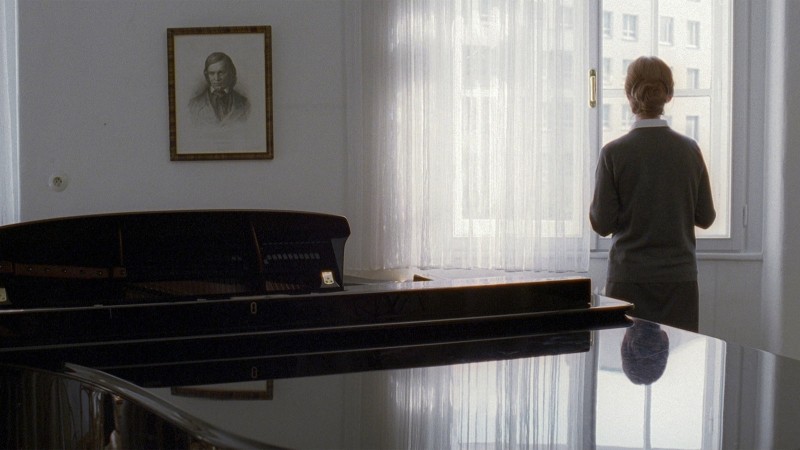
Almodóvar’s Bitter Christmas has already opened in Spain, and Variety’s John Hopewell reports that reviews have been “good to great.” For the Hollywood Reporter, Scott Roxborough profiles Catherine Deneuve: “At once liberated and conservative, radical and restrained (and, some would say, occasionally reactionary), Deneuve, more than any actress, more than any filmmaker, embodies French cinema in all its glorious, confounding contradiction. Deneuve is not just a legend of the Croisette. She’s the legend.” Deneuve lends her aura to Farhadi’s Parallel Tales, costarring with Isabelle Huppert, Vincent Cassel, Virginie Efira, and Pierre Niney, and to Marie Kreutzer’s Gentle Monster, playing the mother of a concert pianist (Léa Seydoux).
Mungiu has told the Film Stage that his Fjord—starring Sebastian Stan and Renate Reinsve as parents who move their family to the small Norwegian town where she grew up—is “about this huge polarization in the society of today. If you watch what is happening in a lot of countries, this difference between conservatives and progressives has gotten so big that people have started hating each other, literally, and hoping that the other side disappears.”
At AnOther Magazine, Alex Denney is excited about Hope, directed by Na Hong-jin, “whose last film, The Wailing, was a work of rug-pulling horror genius to rank with the best of Bong Joon Ho’s work.” And at Cineuropa, David Katz spotlights Javier Calvo and Javier Ambrossi, the directors of the “innovative TV series Veneno and La Mesías. Carrying great early buzz, their ambitious feature” The Black Ball is “inspired by an unfinished play by Federico García Lorca,” and “it follows the interconnected lives of three different queer men at three points in Spanish history: 1932, 1937, and 2017.”
David Canfield talks with Ira Sachs for the Hollywood Reporter about “his vividly sad but vibrant drama,” The Man I Love. Rami Malek stars as Jimmy George, a queer entertainer in mid-1980s New York. Jimmy knows he’s dying of AIDS, but he’s intent on mounting a new play. “I feel like I need to go into the world with this movie with as much of me as possible,” says Sachs, “and the fearlessness of Jimmy in the face of mortality is really beautiful. It came from a very deep place for me.”
The only other American film competing for the Palme d’Or is Paper Tiger. “It’s a sore point among many admirers of James Gray’s work that despite five previous competition entries, the writer-director has never won a major award in Cannes,” writes THR’s David Rooney. “Perhaps his sixth contender will change that. Miles Teller, Scarlett Johansson, and Adam Driver star in the gritty 1980s-set drama about two brothers chasing the American dream, who find their mutual loyalties tested as they navigate a dangerous world of corruption and violence, leading to the terrorization of their family by the Russian mob.”
Park Chan-wook is presiding over the jury this year, and it’s here that we should at least briefly mention a vital component of the festival, the Marché du Film, the market where packages are pitched and deals are sealed. THR has surveyed several of the most promising wares on the table, and among them is Park’s The Brigands of Rattlecreek, a western written by S. Craig Zahler (Bone Tomahawk) and starring Matthew McConaughey, Austin Butler, Pedro Pascal, and Tang Wei.
Un Certain Regard
Cannes’ Un Certain Regard section focuses on promising filmmakers early in their careers, and the section will open tomorrow with Teenage Sex and Death at Camp Miasma, the third feature from Jane Schoenbrun (I Saw the TV Glow). Hannah Einbinder and Gillian Anderson star in the story of a reboot of a slasher franchise that has the director obsessing over the star of the original film. “This movie was very consciously designed to be fun,” Schoenbrun tells THR’s Canfield. “When I look around in our ‘post-woke, post-Biden’ era, I don’t see any other trans artists getting budgets, and that’s a fucking shame. I shouldn’t be the only one who’s making movies at this level of budget.”
One of the “fifteen films to watchlist” selected by Ella Kemp for Letterboxd is Club Kid. In his feature debut, Jordan Firstman writes, directs, and stars as “a washed-up New York party promoter whose world shifts on its axis when he must care for the son he never knew he had,” writes Kemp. “Few people understand how to capture modern-day youth and the heady joy and darkness of nightlife and internet living like Firstman.”
“Spitballing from afar,” writes the Los Angeles Times’ Amy Nicholson, “the Un Certain Regard title that’s seized my attention is Zachary Wigon’s Victorian Psycho, a gothic horror film starring Maika Monroe and Thomasin McKenzie. Wigon’s most recent film, Sanctuary, was a twisty thriller about sexual politics with Margaret Qualley and Christopher Abbott that deserved to make more of a splash. Maybe this will.”
Deadline has a teaser for Manuela Martelli’s The Meltdown, the story of Inés, a nine-year-old girl who befriends a fifteen-year-old German skier, Hanna, at a resort in the Andes in 1992. But then Hanna mysteriously disappears. Deadline also offers a clip from Sandra Wollner’s Everytime, in which a tragedy unites a young woman’s mother, younger sister, and boyfriend. And the Hollywood Reporter has two clips from Viesturs Kairišs’s Ulya, starring Kārlis Arnolds Avots as the famous Latvian basketball player Uļjana “Ulya” Semjonova.
Out of Competition
The Electric Kiss, a comedy set in 1920s Paris about a fraudster who falls in love with the widowed painter she’s been duping, will officially launch this year’s festival tonight. For the New York Times, Jillian Rayfield talks with director Pierre Salvadori and notes that The Electric Kiss will also open today in hundreds of French theaters, as every Opening Night film must. Cannes artistic director Thierry Frémaux tells Rayfield that he “issued the rule about fifteen years ago to give the films ‘strong commercial momentum,’ and because ‘it reinforces our core belief: Cinema is meant to be experienced in theaters.’”
Shot in Tokyo and Copenhagen, Nicolas Winding Refn’s Her Private Hell depicts a woman’s search for her father as an eerie mist engulfs a futuristic metropolis. Refn’s debut feature, Pusher (1996), has been newly restored, and he’s been talking about that as well as the trajectory of his career, giving distributor Neon its name, the future of cinema in the age of AI, and more with Nick Newman at IndieWire and Chris Shields at Screen Slate.
Midnight screenings include Colony, the latest zombie movie from Yeon Sang-ho, whose Train to Busan (2016) will be back in theaters in August, and Quentin Dupieux’s Full Phil, starring Woody Harrelson as a wealthy industrialist trying to reconnect with his daughter (Kristen Stewart) by taking her on a trip to Paris. Dupieux tells Elsa Keslassy that Full Phil is “like Emily in Paris in hell—a fever dream, a nightmare version of it.”
Cannes Premiere
Talking to Keslassy about his quarter of a century as artistic director, Thierry Frémaux does not say that the Cannes Premiere section was created in 2021 to accommodate the overflow of films selected for the competition that year as well as the previous year, when the festival was canceled due to the pandemic. “Alongside the competition or Un Certain Regard, I wanted to be able to showcase works that fall somewhere in between,” he says. “Cannes Premiere speaks for itself. It has nothing to do with ‘taking films away from the competition,’ as has been written.”
Introducing his interview with Kiyoshi Kurosawa for Letterboxd, Isaac Feldberg notes that the director has described The Samurai and the Prisoner as “a cross between a samurai film and a locked-room mystery.” Set in sixteenth-century Japan, the story “centers on a general of the warlord Oda Nobunaga who rebels against his master’s tyrannical methods; besieged within his castle and struggling to protect its people, he’s confronted with a series of mysterious crimes, ultimately entering into an uneasy alliance with a brilliant, dangerous military strategist he’d previously imprisoned in the castle dungeon.”
The program includes Volker Schlöndorff’s Visitation, a story set in a lakeside house near Berlin and spanning from the 1930s to the fall of the Wall in 1989. The cast features Lars Eidinger, Martina Gedeck, and, as an older soldier, David Bennent, who was eleven when he starred in Schlöndorff’s The Tin Drum (1979).
Special Screenings
Among this year’s special screenings is Steven Soderbergh’s John Lennon: The Last Interview. “I think people, when they heard about this project and that I was using AI tech, jumped to the absolute worst conclusion, which is, ‘He’s going to try and bring John Lennon back to life,’” Soderbergh tells Deadline’s Matt Grobar. “And all I can say is, have we met? Do I look like somebody that would do that? So it’s a little hard to talk about also because I feel once you’ve seen the movie, you go, ‘Oh, of course.’” As always with Soderbergh, this is a rich and engaging interview and a highly recommended read.
Benicio Del Toro, the star of Soderbergh’s Che (2008), gave Christophe Dimitri Réveille an idea that eventually became Che Guevara: The Last Companions. It’s the story of three of the fifty or so men who followed Che on his quest to carry the flame of the Cuban revolution to South America. After Che was shot and killed in Bolivia in 1967, these three survivors trekked across 1,500 miles, chased by around four thousand Bolivian soldiers. “These are not men who are out for themselves,” Réveille tells Farah Nayeri in the New York Times. “They want to come out alive so that they can rearm and resume the struggle.”
Cannes Classics
This afternoon, Guillermo del Toro will be on hand for a twentieth-anniversary screening of Pan’s Labyrinth, which Kazuo Ishiguro has called “a great movie about how human beings need fantasy.” The appreciation is mutual. Del Toro is currently working on an adaptation of Ishiguro’s 2015 novel The Buried Giant that he calls a “fascinatingly difficult stop-motion movie for adults.” Earlier this month, del Toro was awarded a BFI Fellowship, and Mar Diestro-Dópido spoke with him for Sight and Sound about monsters and movies. Dozens of titles are name checked, but “Fellini is the third most formative filmmaker in my life with Hitchcock and Buñuel.”
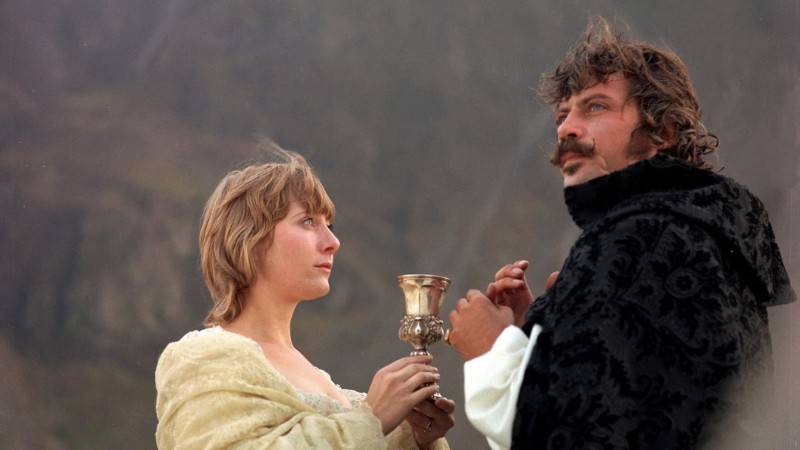
When the Cannes Classics lineup was announced last week, the headline-grabber was the new restoration of Ken Russell’s original cut of The Devils (1971) assembled from the original camera negative. Drawing from a 1952 book by Aldous Huxley and a 1960 play by John Whiting, Russell tells the story of the downfall of a seventeenth-century French Catholic priest (Oliver Reed) brought about by a sexually repressed nun (Vanessa Redgrave). In an appreciation of Russell, Mark Kermode wrote last year that a Catholic theologian had “correctly described” The Devils as “depicting blasphemy” without “being blasphemous.”
Cannes Classics will present restorations of Akira Kurosawa’s Sanshiro Sugata (1943), Orson Welles’s The Stranger (1945), Roger Corman’s Machine Gun Kelly (1958), Luchino Visconti’s The Innocent (1976), Andrzej Wajda’s Man of Iron (1981), Jerzy Skolimowski’s Moonlighting (1982), Chen Kaige’s Farewell My Concubine (1993), and five films by Artavazd Pelechian. “Defined variously as a documentarian, a poetic film essayist, a quasi-experimental artist, and a montage neo-theorist, Pelechian’s global esteem, for a certain geek margin of cinephiles, may be the most outsized relative to output since Jean Vigo,” wrote Michael Atkinson for Sight and Sound in 2020. “Everywhere you go to read about him, you find Sergei Parajanov referring to him as ‘one of the few authentic geniuses in the world of cinema.’”
Also lined up are two new features—including Jean-Gabriel Périot’s A Life, a Manifesto, a documentary portrait of film critic Michèle Firk—and three new short films. One of them is Jia Zhang-Ke’s Torino Shadow. “In 2025, Carlo Chatrian reached out to me with the idea of making a short film in tribute to the art of film,” says Jia. “I immediately accepted his invitation, and I would like to use this short film to confess my love of cinema and the filmmakers I so deeply adore.”
Mark Cousins’s The Story of Documentary Film (The 1970s) is one of five nonfiction films premiering in the program. The other four are docs on Chris Marker, David Lean, Bruce Dern, and Vittorio De Sica, whose Two Women (1960) will also screen, newly restored. Sophia Loren’s lead performance won her a Best Actress award in Cannes—and an Oscar.
Last Wednesday, Cannes added a twenty-fifth-anniversary screening of Rob Cohen’s The Fast and the Furious. As it happens, Hua Hsu had reviewed Fast and Furious Franchising in the New Yorker the previous week, noting that author Dan Hassler-Forest “argues that the series is central to understanding the evolution of Hollywood over the past twenty years. At first, it was easy to dismiss these movies, built on ‘predominantly male characters entering their phallic automobiles in an endless series of epic dick-measuring contests.’ Yet Hassler-Forest found himself fascinated with the ‘surprisingly intricate mythology’ of the franchise, ‘all the more compelling for the fact that it had so obviously been made up as it went along.’”
Cinéma de la Plage
Free movies on the beach! The 2026 Cinéma de la Plage program opens tomorrow with a fortieth-anniversary screening of Tony Scott’s Top Gun. Alan J. Pakula’s All the President’s Men, screening on Sunday night, turned fifty last month, prompting appreciations from Anthony Breznican (Esquire), Rory Doherty (Letterboxd), New York Times journalists, and in the Los Angeles Times, Ann Hornaday, who has been researching a book about the film’s making.
“I’ve done my share of genuflecting,” writes Hornaday, “most recently as chief film critic at the Washington Post, whose city room was as vivid and fully realized in the movie as Robert Redford’s Bob Woodward and Dustin Hoffman’s Carl Bernstein.” Hornaday touches on the absence of Post publisher Katharine Graham in the movie and recalls conversations with the late Redford, who “bemoaned the ‘downward slide of this thing,’ by which he meant the constellation of institutions All the President’s Men celebrates: not just journalism and a robust First Amendment but a Washington where investigators, prosecutors, judges, the Senate, and Congress did their jobs regardless of partisan loyalties, and a Hollywood where a studio as mainstream as Warner Bros. would agree to finance a tough-minded film about a contentious and still-raw period in recent history.”
Ken Loach, who has made a few tough-minded films himself, will be on the beach next Tuesday for a screening of a new restoration of Land and Freedom (1995), which follows an activist from Liverpool to Spain, where he joins the republican forces fighting Franco’s fascists in the mid-1930s. Loach is “perhaps the most accomplished and intelligent Marxist practitioner of social realism left in England,” wrote Jonathan Rosenbaum in the Chicago Reader thirty years ago, and Land and Freedom is “historically convincing as well as gripping—Loach near his passionate best.”
Directors’ Fortnight, Critics’ Week, and ACID
Of the three sidebars to the main event, Directors’ Fortnight has become the one showcasing the latest films from directors with proven track records, while Critics’ Week and ACID focus on lesser known but auspicious talents. For Ella Kemp, one of the highlights at the Fortnight will likely be I See Buildings Fall Like Lightning. Clio Barnard teams up with screenwriter Edna Walsh (Hunger, Die My Love) “to tell the story of five childhood friends now entering their thirties,” writes Kemp. “The cast brings together many of the best young British and Irish actors working today, including Anthony Boyle, Lola Petticrew, Joe Cole, Jay Lycurgo, and Daryl McCormack. If anyone knows how to find the soft parts within the hard times that come as an inevitable part of life in Britain these days, it’s Barnard.”
Rebecca Mead’s recent profile of Radu Jude in the New Yorker makes only a brief mention of his very loose adaptation of Octave Mirbeau’s 1900 novel The Diary of a Chambermaid, but this is an intriguing prospect. Ana Dumitrașcu (Dracula) plays a Romanian housekeeper working for a family in Bordeaux, and the cast also features Marie Rivière, Vincent Macaigne, and Mélanie Thierry.
The Film Stage has a trailer and poster for Bruno Dumont’s Red Rocks, featuring a cast of very young kids competing in a game that involves nerve-wracking leaps from high cliffs. Set in Lagos, Nigeria, Clarissa draws from Virginia Woolf’s 1925 novel Mrs. Dalloway and is directed by twin brothers Arie and Chuko Esiri, who broke through in 2020 with Eyimofe (This Is My Desire). Other promising Fortnight titles include Lisandro Alonso’s Double Freedom, Kantemir Balagov’s Butterfly Jam, Dominga Sotomayor’s La perra, and another film from Quentin Dupieux (Full Phil), Vertiginous.
Critics’ Week is introducing us to the directors of the first and second features in its lineup via interviews linked from each of the films’ pages. And the filmmakers who have programmed this year’s ACID lineup tell us that this year’s selection “reflects both the alarming folly of our era and our ability to face it.”
Don’t miss out on your Daily briefing! Subscribe to the RSS feed.