IFFBoston 2026
Share
“Only in Boston will you find a major movie festival that unspools everywhere except within the municipal boundaries of the city for which it’s named,” writes Ty Burr. The forty features and eleven short film programs lined up for this year’s Independent Film Festival Boston will be screening at the Brattle in Cambridge, the Coolidge Corner in Brookline, and the Somerville Theatre in Somerville.
Both Burr and Sean Burns, who previews IFFBoston 2026 for WBUR, have plenty of recommendations with a special emphasis on local talent. In Pourya Azerbayjani Dow’s As I Am, a sixty-year-old Iranian stations himself in an Airbnb in Hingham, Massachusetts, to stake out a house where an old friend from the Iran-Iraq War is now living with his wife and grandson. “This one’s a find,” writes Burr, “with flashes of meta-awareness that recall the greats of the Iranian New Wave.”
“Local film critic and music scene veteran Tim Jackson would have been at IFFBoston anyway as a spectator,” writes Burns, “but he’s here as a director this year with Marblehead Morning: 50 Years in Harmony, a profile of New England folk duo Mason Daring and Jeanie Stahl, who have been performing together for half a century.” As it happens, Daring was a guest on Burr’s Watchcast three years ago, talking about his admiration for Tony Gilroy’s Michael Clayton (2007) and his experience as a composer writing scores for nearly every film by John Sayles as well as for Nancy Savoca’s Dogfight (1991) and Don Roos’s The Opposite of Sex (1998).
The twenty-third edition of New England’s largest film festival will open tonight with Boots Riley’s I Love Boosters and wrap next Wednesday with Olivia Wilde’s The Invite. In Gregg Araki’s I Want Your Sex, Wilde plays “a flamboyant, foulmouthed, sex-crazed artist in various BDSM get-ups,” as Vulture’s Bilge Ebiri described her when Araki’s twelfth feature premiered at Sundance.
Wilde “has always stood out when she’s been allowed to go big,” wrote Ebiri, “and as controversial artist Erika Tracy, a self-described ‘pretentious bitch from hell,’ she gets what might be her best part yet. This is a woman who instantly peppers her newest assistant, the unassuming Elliot (Cooper Hoffman), with all sorts of inappropriate questions, and within a week of hiring him turns him into a sex toy, making him crawl on the floor of her office, tying him up, spanking him, dressing him up in leather and women’s clothing—just about all of it to his incessant delight.” In the Los Angeles Times, Amy Nicholson noted that “a murder mystery worms into the script that’s too screwy to be taken seriously. But as Erika’s mealy lover, Hoffman gets bossed around and humiliated and mostly digs his kinky misadventure. Me, too.”
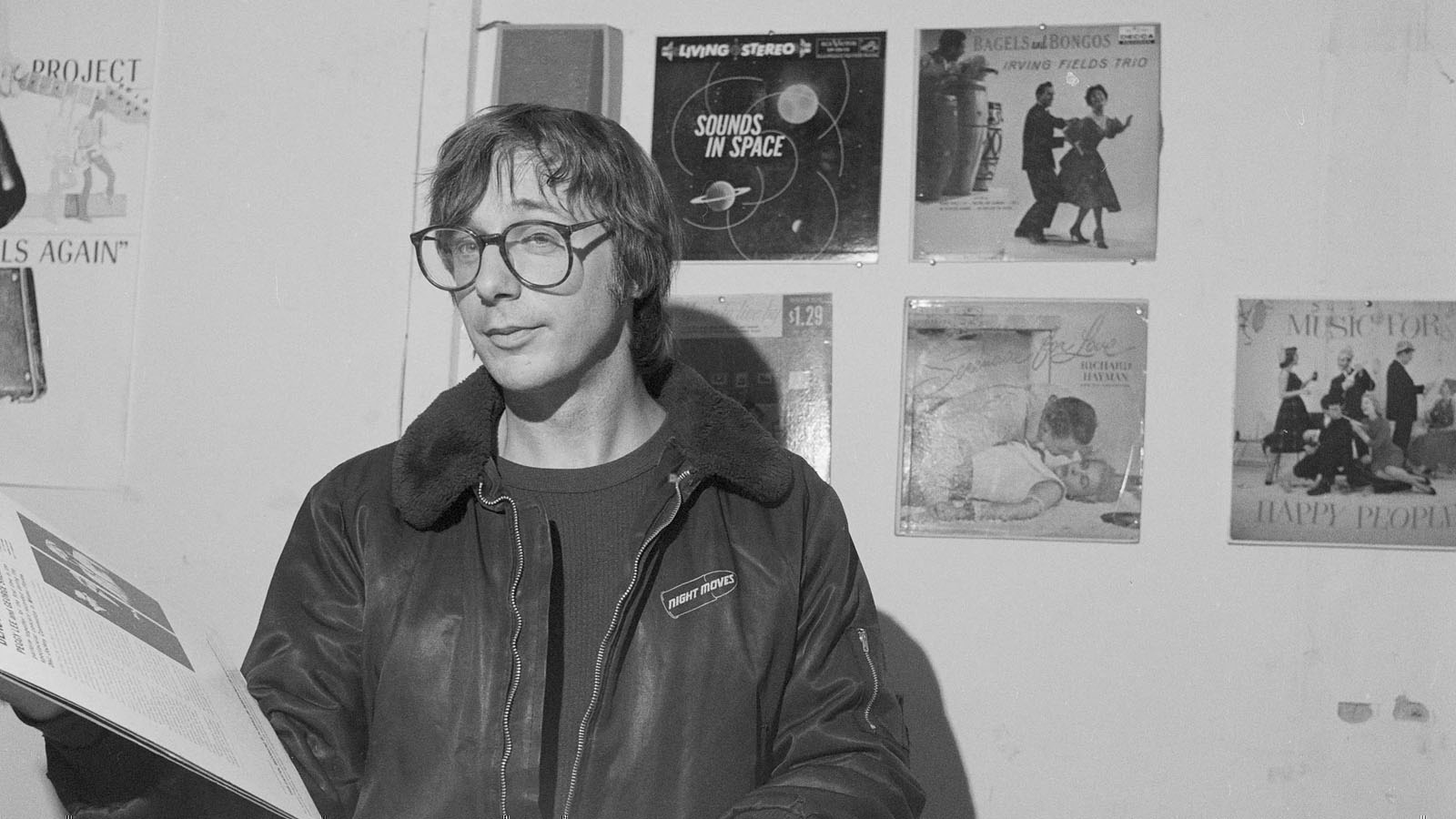
Boots Riley, too, shows up in another film screening in Boston, Matty Wishnow’s The Last Critic, a straight-ahead portrait of Robert Christgau, the “dean of American rock critics” renowned for the compact yet incisive reviews he’d stack up in the monthly Consumer Guide columns he wrote for the Village Voice from 1969 to 2006. At eighty-four, he’s still writing that column—and longer pieces as well—at Substack.
Along with fellow interviewees Colson Whitehead, Randy Newman, Thurston Moore, and Greil Marcus, Riley tells the camera about a Christgau review that hit home. As the frontman of the Coup, Riley especially appreciated reading Christgau on the band’s 2012 album Sorry to Bother You because “I hear him listening.”
“For many,” writes Rolling Stone’s David Fear, “the first choice that comes to mind is his take on Prince’s Dirty Mind, an appraisal which ends with the immortal kicker, ‘Mick Jagger should fold up his penis and go home.’” The Last Critic “isn’t the sort of documentary that reinvents the nonfiction filmmaking wheel. It doesn’t necessarily need to, thankfully,” adds Fear. “Wishnow makes sure all of the biographical beats get hit,” but “the film is also doing something besides letting us now praise a famous man, or serving up a portrait of artist as a critic (and critic as artist). It doubles as an ode to the art of criticism itself.”
Fellow music critic Carl Wilson has a few bones to pick with The Last Critic, but he does find that the film “gets across the ways Bob is at once warm and irascible, hypercompetent yet sometimes off-world. I like the loose framework of following him through the process of putting together one Consumer Guide, tracking the rhythm of his incredible work drive—and the accompanying sensation that, as Ann Powers memorably puts it, Bob is akin to a Jorge Luis Borges protagonist ‘whose intellectual passion leads him into a labyrinth he can never leave.’ He never wants to, apparently, till the literal living end.”
Don’t miss out on your Daily briefing! Subscribe to the RSS feed.