On Restoration and Repair: A Conversation with Ja’Tovia Gary
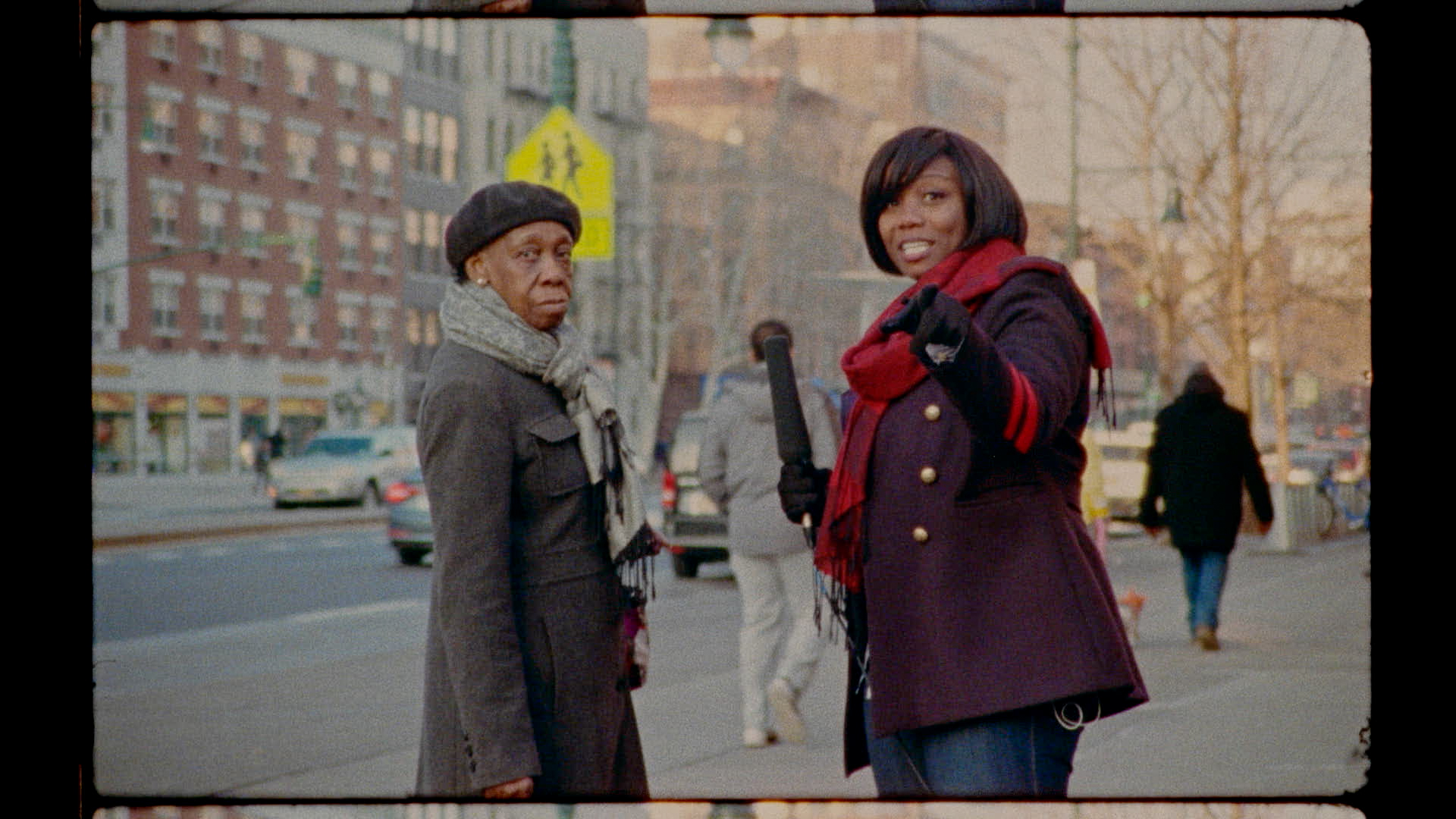
“The wig has a name. The wig’s name is Pam.”
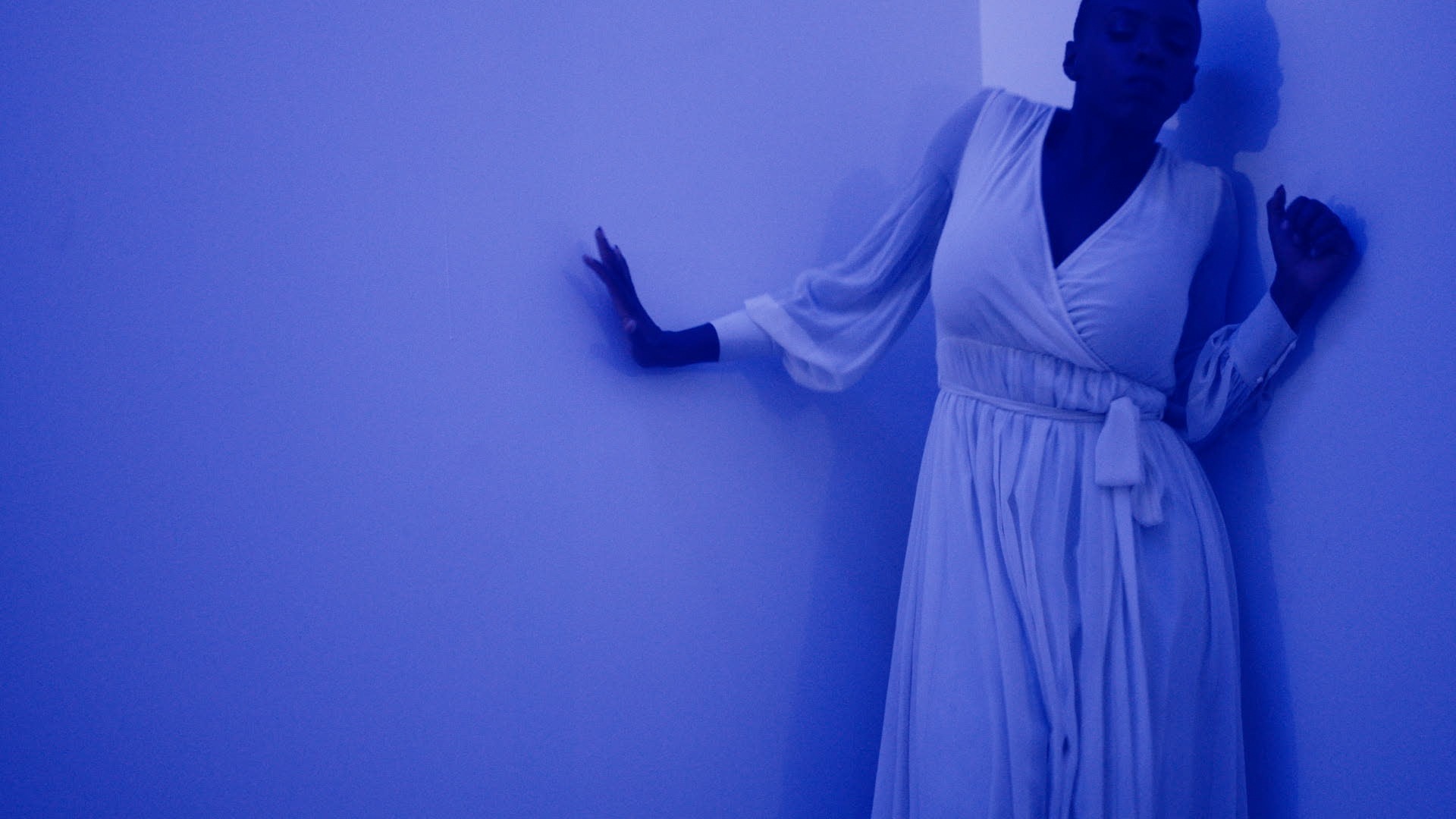
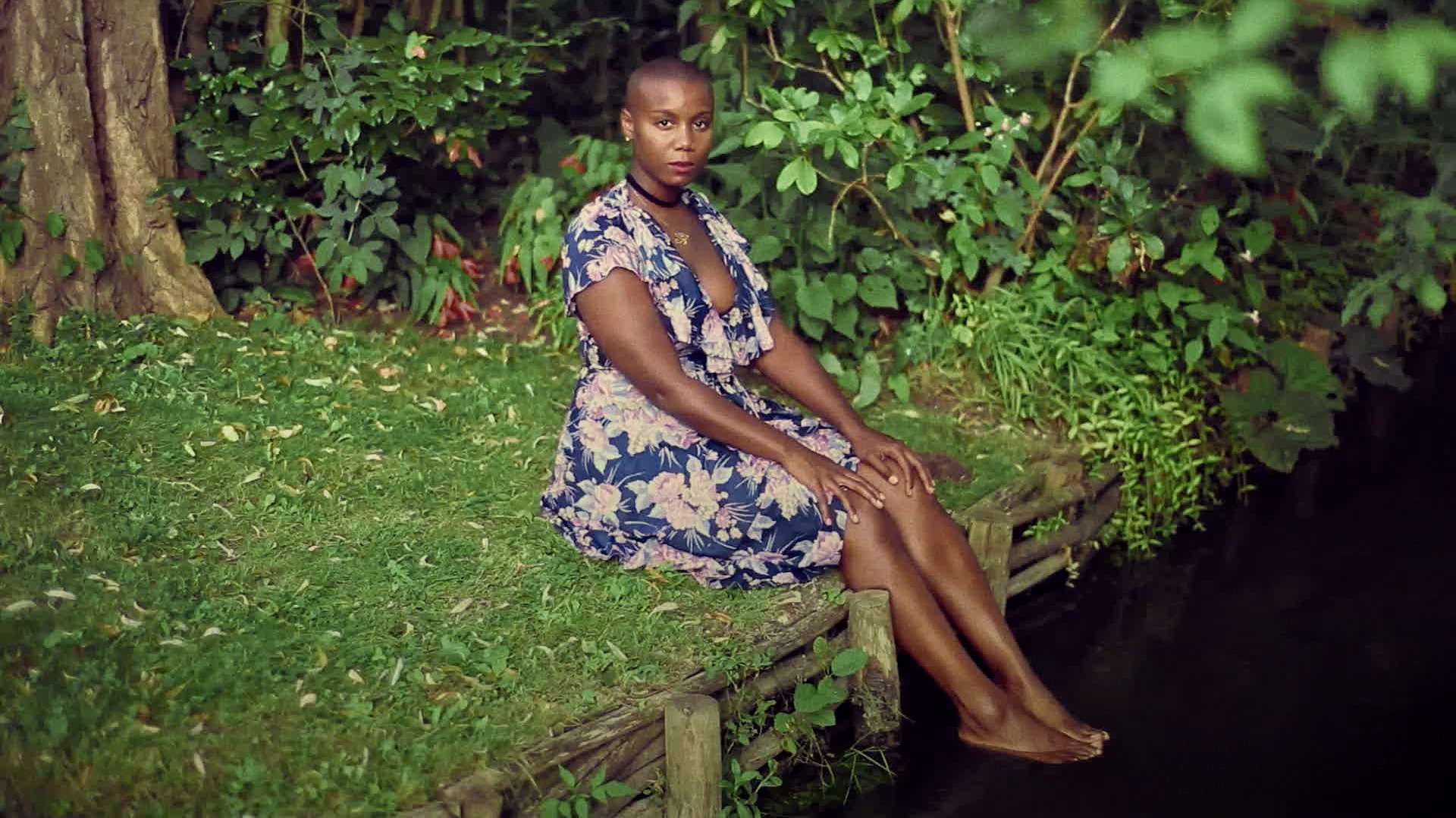
I was not even a little surprised to hear that Dallas-born filmmaker Ja’Tovia Gary had given a name to the bouncy brown bob she wears in her film The Giverny Document (2019). The wig takes on a presence of its own, allowing Gary to embody a talk-show-host persona as she stops Black women on the streets of Harlem to ask, “Do you feel safe?” This character dons a navy blue, military-style jacket with gold buttons (think Michael Jackson) and speaks with a palpable warmth as she extends her mic to passersby. The multi-award-winning film traverses between Harlem and a very different location—the lush gardens of Giverny, France, where Gary held the Terra Foundation Summer Artist Residency in 2016. In the scenes shot in this Edenic sanctuary, Gary plays the Negress, wandering in an easy floral dress—and sometimes in Eve-like nudity. She is bold, curious, and unashamed, certain of her right to be there just as she is. In both settings, Gary is channeling someone who isn’t quite herself but somehow reveals an essential part of who she is: “I think both the character of the Negress in the Garden and the Woman on the Street who’s wearing Pam—those are iterations of myself in some regard,” Gary tells me.
The Criterion Channel is now presenting a showcase of Gary’s work featuring three of her films. Alongside The Giverny Document are Quiet as It’s Kept (2023), her pulsating call-and-response tribute to Toni Morrison’s The Bluest Eye, and An Ecstatic Experience (2015), which explores the meaning of liberation through testimonies of Black women. Gary’s films blend animation—created through handmade techniques applied directly to film stock—with Kuleshov-style montage and audiovisual citations from nontraditional archives like the internet. Though she delights in abstraction and nonlinear form, Gary doesn’t love being labeled an “experimental filmmaker.” “If experimental wasn’t marginalized and diminished, I would have no problem being called experimental,” she says when we speak in February. Gary has just gone through an initiation practiced in her longtime religious tradition of Lucumi, which requires her to keep her video off during the interview. Her West African, Yoruba-based religion centers around the veneration of ancestors. “If stories are how we formulate reality—how we make sense of our experience here—but they all follow the same outline,” she continues, “then by changing the form, I’m modeling that you can create a reality radically different from the one you exist under.”
Ja’Tovia, who gave you your name, and what meaning does it hold for you?
My name, which I’ve grown to love over the years—I didn’t always love it—was given to me by my mother, Jocelyn. Everyone in my nuclear family has a name that starts with J.
My mother didn’t really have a meaning for it. She and my father were living in Palermo, Sicily—my dad used to be in the Navy. The story goes that they knew someone named Octavio, and—you know how Black people are—they decided to add the “Ja” and make it Ja’Tovia.
My theater teacher at Booker T. Washington High School for the Performing and Visual Arts in Dallas—Ms. Vicki Washington—gave me a meaning for the name: “she who will not be deterred.” And I hang on to that.
You grew up in the Pentecostal church. Do you think there’s a connection between that background and performance? People talk about answering the call to ministry—did theater feel like your version of that?
What I’m doing right now may be a version of that. When I was a young person, theater was more about self-regulating. That was before I even understood what that meant. I just knew that when I got onstage and expressed myself physically and creatively through performance, I felt better. I felt better in my body and about who I was. It quieted my mind and gave me an outlet. Having access to arts education and the stage—and these incredible instructors and mother figures—really was lifesaving.
How did you make the transition from being a student at Booker T. Washington and acting to being interested in making films?
I made my first film on VHS while I was at Booker T. Washington. I was probably sixteen or seventeen. I had this boyfriend at another school—Mrs. Washington is actually his mother—and we were just two young artists. That first film was a kind of love letter to him. I got all my friends together. At that school everyone is extremely talented—dancers, singers, visual artists, musicians. People recited poetry, people sang. It was kind of a precursor to this nontraditional, nonlinear narrative structure in my work. It was a mosaic.
I didn’t start taking cinema seriously until I moved to New York and was pursuing acting. I started running into limitations around representation and autonomy in the roles I was being asked to audition for. Not all of them were disturbing, but enough of them made me feel that acting wasn’t giving me the freedom I needed.
At the same time I became interested in documentary and history. I was watching all kinds of historical documentaries—about Marcus Garvey, about Josephine Baker, about political issues. Eventually I returned to school and studied Africana Studies and documentary film production. It became a way to bring together my curiosity about Black culture and history with storytelling.

I want to get into the films that are on Criterion. I’d like to start with Quiet as It’s Kept, especially since yesterday was Toni Morrison’s birthday.
Originally the idea of exploring Toni Morrison cinematically was presented to me by a critic who wanted to commission it for a show. I usually don’t do commissions because I don’t like having a boss. But I loved the idea of thinking through Morrison cinematically. We used The Bluest Eye, which is one of my favorite texts, as a point of departure. I wasn’t interested in adapting it. I wanted to be in conversation with it. If Morrison were here, this film would be what I’d say to her about that book from my perspective as a Southern Black millennial queer woman.
You’ve said editing is where you make the film.
Yes, I remember going to the Flaherty Seminar when Christopher Harris and Cauleen Smith were speaking. Someone asked why they edit their own films, and they said the edit is where we make the film. I almost screamed when they said it.
Everybody’s process and practice is their own and deserves consideration, but for me, the edit is where the thing called filmmaking occurs. The edit is like writing. I wouldn’t hand my notes to another writer to assemble them into a text. The edit is the writing.
When you were interviewing people on the street in Harlem wearing the wig in The Giverny Document, were you consciously creating a character?
Yes. Something shifts when I put on the wig. I’m channeling talk-show culture from the 1990s—Rolonda Watts, Oprah, Phil Donahue, even Ricki Lake. Talk shows were an important cultural commons. I feel talk shows are very much within a documentary tradition. They revealed the desires and anxieties of the collective. So I wanted to think about the various modes that documentary has gone through over the ages. One of those modes is vox populi, voice of the people. You can sometimes get to a really intimate and revelatory moment with a stranger on the street.

The interviews in The Giverny Document were really moving to me as a Black woman who’s experienced some of the things that your woman-on-the-street interviews revealed. Did you have a lot more interviews than you included in the film?
Every person who stopped, I included. It wasn’t just about one or two, it was about the chorus. Saidiya Hartman talks about how the chorus can provide a mosaic of the reality that we live in, especially if the chorus is voices that are historically silenced. If anything, the experiment feels incomplete because I didn’t encounter transwomen during filming. If we really want to talk about safety, that’s who we need to be talking to.
I would describe The Giverny Document as your breakout film. Do you agree?
I don’t know. I think if we were to go by the amount of screenings and the response, that definitely had the largest response.
Why do you think that is?
I think there are many factors. My goal when I make these films is for someone to see them a hundred years from now and say this is resonant and applicable or restorative for me, but I think the timing was key. And I think it’s so densely layered that even though it does not reflect everyone’s lived experience, there are pieces, moments, and feelings that emerge that people can latch on to. It feels like a poem in a way, and you don’t understand every line of the poem, but maybe there’s this one stanza or this one couplet that does something for you.
Your films also feature a technique that involves etching directly onto 16 mm film.
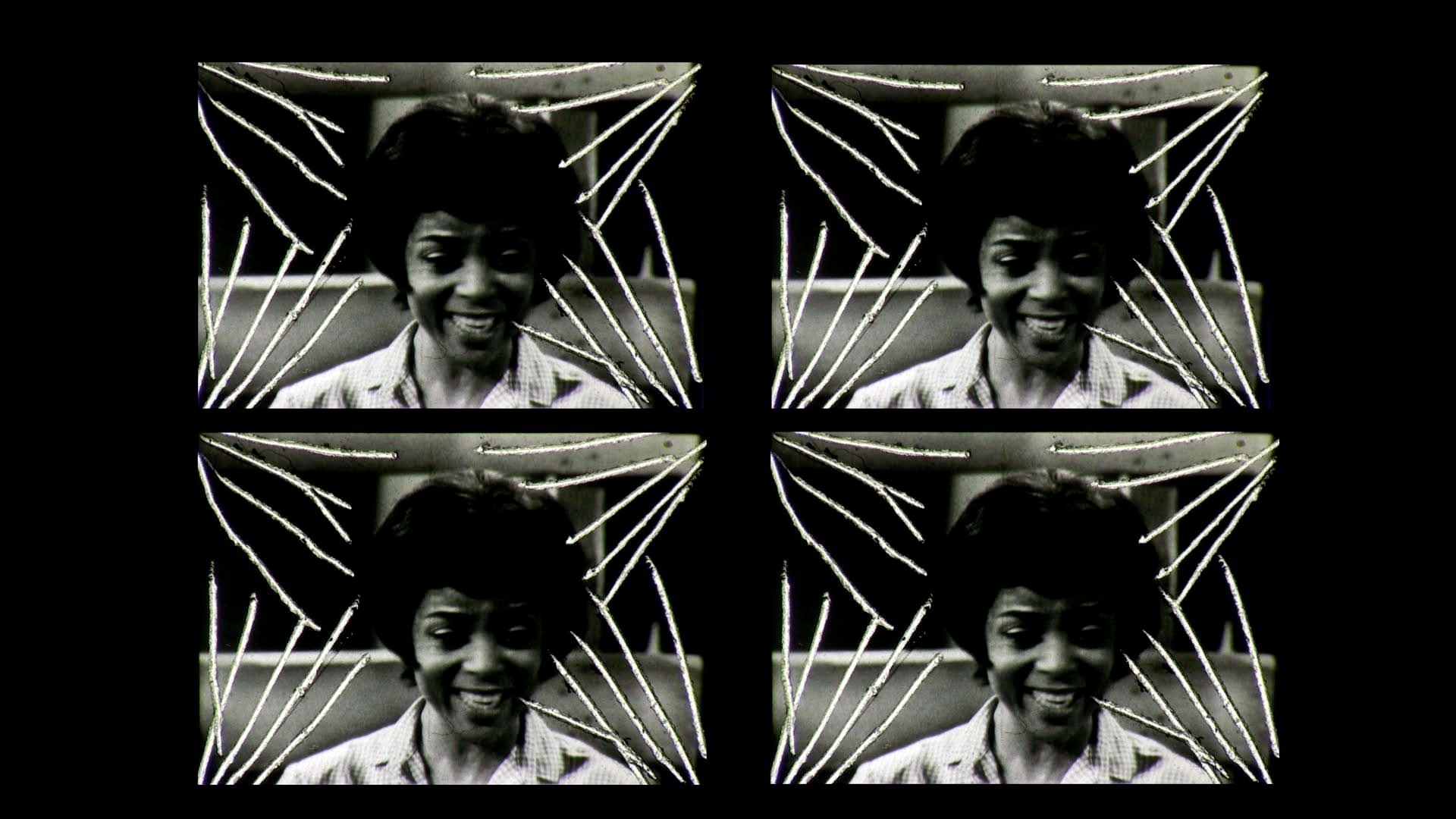
So, direct animation is the overarching name of several techniques. Etching is one of the techniques; you are etching directly into the surface of the film, into the emulsion. Sometimes people are painting onto the surface of the film, or you are masking out certain parts of the film. It’s basically hand-processing techniques. Some people, like Stan Brakhage and Len Lye, call this cameraless filmmaking. I had a really interesting professor in graduate school called Michel Negroponte, and he told me that I was going to need to supplement my education, that I was going to need to use New York City as my other classroom. And I found a place in Brooklyn called Mono No Aware. This is where I began to learn about these techniques and incorporate them into my practice. For me, the handmade element is important. I consider the films to be objects as well as experiences. There’s a sculptural element. I am not one of those filmmakers who’s always chasing the latest and greatest gadget, the sharpest camera. I’m absolutely consumed with the archive and small-gauge filmmaking and hand-processing. I think the intimacy that is created while you are making something can be transmitted, so it’s important for me to hold on to that and to spend that time creating that relationship with the material. It takes a really long time to etch, and that’s where the magic is stored.

You’ve also talked about Soviet montage theory as an influence.
Yes, the Kuleshov effect. When you place one image next to another, meaning emerges. If you change one image, the meaning changes. They are these psychological landscapes that are being painted. So I find this technique and the various ways that montages can be assembled extremely helpful. When I’m trying to paint an interior picture for a viewer, there’s so much meaning that can be made just by placing images next to one another. John Akomfrah and Arthur Jafa would call this “affective proximity.” What are you feeling emotionally? What are you feeling psychologically? Not just: what happens next in the narrative?
On the topic of citing internet archives, Arthur Jafa’s Love Is the Message is one of the most well-known examples of films that do this. But your film An Ecstatic Experience actually came out a couple years earlier.
You know how many people say, “Oh, you were inspired by Arthur Jafa”? Everyone wants to make Arthur Jafa my dad, and I love AJ. He hates when I call him Uncle, but this is my southern uncle. We’re from the same region of the country. We come from very similar traditions, so it's no wonder that there are threads that are similar. But I’ve had multiple curators—usually they’re white men, sometimes they are Black people—say “you’re very much in this tradition of Arthur Jafa.” It’s erasure. It’s all love and respect to my uncle. I’ll forever give him his praises. He is my elder. I have learned a lot from him. He’s given me permission to speak very freely about my practice and to be my full self, which is why I don’t feel no type of way saying this: I did not get my ideas around montage editing from his film.
How do you listen for what a particular piece is asking of you while you’re making it?
I can’t even tell you how I listen. I just know that it is a listening. Initially, I’m working with ideas and thoughts and feelings that I’m scribbling down, and then I start culling images. If we’re talking about Quiet as It’s Kept, I knew that I wanted Toni Morrison’s voice in there somehow. And again, to shout out Michel Negroponte, he would always say to me, “Just put it on the timeline.” In your editing software, just start putting things there. Beginning is hard, but if you just start putting things down, like a painter would begin to put a stroke down or make a mark, then you begin to see things next to one another. So I’m listening, I’m watching, and I’m also reading while I’m making. And this is something that I tell younger filmmakers: “Don’t just go to film school. What do you know about the world?”
As a Black woman, I feel nourished by your films. There’s a caring that happens. I may not understand everything, but I know I can watch this and I’m not going to be harmed by it. And I think that’s really powerful, and something more filmmakers ought to think about.
We are deeply invested in care. These are restorative gestures. These are healing gestures. Some things are going to be uncomfortable, but we’re not trying to break you. We’re destabilized only in that we have to rip off the veil. We have to tell the truth straight. We’re operating in the Black feminist tradition, and that’s one of restoration and repair.
More: Interviews
To Become the Sky: A Conversation with Jess X. Snow
Suffused with visual beauty and moments of magical realism, Jess X. Snow’s queer diasporic cinema invites us to imagine new possibilities for freedom, transformation, and intergenerational healing.
Planet of the Tapes: A Conversation with Alex Ross Perry
To mark the fiftieth anniversary of the invention of VHS, the director and the editor of Videoheaven discuss how this game-changing format shaped their lives and imaginations and left a seismic impact on the film industry.
Near and Far: A Conversation with Dwayne LeBlanc
The director of Civic and Now, Hear Me Good talks about how his experience as a first-generation Caribbean American and his love of Chantal Akerman’s short La chambre have influenced his work.
First and Foremost: Rógan Graham on Black Debutantes
The critic and curator talks about working on a program of films by trailblazing Black women directors, which opened at London’s BFI Southbank this year and is now playing on the Criterion Channel.