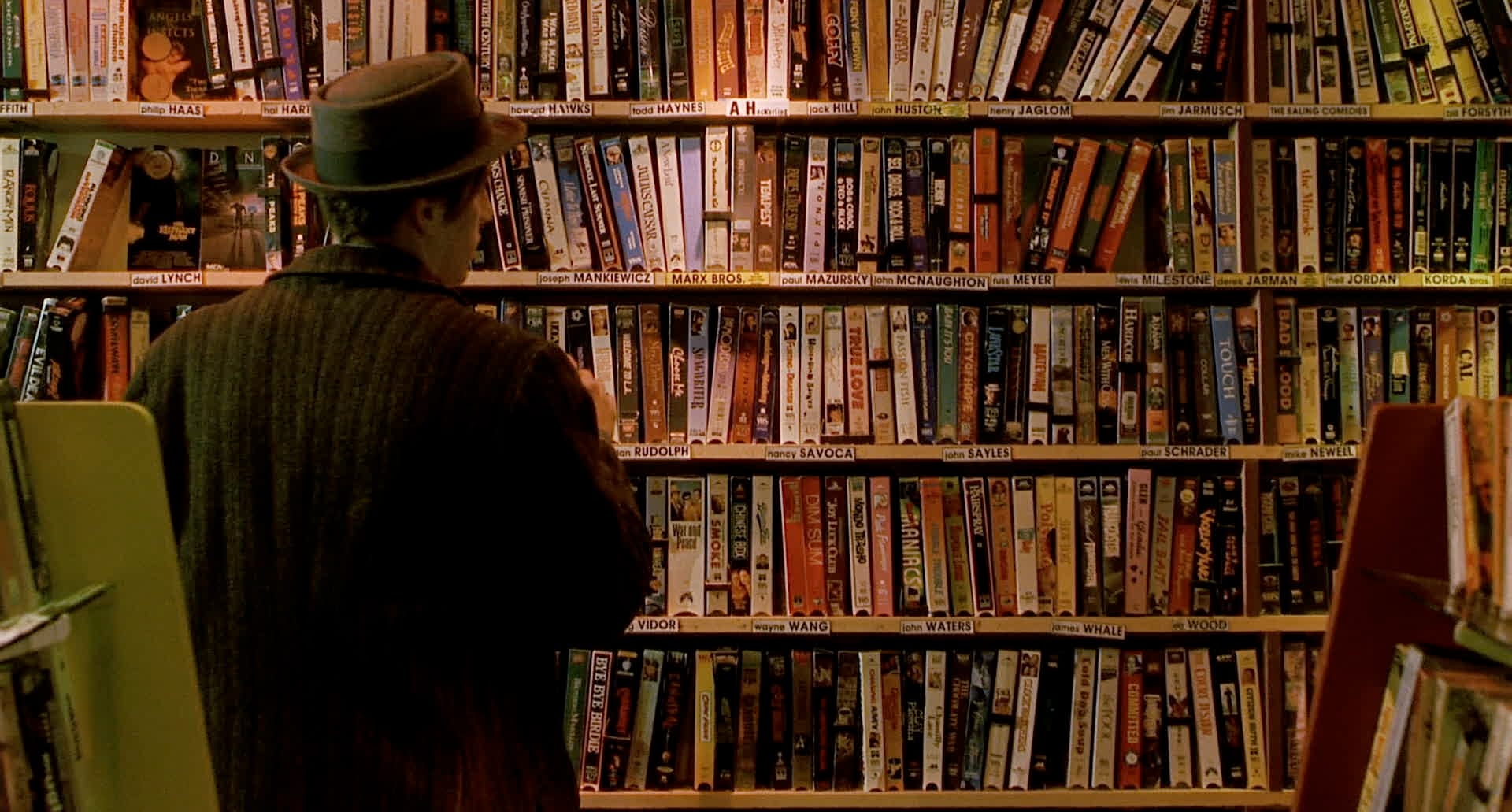
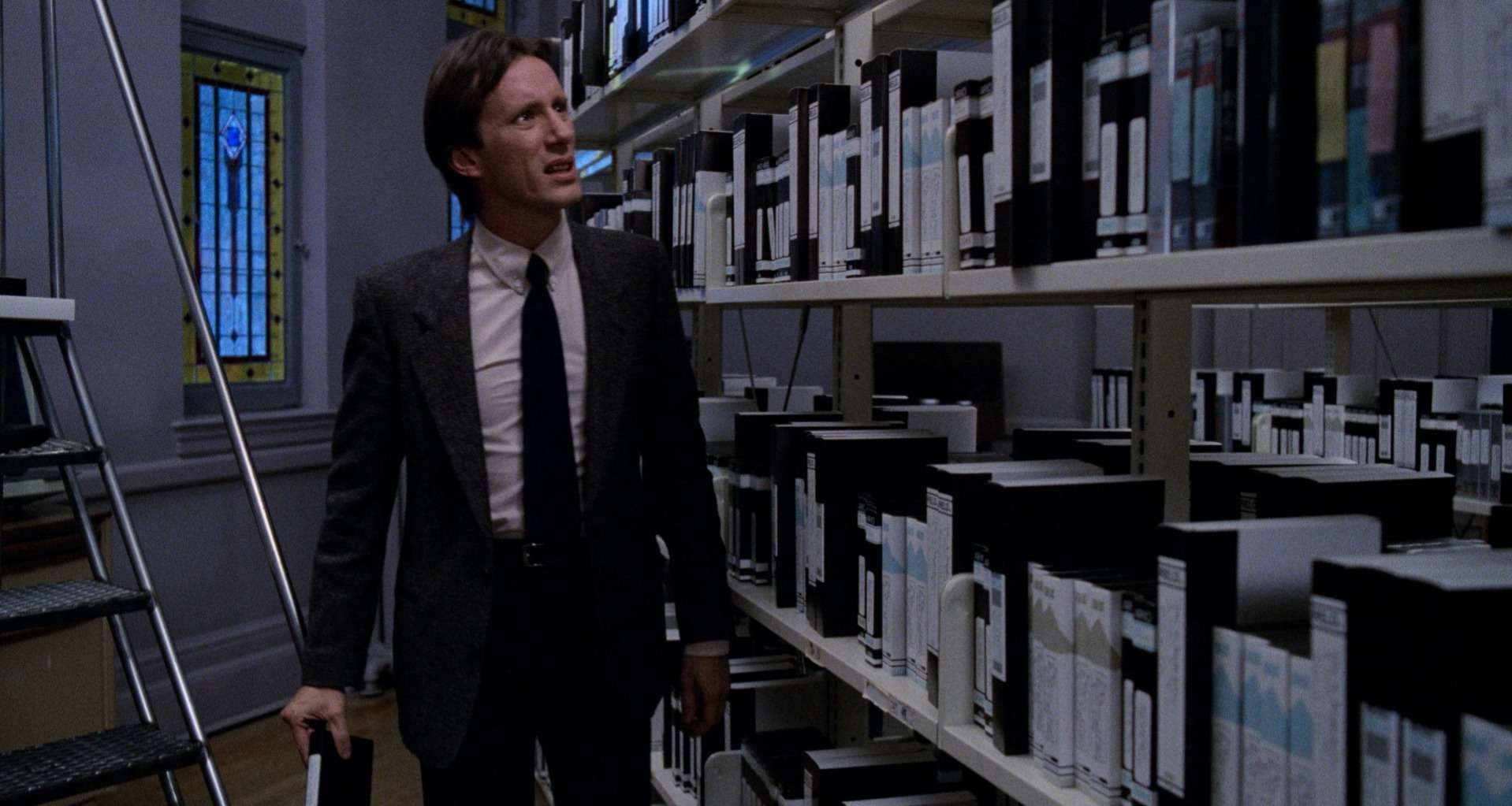
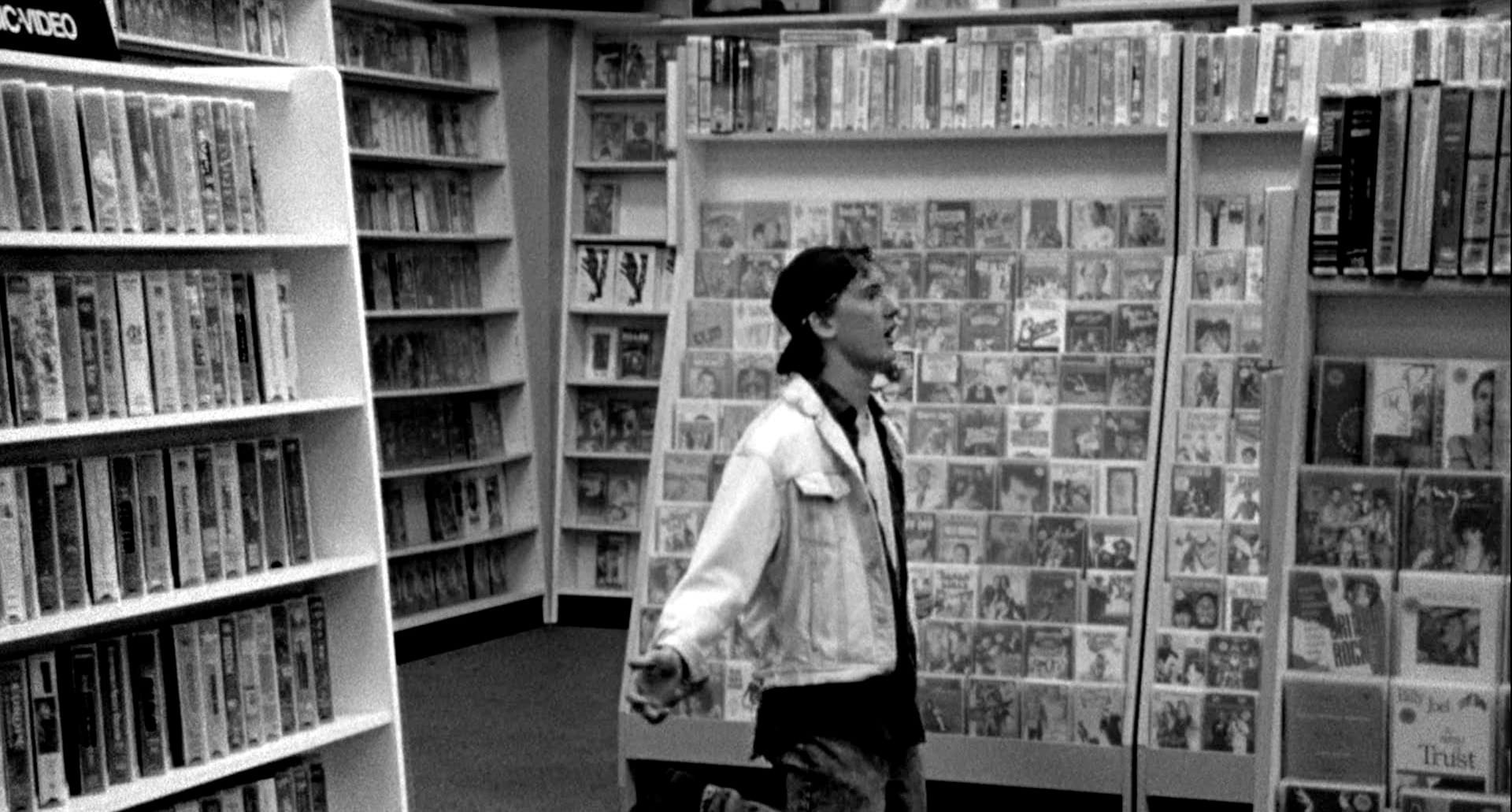
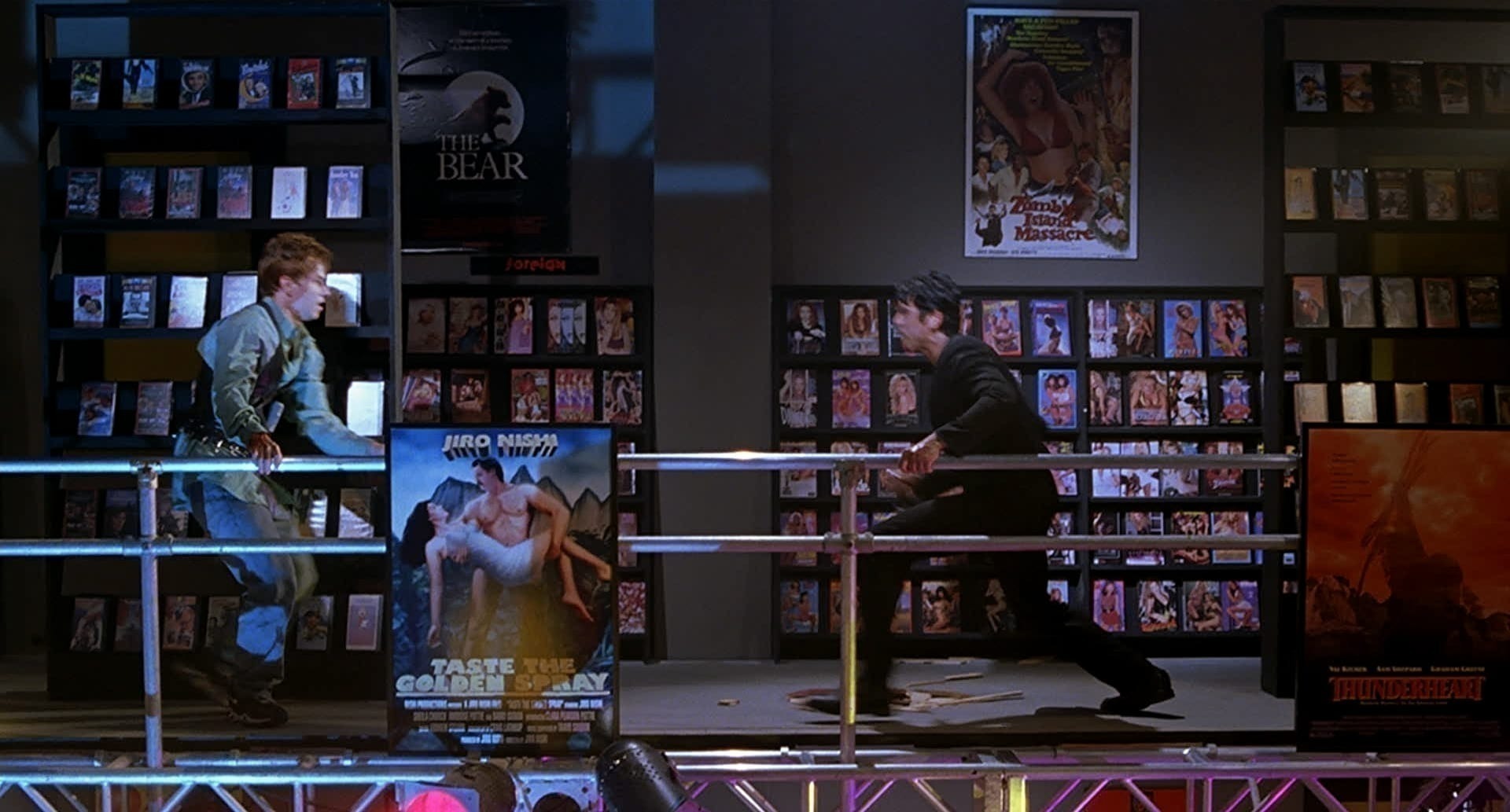
The VHS Forever collection now streaming on the Criterion Channel gathers films across a range of genres that illustrate how the titular home-video format changed our relationship with movies. In curating this lineup, I drew upon not only my memories of a lifetime spent wandering the aisles of video stores but also the five years I spent editing Alex Ross Perry’s staggeringly comprehensive essay film Videoheaven (2025), which charts a history of these once-ubiquitous hubs of cinephilia and commerce as depicted in decades of movies and television. On the occasion of the film’s exclusive streaming premiere on the Criterion Channel and the fiftieth anniversary of the invention of VHS, I sat down with Alex to discuss making the film, home video’s seismic impact on the motion-picture industry, and some of our favorite selections in the lineup.
I want to go back to the very beginning and talk about the VCR. It was originally intended not as a way of playing prerecorded movies, but as a “time-shifting device.” What did the purveyors of the VCR mean by that?
I highly recommend Michael Z. Newman’s Video Revolutions: On the History of a Medium, a book that analyzes video not as a technology but as a dynamic cultural concept that has shifted in meaning and status in relation to film and television. It’s a book I found really useful in working on this movie. A big part of it was this sudden idea that you could tape the game, or tape the news and watch it when your kid goes to bed, or tape your favorite show and fast-forward through the commercials, which you can imagine would have seemed huge for people. I can’t even imagine how exciting it was for people that had grown up watching TV in the sixties and seventies to suddenly have a godlike control over their entertainment, including the fast-forward button.
Circa 1999, I became a certified [David] Lynch fanatic. Some guy at my dad’s office had all of Twin Peaks (1990–1991); he taped it off the TV when it was on. There was no other way to see it. For like a year [my dad] would bring me home two tapes at a time. And that’s how I saw Twin Peaks, from some guy who started watching it and immediately said to himself, “I should be taping these. I should have whatever this show is.” I don’t know who this guy was. Probably never met him. And this is the gray-market bootleg phenomenon of videotape.
Everything was shifting around how movies were being watched at this time. The thing about video stores and VHS, specifically, is that it strikes me as a democratizing force. This was something that rose from the ground up, not from Hollywood, but from independent sources. For instance, the whole idea of releasing pre-recorded films on videotape didn’t come from the studios. It came from Andre Blay at Magnetic Video Corporation, which was a video-duplication service: He convinced Fox that it would be a good idea to release forty of their most popular titles on home video. They did it, and that was the start of movies on home video as we know it.
It was the start of a movie as a commodity. Prior to that, for fifty-plus years, the theatrical experience was ephemeral. You would experience [a movie], and then it would go away. You would have your memories of it, and then maybe you’d see it again someday in some other form. Suddenly you could say, “Oh, I love that movie, I have it at home, I watch it all the time,” or “I’ll loan it to you.” And suddenly the consumers became the archivists. You could sit in your home and have a shelf of your favorite movies. Clearly in retrospect, that is the moment when the consumer’s relationship with what a movie is changed forever. They went from being these magical objects that flew by you like a comet that you were lucky to get to see, to something that was just around all the time.

Looking at Videodrome (1983) and Body Double (1984)—two of the earliest films featured in this series and in Videoheaven—they lay out this idea of tapes as illicit objects. The tapes in those films introduce danger and evil and chaos into people’s lives.
I imagine there was something very mysterious about loving movies your entire life, and then suddenly [experiencing] the illicit feeling of, “I could have this at home now.” That must have been extremely destabilizing to the mind of the film lover. You see it in those movies, and in some of these other ones that you’ve selected: 52 Pick-Up (1986), Lost Highway (1997), The Ring (2002).
52 Pick-Up and Lost Highway also treat the tape as pornography-adjacent. They both feature characters who are makers of pornography. Obviously Body Double is the height of this. But I think there’s something to the fact that pornography enters the home via video. The adult-film industry sided with VHS over Betamax in the format war. In these films, VHS is next to pornography and they just keep being presented together.
Imagine how hard it would have been to get your hands on pornography to own. Then all of a sudden you can just get sex on videotape and watch it in your home. After years of thinking of that as some public exercise in exhibitionism and shame, now you can just buy videos. This is kind of the thesis of Videoheaven: [video is about] taking what has only ever been public and making it private. And what better canary in a coal mine for that than pornography?
I want to ask you a question about watching movies on VHS, which you still do with some regularity, yes?
Yeah, all the time.
Why do you still choose to watch certain films on tape when you could watch them in other formats that are readily available?
I just prefer it. Anything that would have been on a video-store shelf as of January 1st, 1999, is a movie I’m happy to watch on tape. This is like asking “Why would you like to watch a movie on a 35 mm print?” Because it’s a living, tangible experience that connects you with every other time this print has ever been shown, and it’s more fun. To me a tape is the same thing. It has that audio quality that you get in a theater when the print starts before the image starts: the clicks, the pops, the hisses, the flicker. A tape has all of that in a way that, for me, a disc never did. A tape is alive the way a print is alive. It can break, it can be defective; that’s part of the fun. It’s like time travel. It’s [a way of] communing with everything we see in Videoheaven. Watching a tape is the only lasting version that I can still access of getting in the car, going to the store, walking the aisles, picking out a movie, getting a pizza, going home, and watching the movie. All of that experience is gone now except for what the movie looks like when I press play.
Many years ago, you recommended to me Daniel Herbert’s book Videoland: Movie Culture at the American Video Store, which analyzes how video stores served as a hub of movie culture from the 1980s to the 2000s. This book would become the inspiration for Videoheaven. What were your major takeaways from it?
It says in his intro, by 1999, video stores were decreased by 20% from their peak a decade earlier. I remember reading that and thinking, that can’t be possible. To me, that was the peak, 1999. Here I am learning that the peak was when I was five, when I was first stepping foot into these stores. I think having the rug pulled out from me factually really opened my eyes to, like, “Oh I actually don’t know this story, because to me the peak is [when there were] Blockbusters every five miles.” If that was the peak, the industry couldn’t have been eradicated as quickly as it was. That just made me feel like, “Wow, this is a very complicated American retail narrative.”

What is it about the eighties that made that the golden era?
The stores were just totally gnarly. They all looked different. Some of them had a thousand, two thousand, three thousand tapes, they really weren’t that vast. Not a cavernous retail space, but a narrow spot in a strip mall. And for me as a six-year-old, that was magical. To be getting a haircut, walking at the strip mall, and there’s just some tiny little spot with neon lighting and unregulated horror movies in front of you.
What do you think the big difference was when stores started having DVDs? What do you think happened when tape gave up the market share? Which was really a quick thing; it was just three or four years.
To me, that’s the line in the sand of when mom-and-pop stores start really biting the dust. Blockbuster can afford to do the full changeover to DVD. Independently owned stores don’t have as much money to do that.
When you go into a store in 1997, the variety of tapes in front of you could be roughly twenty years old. You could be looking at a tape that is fifteen years old, next to a new release. And it was this very organically built-up archive of different shapes of boxes. Big-box tapes, small-box tapes. Clamshell tapes. Tapes that were beat up, tapes that were in perfect condition. Walking through a video store in 2005, everything there is five years old. Just plastic, all plastic except for the snap cases, but everything there went from being a fifteen or twenty-year organic archive, cobbled together from dozens if not hundreds of different distributors, to being a brand-new, very sanitized aesthetic of movie library. To me that was instantly less fun, less visually appealing, less browsable. The Wild West was over. You couldn’t have Troma tapes next to Warner Brothers clamshells next to red-and-black-and-white Columbia RCA.
I know you’re sort of acclaimed for putting these [Criterion Channel collections] together and [including] two or three complete disreputable titles. What were some of your “this was all worth it because I got this on the Criterion Channel” films?
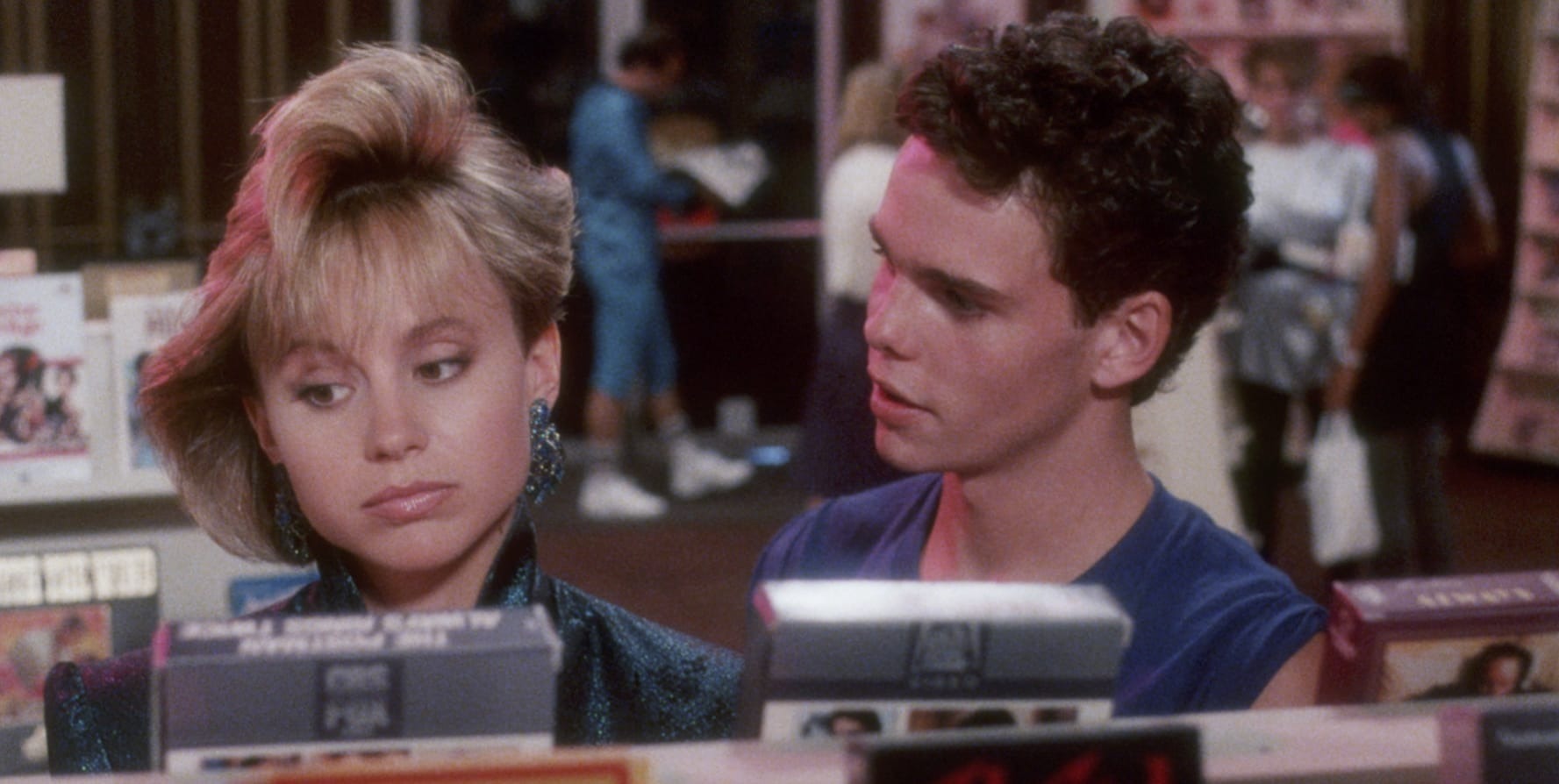
Weirdly, one of those films is Clerks (1994). It’s not even that disreputable of a movie, but it was huge in the ’90s. And if you’re of a certain age, it was huge to you as a teenager. When I got into my twenties, I guess I started thinking of myself as a more sophisticated, highfalutin guy, and I had no interest anymore in Clerks. Then, in the process of working on Videoheaven and circling back to it I realized, no, this is still great. There’s something that’s genuinely raw and working-class about the film that you never really saw in many other movies in this period.
You know, real ones will remember: historically, what was the cheapest, most affordable, and therefore highly ubiquitous Criterion DVD? Chasing Amy (1997). Everybody had it. To me, Kevin Smith is inextricably linked to the physical-media history of the Criterion Collection because of that. And now the idea that decades later, his inimitable debut film is underrated or underseen is impossible for me to wrap my head around. If you are in your late thirties or forties and you think that Clerks belongs in your adolescence, I think you'd see it now as a visually striking and radically written keystone of nineties independent film.

I’m also tremendously happy to put The Big Hit (1998) on the Criterion Channel. This was a movie that I saw as soon as it came out on video. I don’t even remember why I was aware of it, but I was super into it as a thirteen-year-old. The Big Hit is the Hollywood debut—and the sole Hollywood film at this point—from Hong Kong director Kirk Wong. In the mid-to-late nineties, much of the top Hong Kong talent was going to work in Hollywood. And what I love about this film is that it has a certain kind of abrasive humor. You might even call it obnoxious, but I think it’s very particular to the strain of Hong Kong action cinema that we love. If you watch those movies, it’s nonstop crass humor. And a lot of that gets shaved off with the other filmmakers who go to Hollywood, but Kirk Wong retained it all.
If your casual cultural prejudice against this film is like, “I’ve always assumed that is a garbage, post–Pulp Fiction (1994), guys-with-guns piece of crap,” if the video box scared you off, we have to inform you that The Big Hit is closer to the operatic, Hong Kong–imported American films [of the era] like Face/Off (1997) and Broken Arrow (1996) and Double Team (1997). This is not “The Boondock Saints (1999) but with Mark Wahlberg.” It’s not “Hard Boiled (1992) but with Mark Wahlberg,” but it’s got more of that in it than anyone would think.
Remote Control (1988), along with The Big Hit, is one film that many people walk out of Videoheaven saying, “What was that movie? I should see that.”

The funny thing about Jeff Lieberman, the director of Remote Control, is that he also used to work for Janus Films back in the early seventies. So there’s decades of Janus and Criterion history running through here. I think Remote Control is a total treat. And in terms of the amount of screen time spent in a video store, it ranks pretty high among all the films in the series.
It’s one of our key texts for sure, and it was a real discovery. I had never seen it. The clip that we leapt out of our seats at is where they’re in the car and they say, “They probably dropped off these brainwashing tapes at every video store in town. Where’s the nearest video store?” And they say it’s a mile down the road. We had been searching for years for any clip to illustrate the idea that in the late eighties, video stores reported that their nearest competition was just a few miles away.
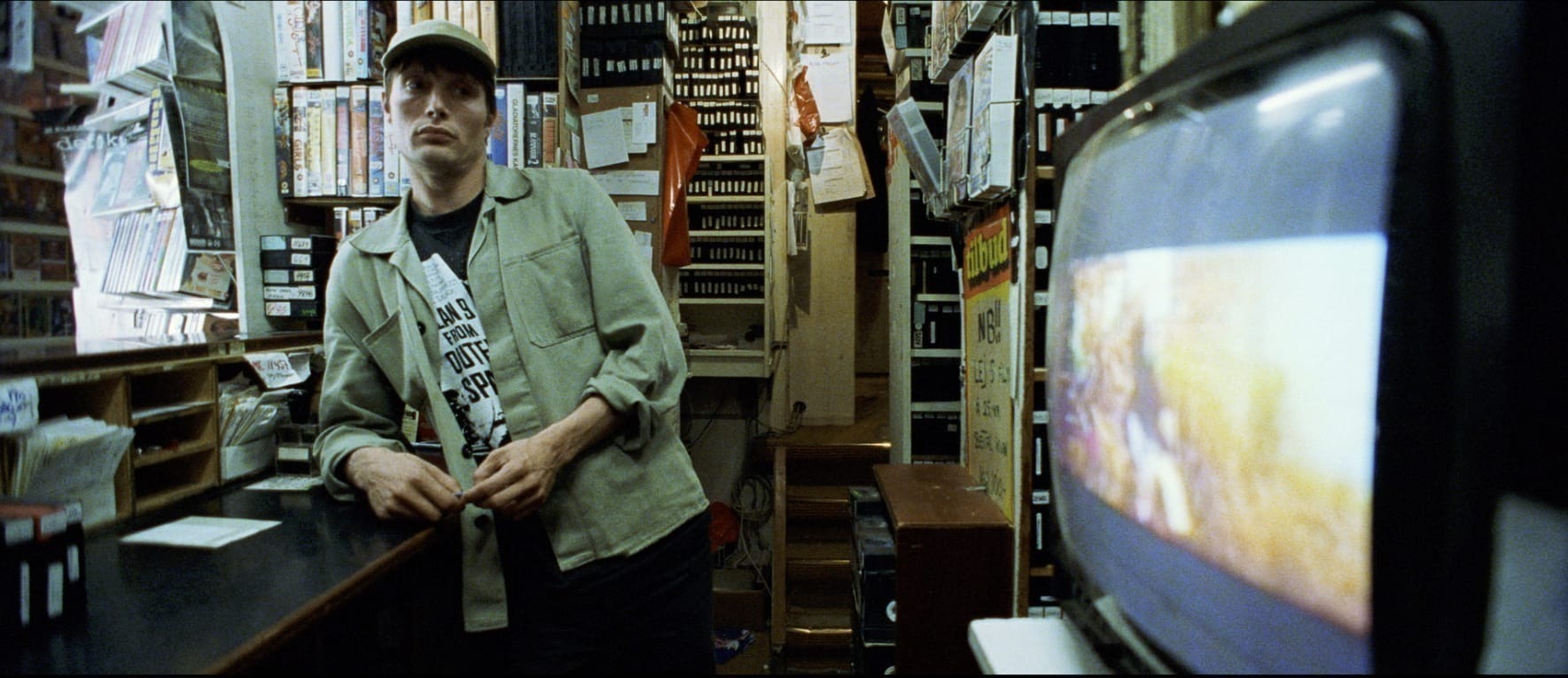
No film lays out the geography of video stores in America in 1988 better than Remote Control. I think it’s also worth pointing readers to Bleeder (1999), which is an early Nicolas Winding Refn film that I had not seen or even heard of before working on Videoheaven. It’s especially notable for having Mads Mikkelsen play a video-store clerk. No matter how many Plan 9 from Outer Space (1957) T-shirts you put him in, he will still always look like a male model.
I think he looks pretty great. And that is of course how most clerks see themselves. This is real post-Trainspotting (1996), grimy, funny, gross, losers-in-over-their-heads, drugs-and-sex-and-stealing, extreme boy-movie stuff.

Bleeder is a rare film. As far as I know, this isn’t streaming anywhere else.
If Videoheaven celebrates that kind of esoteric, strange, catch-all video-store culture, you look at the handful of films [in VHS Forever] and it’s like, “What are you in the mood for?” Comedy, horror, thriller, a sweet drama like The Fisher King (1991). We have it all here. We have a foreign section here—Japan, Denmark—you can really go around the world. I think it represents in microcosm the thing that people miss about browsing the sections at a video store.
More: Interviews
Near and Far: A Conversation with Dwayne LeBlanc
The director of Civic and Now, Hear Me Good talks about how his experience as a first-generation Caribbean American and his love of Chantal Akerman’s short La chambre have influenced his work.
First and Foremost: Rógan Graham on Black Debutantes
The critic and curator talks about working on a program of films by trailblazing Black women directors, which opened at London’s BFI Southbank this year and is now playing on the Criterion Channel.
The Other Side of Apocalypse: A Conversation on We Were the Scenery
In this Sundance-award-winning exploration of war and memory, writer Cathy Linh Che shines a spotlight on her parents, who were Vietnamese refugees living in the Philippines when they were cast as extras in Apocalypse Now.
The Banality of Apartheid: A Conversation with Milisuthando Bongela
In her intensely personal debut feature, the filmmaker and poet investigates the myths that have shaped South African history through a mix of archival footage, poetic remembrances, and conversations with friends and family.