New Directors/New Films 2026, Part Two
Share
Following up on last week’s overview of the first half of this year’s New Directors/New Films, the festival of fresh work by emerging filmmakers copresented by Film at Lincoln Center and the Museum of Modern Art, we’re taking a look here at films screening from today through the closing weekend. “However fraught the state of the movie industry,” writes Manohla Dargis in the New York Times, “New Directors insists that there are always filmmakers from across the globe producing inspired, inspiring work that demands attention, deserves respect, and may earn your love. It’s making good on that promise this year with one of its best lineups in ages.”
Wednesday
Set in Iztapalapa, a working-class borough of Mexico City, Clemente Castor’s Cold Metal opens with a brief street gambling sequence before shifting focus to two brothers. Óscar (Óscar Hernández) has escaped from rehab, and Mario (Mario Banderas) awakens to “images that don’t belong to him.”
Dispatching to Filmmaker from last summer’s FIDMarseille, where Cold Metal won the Prix Georges de Beauregard, Cici Peng wrote that “Castor’s work is often aggressively opaque, guided by a seemingly haphazard editing logic that deliberately short-circuits narrative momentum as the film drifts between nonfiction, epistolary voice-over, gestural performance, and the supernatural, staged by a largely nonprofessional cast.”
Peng was “surprised by the sensation of being adrift, teleporting between ever-shifting film textures and terrains, from the underground to the skies of what appeared like the edge of the world. The film’s dialectics aren’t strictly ideological but affective: like Mario, I found myself clinging to signs, grasping at symbols, trying to decode meaning from disorder in an almost schizophrenic mode before suspending any desire for formal cohesion.”
Yuiga Danzuka was twenty-six when his debut feature premiered at Directors’ Fortnight in Cannes last year. Brand New Landscape is an “elegant interweaving of a Japanese family’s emotional unraveling with meditations on Tokyo’s ceaseless cycles of alienation and renewal,” wrote Patrick Brzeski at the top of his interview with the director for the Hollywood Reporter. “But what many Western critics overlooked is that the film isn’t merely an above-average entry in the arthouse family drama canon—it’s also a bold and somewhat provocative act of autobiography.”
Danzuka is the son of renowned earthscape designer Eiki Danzuka. In Brand New Landscape, an architect cuts out from a family holiday to take on a star-making project, leaving his wife depressed and his two children feeling abandoned. Ten years later, the son, on an impulse, snatches an opportunity to check in on his estranged father.
“Danzuka’s framing of people in buildings calls to mind great poets of urban alienation like Antonioni and Edward Yang,” writes Nelson Kim for Filmmaker. “The film has some rough spots—a brief documentary interlude critiquing the father’s designs for gentrifying once-diverse neighborhoods lands clumsily, and a promising third-act turn to magical realism fizzles out—but the core story of a broken family moving haltingly toward reconciliation carries a quiet emotional charge that lingers afterward.”
Thursday
Manon Coubia’s short film The Fullness of Time (2016) won a Golden Leopard in the Pardi di domani competition at Locarno and another of Coubia’s shorts, Children Leave at Dawn (2017), screened at Critics’ Week in Cannes. Coubia has also spent ten years as a warden at a mountain refuge, an experience that inspired her debut feature, Forest High, which garnered a Special Mention when it premiered in the Berlinale’s Perspectives program.
Forest High was shot on 16 mm over four seasons as three women, one after another, serve as seasonal caretakers for a hut in the northern Alps, seeing to the bare-bones needs of hikers during their brief stopovers. This is “not a film of major dramatic incidents and revelations, though its payoff is clear and cleansing as a mountain spring,” writes Variety’s new chief film critic, Guy Lodge.
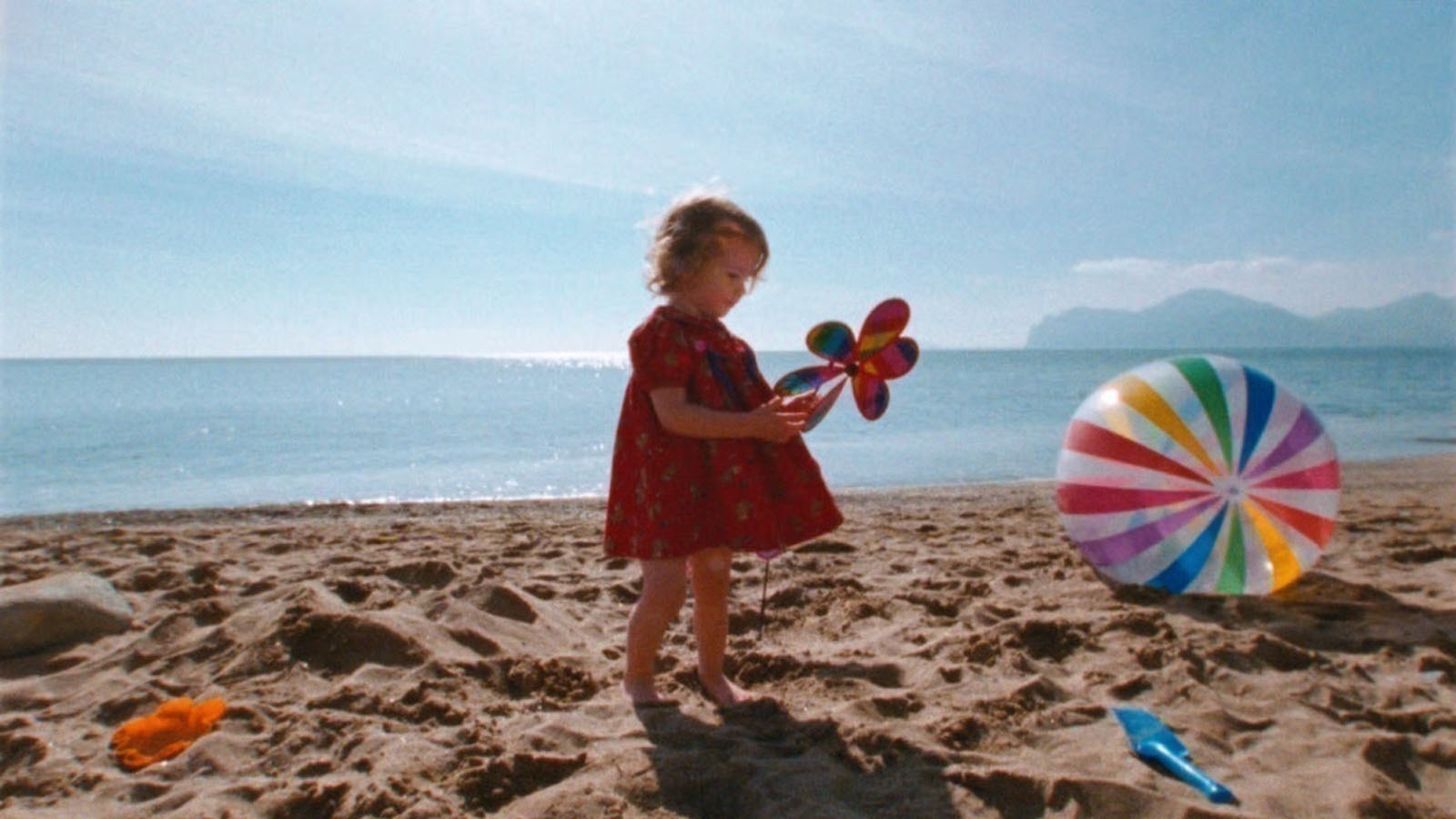
At the A.V. Club, Monica Castillo recommends five films from the ND/NF 2026 lineup, and Ukrainian director Vladlena Sandu’s Memory is one of them. Born in 1982 in Crimea, Sandu was six when she was sent to live with her abusive grandfather in Grozny, the capital of Chechnya. The Chechen Republic won its independence in its first war with the Russian Federation but lost it again in the second war. Sandu walked past corpses in the streets and took shelter from the bombs falling from the sky.
“To recreate these difficult scenes from her youth,” writes Castillo, “Sandu uses toys, animation, her family’s photo album, younger actresses to stand in for her younger self, and dreamy 16 mm footage of the sites in her story—all of which makes for a painful yet playful look back at the trauma her family endured. Memory references Sergei Parajanov‘s intricate use of design and color, Andrei Tarkovsky’s careful use of landscape and time, as well as the dioramas of Ingmar Bergman’s Fanny and Alexander. Although her story is a tragic one, it never loses its sense of childlike wonder.”
Friday
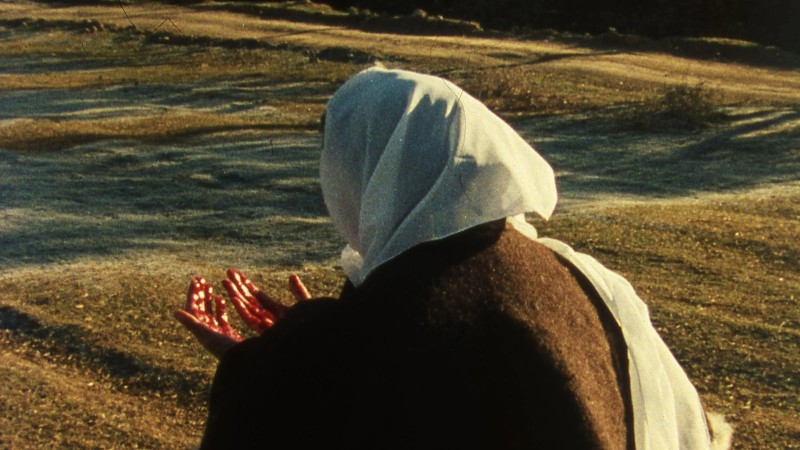
A social worker in Brussels turns to sex work to make ends meet when she unexpectedly finds herself raising her daughter on her own in Alexe Poukine’s Kika. “At first blush, “ writes Manohla Dargis, “the filmmaking in Kika seems less radical than the movie’s open-minded attitude toward outré sex work. Yet the director Poukine’s choices, including her use of some productively disorienting narrative ellipses—time can leap forward in an eye blink—accentuates the destabilization that comes to define the life of its titular heroine (a nuanced, appealing Manon Clavel). Equally impressive is how fluently Poukine slides from realism to expressionism in a tough, touching scene in which Kika looks deep inside herself while keening in a room as red as blood.”
Sho Miyake’s Two Seasons, Two Strangers, the winner of the Golden Leopard in Locarno, screens Friday evening and Sunday afternoon and then sees a weeklong run at New York’s Metrograph starting on April 24. Drawing from two manga by Yoshiharu Tsuge, Miyake tells two tales, one of a summer romance by the sea, the other of a wintry friendship slowly forged at an isolated inn.
Miyake “combines dollops of Hong Sangsoo—bifurcation, self-reflexivity about the writing process—with the more classical, Imamura-style stringency one finds in Hamaguchi’s work,” writes Michael Sicinski, who finds Two Seasons to be “a perfectly pleasant ninety minutes, and I don’t mean that as faint praise.” Metrograph notes that the film has been “hailed ‘a true masterpiece’ by Shigehiko Hasumi, Japan’s greatest living film critic.”
Saturday and Sunday
As the New Yorker’s Richard Brody points out, ND/NF 2026 “highlights a diverse array of movies with invigorating approaches to narrative form—foremost, Variations on a Theme, the second feature by the South African filmmakers Jason Jacobs and Devon Delmar, which weaves together multiple story lines in its hour-and-five-minute span.” The winner of the Tiger Award, Rotterdam’s top prize, Variations is set in the South African village of Kharkams, where Hettie—played by Jacobs’s grandmother, Hettie Farmer—prepares to celebrate her eightieth birthday. “The life of the rural region is framed in airy and luminous wide-screen images that recur with a lyrical vision of vast arcs of time amid dramatic social change,” writes Brody.
Chinese artist and filmmaker Viv Li has traveled the world, and when the pandemic hit, she found herself more or less stuck in Berlin. She put her five years in the German capital to good use, though, shooting her first feature, Two Mountains Weighing Down My Chest. “Following her semi-autobiographical character through the cultural landscape of Berlin and Beijing, the film presents the artist as a ‘misfit’ between two cultures,” writes Mia Butter at the top of her interview with Li for Berlin Art Link. “Tackling themes of migration, belonging in a globalized world, and self-acceptance, Two Mountains Weighing Down My Chest explores the local queer scene in Berlin, traditional family values in China, and the state of limbo in which the protagonist finds herself.”
This year’s ND/NF will wrap with the U.S. premiere of Rosanne Pel’s Donkey Days, starring Jil Krammer and Susanne Wolff as adult sisters competing for the affection of their manipulative mother (Hildegard Schmahl). “Pel deftly weaves this tragicomic narrative from the same cloth as the Dogme 95 canon,” writes Sonya Vseliubska for Notebook. “It’s clear from her handheld camera, which captures her heroines in both hysteria and sadness, as well as the improvisatory style of her talented actresses, who wind their way through serpentine mise-en-scènes in sprawling rooms. But what truly gives Donkey Days its Vinterbergian touch is the dramatic setup at the heart of the story—a toxic family gathered around the dining table, where the aim is not to eat but to fight.”
Don’t miss out on your Daily briefing! Subscribe to the RSS feed.