Not I, AI
Share
The third issue of Narrow Margin, devoted to the work of Rita Azevedo Gomes and Larry Cohen, will see an official launch on Tuesday as the editors present two films by Azevedo Gomes, Altar (2000) and The Conquest of Faro (2005), at Light Industry in New York. Further terrific news for fans of Portuguese cinema comes from Cinema Guild, which has acquired the restored films of António Reis and Margarida Cordeiro. North American releases will begin with a retrospective in Toronto running from May 8 through 17.
This week’s highlights:
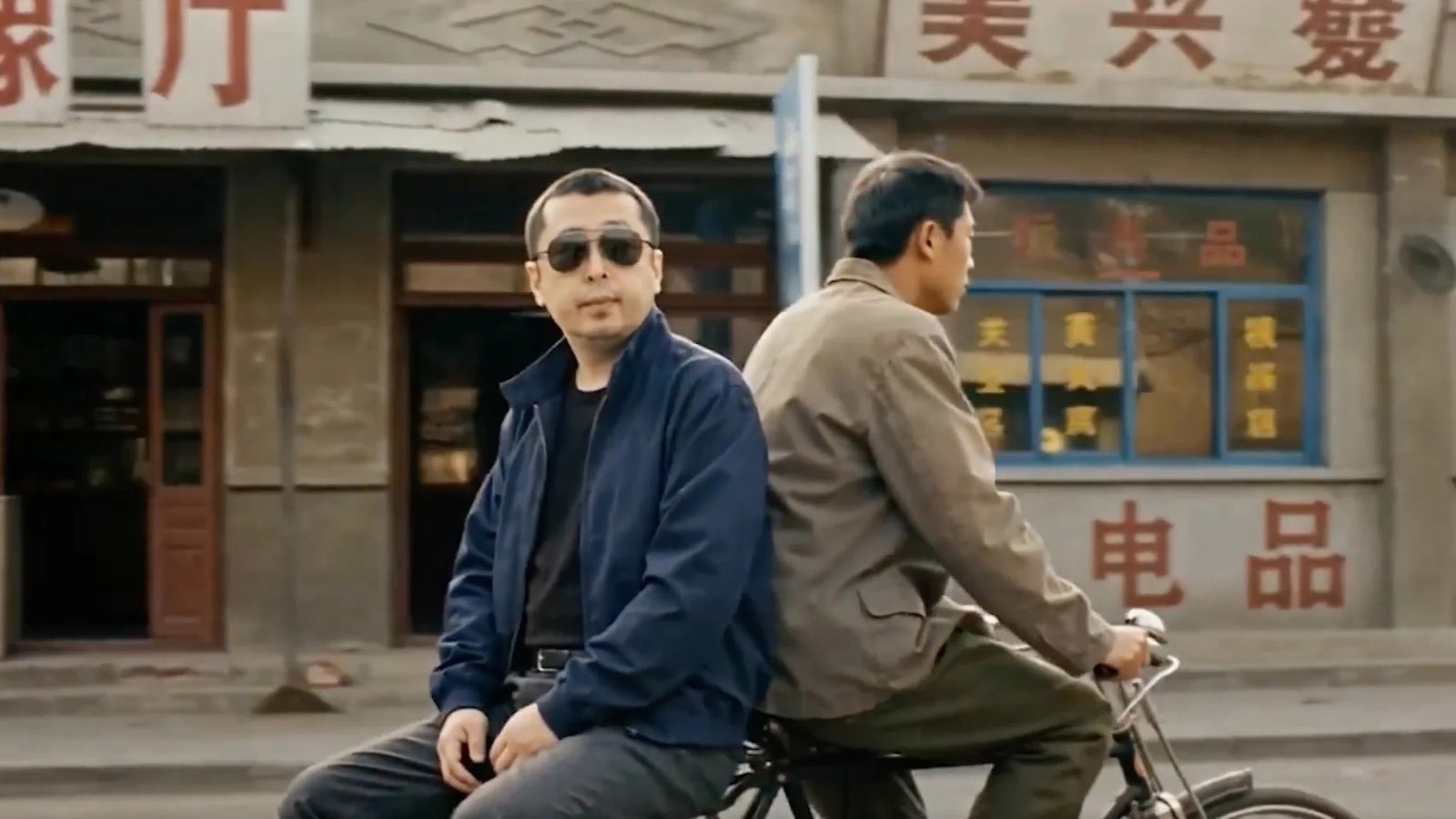
- “I am not worried about whether technology will ‘replace’ cinema,” Jia Zhang-Ke wrote in a Weibo post when he released an AI-generated video of his younger and current selves dropping in on scenes from his films. “What truly matters is how people use technology.” Michael Berry, the author of twobooks on Jia, writes in the Los Angeles Review of Books about the splash the video made in China, Jia’s many public personas, and the role of AI in China’s ongoing ascent as a global power: “There is a certain perversity about a director whose films have consistently interrogated themes like labor rights and environmental devastation seemingly going all in on AI. For those primarily familiar with Jia Zhang-Ke as a well-known art-house auteur, the video may simply scan as a stunt. But considered within the arc of Jia’s multifaceted career, these contradictions begin to come into focus, revealing their own uncanny logic.”
- Steven Soderbergh’s The Christophers stars Ian McKellen as Julian, a renowned artist who hasn’t painted anything of significance in twenty-five years, and Michaela Coel as Lori, an art restorer Julian’s kids hire to forge a completion of a series of Julian’s paintings that they can sell when he dies. When Amy Taubin first saw The Christophers, “I thought it was a trifle,” she writes at Filmmaker, “but it stayed with me, so I saw it again. It is one of Soderbergh’s best and most personal films about art, relationships, and the instability of everything we believe we know.” Soderbergh talks with Taubin about working with actors, operating his own camera, and using just a smidgeon of AI on John Lennon: The Last Interview (which is slated to premiere in Cannes next month), but “a lot of AI” on a projected movie about the Spanish-American War that would star Wagner Moura.
- It’s hard to imagine Jim Jarmusch being tempted to even experiment with AI. As Father Mother Sister Brother opens in the UK today, Amy Raphael talks with Jarmusch in the Guardian about taking his Golden Lion through security at the airport in Venice, the mounting challenges of getting a film off the ground, and what he calls “one of the most beautiful gifts of my working life,” working with Gena Rowlands on Night on Earth (1991). Before he died, John Cassavetes wrote a screenplay for Rowlands, Unless That Someone Is You, and she asked Jarmusch to direct, but he was tied up with Dead Man (1995). Jarmusch says he feels “beautifully connected” to Cassavetes and David Lynch via his cinematographer, Frederick Elmes, who worked with both directors. “I’m not a surrealist like David,” says Jarmusch, “nor am I quite as visceral as Cassavetes, but I’m a humanist romantic, as John was.”
- A series of films by Federico Fellini, Bernardo Bertolucci, Philippe Garrel, Pierre Clémenti, and others, all starring Tina Aumont, will open at Anthology Film Archives on April 17 and run through April 30. “Aumont didn’t mind playing the sexpot,” writes Beatrice Loayza at 4Columns. “Her style relied on embracing her sensuality, which was openly coquettish and laced with the kind of faux innocence that created a sense of mischief. With her heavy brow and kohl-rimmed eyes, her look could easily turn manic, deviant, making her a precursor of the likes of Béatrice Dalle and Asia Argento, tempestuous brunettes who also thrived in B movies and the seedier pockets of the art house.”
- Marya E. Gates talks with Valerio Ciriaci about his new documentary, Elvira Notari: Beyond Silence, which delves into the life and work of Italy’s first female director. Notari worked in Naples from around 1911 to 1930, when fascist censorship put a stop to her career. She was forgotten for decades until a network of artists began a process of rediscovery and reclamation in the 1970s. “It’s clear that not only does she know the language of fiction, but also she knows the language of documentary,” says Ciriaci. “This is not common. I’ve watched a lot of Neapolitan silent cinema, which doesn’t make me an expert, but I know how Elvira’s work relates to those others. They were filming street life as well, but not like her. She knew those people. You can see that she was part of that community, and she films it with an eye that is not judgmental . . . and is not voyeuristic. She’s somebody who belongs there.”
Don’t miss out on your Daily briefing! Subscribe to the RSS feed.