Calling to Your Attention
Share
In the run-up to next Thursday’s unveiling of its full 2026 lineup, Cannes has announced that its seventy-ninth edition will open on May 12 with Pierre Salvadori’s La Vénus électrique, a comedy set in 1920s Paris. Then, during the Directors’ Fortnight opening ceremony on the following day, the French Directors’ Guild will present the Carrosse d’Or—given each year to “a filmmaker who has left their mark on the history of cinema”—to Claire Denis.
This year’s San Francisco International Film Festival will open on April 24 with an unprecedented double feature: Kent Jones’s Late Fame, starring Willem Dafoe and Greta Lee, and Olivia Wilde’s The Invite, starring Wilde, Seth Rogen, Penélope Cruz, and Edward Norton. Jones, Lee, and Wilde will all attend the festivities at the newly restored Castro Theatre. Boots Riley’s I Love Boosters will be the Centerpiece presentation, and the sixty-ninth edition will close out on May 4, Star Wars Day, with Irvin Kershner’s The Empire Strikes Back (1980).
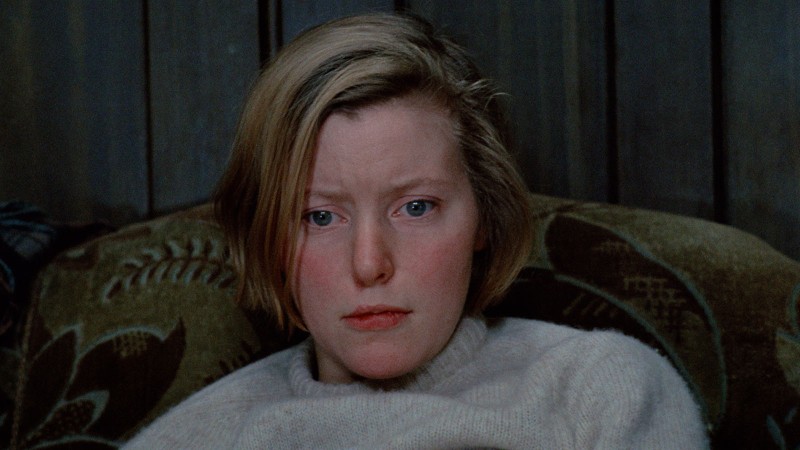
Mary Beth Hurt, an accomplished theater actor when she made her on-screen debut in Woody Allen’s Interiors (1978), died this past weekend after a decade-long struggle with Alzheimer’s. She was seventy-nine, and her daughter, Molly Schrader, and husband, Paul Schrader, jointly announced her passing. Hurt’s follow-up to Interiors was Chilly Scenes of Winter (1979), directed by Joan Micklin Silver and starring John Heard as Charles, a schlumpy civil servant obsessed with Hurt’s Laura. Hurt, an ensemble player who favored supporting roles, also appeared in George Roy Hill’s The World According to Garp (1982), Schrader’s Light Sleeper (1992) and Affliction (1997), Martin Scorsese’s The Age of Innocence (1993) and Bringing Out the Dead (1999), Fred Schepisi’s Six Degrees of Separation (1993), and M. Night Shyamalan’s Lady in the Water (2006).
This week’s highlights:
- The Whole Shebang: Celebrating Ken and Flo Jacobs is a monthlong event taking place in fourteen New York venues, and the essential overview comes from Amy Taubin at Screen Slate. On April 15, Taubin will present two programs at Anthology Film Archives, “one comprising two portraits, both featuring Flo Jacobs, the other a combo of The Whirled (1956–63) starring Jack Smith, along with what for me is [Ken] Jacobs’s most exquisite and heartbreaking movie: The Sky Socialist: Environs and Out-Takes (1964–66, completed in 2019.)” In the New York Times, J. Hoberman—Jacobs’s former student and projectionist—writes about Star Spangled to Death, a six-and-a-half-hour “basement mash-up that variously evokes Greed, Howl, and Moby Dick” that Jacobs worked on from the mid-1950s to 2004. And this coming Tuesday, Hoberman will be at Light Industry to present Return to Lecture Hall 6, a program of shorts Jacobs screened in his classes.
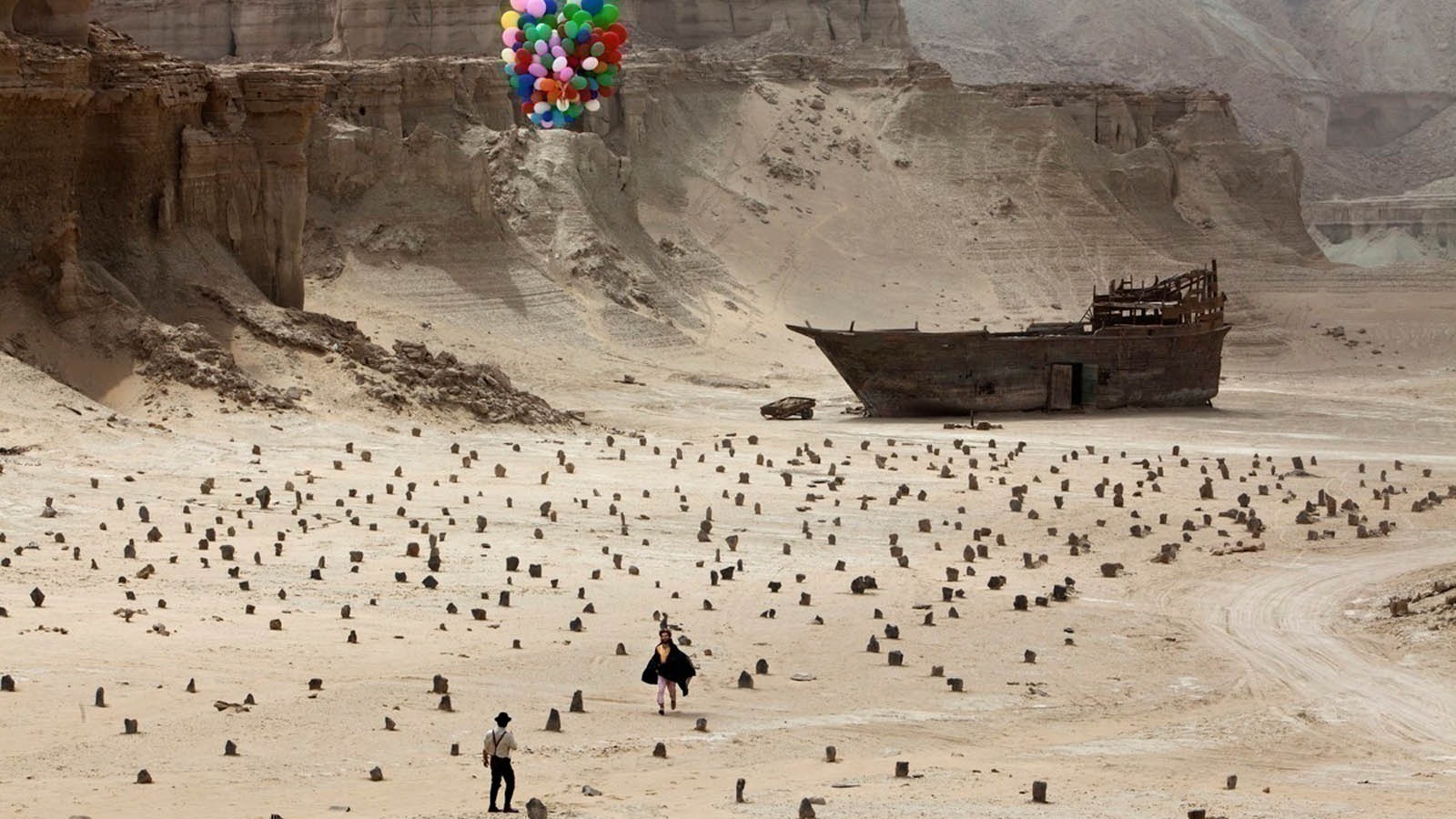
- Seeped in “a grand tradition that goes back more than sixty years,” the films of Iranian director Mani Haghighi have screened at festivals around the world, occasionally picking up awards, but the work of “one of the world’s most interesting and most woefully underrated filmmakers” calls out for greater attention, argues Richard Brody in the New Yorker. For Brody, “the masterpiece of Haghighi’s career so far” is A Dragon Arrives! (2016), which “expands a simple premise—the investigation into the death of a political prisoner under the Shah’s regime—into a pan-historical jamboree, a breathtakingly imaginative abundance of narrative strands, a thrilling, revelatory complex of adventures and ideas that is also a compendium of Haghighi’s themes, styles, and ideals.”
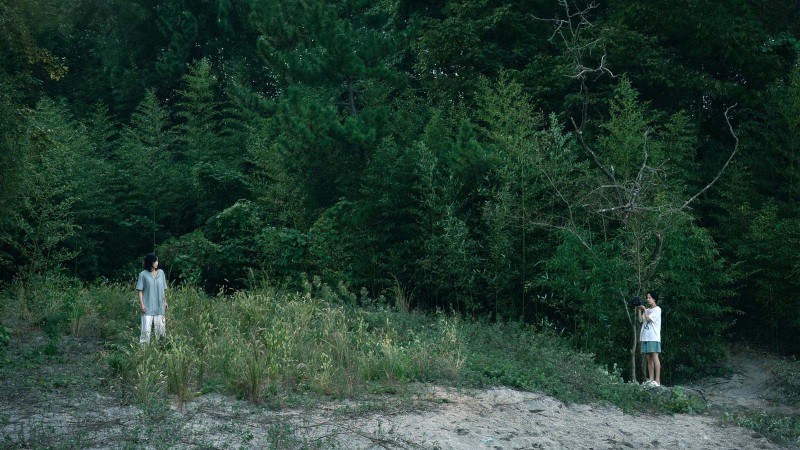
- Sophy Romvari’s Blue Heron, the winner of the First Feature Award in Locarno, will open on April 17, and we’re presenting a program of Romvari’s short films on the Criterion Channel. Talking with Romvari at RogerEbert.com, Marya E. Gates asks if there was a film from which she drew inspiration. Romvari names Martha Coolidge’s Not a Pretty Picture (1975), a reconstruction of a real-life sexual assault. “Watching it now,” she says, “it’s crazy to me how much of an impact it clearly had, even somehow subconsciously, on so many filmmakers. It’s doing the hybrid techniques so elegantly, and it’s from fifty years ago . . . I’m in a long line of women, specifically, who make work based on processing their pasts, especially within systemic harm and societal issues, using themselves as a vessel to discover those things. When I saw that film, it just made me feel like I was in conversation with a film that I had not even seen. It made me feel like there is something very specific and special about the way that women use film.”
- A Kiyoshi Kurosawa double bill is currently winding its way through theaters. In the forty-five-minute Chime (2024), a viruslike sound induces strange and violent behavior in all who hear it, and in Serpent’s Path (1998), a low-level yakuza gangster recruits a math teacher to help him take revenge for the murder of his daughter. “In a review of last year’s Cloud,” writes Dan Schindel at Reverse Shot, “I wrote that Kurosawa captures the ‘persistent tinnitus-like hiss in your mind, the background radiation of unease’ in contemporary life. That quality is literalized in Chime, since the vector for the violent compulsion (or perhaps its herald) is a sound only the affected can hear . . . If Chime is an inward spiral with hints of outer chaos, Serpent’s Path is a vortex destroying all in the orbit of its main characters.”
- The new team at Filmmaker is previewing its forthcoming issue with two conversations between directors who have known each other for a good number of years. Chloé Zhao talks with David Lowery about his latest feature, Mother Mary, opening on April 17, and Ricky D’Ambrose has questions for Radu Jude about Kontinental ’25. “I wanted to make a film where words were the main material—where language itself became the subject,” says Jude. “That idea was influenced, indirectly, by Victor Klemperer’s book The Language of the Third Reich. Probably better known for his Diaries, Klemperer was “a Jewish German philologist who survived the Nazi period because he had [scare quotes] an Aryan wife,” explains Jude. “He paid obsessive attention to how language shifts under ideology—how words acquire new meanings. I always say this book should be required reading for screenwriters.”
Don’t miss out on your Daily briefing! Subscribe to the RSS feed.