In his delightful and engrossing new memoir Flashbacks: A Passion for Film, Peter Cowie brings to vivid life the era we have come to know as the golden age of art-house cinema, an astonishing period in the growth and distribution of the medium—and one he happened to come of age during and became a major force in shaping. As a pioneering film critic, historian, publisher, festivalgoer, and commentator, Cowie helped introduce legendary film artists—including Ingmar Bergman, Akira Kurosawa, Louise Brooks, Satyajit Ray, and Alain Resnais—to audiences all over the world, creating the foundations for a widespread cinephilia that is exploding again in the twenty-first century.
How fortunate we are to have had Cowie there to chronicle this most fertile era—and with such intelligence and flair. One of the elements of this bounteous book that struck me is his indefatigable writing and publishing, starting with his first published review, on Bergman’s The Magician—for the Cambridge University weekly arts magazine, Broadsheet—and his correspondences with such luminaries as Bergman, Ray, Brooks, Lindsay Anderson, and Orson Welles, and growing to pamphlets, books, columns, and the output of his groundbreaking and influential publishing house, the Tantivy Press, notably the International Film Guide, an indispensable annual survey of world cinema, published for more than four decades starting in 1963. During the course of all of this, Cowie also became a beloved—and essential—contributor to Janus Films and the Criterion Collection.
On the occasion of the publication of Flashbacks, out from Sticking Place Books, I wanted to give readers a sneak peek into its riches, and ask Cowie about his approach to writing it—and about film criticism then and now.
You were there at the beginning of so many aspects of film culture as we know it today: the emergence of the filmmakers themselves, the art-house movement, the subsequent explosions of festivals around the world and of writing and publishing about the films and filmmakers. Take us back there for a moment.
I cherished the privilege of having come of age at the end of the 1950s, when world cinema was entering a vintage period akin to that of jazz in the 1920s. Everywhere you looked, talent was evident—from Fellini, Antonioni, and Visconti in Italy to the New Wave in France, from Bergman in Sweden to Kurosawa in Japan, from Satyajit Ray in India to Wajda and Munk in Poland, not forgetting maverick directors like Cassavetes in the U.S. and Carlos Saura in Spain. This energized the fledgling art-house movement in Europe and the States, and festivals began to burgeon. Some of my earliest acquaintances were the buyers of art-house movies, who would frequent the corridors of events like Cannes, Berlin, Locarno, and even Oberhausen, the mecca for short films in the 1960s. The cinema was the art of the moment and a prime subject for cocktail-party chatter—a mood that Pauline Kael satirized in an article for Sight and Sound entitled “Fantasies of the Art-House Audience.” In these circumstances, it seemed logical for me to devote my career to serving the cause of film, as a medium capable of dealing with life’s most profound dilemmas.
How did you come to choose film criticism as your métier?
The notion of writing has always sustained me. My father was a poet born and bred and could express himself in words with a facility that I admired. He encouraged me to write and gave me a typewriter when I was eleven years old. But it was only at university that I realized that my best chance of doing that was in reviewing films.
Cambridge during my time there, in the late fifties and early sixties, was a hive of writing of one kind or another, from the magazine Granta, edited by David Frost, to the weekly campus newspaper Varsity, via another weekly devoted to the arts in the town, under the title Broadsheet. So I cut my teeth by contributing to all these publications and soon became involved in the editing and publishing process. Simultaneously, I learned to write to deadline, both for these university magazines and for the London weekly What’s On in London—a forerunner of Time Out. So, if you like, I was acquiring the label of “journalist” as well as “critic.” This in turn bred in me a distrust of academic language, and I admired the clarity of contemporary film analysts like Penelope Houston, Charles Barr, and Peter Graham. But I did not respond to the vernacular, so beloved, of, for example, Pauline Kael. It’s always seemed to me that it’s rather lazy just to put down on paper your unvarnished, conversational reactions to films, books, music, or painting. Writing does require polishing and sometimes needs planing like a raw plank of wood.
What filmmakers first wowed you?
I’ve often said that the screening of The Seventh Seal I attended with my parents in early 1959 convinced me that the cinema was an art form. Had I discovered Strike or Citizen Kane or Children of Paradise or a host of other monuments in film history, then the Bergman might not have had quite the same effect. But coming as it did just before I went to Cambridge and was immersed in the French New Wave, the Italian giants like Fellini, Antonioni, and Visconti, and the great British proletarian cinema, I think that The Seventh Seal remained a lighthouse that guided my approach to movies for many years thereafter. I also fell under the spell of Kurosawa, Satyajit Ray, Andrzej Wajda, and the young Carlos Saura.
When did you decide that you could make a living at this?
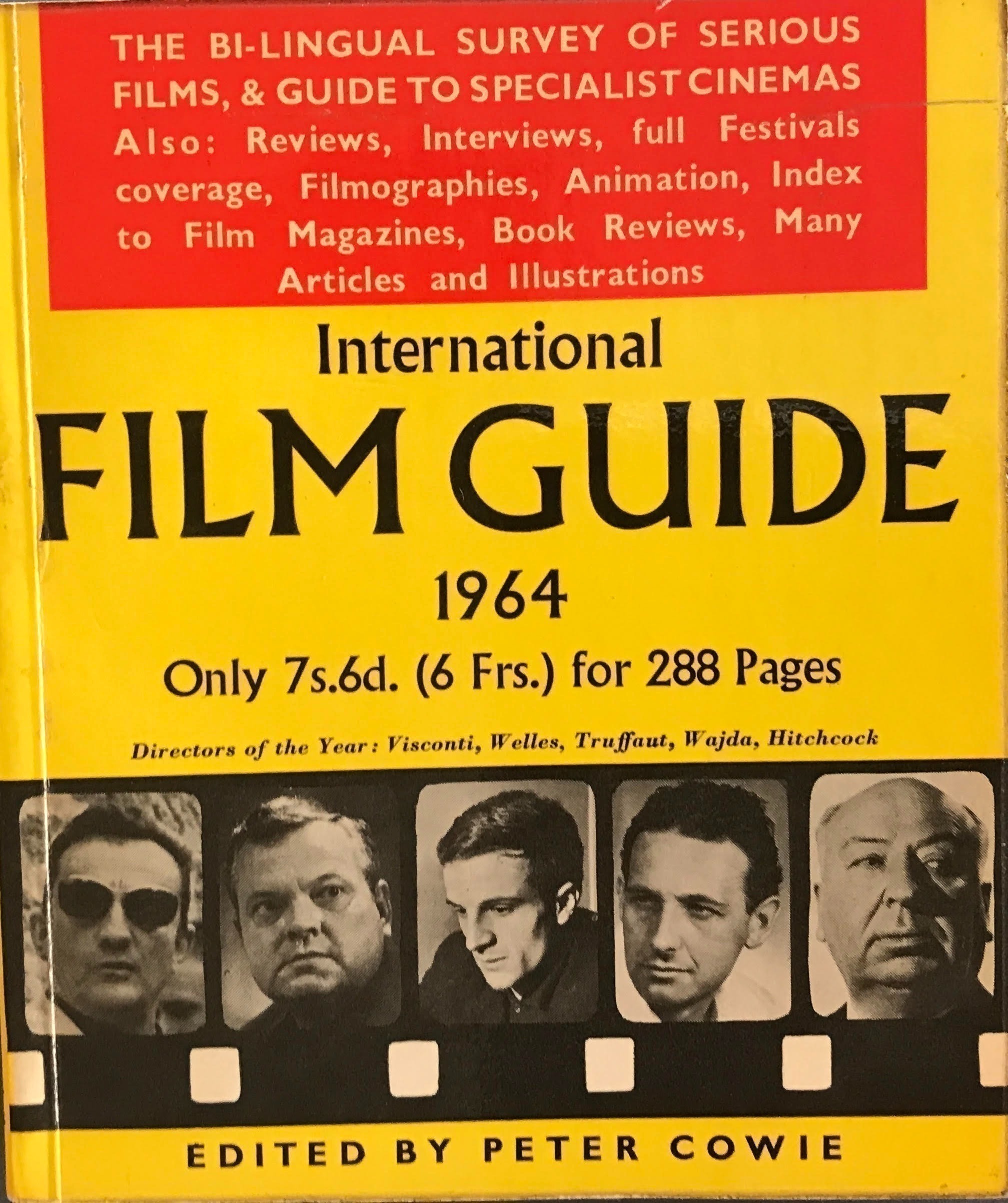
It was an instinctive response to the zeitgeist. Whenever you went out with friends, the topic of conversation inevitably focused on cinema—and art-house cinema, because my generation tended to regard Hollywood with lofty disdain. That said, it was only when I developed the annual International Film Guide from 1963 onward that the operation became financially viable. My simplistic but effective goal with the Guide was that by selling ads inside the book to film distributors and institutions I could offer it for sale at a bargain price. Thus, more people would buy the book, and the advertisers would, I hoped, get more results.
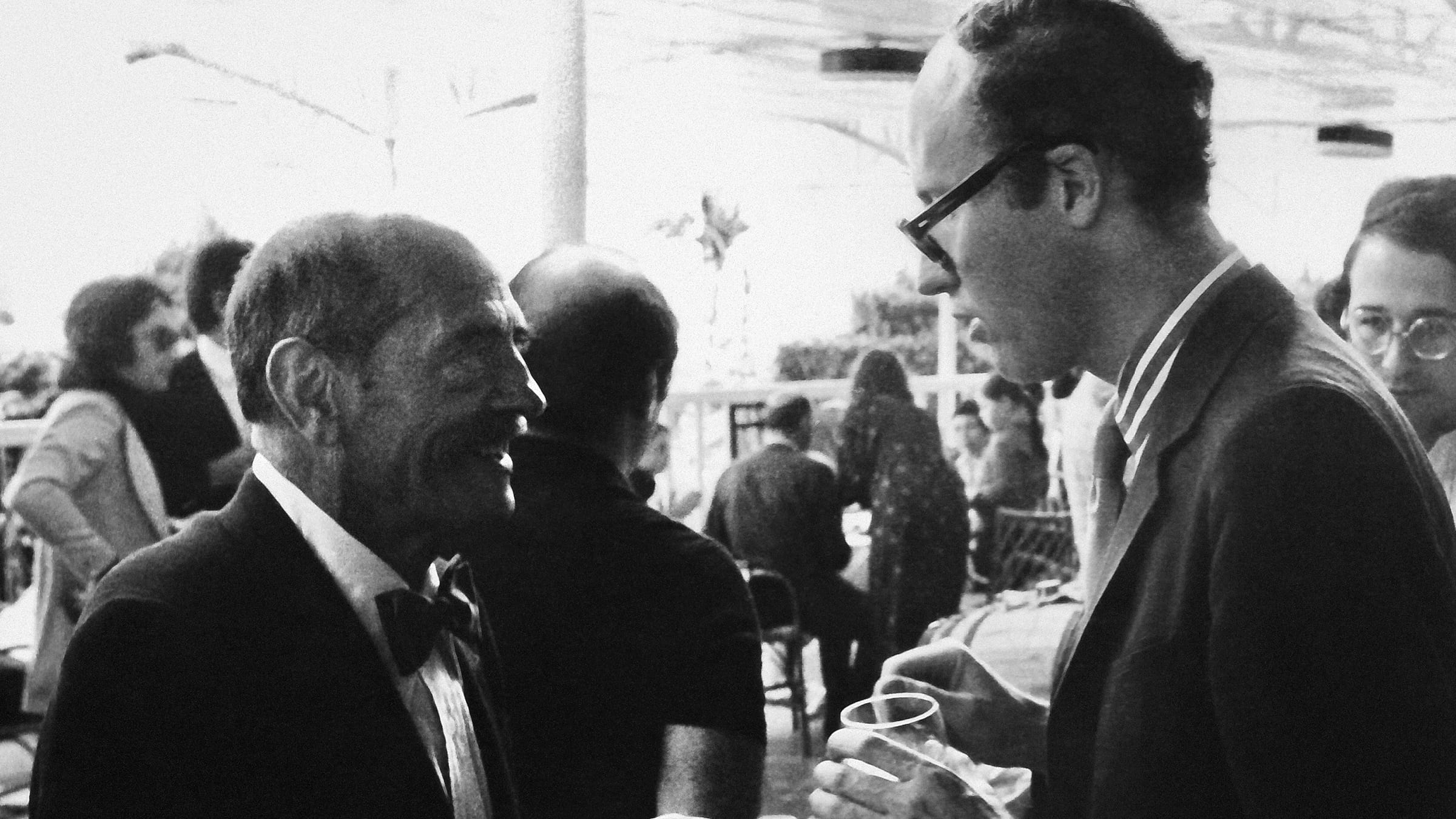
Top of page: Peter Cowie (right) with Luis Buñuel; above: International Film Guide 1964
Tell us a little about the origins of Tantivy Press, and how you came up with the idea for the International Film Guide.
My father had founded a small publishing enterprise called the Tantivy Press (a quote from Walter Scott’s novel Woodstock) at the close of World War II. He published poetry, satire, and oddities like a facsimile edition of Wordsworth’s A Guide Through the District of the Lakes in the North of England. When he retired, he gave me the name, and I was able to use that to launch my first titles. The concept behind the International Film Guide was quite simple: to open a window on the burgeoning art of film in as many countries as possible, and to bolster that with sections on film books, film magazines, film bookshops, art houses around Europe, and so on. The response in 1963 was so overwhelming that I knew there was a yearning for books about films and filmmakers.
French publishers were far ahead of the pack by the turn of the 1960s, and when we started putting out original monographs on directors, we stole a march on the Americans. We were soon followed by Ian Cameron’s Movie paperbacks, and by Secker and Warburg’s Cinema One series in association with the BFI.
I was struck by something you wrote, that at the time you first started publishing these books, “each new monograph was almost always the first of its kind in English.” This might be hard for some people to imagine today!
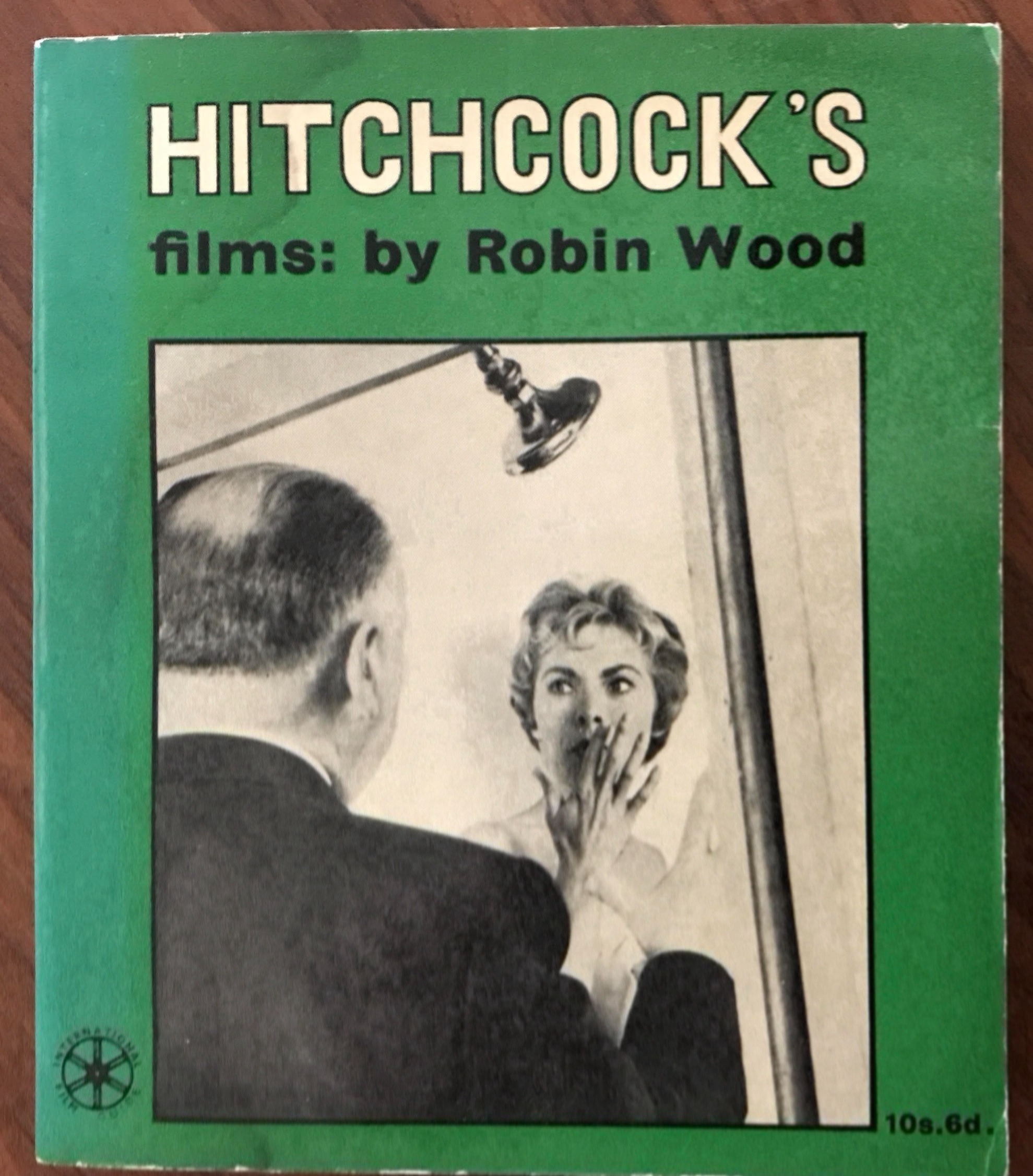
Absolutely. It was an exciting time, somehow rhyming with the hopes of the early 1960s in so many fields—politics, with the advent of John F. Kennedy; fashion, with Courrèges and Mary Quant; theater, with John Osborne, the Royal Court, and so on. It was gratifying to put out the first book-length studies in English of directors like Hitchcock, Dreyer, and Polanski—not forgetting one of my personal favorites, Allen Eyles’s still definitive analysis of the Marx brothers and their films. Today there must be some thirty books available on Hitchcock, Bergman, Welles, Kubrick, etc. But in 1963 the field was largely unplowed.
Give us a sense of your peak Tantivy years.
By the late 1960s, the law of diminishing returns soon began to hover at my shoulder. We had started with the International Film Guide and one or two other titles each year, but encouraged by our distributors and by letters from film buffs, we expanded the program to as many as a dozen paperback originals per year. I tried to edit each title myself, but I found I had to take on assistants like Derek Elley (who would himself become a noted critic). On top of that we were distributing several film titles originated in the U.S. by A. S. Barnes & Company, and I found that I was spending more time on administrative chores than I was on editing or indeed on my own writing, which took a back seat for several years.
You even anticipated IMDb with your very ambitious idea to publish a world filmography.
Indeed, and not just with those two volumes of World Filmography (1967 and 1968) but also with our Screen series, which featured illustrated dictionaries of national cinemas (Germany, France, Swede, Eastern Europe) and genres (the gangster film, the American musical). This was due to the success of Peter Graham’s path-finding A Dictionary of the Cinema, which we published in 1964 and had to reprint twice.
When did your long relationship with Janus Films and Criterion begin?
The moment I saw the patrician elegance of the Janus logo, I sensed that here was a distributor bent on serving the art-house world. Bill Becker and Saul Turell held the rights to a cluster of great directors, from Eisenstein to Bergman, Renoir to Truffaut, and Fellini to Kurosawa. Their catalogs and promotional flyers were five star all the way, scrupulously researched and printed on high-quality paper that did justice to stills. Even the Janus offices at 745 Fifth Avenue were spacious and thickly carpeted. Everyone who worked there did so with total commitment, among them Peter Meyer, who first had the idea of sending me round the U.S. on lecture tours featuring Janus titles.
I began writing catalog notes for Bill and Saul in the very early 1970s, and so when a decade or so later the company entered a joint venture with Voyager to release classic films on laser disc, I was asked to essay a full-length commentary on my favorite film, The Seventh Seal. I describe in my book the often hazardous process of recording these commentaries, and the grueling research required to “keep talking” for a hundred minutes (or even three hours, as I did later for The Leopard and Fanny and Alexander). I sometimes ask myself who listens to these commentaries, and then, out of the blue, I receive a letter or an email from a film buff in a distant land, saying how much they enjoyed my track.
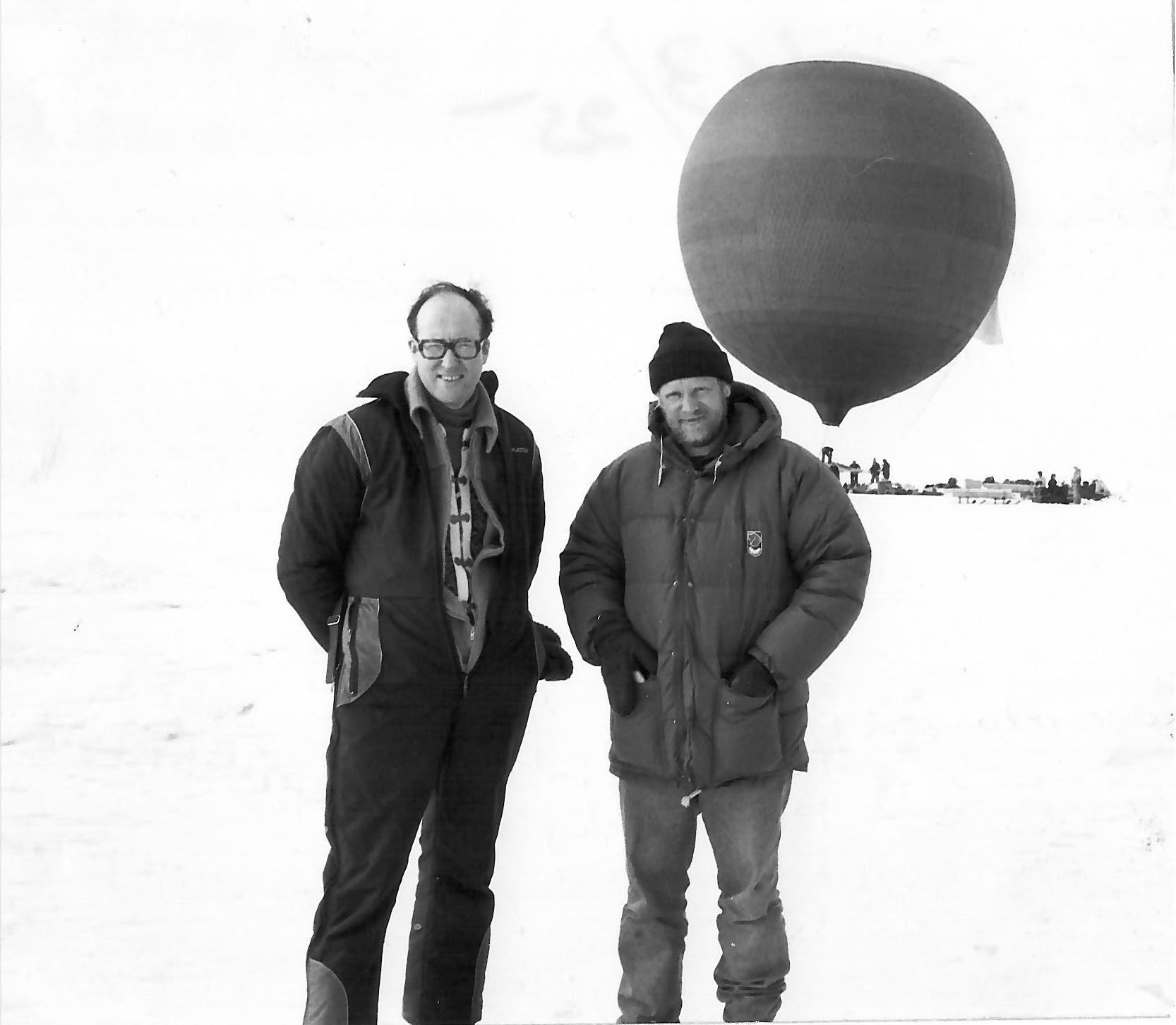
Cowie and director Jan Troell
I was amazed reading the book by your prolific and precocious letter-writing habit. Starting with one to your idol Bergman before you even started at university, I believe.
Sixty to seventy years ago, phone calls from one country to another were expensive and cumbersome. Letters were the principal means of maintaining contact with others around the world. Correspondence of this kind were supplanted by emails—emails, furthermore, that most people lose over time as they switch from one electronic device or provider to another. It’s such a pity, because what would we know about previous centuries were it not for letters? Ingmar Bergman, for example, kept about twenty thousand letters during his lifetime, and François Truffaut’s letters constitute a mini-history of the French New Wave. The irony is that emails are themselves now regarded as “so twentieth-century.” On the other hand, the age of the internet has given us access to an almost unquantifiable amount of knowledge, all at a few clicks of a keyboard. Just occasionally, I like to think, the flashbacks in my memoir offer insights or incidents that one will not find in Wikipedia.
The richness of your relationships with these important artists certainly comes across in those “Flashbacks”—your short personal remembrances, many first written for Criterion. I think the way you interweave them with the main narrative of the story of your life is very effective.
For a majority of people, their private life is distinct from their professional work. I loathed the idea of describing the intimate moments of my existence unless, and it’s a big “unless,” they impinged directly on my career as a publisher and film historian. So I tried to adhere to this approach.
What are you working on now?
There’s no doubt that in one’s mideighties, there are only a few hours each day when one feels top-notch and ready to write or research. I’m content to do two or three pieces a year for the arts section of the Wall Street Journal, to moderate a panel at the Venice Film Festival, and write the occasional liner note for Blu-rays. There are two book projects for 2027, however: the first is a revised and expanded version of my monograph on Orson Welles, published in 1965 and now out of print; and the second will be a study of the films of Kon Ichikawa, whose achievements rival those of the Big Three in Japanese cinema—Kurosawa, Mizoguchi, and Ozu.
From your eminent vantage point, how would you assess the state of cinephilia today?
I believe that the state of art-house cinema today rhymes with the situation in what one might term “cine-literature.” When my slender monograph on Bergman appeared in 1961, cinephiles leapt upon it eagerly because it was the first study of Bergman in English. So few books on the movies were being published, and there were far fewer films being made. Today, however, more films than ever before are available on various formats and platforms, and most are seen by fewer spectators than there were for art-house titles sixty years ago. A plethora of books on film emerge from a wide range of publishers, but again, most of those titles sell a handful of copies by comparison with the sixties and seventies, when even our paperbacks on Carl Dreyer or Luis Buñuel went through a first edition of four thousand or more.
Does that mean that the films of the sixties were intrinsically better than those of today? I don’t think so. The landscape, rather than the trees, has changed. More movies and, as I’ve said, more books and essays about the movies. And, miracle of miracles, every few months a new talent emerges. Classic films are so much more accessible now, thanks to restoration programs, and the presence of older feature films all over the internet as well as on disc and on streaming services like the Criterion Channel. So, despite the decline in theatrical audiences, I still believe that the art of film can go from strength to strength. In Flashbacks, I have tried to express not so much nostalgia as a passion for cinema in all its forms.
The Bhutanese director and leading Tibetan Buddhist teacher talks about his wide range of aesthetic influences, his experience working with Bernardo Bertolucci, and film’s connection to meditation.
The filmmaker looks back on the experiences that have shaped his creative life, including his time in art school, his work as a graphic designer and music-video director, and his early interest in documentary cinema.
The director behind such documentaries as Helvetica, Objectified, and Urbanized talks about his interest in how designers shape our world and explains the technological innovation at the heart of his new film about legendary musician Brian Eno.