“Last night, I was in the Kingdom of Shadows,” proclaimed Maxim Gorky, writing about an 1896 projection of films by Auguste and Louis Lumière in the Russian city of Nizhny
Gorky was dazzled, as were many others, by the Lumières’ 1895 invention, the Cinématographe, a major advancement on the first attempts at motion picture photography. Before the Lumières, the most successful of these was Thomas Edison’s Kinetoscope, which presented films in a box that viewers peered into. Auguste Lumière reportedly said of it, “We have to get the image out of the box and project it in front of an audience.” And so they did, with their elegant contraption, which could photograph, process, and project moving images. Within a decade, the Lumières used it to create more than two thousand films.
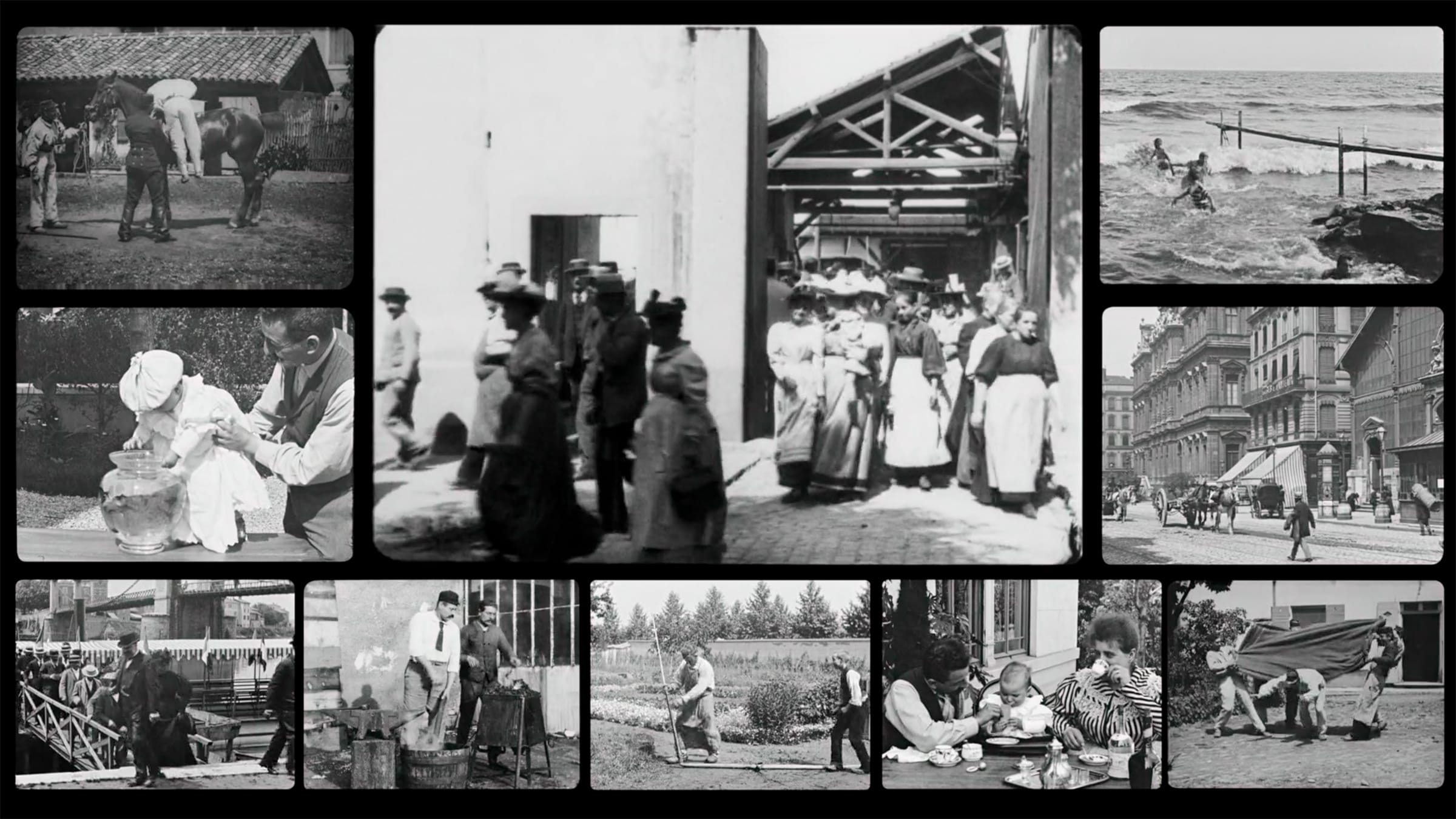
As Thierry Frémaux shows in his enthralling new film Lumière, le cinéma!, now on the Criterion Channel, these were the works not just of inventors but of the first film artists. With dynamic compositions, endlessly fascinating subjects, and ingeniously choreographed action, the films—each under a minute—are surprisingly modern and beautifully structured in their control of time and space, showing us how to see the world in a new way.
Lumière, le cinéma! compiles 120 of them, beautifully restored, into a coherent feature-length work that functions as a love letter to cinema and as an essay film. Serving as a loquacious benshi, Frémaux narrates, sharing fascinating historic details, critical observations, and philosophical thoughts. As head of the Cannes Film Festival and director of the Institut Lumière in Lyon, he has the perfect vantage point to draw stylistic connections between the Lumière films and the work of great directors to follow.
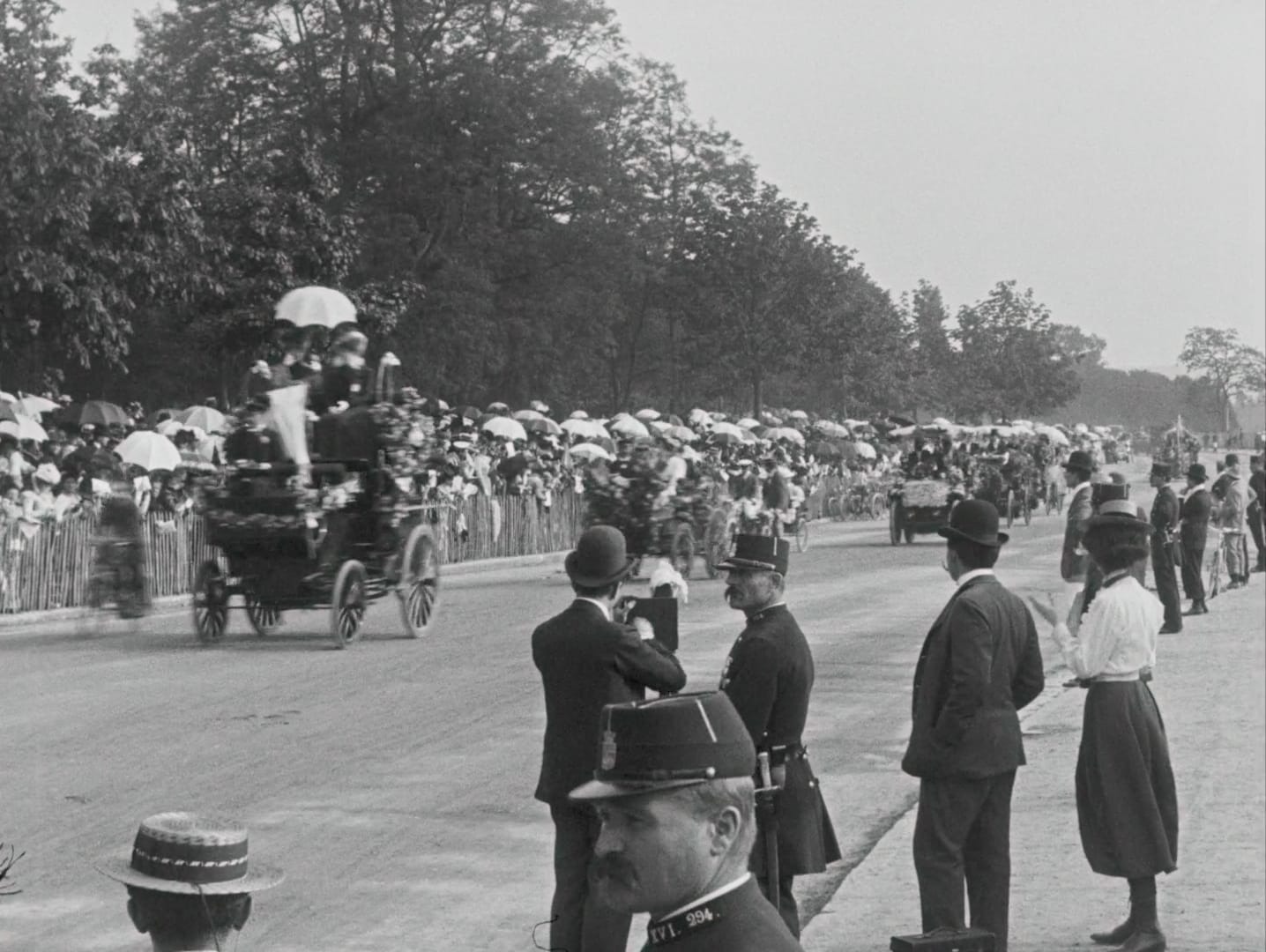
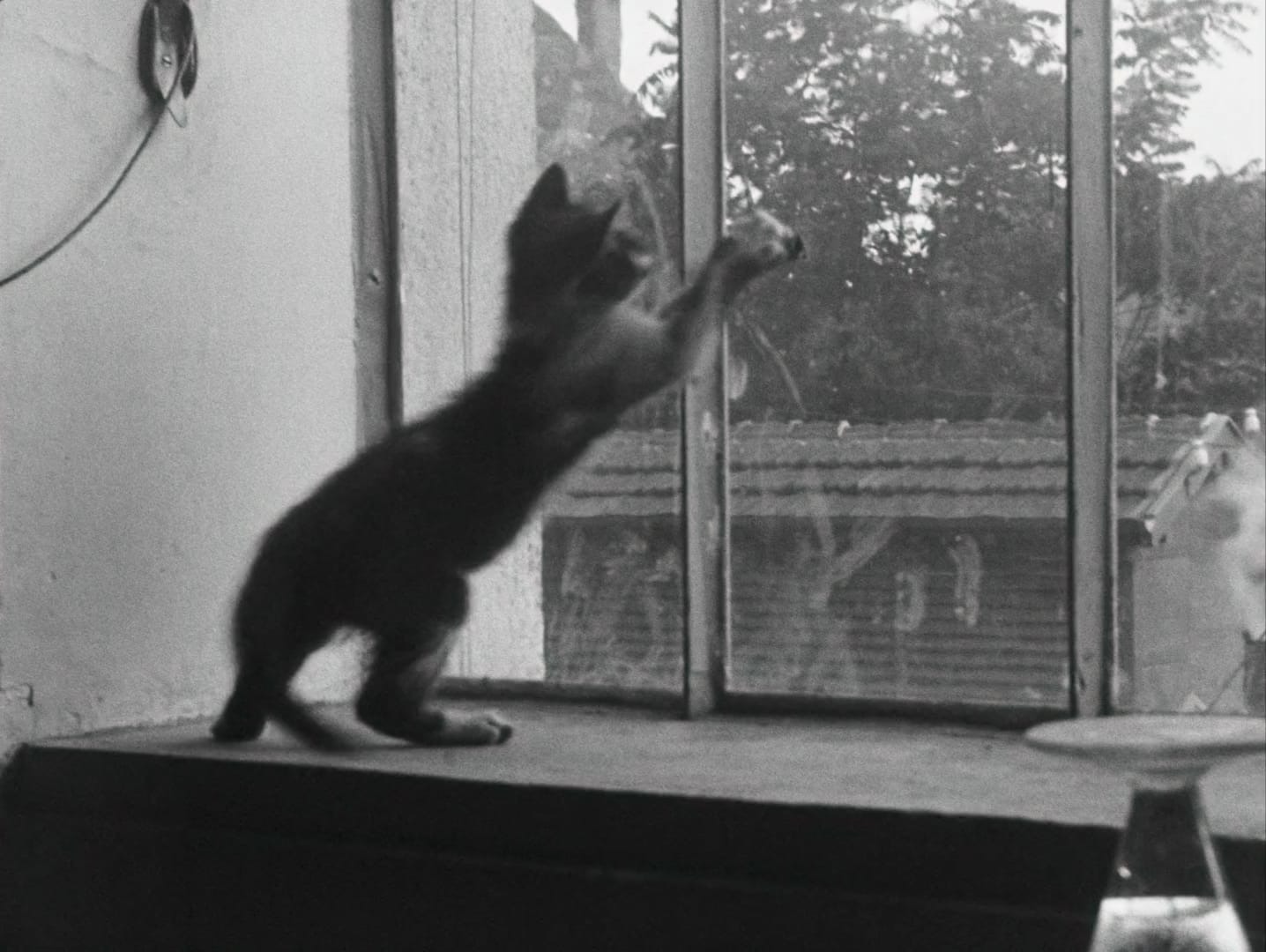
The Lumières dispatched cameramen around the world, to capture teeming cityscapes, domestic scenes, acrobatic performances, military exercises, and the urtexts for such future genres as the cat video, the martial arts film, and, presaging Jackass, the prank film. A bustling Paris scene lingers on a family at rest in the foreground, a moment in time that reminds Frémaux of Proust; a cavalry charge surges from deep background to immediate foreground, then carries on, leaving an empty frame; workers exiting a factory in Vietnam (then Indochina), passing a formation of French soldiers, evokes a colonial past; a scene of women loading wheelbarrows outside a coal mine shows their role in this physically grueling work. And even the simplest subjects—a shoreline, waves breaking against rocks—filmed with the minimalism of Chantal Akerman—take on a striking modernity.
Frémaux’s film is a celebration and a reminder. At a moment when theatrical exhibition faces ongoing uncertainty, it returns us to cinema’s foundational gesture: the shared experience of watching moving images together. I talked with Frémaux at the Criterion office about Lumière, le cinéma! As always, his energy matched the enthusiasm of the film’s well-earned exclamation point.
Your film addresses a few misconceptions about the Lumière films. Often people say that Georges Méliès was making narrative films and that Auguste and Louis Lumière were just filming life, which takes away from what they really achieved.
And those two conceptions became: Lumière is documentary, and Méliès is fiction. It’s not true. Because one of the first Lumière films is The Gardener, which is a fiction and a comedy. The Lumières right away understood that they can film a story. And, by the way, the first Méliès films were documentaries he did at a railway station.
When you watch the Lumière films, you understand they are putting on-screen the daily poetry of life, and Méliès reinvents what life is, creating magic and illusion. That’s why I say in the movie that Lumière is Rossellini, and Méliès is Fellini. Lumière is the French New Wave, the modern. Méliès is maybe Hollywood. And I love both. But it’s not about documentary and fiction. As an artist, writer, or painter, you have two approaches. You make something very realistic—though it won’t be totally realistic, because you find your own way to do it—or you make it from your imagination and you are Picasso. So there is on one hand George Méliès, Stanley Donen, Steven Spielberg, and James Cameron. And on the other you have Lumière, Murnau, Bresson, Renoir, Kiarostami, Pialat. And that path. So you have those two. And the history of cinema is the development of those two families. And me, as a movie buff, I love both. I don’t take one over the other.
I think it’s important that you connect the Lumières to these great directors, like Bresson and Chantal Akerman, because there’s so much artistry to what the Lumières are doing. And that’s always what amazes me about their films. The decisions they made about composition and camera placement are so rich. I don’t know if you have an idea of where that came from. They seem to have such a deep understanding of the medium right at the beginning.
We have some archival material and letters about the scientific process but little else. So it’s like with Shakespeare—we don’t know, we have to make hypotheses. The Lumières are the same. Did they know the painting of their time, the literature of their time, the photography of their time? We don’t know. But we do know that they were fully of their time. In the first montage in my film, I mention a Lumière short that is very similar to a Cézanne painting. Did they know the Cézanne painting or not? If they knew it, it’s extraordinary how they remade it, and if they didn’t know the painting, then the anonymous Lumières from Lyon made something similar to the great artist Cézanne. The Lumières were industrial photographers. So the quality of the black and white, the quality of the grain, the quality of the focus looks like the best photography of the time. But the word cinématographe means “writing movement,” so the Lumières made each film as cinema and not a photograph.

Even if they were thinking of paintings, there was an instinct about what to do with those fifty seconds.
Yes, exactly. The story of cinema is not the story of images. It’s the story of shots. And each film is a shot, and a shot that means something. And there are some films without any movement, only I don’t want to say silence, but you can feel the silence of the room or of the scene. So they understood that cinema was about movement but could also be about silence, about time. Like Ozu. They tried a lot of things. And that’s what we wanted to show.
I think that’s why it’s great that you start with the quote from Agnès Varda that stresses that, as a modern filmmaker, she sees the Lumières as peers, as contemporaries almost.
Cinema is a young art. One hundred and thirty years is nothing.
I just want to pick up on one thing you said about the quality of the images. How are the films preserved so beautifully? In the U.S., we’re used to seeing copies of the Edison films and other early films coming from paper prints, so the quality is not as good. Were the negatives preserved by the Lumières themselves?
After World War II, in 1946, Georges Sadoul, the great French historian, went to see Louis Lumière. Lumière’s wife had died already, so he was living alone in the south of France, and they had a great conversation. Sadoul’s last question was: Where are the films? And Lumière said, I have them. And he had the films in Lyon, protected. Sadoul told him he needed to send them to Henri Langlois, to the Cinémathèque française. So that’s why the Cinémathèque has such a good collection of the films, and that’s why our film is partly dedicated to Langlois, because he was one of the first Lumière fans and supporters, and he screened them. On seeing them in 1965, Godard said that the Lumières are the extraordinary inside the ordinary thing, and Méliès is the opposite, the normal thing inside the extraordinary.
So, thirty years ago, for the centennial of cinema, the Lumière Institute, the Cinémathèque, and the government restored many of the films, from negatives and from some positive prints. [My producer] Maëlle Arnaud is in charge of the new process of restoration. After 130 years, the film is fragile, so we have to do digital restoration. There are two thousand movies, and we have restored five hundred. So we have a lot to restore, and will maybe make a third compilation or a fourth. And this year we are going to open a web platform for people to see films without my commentary. Shut up, Frémaux [laughs]! We also want to make a catalogue raisonné. We are really focused on our responsibility to protect those films. Cinema is a young art, and we have to preserve it.

But there is a phenomenon now in repertory theaters; there’s a younger audience going to theaters. I wanted to ask about the role of Antoine, the Lumières’ father. It seems like he really saw the need to show these films in a theater.
The father did two very important things. First, he said no to the Kinetoscope, that we can do better. And one year later, when the Lumières were ready to show films, he organized the first public screening with tickets, in Paris at the Grand Café. Who could guess then that cinema would become what it became?
It’s very touching at the end of the film when you suggest that, early in the twentieth century, the Lumières realized that they were finished with cinema. Why did they stop?
Two things. First, Louis Lumière said, “We left the cinema to the artists.” We say he was an artist. You have to just look at the work. Those films are made by people with a total consciousness of the art. But the Lumières were very interested in two things: one was cinema, the other was color photography. In 1903, they moved on to something new, inventing the Autochrome color process. And that was the main color process until 1930, when George Eastman created a new kind of film.
The Lumières epitomized that moment at the end of the nineteenth century, the beginning of the twentieth century, when humanity thought that the new century would be great. It may have been the worst century of the world. But at that time, even Marcel Proust thought that life was great. And then World War I and the rest of the twentieth century happened.
I love the connection to Proust you make in the film, you know, that little film of the family.
Yes, it’s like having in one shot what Proust used two hundred pages to describe.
More: Interviews
On Restoration and Repair: A Conversation with Ja’Tovia Gary
The shape-shifting artist and director of The Giverny Document talks about the Black feminist tradition, her approach to direct animation, and the influence of Toni Morrison and Soviet montage theory on her work.
To Become the Sky: A Conversation with Jess X. Snow
Suffused with visual beauty and moments of magical realism, Jess X. Snow’s queer diasporic cinema invites us to imagine new possibilities for freedom, transformation, and intergenerational healing.
Planet of the Tapes: A Conversation with Alex Ross Perry
To mark the fiftieth anniversary of the invention of VHS, the director and the editor of Videoheaven discuss how this game-changing format shaped their lives and imaginations and left a seismic impact on the film industry.
Near and Far: A Conversation with Dwayne LeBlanc
The director of Civic and Now, Hear Me Good talks about how his experience as a first-generation Caribbean American and his love of Chantal Akerman’s short La chambre have influenced his work.