Christian Petzold in New York
Share
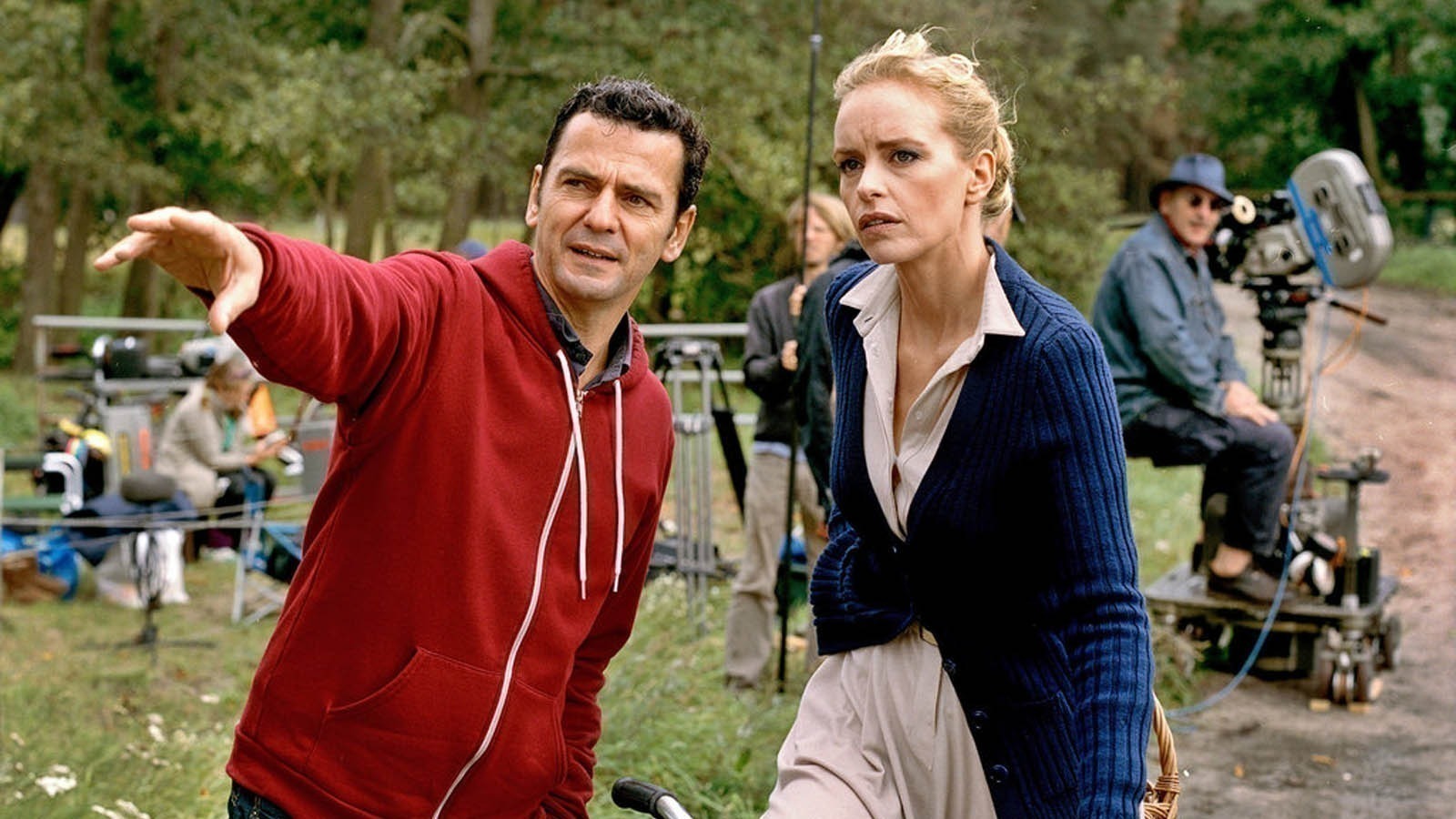
A few years ago, Christian Petzold recalled being at the fiftieth New York Film Festival in 2012 with Barbara and meeting Abbas Kiarostami, who was there with Like Someone in Love. Petzold told a tale of two breakfasts in the big city, and trust me, you’ll want to give it two and a half minutes of your time.
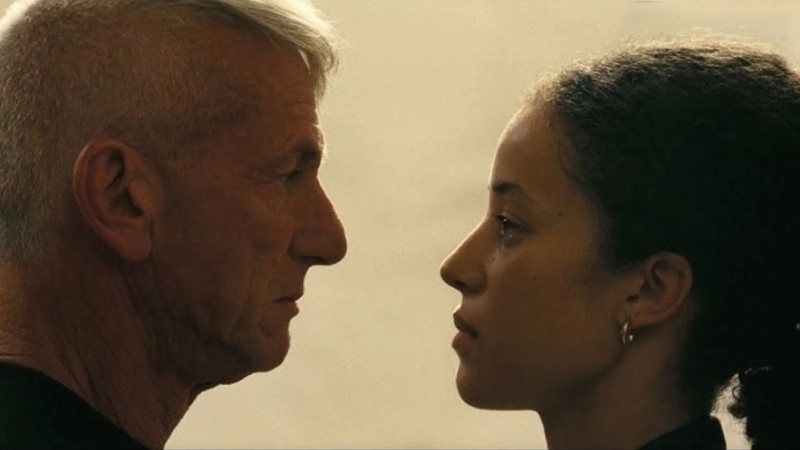
The German director is back in New York this week as Film at Lincoln Center presents a series of his films leading up to the U.S. release of Miroirs No. 3 (2025). Paula Beer stars in her fourth Petzold film as Laura, a pianist who survives a car crash and takes up an unspoken offer from a stranger, Betty (Barbara Auer), to begin a new life with a new family.
“In Germany, we don’t have a concrete film industry, so we have to build our own little partisan film groups,” Petzold tells Weiting Liu in the current issue of the Brooklyn Rail. “For example, Rainer Werner Fassbinder also had his own ensemble of regular collaborators throughout his career . . . Nine years ago, I saw Paula for the first time in French director François Ozon’s Frantz (2016). I was instantly impressed. François, a friend of mine, vouched for her special acting sensibility—she’s not playing, nor is she on stage.”
Petzold is always a terrific interviewee, even more delightful to listen to than to read. On The Last Thing I Saw, he tells host Nicolas Rapold about going through passport control in New York, and it’s a story with a pleasant surprise at the end. He’ll take part in a Q&A following this evening’s screening of The State I Am In (2000) before introducing Ghosts (2005). These are the first two films in an informal “Ghosts” trilogy, and the third, Yella (2007), screens tomorrow.
“Money—who has it, who lacks it, and what those who need it are willing to do to get it—is a constant, corrosive presence,” wrote Max Nelson in a 2014 piece on the trilogy for Film Comment. “It’s what drives a married pair of former West German terrorists to endanger their teenage daughter’s future by committing a desperate, irrevocable deed in the last act of The State I Am In, what brings together—then tears apart—a struggling, marginalized girl and an emotionally shattered businessman’s wife in Ghosts, and what determines every step of a young accountant’s uncertain future in Yella. It’s the hurdle that Petzold’s characters have to jump before they can arrive at any kind of intimacy with one another, and the sudden, pressing interruption that cuts their moments of tenderness short. And it’s bound up closely with a subject that haunts every frame of Petzold’s trilogy: the fault lines created, widened, and exposed in Germany’s national identity in the wake of the country’s 1990 reunification.”
Barbara, also screening tomorrow, takes us back to a divided Germany. It’s 1980 when Dr. Barbara Wolff (Nina Hoss) is reassigned from a clinic in East Berlin to a provincial hospital as punishment for having applied for an exit visa. “The dissident doctor, unfailingly kind and warm with her patients,” wrote Melissa Anderson in the Village Voice, “will make an enormous sacrifice for one of them: teenage Stella (Jasna Fritzi Bauer), an escapee from a juvenile workhouse—or ‘Socialist extermination camp,’ as Barbara calls it, cutting through the euphemism—who has been brought in with meningitis. Barbara’s act, beyond ratcheting up the tension of an expertly plotted film, also links our heroine to the great maternal altruists of ’30s and ’40s cinema whose names also served as film titles (Stella Dallas, Mildred Pierce). But unlike those martyrs, the physician’s deed is impelled not by masochism or self-abnegation but a sense of duty both to herself and her vocation. By the end of this impeccable movie, that commitment will be understood as her rescue.”
On Thursday, Petzold will introduce his first collaboration with Hoss, Something to Remind Me (2001), a made-for-television feature with deliberate echoes of Hitchcock’s Vertigo (1958). “While Petzold reveals everything in due time, he’s not particularly interested in twists or surprising reversals,” wrote Daniel Gorman at In Review Online in 2021. “To be clear, the film functions as a top-notch thriller, but there’s a steady undercurrent present about internalized emotions playing out over placid, sanitized surfaces. Petzold has an uncanny ability to zero in on only the most important part of any given scene, advancing plot and key characterizations while also careful to always show his characters navigating the world as a series of obstacles. His preferred style of shooting—minimal camera movement, lots of medium and long shots that emphasize the place of the human body in a clearly demarcated space, multiple setups in lieu of standard shot-counter-shot—is all already firmly in place here.”
Don’t miss out on your Daily briefing! Subscribe to the RSS feed.