BFI Flare 2026
Share
The fortieth-anniversary edition of BFI Flare: London LGBTQIA+ Film Festival opens tonight with the world premiere of Hunky Jesus, the latest documentary from Jennifer M. Kroot (It Came from Kuchar, To Be Takei). Each Easter, thousands of people gather in Dolores Park in San Francisco for a liberating celebration hosted by the Sisters of Perpetual Indulgence, an informal order whose history stretches back to 1979. “I was surprised to learn, personally, that a lot of them are Christian, the Sisters,” Kroot tells Gavin Spoors in Filmhounds Magazine. “That a lot of them have some type of spiritual practice or might even be associated with an actual church or temple.”
By the time BFI Flare 2026 closes on March 29 with Sandulela Asanda’s Black Burns Fast, the story of a seventeen-year-old who falls for a new arrival at her South African all-girls boarding school, the festival will have screened sixty-five features and sixty-two shorts from forty-seven countries. This year’s Special Presentation is Paloma Schneideman’s Big Girls Don’t Cry, which Siddhant Adlakha, writing for Variety, calls “a fantastic feature debut atypical of films on awkward adolescence. Unfolding during an overcast December summer in the mid-2000s, its intentional plotless-ness comes wrapped in harsh moods and distinct visual palettes, complemented by a gentle (albeit unflinching) approach to its maladjusted teen protagonist, brought to life by a fearless young actress [Ani Palmer], and by a director who makes each hefty, detailed layer of her story and setting feel natural and effortless.”
Like the British Film Institute’s London Film Festival, BFI Flare is divided into thematic strands. Best of Year, for example, showcases four films. In Marcelo Caetano’s Baby (2024), eighteen-year-old Wellington (João Pedro Mariano) is released from a juvenile prison to the streets of São Paulo, and in the Guardian, Phuong Le finds that “Caetano depicts Wellington’s new life of crime with tender empathy rather than as a sensationalist cautionary tale.”
Nigerian immigrants Isio (Ronke Adekoluejo) and Farah (Ann Akinjirin) share a room at a British removal center in Joy Gharoro-Akpojotor’s Dreamers (2025). For the Guardian, Leslie Felperin writes that “thanks to subtle, considered performances, a finely milled script, inventive craftsmanship, and a deep sense of empathy for the precarious lives of refugees, [Dreamers] packs a considerable wallop.”
Reviewing Urška Djukić’s debut feature for Variety, Guy Lodge finds that Little Trouble Girls “sharply evokes that adolescent age where worldly adult knowledge is just within view and just out of reach. Following a shy sixteen-year-old on a girls’ choir trip that exposes both her sexual naïveté and her deep, inchoate yearnings, this is a striking statement of intent from its Slovenian writer-director—there’s an airy delicacy here that invites comparisons to early Céline Sciamma, but with its own raw, restless edge.”
The fourth film in the strand is Pillion, the debut feature from Harry Lighton and the winner of the award for Best British Independent Film. Harry Melling stars as Colin, a young man living with his parents in the London suburb of Bromley and falling for Ray, a strapping motorcyclist played by Alexander Skarsgård. Colin willfully submits to Ray’s domination—for a while. When the film premiered in the Un Certain Regard program in Cannes, Richard Lawson wrote in a dispatch to Vanity Fair that the “beauty of Pillion is that those of us watching on the sidelines are not voyeurs, but rather witnesses to something powerfully complex and human.”
Eight films are lined up for the Treasures strand of “queer classics from across the decades,” including James Bidgood’s Pink Narcissus (1971), Bill Sherwood’s Parting Glances (1986), Cheryl Dunye’s The Watermelon Woman (1996), and Gregg Araki’s Mysterious Skin (2004). As a sort of companion text, ten writers have put together an annotated list of forty films that have screened at BFI Flare over the past forty years, including works by Monika Treut, Rosa von Praunheim, Barbara Hammer, Marlon Riggs, Andrew Haigh, Xavier Dolan, François Ozon, Stephen Cone, and André Téchiné.
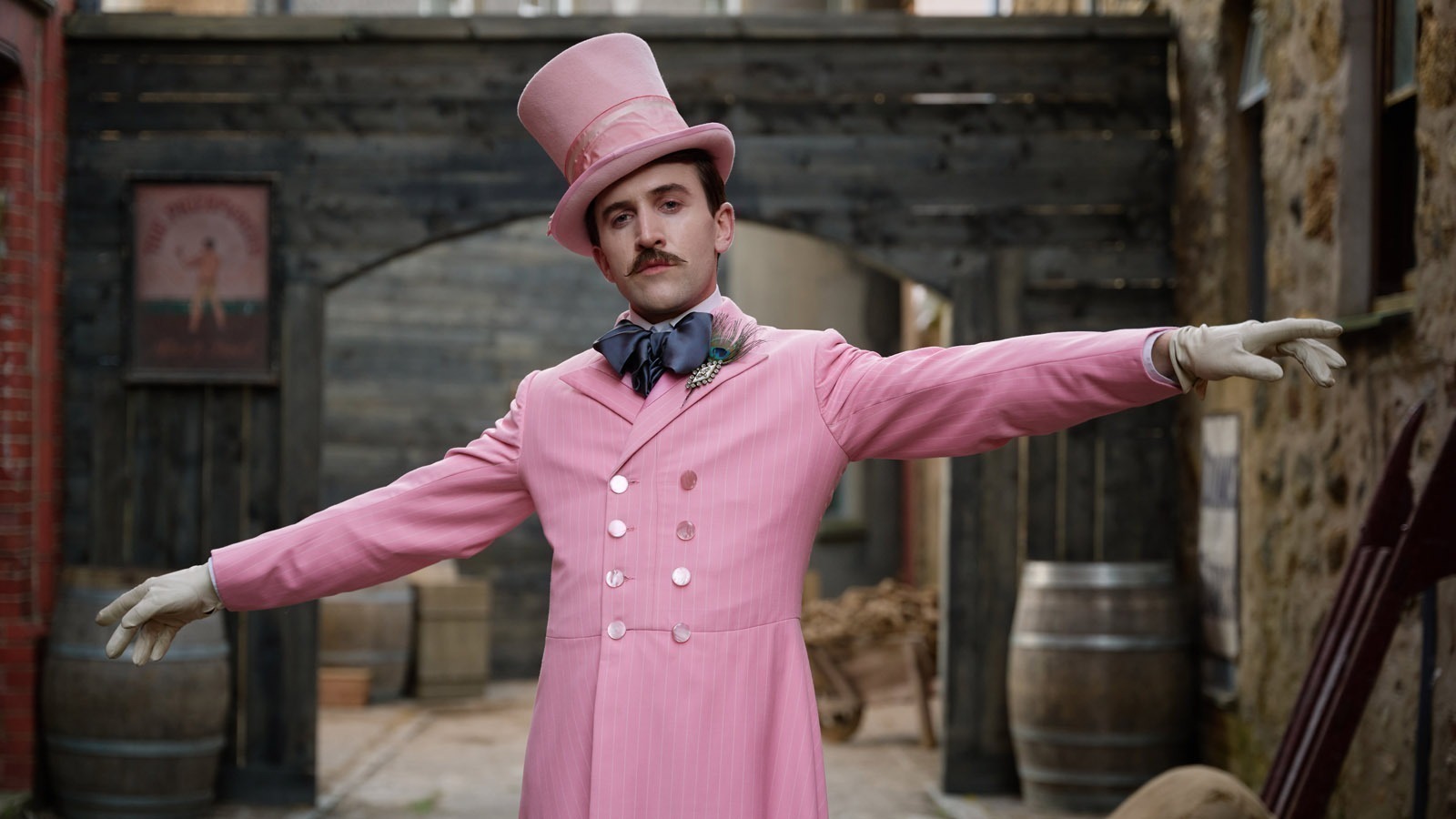
The Hearts strand features Lucio Castro’s Drunken Noodles, which screened at last fall’s New York Film Festival, and the world premiere of Celyn Jones’s Madfabulous, starring Callum Scott Howells as Henry Cyril Paget, the Fifth Marquess of Anglesey, or to his friends, Toppy. “He enjoyed dressing up as Queen Eleanor of Aquitaine,” notes Tristram Fane Saunders in the Telegraph, “performed sultry dances in German music halls, and (as one contemporary newspaper put it) ‘he bought diamonds as an ordinary man buys cigarettes.’” The cast of Madfabulous also includes Ruby Stokes and Rupert Everett.
The Bodies strand offers Jaripeo, a documentary by Efraín Mojica and Rebecca Zweig that premiered at Sundance and screened in Berlin. “There’s always been something sexy about the image of the cowboy,” writes Juan Barquin at the Film Stage, and Jaripeo, “named after and set against Mexican bull-riding rodeo events, is fixated on this image and how a variety of men who attend these events question it, eroticize it, and actively laugh at it.”
Featured in the Minds strand are Louise Weard’s Castration Movie Chapter iii. Junior Ghosts—Premorphic Drift; a fragmentary passage and Lexie Bean and Logan Rozos’s What Will I Become?, which won the Amnesty International Film Prize when it premiered last month in Berlin. More than half of all transgender boys and young men in the U.S. have attempted suicide, and What Will I Become? tells the stories of two who did not survive.
When Harper Steele, the former head writer at Saturday Night Live who appeared with Will Ferrell in Will & Harper (2024), came aboard What Will I Become? as an executive producer, she told the Hollywood Reporter: “As someone who’s been steeped in trans culture for more than a decade, this film was an education. As trans people come under increasing attack from all directions, it is essential to show the harm transphobia enacts on the community, but equally important is to show the joy they can never take away. What Will I Become? achieves both.”
Don’t miss out on your Daily briefing! Subscribe to the RSS feed.