Unmistakably Real
Boots Riley has opened this year’s SXSW with I Love Boosters, starring Keke Palmer as the leader of the Velvet Gang, a trio of shoplifters whose latest target is a billionaire played by Demi Moore. I Love Boosters is set “in a version of the Bay Area where the floors of an office are tilted at a forty-five-degree angle,” notes Angie Han in the Hollywood Reporter, “where a demon sucks the souls out of people by going down on them, where a teleportation device shows great promise as a way for retailers to cut down shipping costs. But watching it feels less like being transported into a different universe than putting on X-ray goggles to look at our own—and finding, buried under all the frustration and despair, a joyful and unruly sense of hope.”
- Following an “unofficial” hiatus of a little more than two years, Another Gaze has returned to relaunch with a freshened-up design and a new issue that includes articles on Emerald Fennell’s Wuthering Heights and Deborah Stratman’s Last Things (2023) and interviews with Mary Helena Clark and Paula Gaitán, both of whom have selected work to stream on the newly revamped Another Screen. “As feminist film theorist Teresa de Lauretis (1938–2026) put it,” write the editors, “‘how to effect another vision: [how] to construct other objects and subjects of vision’? In 2026, we are still asking ourselves this question.”
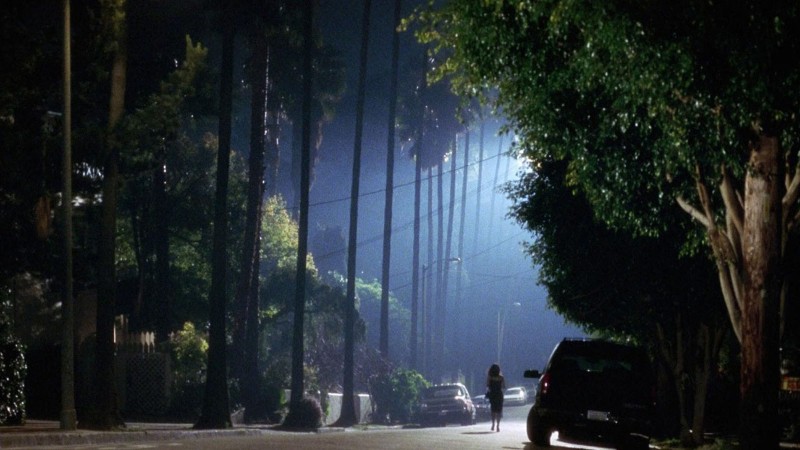
- June 1 will mark the hundredth anniversary of the birth of Marilyn Monroe, and exhibitions are set to open in Paris (April 8 through July 26), Los Angeles (May 31 through February 28), and London (June 4 through September 6). New York’s Museum of Modern Art is presenting a series of films starring Monroe through March 25, and MoMA’s Magazine is running curatorial associate Francisco Valente’s piece on the echos of the star’s legend in David Lynch’s Mulholland Dr. (2001). “You could say that Laura Palmer is Marilyn Monroe,” wrote Lynch in Room to Dream, “and that Mulholland Dr. is about Marilyn Monroe, too. Everything is about Marilyn Monroe.”
- Throughout last month’s Berlinale, MUBI’s Daniel Kasman asked filmmakers “to select a memorable image or moment from their film and describe why it is particularly special to them.” The result is an amazing Notebook collection of reflections from, for example, Charles Burnett, who says that “the saving grace of My Brother’s Wedding [1983]” is his lead character’s relationship with his grandparents. Alain Gomis (Dao) shares an unsettling moment, while for Radu Jude (Shot Reverse Shot), “the whole architecture is crucial.” Angela Schanelec (My Wife Cries) focuses on her ensemble, and Gore Verbinski (Good Luck, Have Fun, Don’t Die) talks about an accidental discovery he intuitively incorporated “like an infant grabbing candy.”
- Written and directed by the late Robert Benton (Kramer vs. Kramer, Nobody’s Fool), Places in the Heart (1984) is “one of the great films of the 1980s, and the greatest Texas movie of all time,” writes Matt Zoller Seitz in a fantastic piece for the Southwest Review. Set in 1935 Waxahachie, this story of an ad hoc family led by Edna (Sally Field) is “a Texas movie in every way. It’s set in a specific Texas city during a specific time, and written and directed by an artist who didn’t come to the material as an outsider but was a native son with a compassionate but unsparing eye. It has larger points to make, of course. But for the most part, it’s a splendid example of how to illuminate the universal by drilling down on specifics.”
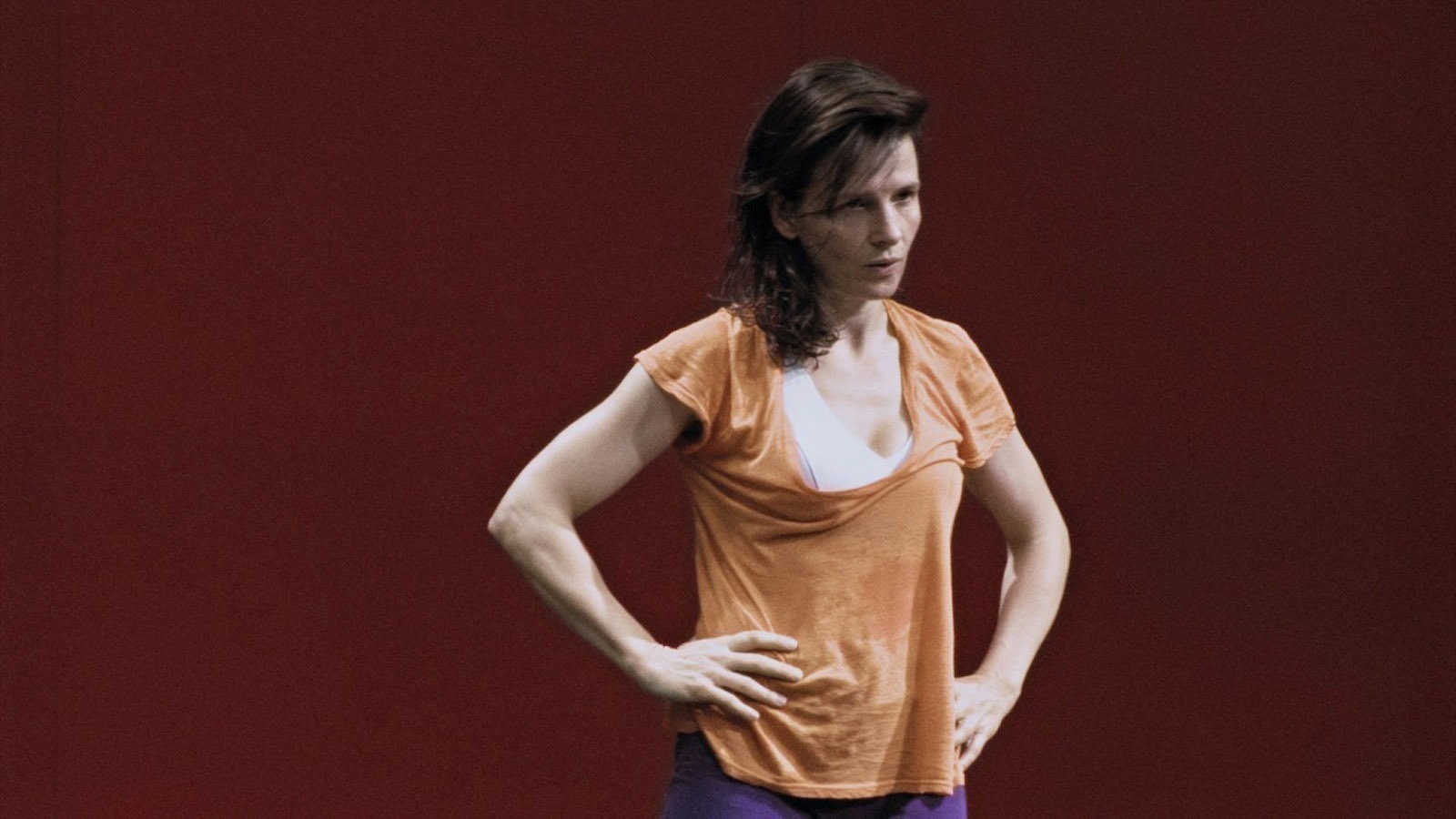
- Juliette Binoche is in Copenhagen, where her directorial debut, In-I In Motion, a collaboration with dancer and choreographer Akram Khan, is screening at CPH:DOX. New York’s Metrograph is currently presenting a series of films starring Binoche, and in the Journal, Elissa Suh writes that “Binoche’s great gamble has been to play emotions straight, without quotation marks. It works because of her uncanny ability to impart both self-awareness and uninhibitedness, a paradox that scholars like Shonni Enelow have traced in her performances. There is, too, that cosmopolitan glibness—a light, quick intelligence so often, fairly or not, ascribed to the French, which flickers at the edge of even her most stricken heroines and grounds her more extreme emotions in something unmistakably real.”