Reading Up on the Contenders
Share
By mid-March, we’ve usually heard and read more than enough about the Oscar contenders. They’ve been giving interviews for months, submitting themselves to probing questions about their childhoods and influences. They’ve run the talk-show circuit and the podcast circuit, and they’ve told Letterboxd about their four favorite movies of all time.
What’s a little different this year is that many of us actually like a lot of the nominated films, even and perhaps especially the two front-runners, Ryan Coogler’s Sinners, which has set a new record with sixteen nominations, and Paul Thomas Anderson’s One Battle After Another, which trails not all that far behind with thirteen. These past few weeks leading up to Sunday night’s presentation of the ninety-eighth round of Academy Awards have become a season for sorting through what it is about some of our favorites that’s sticking with us.
Today’s roundup of think pieces—thumbsuckers, if we’re being unkind—isn’t exactly random, but it’s also far from complete. This selection of just a few standouts is also not about who will win or who should win, though the predictions and preferences from the New York Times’ Manohla Dargis on The Daily, Justin Chang in the New Yorker, Amy Nicholson in the Los Angeles Times, and Jacob Oller at the A.V. Club are well worth tuning into.
Pairings
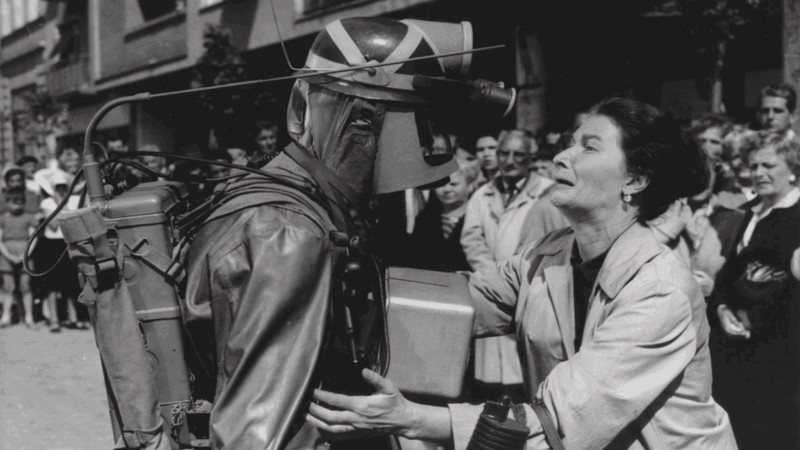
Oliver Laxe’s Sirāt—neatly nailed by distributor Neon’s tagline as “an apocalyptic rave at the edge of the world”—isn’t even up for Best Picture, but at least two writers have found a way into it by setting it next to another nominee. It’s “a movie about music second, colonialism first,” writes Roxana Hadadi at Bright Wall/Dark Room, while Sinners is “a movie about music second, money first.”
In a story about twins setting up a juke joint in the Jim Crow South, “the money of it all is a way for Coogler to link together various groups and generations who have been subjugated similarly and who found music as an outlet for their pain; it’s a commonality of experience as much as the singing and dancing is,” writes Hadidi. “That layering of theme and intention and spectacle is what makes Sinners so rich, so dense, and so sneakily straightforward; like all great horror, Sinners is operating on levels that go as deep inside its characters as the blood and gore it splatters on-screen. Unlike Sirāt, which uses music as a distraction for both its characters and its viewers, Sinners asks us to consider the form as an expression of truth in a world full of lies—capitalism, racism, and even Christianity are all reasons for the blues. Sirāt may show us a path to a more enlightened future. But by making its enemies so plain, and its joys so triumphant, Sinners actually walks it.”
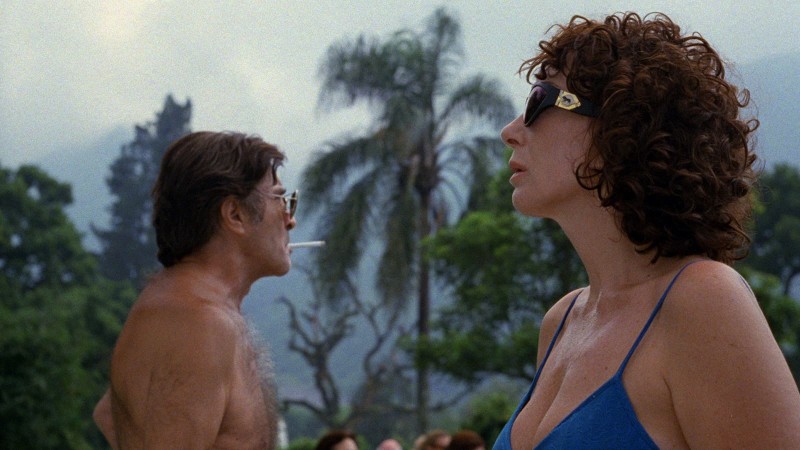
Sirāt fares better in Vikram Murthi’s piece for the Nation. “Living with or dying under tyranny pertains to each” of the five films nominated for Best International Feature, notes Murthi. But Sirāt and Kleber Mendonça Filho’s The Secret Agent, set in 1977 Brazil, “are primarily concerned with the texture of a fascist atmosphere. Differences in style and tone abound, but both films capture the psychology of knowing that one’s fragile world is on the brink of collapse but persevering anyway in spite of overwhelming despair. Neither Laxe nor Mendonça are interested in peddling pat bromides. They recognize the disquiet of our times, and the unsettling awareness that the worst is yet to come.”
Writing for Liberties, Robert Rubsam observes that well-placed white supremacists’ determined pursuit of “racial purification” drives both The Secret Agent and One Battle. There’s some fine writing here on Mendonça’s film, but Rubsam is primarily concerned with connecting dots between One Battle and John Ford’s The Searchers (1956)—as many have—but also between PTA’s movie and John Sayles’s Lone Star (1996), a film whose “real target is the fatal hold that a founding myth can have on the collective imagination.”
Singles
One Battle has also prompted David Denby’s survey of PTA’s oeuvre in the current issue of the New Yorker. “Anderson’s visual imagination, however active, is disciplined by a stern aesthetic that becomes almost moral in its insistence,” writes Denby. “He may jump ahead within a given line of movement, cutting from one decisive moment to the next, but he mainly stays on the ground, in real space, disdaining the up-in-the-air digital schlock that has all but destroyed movie aesthetics in the past thirty years.”
In a short video for the New York Times, Marc Tracy explains how, given the preferential balloting system that will determine the Best Picture winner, Chloé Zhao’s Hamnet could stage an upset. Dana Stevens is one of many critics who would indeed be upset. Hamnet was rapturously received when it premiered last summer at Telluride, but the critical tide has since turned.
Stevens’s essay in the Yale Review is less about taking down Zhao’s film than it is about a rich body of literary work derived from what very little we know about the life of William Shakespeare. Along with the biographies and studies she’s appreciated is Hamnet, the 2020 novel by Maggie O’Farrell—who cowrote the movie with Zhao.
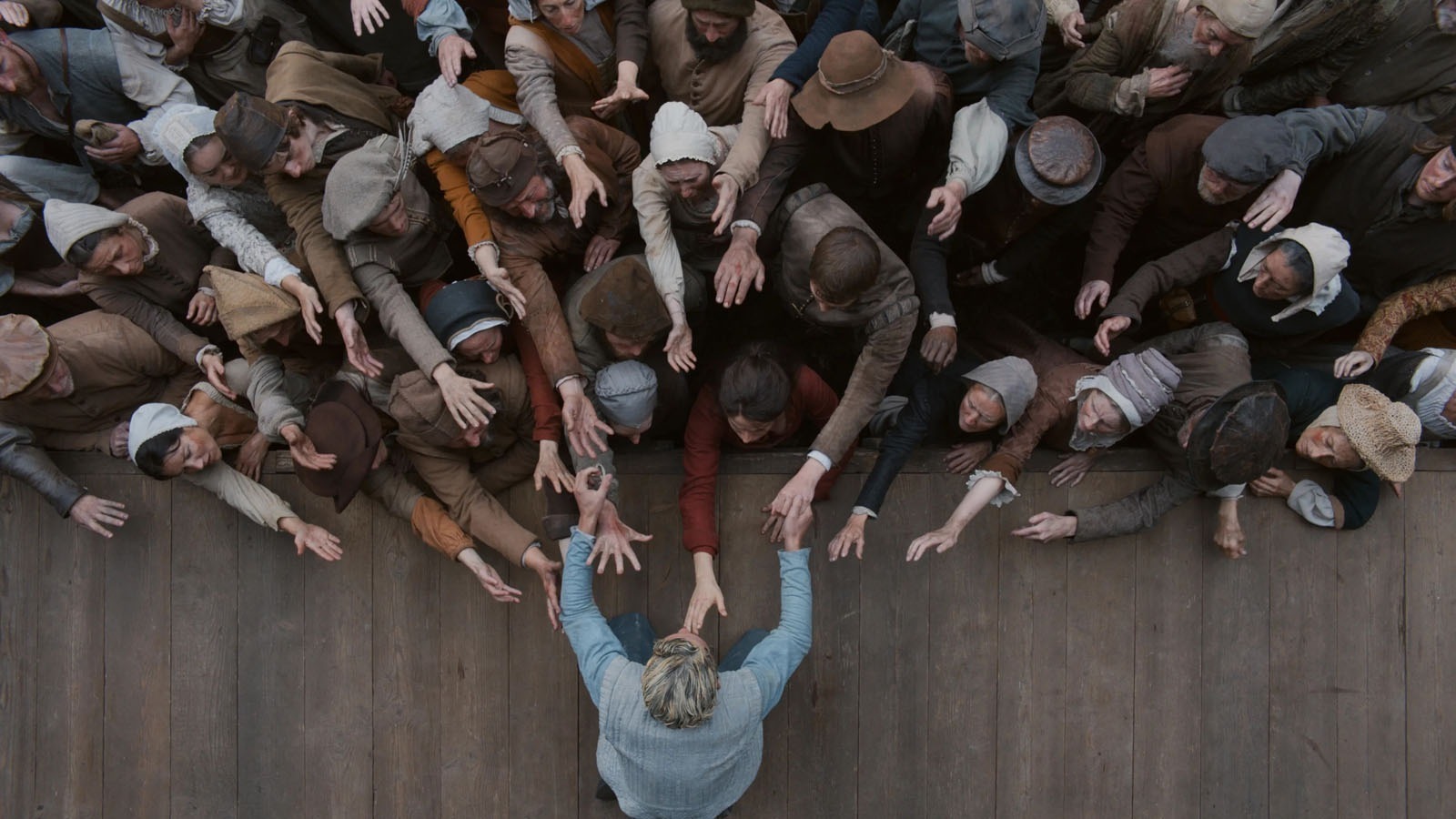
“The film’s closing scene preserves the basic shape of the novel’s ending,” writes Stevens, “but once again the screenplay pushes too far, making explicit what the book leaves to the reader’s imagination. (Celia said it best in As You Like It: ‘That was laid on with a trowel.’) Yet heavy-handed though it is, I couldn’t help but be moved by the film’s final image: the entire Globe Theatre audience reaching out as one toward the young actor pretending to die onstage, having collectively agreed to collapse—for just a moment—the distance between Hamlet and Hamnet, art and life. That longing for convergence is what sustains my fascination with the riddle of how the boy from Stratford grew up to be a conjurer who could summon a universe on the stage. But the simple existence of the riddle—the fact that this life and this work did somehow, inexplicably, happen—is more thrilling than any imagined answer.”
The Yale Review has also run another excellent essay we’ve cited here before, Bilge Ebiri’s “Terrence Malick’s Disciples,” wherein Clint Bentley’s Train Dreams, another Best Picture contender, comes off pretty well. At Little White Lies, though, Maia Wyman argues that Train Dreams is no The Tree of Life (2011).
To return briefly to the Best International Feature category, Brandon Harris has a fine piece in the New Republic on “three very different movies about the plight of the Palestinians” released in 2025: Annemarie Jacir’s Palestine 36, Cherien Dabis’s All That’s Left of You, and the one that scored a nomination, Kaouther Ben Hania’s The Voice of Hind Rajab. A nomination “cannot change policy,” writes Harris. “The genocide continues apace, with hundreds of Gazans killed in shootings and bombings since the latest ‘ceasefire’ went into effect late last year. But if it invites a wider audience to take this history and present more seriously, then the nomination of The Voice of Hind Rajab will have done more good than the majority of nominations ever do.”
Casting and Acting
The Academy has introduced a new category this year, Best Casting, “which seeks to expand and deepen appreciation for a skill set located at the intersection of industry savvy, imaginative projection, and divination,” as Adam Nayman puts it in his breezy but essential primer at the Ringer. After sketching a brief history of the art of casting, Nayman suggests that “the best-case scenario for the Best Casting Oscar is that it doesn’t just become a corollary to Best Picture—it’d be nice to see acknowledgement of casting choices beyond the prestige-picture margins.”
Of the four acting categories, only one is widely considered to be a lock this year. Most agree that Jessie Buckley will likely win Best Actress in a Leading Role for her performance as Agnes Shakespeare in Hamnet. At Slate, Isaac Butler, the author of The Method: How the Twentieth Century Learned to Act, defines perezhivanie and explains that Buckley’s route to it “runs through a now-trendy technique, based in both Jungian psychology and the Method, that is called ‘dream work’ or, somewhat ominously, ‘the Way’ (embarrassing!).”
“Every actor I talk to gets a little glassy-eyed when her name comes up,” writes Butler of Buckley, adding that “the words queen and goddess tend to find their way into the conversation. She is clearly one of the greatest actors (if not the greatest actor) of her generation, one who has demonstrated versatility while operating at a consistently high level. After receiving her start as a runner-up on a reality show judged by Andrew Lloyd Webber, she’s gone on to appear in musical theater, in Shakespeare, in films large and small. In every one of these roles, her performances not only fit the character exactly; they make those characters so fully her own that it’s hard to picture anyone else playing them.”
The only other category that most would argue is pretty well sewn up is Best Animated Feature Film. For the New York Times, Melena Ryzik has put together an “oral history” of KPop Demon Hunters, “the most-watched movie in Netflix’s history.” Tyler Coates (Filmmaker) and Alissa Wilkinson (NYT) consider the five films up for Best Documentary Feature, and let’s wrap by noting that, for the Los Angeles Times, Bill Desowitz has spoken with all five nominees for the Best Film Editing Oscar, asking them “to break down a pivotal scene that showcased their craft.”
Don’t miss out on your Daily briefing! Subscribe to the RSS feed.