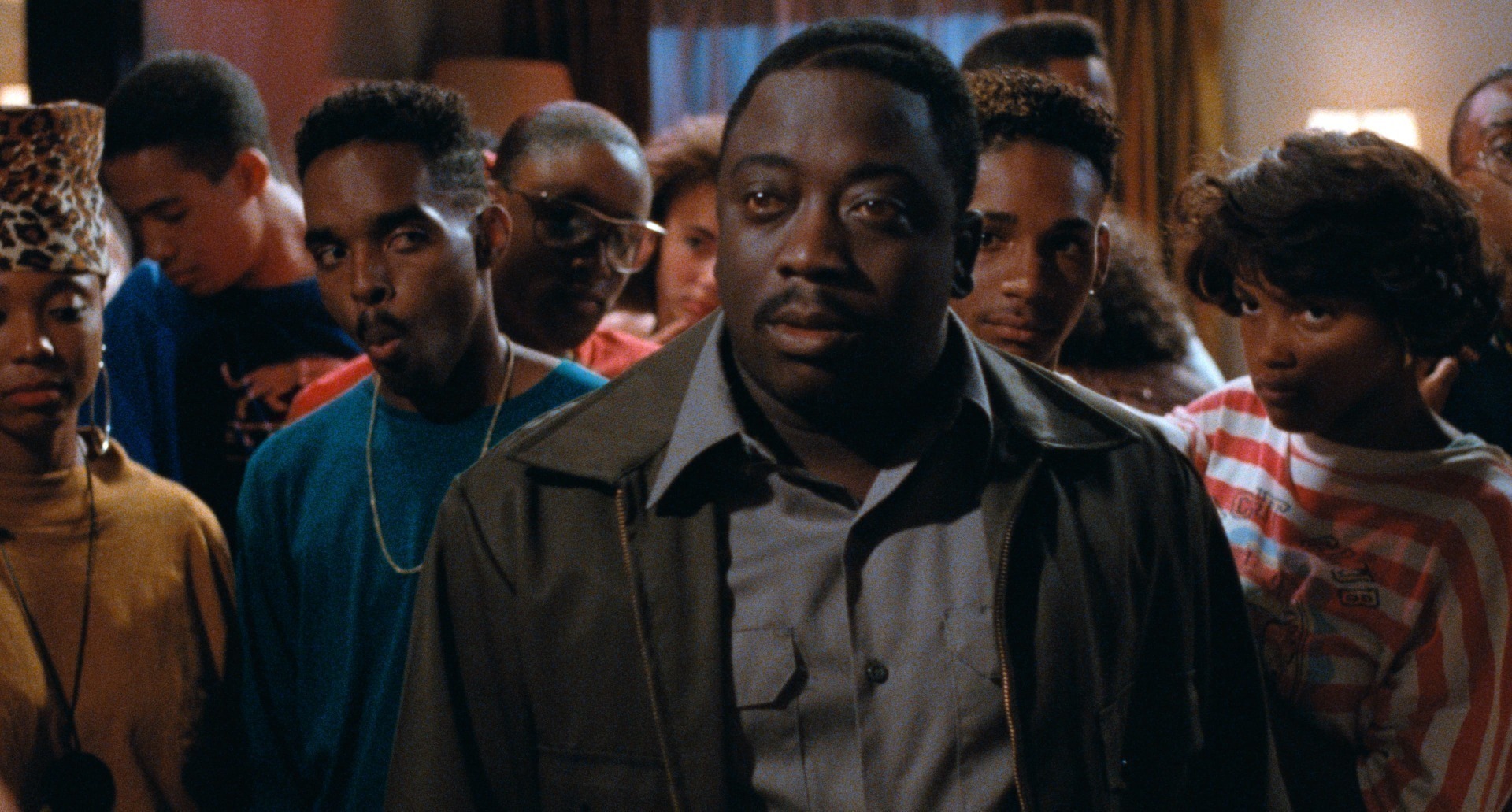
No character embodies this reality better than Kid’s father, Pop, played brilliantly by the late Robin Harris. In one of his final performances before his untimely death, Harris brings to life a man who is equal parts hilarious, exasperated, and real. For anyone raised to appreciate the poetic brilliance of Dolemite or the gospel of Black fatherhood, a man whose only mission is to give his son a better life is instantly recognizable. Pop is not wealthy. His job title is never revealed. And yet everyone who has ever been told to keep their mind “on them books and off them gals” knows the people for whom Pop works:
Them white folks.
But Pop is more than comic relief. He is the moral compass of the film, the last vestige of authority in a world temporarily liberated by youthful exuberance and music. He doesn’t hover like a helicopter parent or deliver long monologues imparting life lessons. He simply enforces the rules of the Black cinematic universe that every Black child knows instinctively. Sidney doesn’t need a long explanation when Kid says he’s “on punishment.” She understands that Pop is no different from the parents she had to bamboozle to attend Play’s bash.
That’s why the music stops and the kids collectively snap back to reality when a Black father shows up at Play’s party. In a parent-free, quasi-fictional world without visible teachers, truant officers, or PTA meetings, Pop is the last line of defense between community and chaos. He commands respect not because he demands it, but because he embodies the rules these kids have been raised to respect.
Being a Black protagonist in classical Hollywood cinema often comes with the burden of proving one’s social value or displaying unimpeachable moral integrity. But because House Party is unencumbered by the blinding light of the white gaze, the audience doesn’t need to know if Kid is a straight-A student or how often he attends church. In the world where House Party takes place, Kid is allowed to be a flawed, imperfect, fully human teenager—worthy of redemption and the audience’s grace—simply because he’s seen as what he is: a human being.
While Stab and his crew (played by members of the legendary music group Full Force) might appear to be the film’s antagonists, they’re less villains than distorted, inverted reflections of Kid, Play, and their friend Bilal (Martin Lawrence). Stab (the Legend Paul Anthony) uses brute force as easily as Play weaponizes his charisma. Zilla (B-Fine), like Kid, is the awkward, less charming sidekick. Pee-Wee (Bowlegged Lou), high-pitched and unpredictable, is similar to Bilal. Stab and his crew are not evil; they’re familiar. And like everyone else in this patchwork quilt of a neighborhood, they belong. They are part of the same fragile ecosystem held together by community and proximity.
The true antagonist of House Party is America.
If House Party takes place in a Black America governed by rules, respect, and community, then America is its adversary. It makes more mischief than the mischief-makers and outbullies the bullies. It is an invader of safe spaces whose allegations are not worthy of being articulated. America does not protect Black communities or serve its residents; it enforces. It is the unseen force whose agents disrespect the people who most deserve dignity. America is the opposite of Black joy.
But House Party is not a story about defeat or the America that devours. It was one of the first films to center hip-hop as part of Black American culture. But it’s not about the genre or “the urban experience”; instead, it is a celebration. It is a movie about Black people who live in a Black community with nerds and aspiring college students and bullies and concerned fathers and rapscallions and Kool-Aid makers and DIY disc jockeys and nosy neighbors and all the sweet and bitter joy and pain and shared knowledge that inspired the ancient African American idiom:
“What’s understood don’t need to be said.”
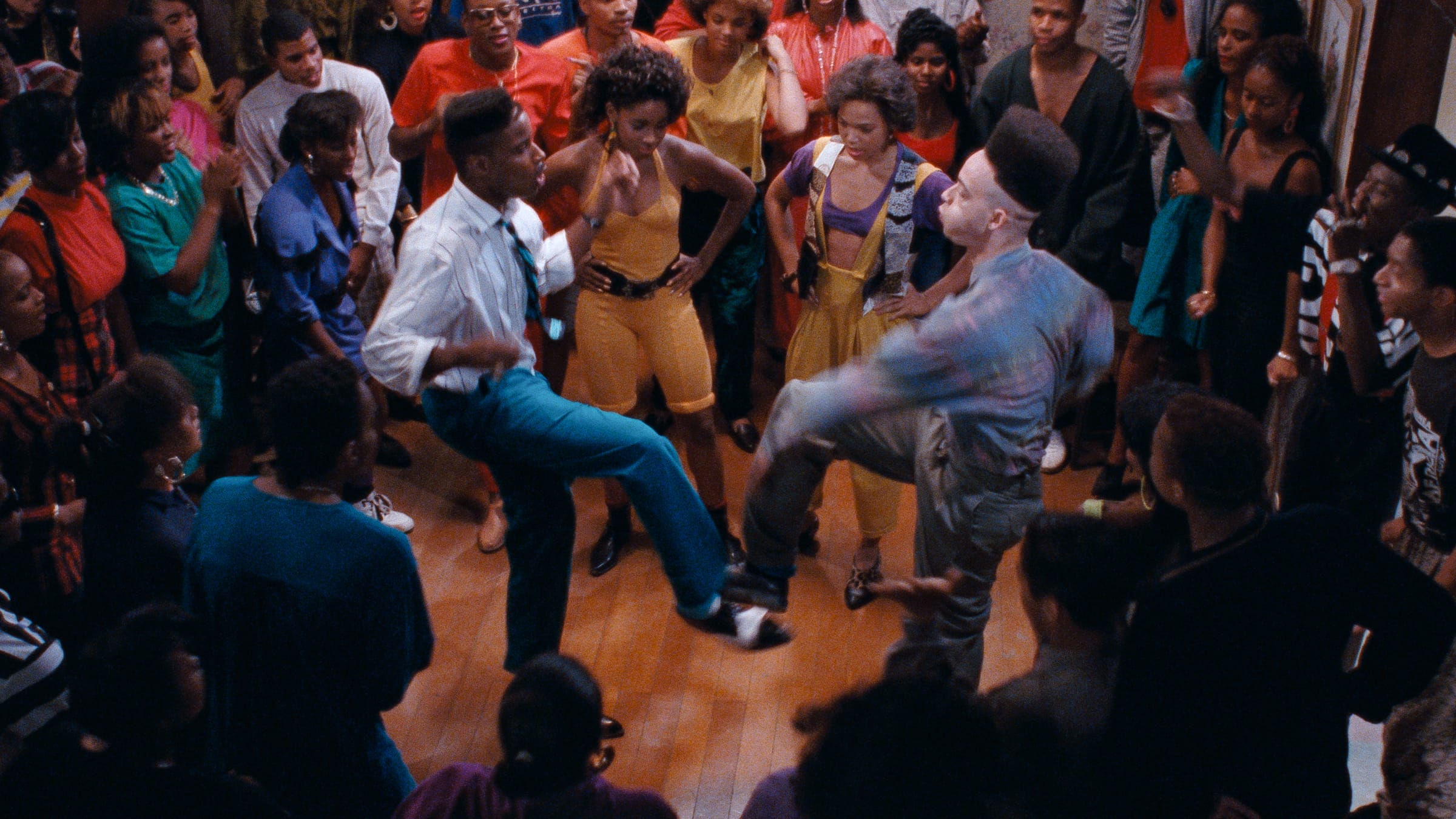
Somewhere, tonight, a group of young, unextraordinary Black people will seek the safety of a space where this country’s tentacles cannot reach. Perhaps at a cookout or frat party or behind a bedroom door at their cousin’s house. Invariably, someone will perform the same iconic dance routine from House Party. Although they will do the same shuffle and kicks, it is likely that they have never actually seen the film where Reginald Hudlin captured this uniquely Black slice of Americana. Yet, somehow, they understand.
In the penultimate scene of House Party, Kid walks out of a cell packed with Black men. Undaunted by his narrow escape, the teenage embodiment of America’s multiracial coalition turns to find his community awaiting his release. His charismatic, loyal friend Play—whose South Carolinian ancestors’ uprisings, protests, and movements forced America to become a democracy—rises first. Kid’s new sweetheart, whose parents do not work for “them white folks,” stands next. So does the around-the-way girl. Finally, the buddy who has no idea that his basement hobby is about to change the musical universe rises to his feet, finishing the portrait of “the kind of people who live in this house.”
This, too, is an American masterpiece.