The Dead: Another Year
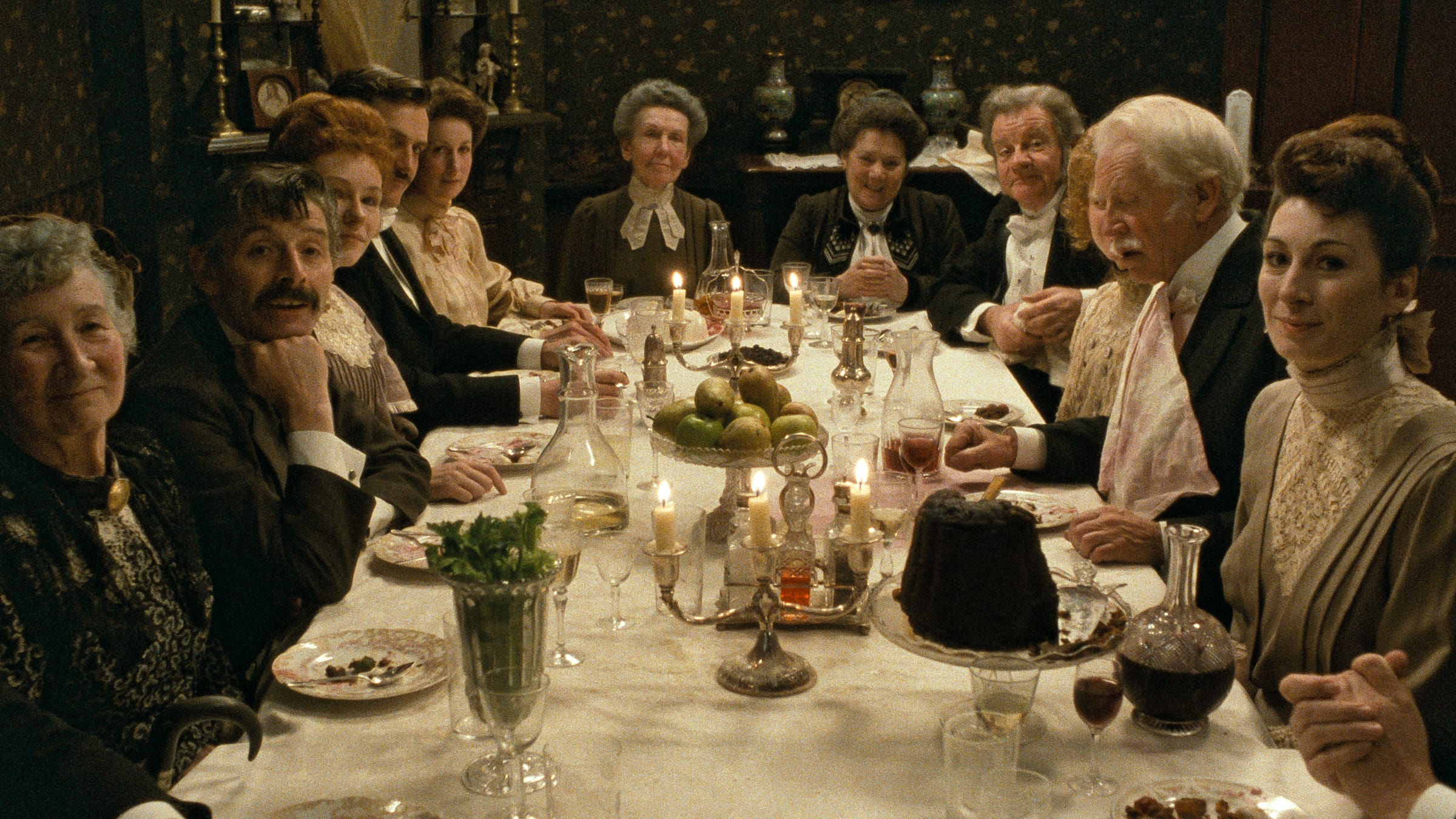
The hour is late, the roast goose carcass has been picked clean, and the flaming plum pudding has been consumed. It’s that time of night when merriment gives way to melancholy, when the warmth of a gathering is disrupted by a chill of mortality—a realization that our joys are fleeting, that togetherness inside is a bulwark against the cold outside. Dinner guest Gabriel Conroy (Donal McCann)—the protagonist of John Huston’s The Dead (1987)—has taken on the time-honored task of praising his aunts Julia and Kate for the generous and splendid meal they have just served during their annual Christmastime party at their Dublin town house. Yet his speech is not merely laudatory. “We are living in a skeptical and, if I may use the phrase, a thought-tormented world,” he austerely says. He might be referring to the befuddling rapidity of modernization felt by people throughout the Western world in 1904, when the film is set. Or his comment could anticipate the outbreak of war in 1914, when the James Joyce story upon which the movie is based was actually published. But Gabriel speaks for us all, down through the century, who feel our time is especially “thought-tormented.”
For a tale in which cheerful frivolity rubs elbows with an awareness of life’s transience, it’s hard to imagine a better setting than a holiday reunion: another year passing, the bleak midwinter just outside the door, nonsecular thoughts of birth and death and resurrection weighing on our minds. Such festivities remind us that no matter what age we live in, life goes on—until it doesn’t. In celebrating dear Julia and Kate for their “good old-fashioned, warmhearted, courteous Irish hospitality,” Gabriel is also nodding to a terrible truth: these remarkable everyday women won’t always be there to shield their loved ones from skepticism and pain. As the aging aunts listen to Gabriel, their eyes well with tears.
The constant negotiation of routine pleasure and profound sorrow—the experience of being human—is the uncommon heart of both Huston’s film and Joyce’s story. The movie is miraculous in two rare fashions. First, as the last work of a legend, it betrays not a hint of strain or slippage. Made during its director’s final months, when he was racked with emphysema while in a wheelchair and on an oxygen tank, Huston’s cinematic farewell glides along with the grace and confidence of a film made in his prime. Second, The Dead is the apotheosis of Huston’s career-long interest in adaptation. It is a perfect cinematic translation of Joyce’s tone and philosophy that refutes the truism that great films cannot (or should not) be made from great literature. It does not simply “do justice” to its source material, one of the greatest short stories ever written: it’s an improbable masterwork in its own right that somehow captures the exhilaration and dread—the very soul—of Joyce’s ecstatic mundanity.
More: Essays
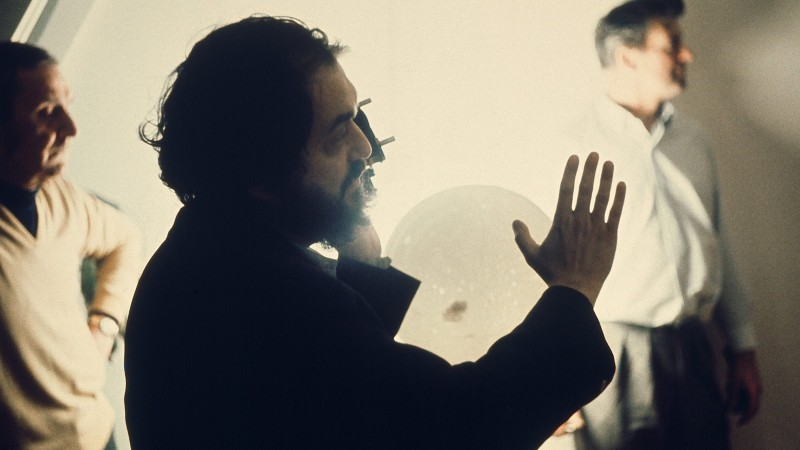
God Laughs: Stanley Kubrick’s Cinema
Throughout his enormously influential body of work, the great director explored the conflict between humankind’s obsession with control and our capacity for error and failure.
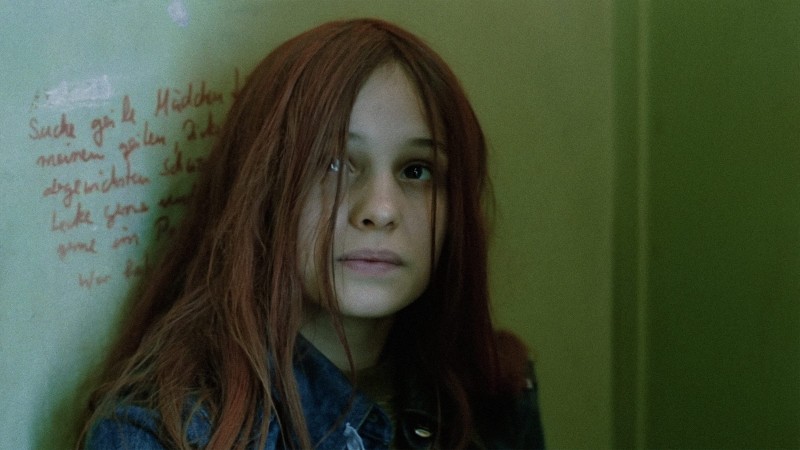
Christiane F.: Up Against the Wall
Uli Edel’s harrowing tale of youth rebellion is one of cinema’s greatest Berlin films, a visceral urban portrait that captures the city’s doom and decadence during the Cold War era.
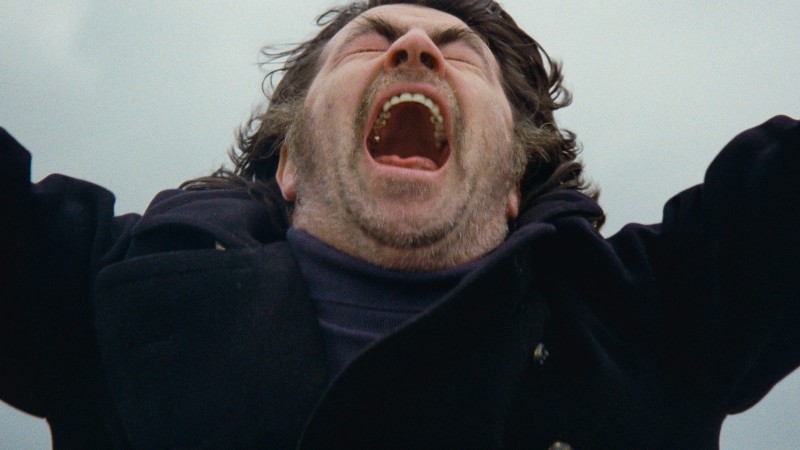
The Shout: Sound and Fury
Blending elements of psychological thriller, social satire, and psychedelic film, Jerzy Skolimowski’s Cannes-award-winning classic uses its audacious sound design to evoke the terror of English civilization.
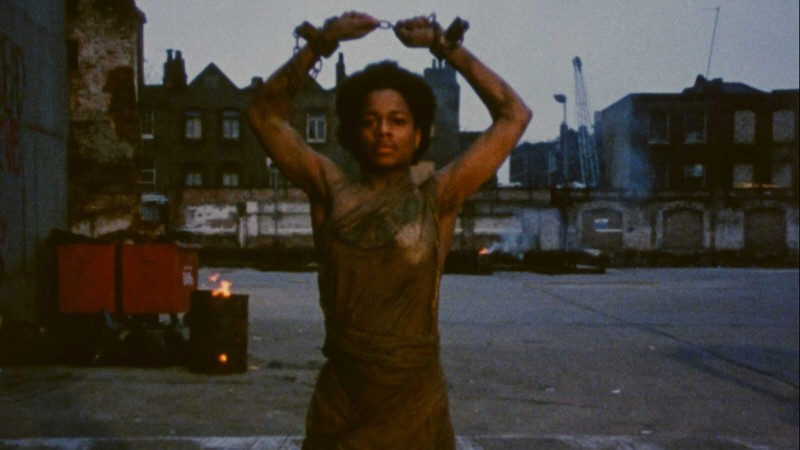
Welcome II the Terrordome: The Future Is Furious
A dystopian drama that draws on the influences of African mythology and hip-hop, Ngozi Onwurah’s debut feature uses a mix of speculative forms to expose anti-Blackness as a system that underpins the modern world.