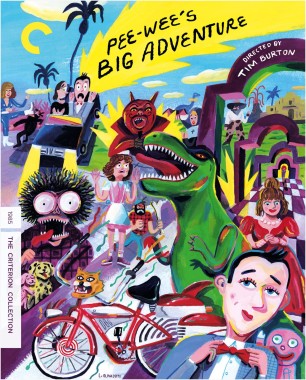
Pee-wee’s Big Adventure: Why Don’t You Take a Picture?
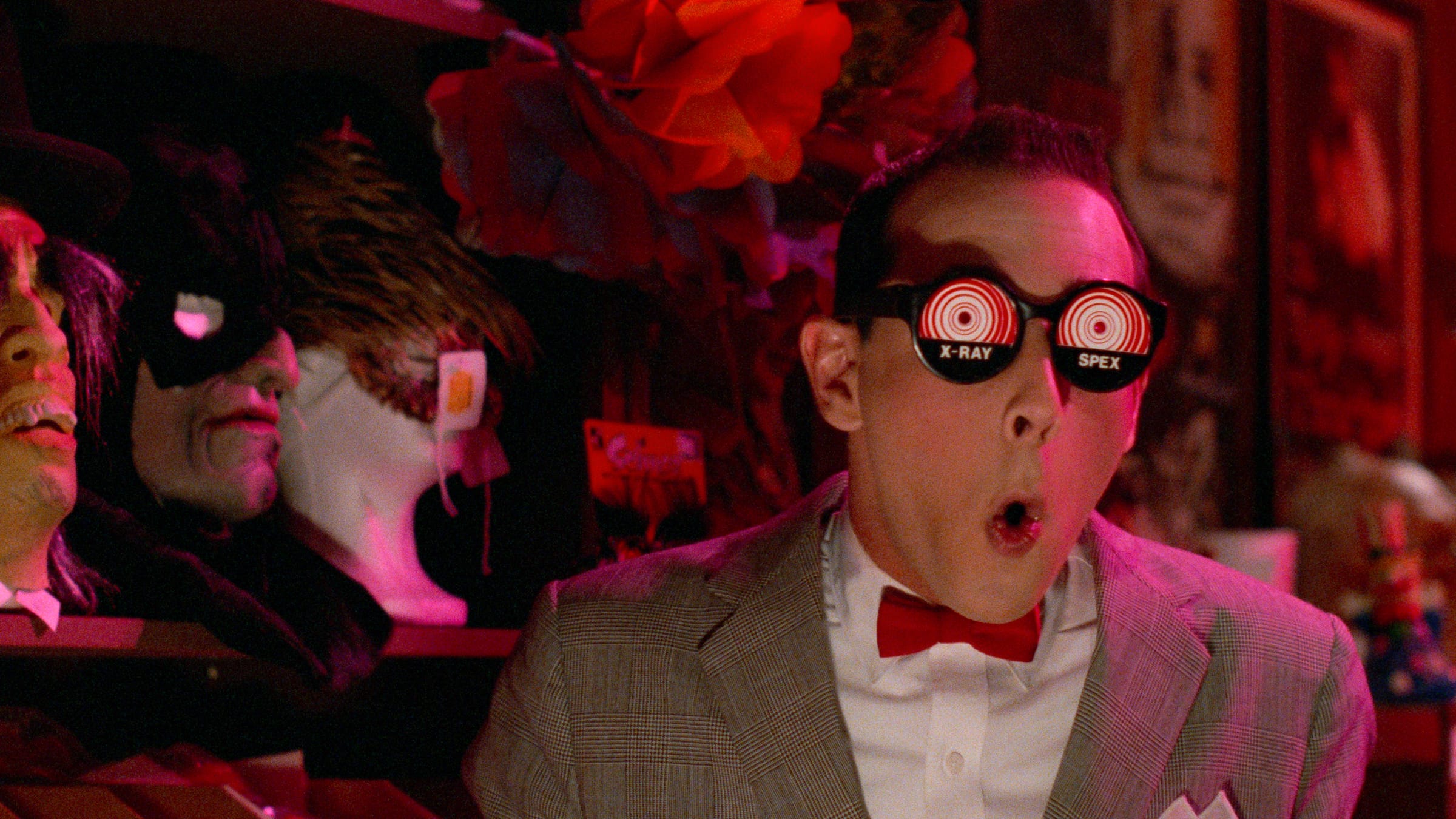
“What the heck is that Pee‑wee Herman?” It was the question on the lips of every 1980s uncle. And they weren’t wrong to ask.
Is Pee‑wee a man or a boy? Does he live in our world or somewhere else? Is he sexual or asexual? Gay or straight? Camp or sincere? Funny or scary? An artifact of the past, or something avant-garde?
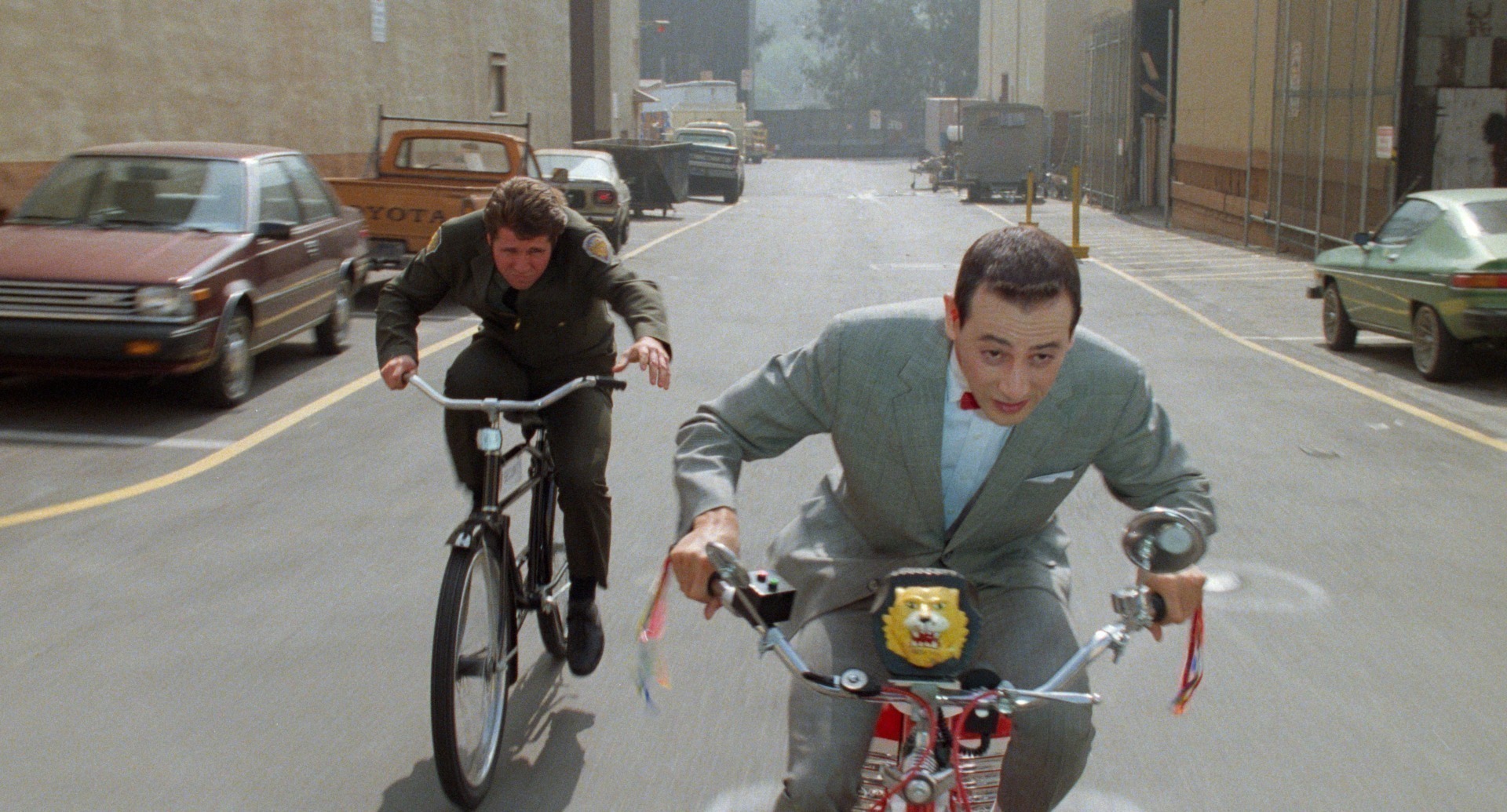
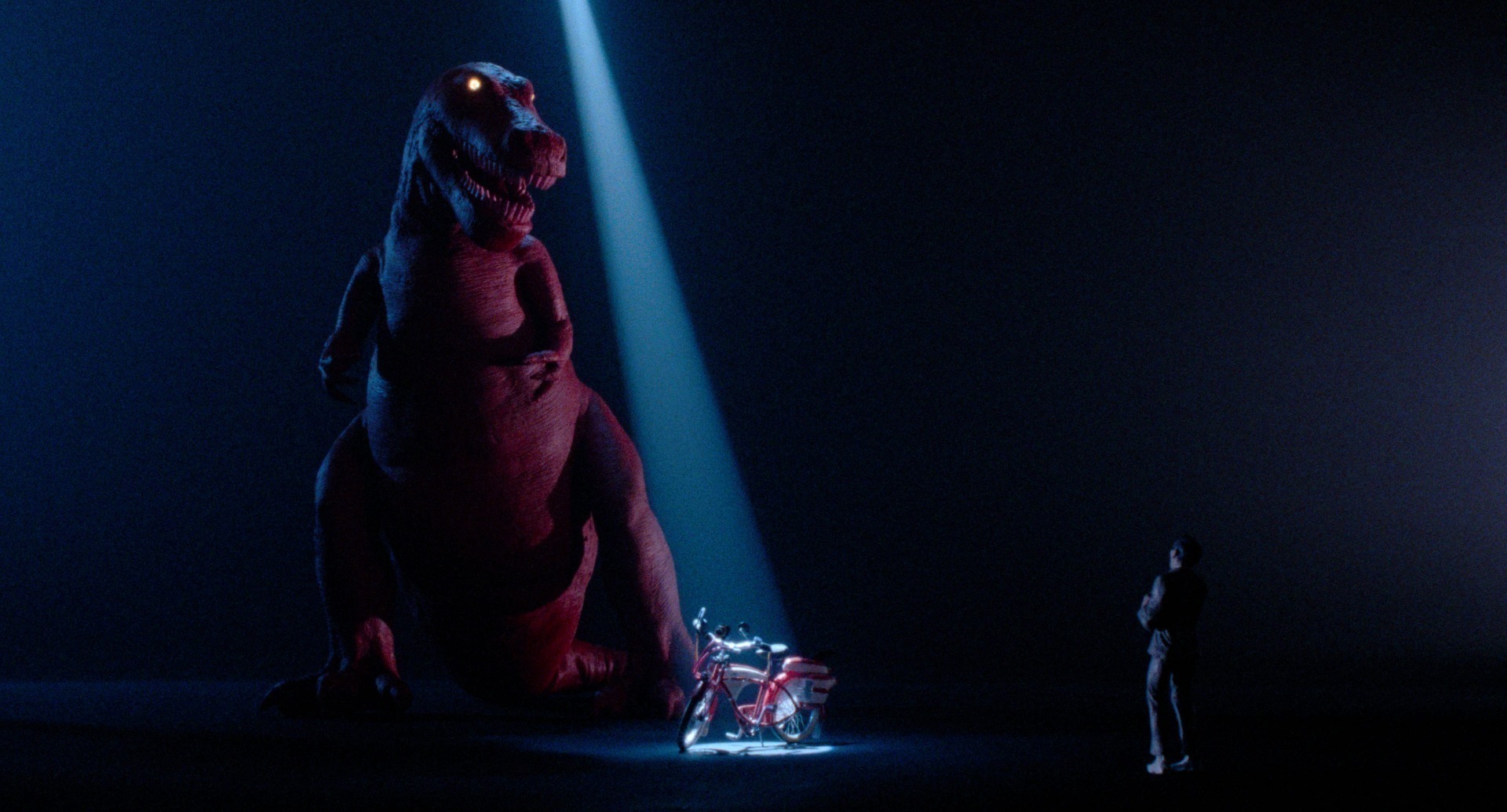
Pee‑wee’s Big Adventure (1985) answers all those questions with . . . yes. It’s an incredible accomplishment: in characterization, by Paul Reubens; and in filmmaking, by Tim Burton, who, in his first feature, balances the unanswerable questions and creates an on-screen world to match the mad genius Reubens had imbued Pee‑wee with onstage.
Reubens studied theater at CalArts in Southern California in the early 1970s; he was queer in his life and his sensibility, intense, and committed to the avant-garde. He developed Pee‑wee as part of the new Los Angeles comedy troupe the Groundlings—initially as a nerdy, distracted, failing stand-up comic. Pee‑wee always wore a glen plaid suit with a child’s red bow tie and usually forgot his punch lines. His straight-arrow look was queered by lipstick, rouge, and a Little Rascals haircut. He laughed loudly at his own half-jokes. He was impulsively aggressive but also surprisingly shy. And almost as soon as Reubens created him onstage, he brought him into the real (show-business) world.

More: Essays
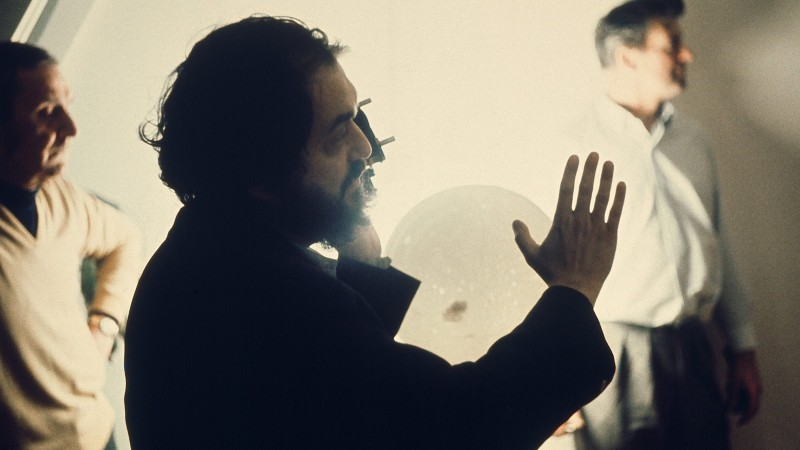
God Laughs: Stanley Kubrick’s Cinema
Throughout his enormously influential body of work, the great director explored the conflict between humankind’s obsession with control and our capacity for error and failure.

Christiane F.: Up Against the Wall
Uli Edel’s harrowing tale of youth rebellion is one of cinema’s greatest Berlin films, a visceral urban portrait that captures the city’s doom and decadence during the Cold War era.

The Shout: Sound and Fury
Blending elements of psychological thriller, social satire, and psychedelic film, Jerzy Skolimowski’s Cannes-award-winning classic uses its audacious sound design to evoke the terror of English civilization.
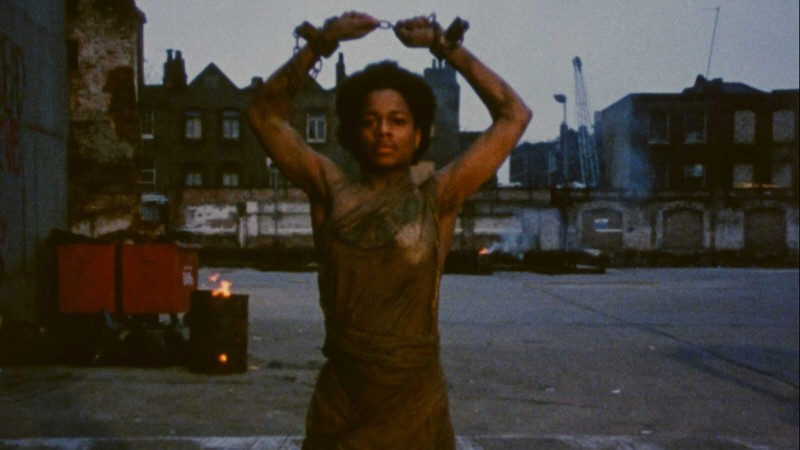
Welcome II the Terrordome: The Future Is Furious
A dystopian drama that draws on the influences of African mythology and hip-hop, Ngozi Onwurah’s debut feature uses a mix of speculative forms to expose anti-Blackness as a system that underpins the modern world.