Toronto Adds Eleven
Share

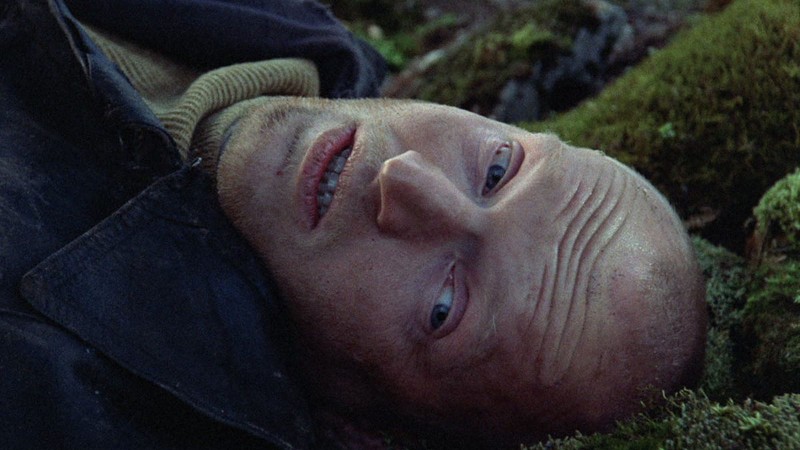
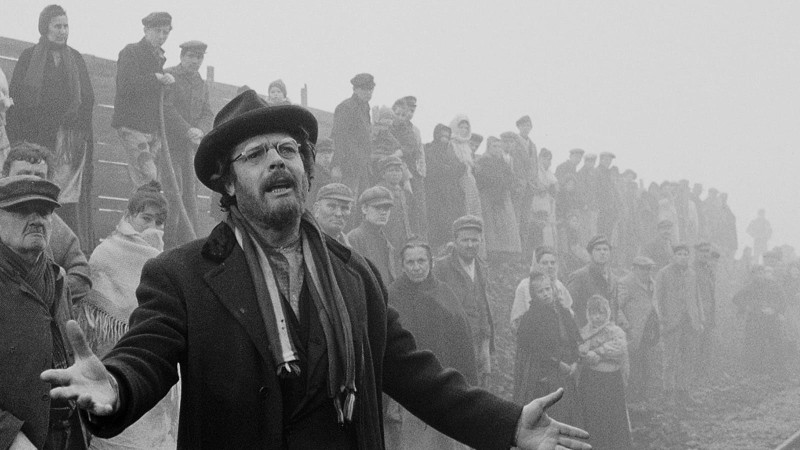
First published in 1925, the year after Franz Kafka died and ten years after he wrote it, The Trial is “one of the paradigmatic texts of the twentieth century,” writes Jonathan Lethem, “an emblem of the ‘nightmare of history’ from which none of us, dreaming or awake, has ever managed to escape.” Lethem’s essay is an appreciation of Orson Welles’s 1962 adaptation, and in 1980, Agnieszka Holland (Europa Europa, Green Border) codirected another for Polish television. As a teen, Holland read just about everything by and about Kafka, and now her new biopic, Franz, has been selected to see its world premiere in Toronto as one of five Special Presentations the festival has added to the lineup of its fiftieth edition (September 4 through 14).
“I don’t like the cliché of Kafka being dark, moody, and depressed,” Holland told Variety’s Leo Barraclough when she was in Karlovy Vary earlier this month to deliver a keynote address. Working with producer Šárka Cimbalová and cowriter Marek Epstein, Holland aims to make her subject “accessible for a contemporary audience.” Born in Prague into a family of German-speaking middle-class Ashkenazi Jews, Kafka “felt like a stranger among the Germans, the Czechs, and Jewish people alike,” adds Holland, “especially after World War I when nationalistic fascism started to rise in practically every part of Europe, like is happening again today.”
The other four newly added Special Presentations are Paul Greengrass’s The Lost Bus, starring Matthew McConaughey as a driver steering a busload of children through California’s deadliest wildfire; Rental Family, directed by Hikari (Beef) and starring Brendan Fraser as a down-on-his-luck American actor in Tokyo; Clement Virgo’s Steal Away, the story of a Belgian teen who bonds with a refugee her family has taken in; and Wake Up Dead Man, Rian Johnson’s third Knives Out mystery. “It’s much more a Gothic, much more grounded tone,” Johnson tells Rolling Stone’s Alan Sepinwall. “It’s more similar to the first one in that way. It kind of gets back to the real origins of the genre, which, predating Christie, go back to Poe.”
Galas
Toronto has also added six Gala Presentations, including Chloé Zhao’s Hamnet, starring Paul Mescal as William Shakespeare and Jessie Buckley as his wife, Agnes, who is struggling with the loss of their eleven-year-old son. Hamnet will see its Canadian premiere in Toronto, and that suggests that it will screen first in Venice (August 27 through September 6) and Telluride (August 29 through September 1).
Two of the six additions are world premieres, Derek Cianfrance’s Roofman, starring Channing Tatum as Jeffrey Manchester, a real-life soldier turned fugitive thief, and The Choral, written by Alan Bennett and directed by former National Theatre director Nicholas Hytner. The two have previously worked together on The Madness of King George (1994), The History Boys (2006), and The Lady in the Van (2015). The Choral, set in 1916, stars Ralph Fiennes as the director of a choir of teenagers in Yorkshire.
When A Private Life premiered in Cannes, the Hollywood Reporter’s David Rooney found it to be “a lot more fun than it probably deserves to be thanks to the disarming chemistry of its seasoned leads, Jodie Foster and Daniel Auteuil. Rebecca Zlotowski’s latest doesn’t have the intoxicating sun-kissed sensuality of An Easy Girl or the emotional complexity of Other People’s Children, her last two films. This one is too busy careening all over the tonal map for any of that. What it does have is the French director’s customary light touch; it’s chaos with charm.”
The remaining two Gala Presentations also premiered in Cannes. Peter Ho-Sun Chan’s She Has No Name features Zhang Ziyi’s “meatiest role in a while as a woman accused of murdering and dismembering her husband in the closing months of the Japanese occupation of mainland China,” wrote Lee Marshall in Screen, where Elizabeth Kerr reviewed Homebound. Neeraj Ghaywan’s second feature “paints a vivid portrait of the struggle faced by India’s invisible population to conduct a dignified and joyful existence. Deeply empathetic and increasingly universal,” Homebound “isn’t particularly subtle, but that does little to dilute the film’s impact or detract from its message.”
Don’t miss out on your Daily briefing! Subscribe to the RSS feed.