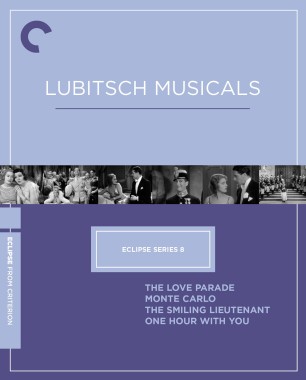
Eclipse Series 8: Lubitsch Musicals
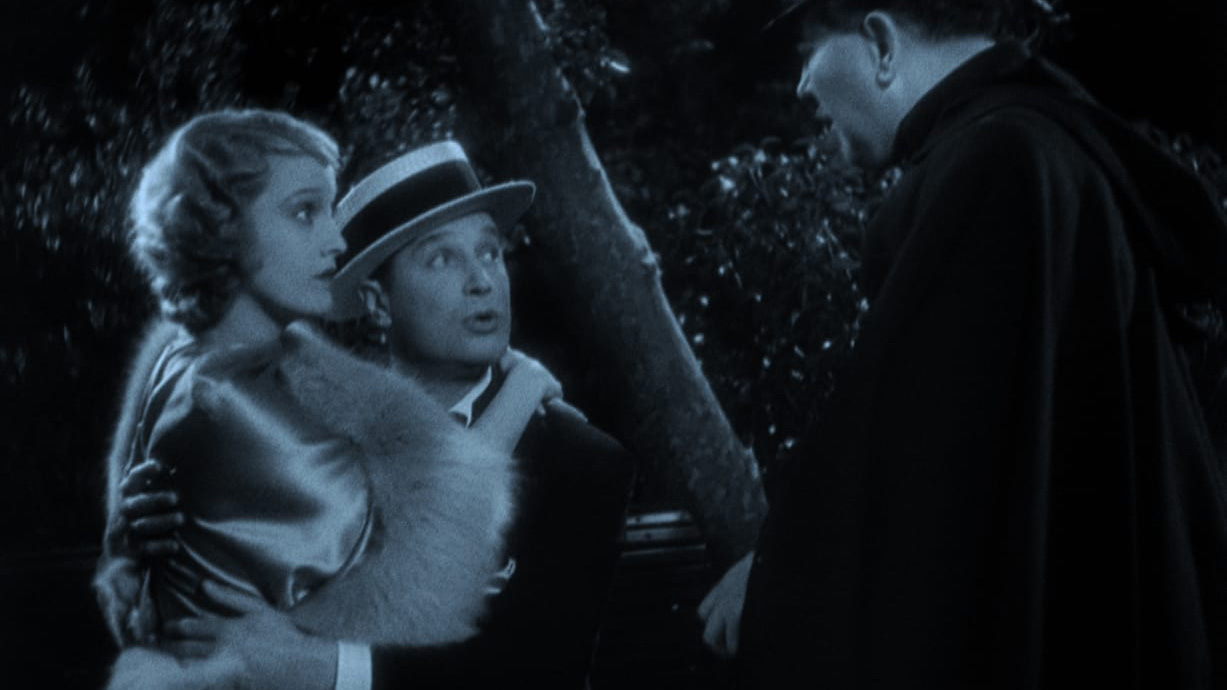
With the advent of sound in the late 1920s, anything seemed possible in Hollywood. Studios were eager to exploit the cinematic medium’s evolving capabilities, and what better way to dazzle audiences’ ears and eyes than with full-out musicals? The first attempts at this new genre were revues: bare-bones, Tin Pan Alley narratives in which preexisting songs, haphazardly strung together, were often performed onstage and straight into the camera, such as in The Broadway Melody and Gold Diggers of Broadway (both 1929). The technique was presentational and primitive; to survive, the musical needed a more harmonious melding of form and content.
Enter Ernst Lubitsch, a German Jewish director wooed to Hollywood in 1922 after a brilliant early career in Berlin. Lubitsch had grown into a major studio player, known for Continental romantic comedies and period pieces, yet his 1929 Eternal Love had flopped, like other films of the time that hadn’t yet fully made the switch to sound. Now contracted with Paramount (having left Warner Bros.), Lubitsch had the chance to reinvent himself in the sound cinema, and he did so by taking on a whole new form. Though today he is most fondly remembered for his later romantic comedies, typifying classical Hollywood filmmaking in its heyday, it should be known that Lubitsch was also a pioneer of the modern movie musical.
Of Lubitsch’s first five sound films, four were musicals, and they were all enormously successful. The form was novel enough that audiences didn’t mind the staid technique (the fixed microphones of those days necessitated a simple three-camera setup). They simply relished the glamorous stars, aristocratic European settings, and seamless use of songs, a welcome escape during the Great Depression.
Lubitsch’s musicals are not merely indicative of a recent émigré filmmaker suddenly immersed in new technologies. These fleet, handsome works of gaiety and wit are also the result of a filmmaker’s meticulous attention to the details of an emergent form. In an interview with American Cinematographer in 1929, the year his first musical was released, Lubitsch established his credentials as an auteur avant la lettre: “I do not believe in the present craze for covering a set with directors of dialogue, directors of dancing, directors of music, and all the other would-be directors who are interfering with the director’s work. I would not make a picture that way.” In other words, Lubitsch was in charge, firmly in control of the various ingredients that made this new cinematic stew possible. Nearly a century later, one can read his signature—and feel that ineffable “touch”—in every frame of these tuneful, toe-tapping confections.
The Love Parade: A Song Is Born
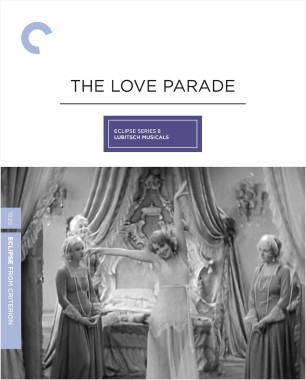
Theater was in Ernst Lubitsch’s blood: he spent his early career as a performer in Max Reinhardt’s fabled company, and always had a particular fondness for the lilting comic romance of the Viennese operetta, in which music carries narrative along as naturally as dialogue does. Lubitsch adapted this style to the screen for his first sound film, The Love Parade (1929), which was also the first narrative movie musical. One of his several Ruritanian comedies (set in fictional kingdoms), The Love Parade depicts the battle of the sexes waged with lacerating, loose tongues, as would become his trademark. These were the days before enforcement of the moralizing Production Code (colloquially known as the Hays code), so in this and his other early sound musicals, Lubitsch could be even more wicked.
Sound cinema necessitated new kinds of movie stars, whose appeal lay in the timbre of their voices as much as in the flamboyance of their gesticulations, and for The Love Parade Lubitsch chose Maurice Chevalier for the lead role of Renard, a bemused lothario count from the fictional country of Sylvania. Signed by Paramount in 1928, after years of singing at the Folies Bergère and becoming the toast of Paris, Chevalier was an instant sensation with The Love Parade, not only for his foreign sophistication but also for an exquisite comic timing that perfectly matched Lubitsch’s delicate balance of earnestness and satire. Cast opposite him in the film, as the sexually vivacious Queen Louise, was a twenty-six-year-old newcomer from Philadelphia named Jeanette MacDonald.
After a series of scandalous affairs during his time as a military attaché in Paris, Renard reports back to Sylvania, where Queen Louise takes an instant liking to his caddish manner and makes him her prince consort. Bursting with innuendo, The Love Parade revels in the possibilities of the pre-Code period by establishing the connection between the queen and her consort as almost entirely driven by sexual attraction rather than romantic devotion. “We shall find how good you are,” the queen winks at Renard; later, she coyly reminds him before a bedroom visit, “Don’t forget—no beard!” More a modern woman than a respectable royal, Queen Louise is firmly in control of the ins and outs of her boudoir.
Naturally, this creates a problem for the increasingly emasculated Renard—after all, a consort can never be a king. On his wedding day, he promises to “obey” and be a “docile husband,” after some hesitation. Yet he must soon contend with his own feelings of irrelevance in what would be more traditionally termed the “wife” role, leading to his threatening to leave. The couple’s ultimate rapprochement depends on the queen’s conciliatory agreement to correct this perceived power imbalance in the marriage. The film’s contradictory mix of progressive attitudes toward gender and more traditional sexism is a sign of its modernizing era, but it also anticipates the musical comedies of the coming decades that foregrounded power struggles between men and women while maintaining a lightness of tone (Oklahoma!, Annie Get Your Gun, Seven Brides for Seven Brothers). Perfectly in tune with Lubitsch’s artful coquettishness, Chevalier and MacDonald help make all this knotty, naughty business go down smoothly, setting the rhythm for a cycle of films that would charm audiences during difficult times.
Monte Carlo: Beyond the Horizon
Though The Love Parade had been a triumph, critically and financially—and received six nominations at the third Academy Awards, including for Best Picture, Best Director, and Best Actor—it was too early in the life of the talkie for Ernst Lubitsch to rest on his laurels. Paramount needed to keep the momentum going, so after a brief pit stop to contribute to the all-star revue Paramount on Parade (1930), Lubitsch moved on to Monte Carlo (1930), which, despite its seeming quaintness today, pushed the musical in new directions.
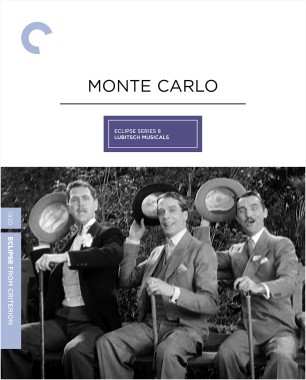
With Maurice Chevalier elsewhere (taking advantage of his newfound American stardom to headline The Big Pond and Playboy of Paris, both 1930), Lubitsch cast British and Broadway theater actor Jack Buchanan as the film’s protagonist, Count Rudolph Farriere. Willowy and coy where Chevalier was robustly sarcastic, Buchanan makes for a somewhat less convincing foil for Jeanette MacDonald. Yet without Chevalier casting his long shadow, MacDonald has more of a chance to shine as the sublimely sexy diva Countess Helene. Introduced after leaving the dandyish Duke Otto (Claude Allister) at the altar, the runaway bride flits off to the Riviera and into a series of power and love games with her devilishly duplicitous new hairdresser (in reality, a count). As the carefree Helene first rides the train to Monte Carlo, Lubitsch accompanies her song “Beyond the Blue Horizon” (an eventual radio hit) with a delightful, rhythmic montage. Momentarily rising above the mostly point-and-shoot aesthetic of the period’s musicals, this sequence dazzled critics with its demonstration of the genre’s possibilities: “As the train speeds on its way,” wrote Mordaunt Hall in the New York Times, “the sound of the wheels, the whistle, and other noises serve as a partial accompaniment to the melody . . . a true touch of genius.”
And there was verbal wit as well. An amalgamation of Hans Müller’s obscure German play The Blue Coast and an episode from Booth Tarkington’s novel Monsieur Beaucaire, Monte Carlo first paired Lubitsch with Leo Robin, the perfect lyricist to match his sensibilities. Robin’s inventive wordplay is best displayed in the opening, when a chorus of guards and ladies-in-waiting sings of the prissy Duke Otto, “He’s a nas . . . he’s a nas . . . he’s a nasty-tempered brute!”—a bit of vulgarity that can only be conveyed through speech.
Such suggestiveness was the order of the day in this pre-Hays haze: like Lubitsch’s other musicals, Monte Carlo is pungent with sexual overtones. And while, as with The Love Parade, its ideas about the taming of strong, independent women can seem a bit dated, the tone is all very playful, and the film ultimately attains an effervescence that points toward what critics would come to call “the Lubitsch touch”—a perhaps overused term for the director’s ability to tread delicately no matter the subject, with a cheery disposition and an economy of words and images. Just as Lubitsch had, with his silents, striven for pictures so concise that they didn’t need intertitles, as a sound filmmaker he was still whittling narrative down to its very essence.
The Smiling Lieutenant: Smiling Through the Tears
The infectiously giddy The Smiling Lieutenant (1931) was surprisingly created during a time of extreme emotional duress for both its director and its star. Ernst Lubitsch was in the middle of divorce proceedings with his wife, Leni, who had been carrying on an affair with his friend and former screenwriter Hanns Kräly. Meanwhile, Maurice Chevalier’s mother had recently died, and the actor was increasingly finding his trademark performance style to be mechanical and insufferable. Already a solemn on-set presence (he was renowned for snapping into his bright-eyed on-screen character when “action” was called), Chevalier was growing more withdrawn, and his working relationship with Lubitsch would continue to deteriorate through the middle of the decade.
On-set headaches extended to the film’s two female leads, Claudette Colbert (Chevalier’s costar in The Big Pond) and newcomer Miriam Hopkins, both of whom demanded that only the more flattering, right side of their faces be photographed. Picking his favorite, Lubitsch granted this courtesy only to Hopkins, who would go on to star in two of Lubitsch’s most acclaimed comedies, Trouble in Paradise (1932) and Design for Living (1933). (Nevertheless, Colbert would also work with Lubitsch again, on his 1938 romantic comedy Bluebeard’s Eighth Wife, and later would cite him as her favorite director.)
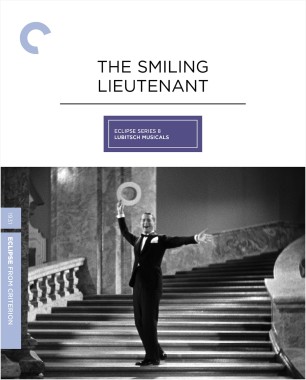
Adapted freely from Hans Müller’s short story “Nux, the Prince Consort”—and from Oscar Straus’s 1907 operetta based on the same story, The Waltz Dream—The Smiling Lieutenant dispenses with much of the song-based narrative of The Love Parade and Monte Carlo, pushing Lubitsch ever closer to the straightforward romantic comedy that would come to define him. Indeed, with only five complete songs in the film, it was the screenplay—his first collaboration with Samson Raphaelson—that stood out. Raphaelson would forge a remarkable career with Lubitsch, writing such classics as The Shop Around the Corner (1940), Heaven Can Wait (1943), and, of course, Trouble in Paradise. In fact, this bubbly comedy of class differences and crass puns, with its conflict between a working-class woman and an aristocratic prude, feels like a warm-up for Trouble in Paradise: torn between the adoration of Colbert’s jazz baby Franzi and Hopkins’s uppity Princess Anna (from the ridiculously nasally named country of Flausenthurm), Chevalier’s happy-go-lucky Lieutenant Nikolaus finds himself in an awkward, seemingly irreconcilable love triangle.
After he finished shooting The Smiling Lieutenant at Paramount’s short-lived studio branch in Queens, New York, Lubitsch returned to Hollywood to find a general malaise—the ongoing Depression was now being widely felt within the film industry; cinema attendance had dropped precipitously by 1931. And even though The Smiling Lieutenant would be met with acclaim (including a third Best Picture Oscar nomination for Lubitsch) and would mark his third musical hit in a row (a feat equaled only by the sensational Parisian filmmaker René Clair), Lubitsch began moving away from the formula with his next project, a dark, brooding World War I film with Lionel Barrymore titled The Man I Killed (a.k.a. Broken Lullaby). An expensive flop, the dire drama is mostly recalled as a momentary break before Lubitsch would go on to complete his joyous musical cycle, and become an increasingly powerful Hollywood force.
One Hour with You: One Last Kiss
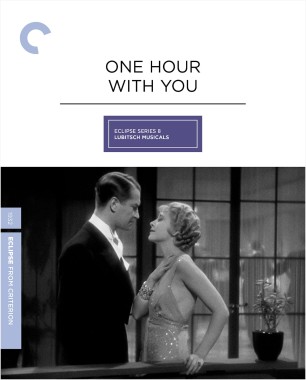
Ernst Lubitsch’s final musical at Paramount, One Hour with You (1932), was, like his earlier such works, a frothy affair greeted with enthusiasm and award nominations, but its production proved to be one of the most contentious of Lubitsch’s career. The German émigré, whose musicals had revitalized the film industry, was by this time an invaluable presence in Hollywood, and before his contract with Paramount was up in early 1932, the studio wanted to get as much work out of him as possible. Thus, even while shooting the drama The Man I Killed, Lubitsch was assigned to supervise a Maurice Chevalier–Jeanette MacDonald musical, to be directed by relative newcomer George Cukor. After reading the script, however, Lubitsch tossed it out and began work with Samson Raphaelson on a new draft, which he decided to adapt from his 1924 film The Marriage Circle.
The project then became increasingly Lubitsch’s own. When shooting commenced, he was dissatisfied with Cukor’s work, feeling the young director wasn’t blocking scenes for maximum comic effect; Chevalier concurred, saying that Cukor was directing him “too broadly.” Lubitsch began directing scenes himself, until he finally took over the production, much to Cukor’s chagrin. In its first preview screening, the film read, “An Ernst Lubitsch Production” and, below, “Directed by George Cukor.” After Lubitsch protested that he had in fact directed the film and wanted proper credit, Cukor filed suit to maintain his billing. Lubitsch won the directing credit.
The behind-the-scenes conflicts certainly do not manifest on-screen. One Hour with You seems like a natural progression from Lubitsch’s prior musicals, without a trace of clashing artistic sensibilities. Perhaps this is because it was such well-rehearsed material for Lubitsch: The Marriage Circle was a telling choice for remaking, since he was still bitter over his recent divorce. One Hour with You takes an especially lackadaisical attitude toward fidelity, introducing Chevalier’s Andre and MacDonald’s Colette as a happily married couple, only to have their trust and devotion stripped away bit by bit after Colette’s delightfully amoral girlfriend Mitzi (Genevieve Tobin) begins to woo Andre. It’s a mostly cynical, if lighthearted, depiction of wedded life, carried along by Chevalier’s frequent direct address to the camera and a fondness for rhyming dialogue. As for the songs, they’re buoyant but nearly as scant as in The Smiling Lieutenant.
The audience for this brand of musical, with its minimal visual flair and broad high-society farce, was now in decline. By 1932, the novelty of sound was wearing off, and spectacle would soon be the order of the day: 42nd Street, Busby Berkeley, and Fred Astaire were waiting just around the corner. Lubitsch would go on to direct only one more musical, The Merry Widow (1934), for MGM—a success, but one greatly affected by the restrictions of the Production Code, put fully into force that year. Gone was the sexual insouciance of these early films, awash with the rough, candid pleasures of a new art form finding its footing. In 1935, Lubitsch was named head of production at Paramount Pictures; though his tenure would last only one year, the position cemented his power in Hollywood and was a testament to his vital role in bringing film into the sound era.
More: Essays
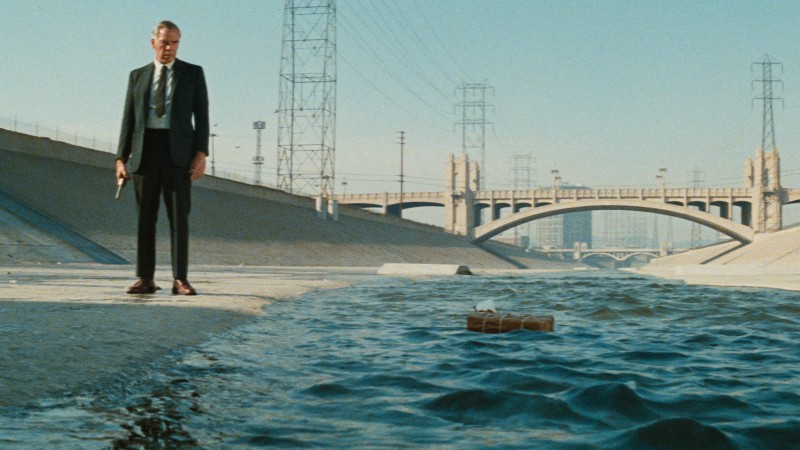
Point Blank: A Dream of Full-Color Noir
A crime-cinema masterpiece whose influence can be seen in such later touchstones as Mean Streets and Reservoir Dogs, this highly stylized portrait of a gangster subordinates the needs of plot to director John Boorman’s saturated aesthetic.
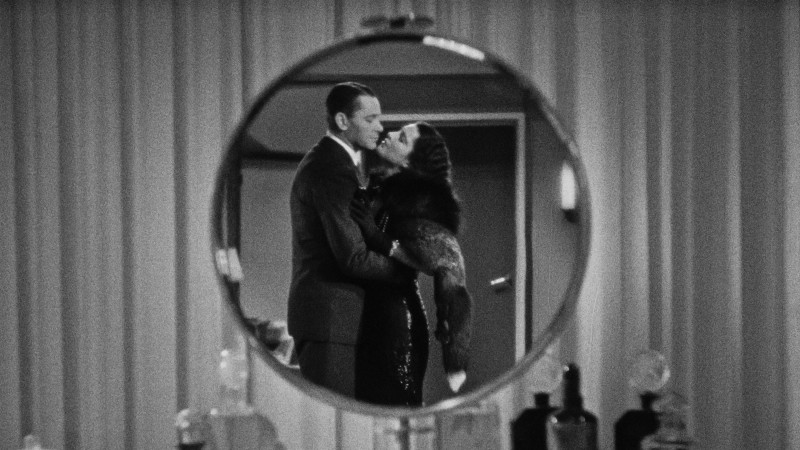
Trouble in Paradise: Pure Style
One of Ernst Lubitsch’s favorites among his own films, this delightful pre-Code whodunit exemplifies the director’s signature European worldliness and his ingenious way of drawing viewers in as if they were coconspirators.
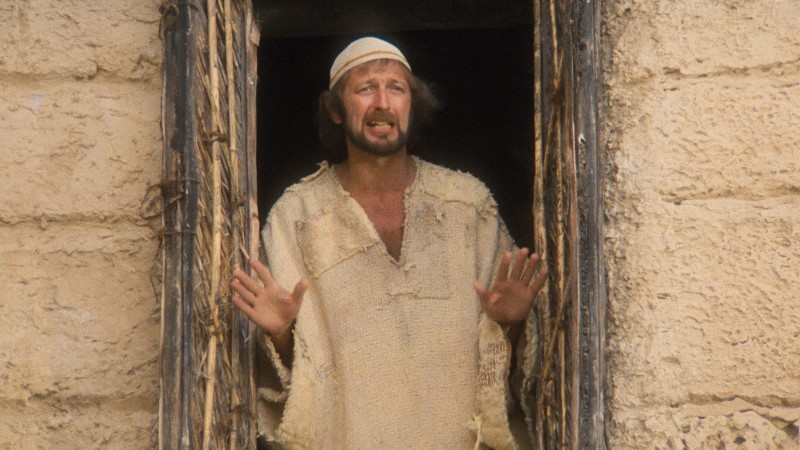
Monty Python’s Life of Brian: The Wrong Messiah
The legendary comedy troupe’s most fully realized film is a hilarious Biblical parody with a streak of overwhelming horror and outrage running through it.
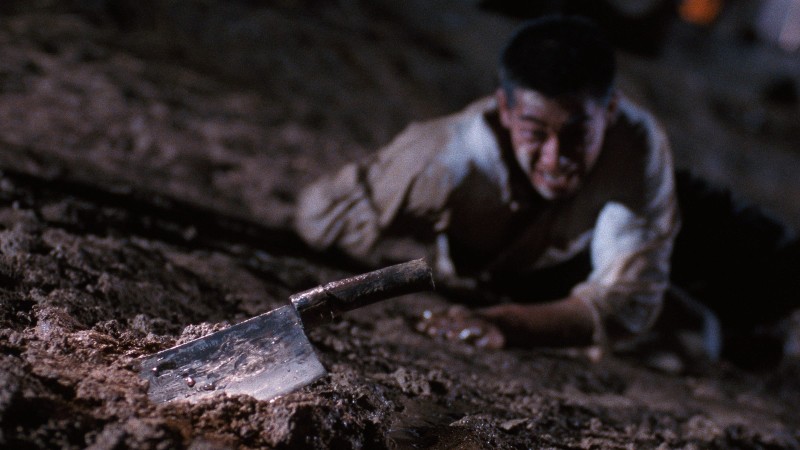
The Blade: Cutting Deep
Violently nihilistic, simultaneously energizing and crushing, Tsui Hark’s remake of the martial-arts classic One-Armed Swordsman captures the zeitgeist of pre–1997 handover Hong Kong.