Frederick Wiseman’s America
Share
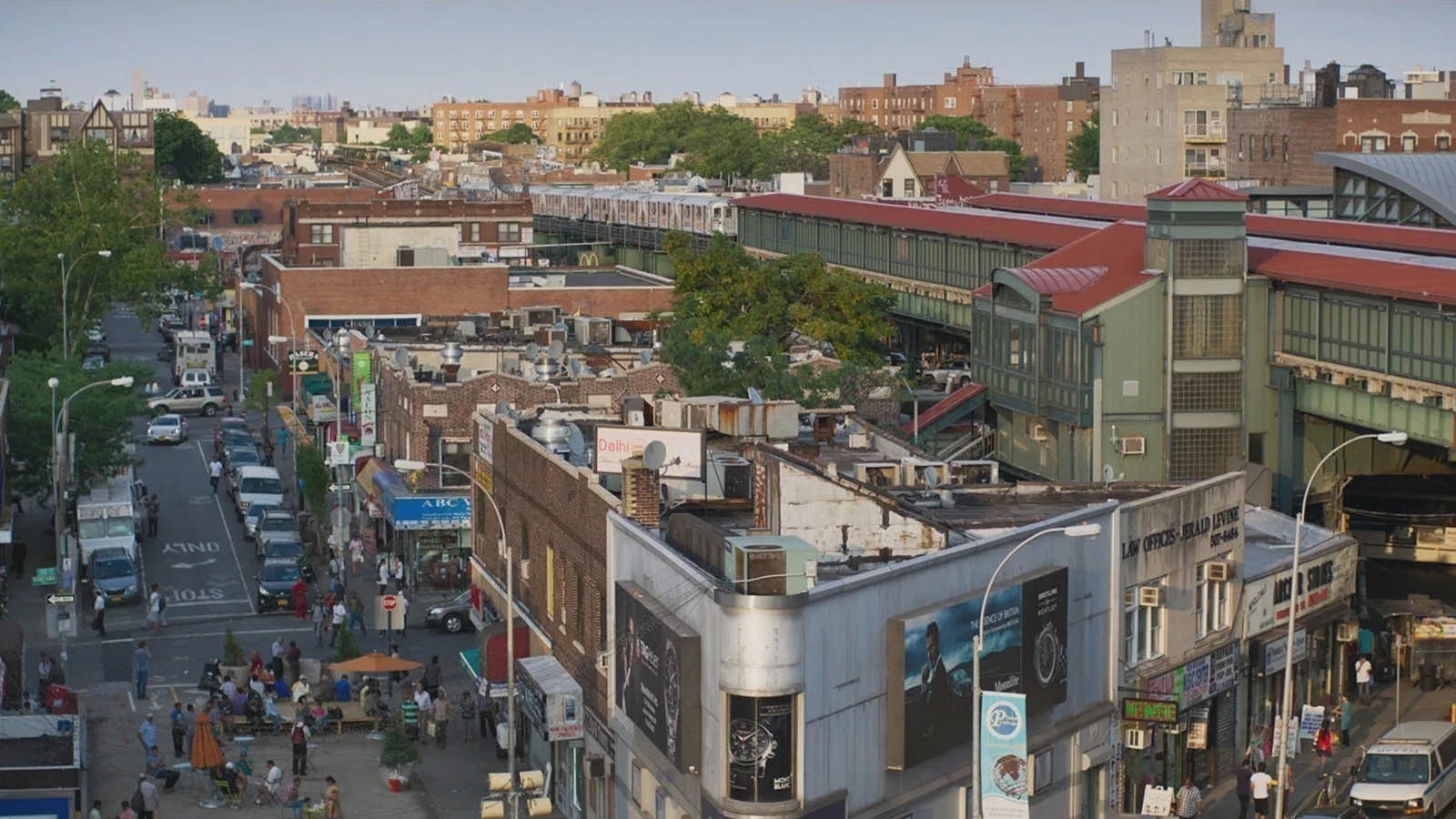
Last year’s bountiful Frederick Wiseman retrospectives in New York and Los Angeles reaffirmed the late filmmaker’s status as one of the great masters of nonfiction, and since his passing in February, appreciation has only swelled. On Sunday at the Museum of the Moving Image, Reverse Shot will present a screening of In Jackson Heights (2015), Wiseman’s portrait of one of the most ethnically and culturally diverse neighborhoods in the world, never mind New York alone.
But there’s also another solid reason to watch or revisit the films in 2026, one called out in the title of a yearlong retrospective running at San Diego’s Digital Gym Cinema, This Is America at 250: Frederick Wiseman. The nation’s semiquincentennial will be similarly celebrated from next Wednesday through May 3 at the Jacob Burns Film Center in Pleasantville, New York.
Introducing the twelve-film series Frederick Wiseman’s America, JBFC Director of Film Curation and Programming Eric Hynes calls Wiseman “one of the greatest chroniclers in the country’s entire 250-year history. Cinema’s version of Mark Twain, Wiseman’s perceptive, majestic, and quietly comedic films have covered all corners of the country, from towns in Maine, Colorado, and Indiana, to seats of government, courts of law, welfare offices, high school auditoriums, even outposts on foreign soil.”
“Wiseman was likely America’s preeminent ‘meetings filmmaker,’ someone who relished filming any kind of professional or community gathering,” writes Vikram Murthi in the Atlantic. “Although local government meetings in Wiseman’s films are often sources of bureaucratic frustration, the meetings in In Jackson Heights are sites of potent expression . . . Street vendors, soccer fans, Arabic teachers, LGBTQ activists—all deserve to assert their dignity in Wiseman’s eyes.” At one point in the film, New York City Council member Daniel Dromm proudly tells a crowd that “167 different languages” are spoken in the neighborhood.
Wiseman was also “American cinema’s reigning master of loose chatter, with the best ear for dialogue this side of Billy Wilder,” writes Adam Nayman for the New Left Review. “He liked to cultivate cacophony: classrooms and playgrounds as echo chambers; hospitals and missile silos as makeshift soundstages; prisons and city halls as towers of babble.” Wiseman’s “powers of perception and persuasion were only deceptively self-effacing. The absence of the director, whether as a voice on the soundtrack or a physical presence, belies the palpable intentionality of the framing and cutting. These techniques made Wiseman’s movies as expressive as art-house psychodramas or as pressurized as a good thriller.”
Documentary Magazine editor Abby Sun has asked contributors for a few words on a favorite from the oeuvre, and Arlin Golden, who cohosts Wiseman Podcast with Shawn Glinis, suggests that Domestic Violence (2001) “might be Frederick Wiseman’s crowning achievement. All of his films are in dialogue with one another, but Domestic Violence could be the skeleton key that unlocks the knotty pain evident throughout his various institutional portraits. By revealing the unending cycles of routine private abuse, Wiseman offers one potential motor on the ceaseless treadmill of American social dereliction, as the hurt originating at home is inevitably internalized and manifests in the public sphere.”
Like Michel Foucault, Wiseman “knew that power is everywhere,” writes Henry Roberts for ArtReview. “For Foucault, people internalized rules through norms, becoming ‘docile bodies’ that learn not to resist. This starts at the earliest institutional level, the school. In High School (1968), Wiseman’s second feature, bodies are judged, sexuality is policed, and expression is restricted. The film ends with the school principal reading a letter from an ex-pupil fighting in Vietnam. ‘Don’t worry about me,’ she reads aloud. ‘I am only a body doing a job.’ By ending the film with this moment, Wiseman’s message is clear: conformity will lead you to the grave, and before you go, you may even write back to your school to say thank you.”
This scene—along with sequences in Welfare (1975), Public Housing (1997), and Belfast, Maine (1999)—is cited in Jordan Mintzer’s Hollywood Reporter appreciation of Wiseman as “not simply a great documentary filmmaker, which is a label he’s always rejected. He’s a great filmmaker, period.” And now, “at a time when our institutions seem to be in great peril,” wrote Mintzer, “these scenes appear to be hammering home a theme Wiseman has been slyly emphasizing all along, from decade to decade and from film to film, in a body of work that’s suddenly become more relevant than ever: the everyday miracle, now under threat, of democracy in action.”
Don’t miss out on your Daily briefing! Subscribe to the RSS feed.