April Books
Share
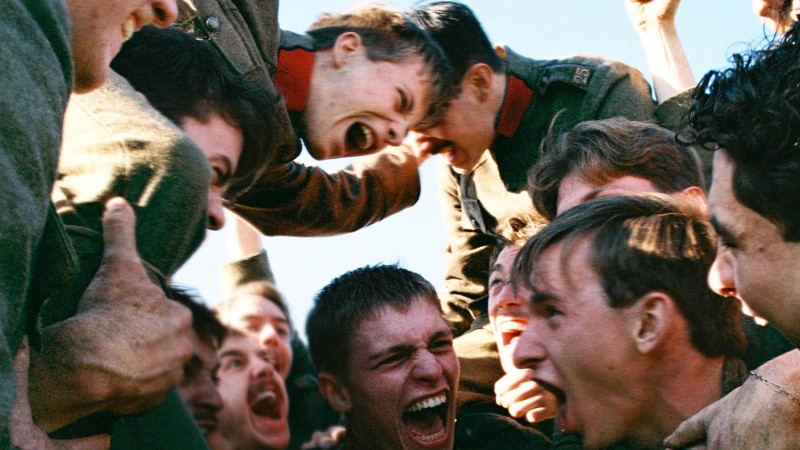
Opening today at the Museum of Modern Art in New York and running through Friday, A Hard Stare: Peter Hujar, Paul Thek, and Their Circle on Film is a series organized by Andrew Durbin, the editor-in-chief of frieze and the author of The Wonderful World That Almost Was: A Life of Peter Hujar and Paul Thek. In 2026, Hujar is the more immediately recognizable name. Exhibitions such as the one currently on view in Berlin, several new books and reissues, and of course Ira Sachs’s Peter Hujar’s Day (2025) have reignited interest in the work of the photographer best known for his portraits of New York cultural figures in the 1970s and ’80s.
When Thek died in 1988, barely one year after Hujar—Thek was fifty-four; Hujar, fifty-three—the obituary in the New York Times referred to him as “an artist best known for installations of objects depicting surrealistic scenes of death and renewal”—and then went a little fuzzy when it came to reporting on the cause of death. The truth was made plain the following year at the latest when Susan Sontag published AIDS and Its Metaphors with its dedication to Thek.
Thek’s “most important works were large-scale installations in Europe,” writes Alexander Cheves in the Guardian, “all lost, and which, as Durbin tells me, ‘everyone loved, but few could experience. And when they were finished, there wasn’t much left to sell. But I think his moment is about to come.’”
Thek and Hujar met in the mid-1950s, became lovers a few years later, and parted ways in 1975. “The Wonderful World is luscious and absorbing, if sometimes a bit giddy,” writes Moyra Davey at 4Columns. “But it doesn’t matter—Durbin’s writing is passionate, and novelistic in scope; it is also scholarly and precise where it needs to be about the art practices of both men.”
We should flag a few more events before we delve any further into this month’s roundup on new and noteworthy books. The third issue of Narrow Margin, featuring dossiers on the films of Larry Cohen and Rita Azevedo Gomes, will be launched in the UK next month as the Institute of Contemporary Arts presents Nothing but Life: The Cinema of Rita Azevedo Gomes, a retrospective running from May 2 through June 5. And on May 9, Megan O’Grady, whose new collection is How It Feels to Be Alive: Encounters with Art and Our Selves, will present Agnès Varda’s Vagabond (1985) in Los Angeles.
Great Silents
This year’s San Francisco Silent Film Festival will open on May 6 with the recently reconstructed Queen Kelly (1929), directed—until he was booted—by Erich von Stroheim and starring Gloria Swanson as a convent girl who ends up running a brothel in German East Africa. Introducing her new book at Silent London, Pamela Hutchinson explains that The Curse of Queen Kelly is about how the film “came to be made, how and why it was abandoned, and how Gloria Swanson spent the rest of her life trying to reclaim it. This is film history as a rollercoaster ride. The things I learned surprised me, and the questions that it raised continue to trouble me. This is a story about the sharp end of silent Hollywood.” And Hutchinson has more to say in conversations with John Bleasdale (Writers on Film) and Marya E. Gates.
Paul Cuff has written a bit about von Stroheim and quite extensively about Abel Gance. His next book, Rediscovering Brigitte Helm: Film Performance and Stardom, 1925–1935, which will of course cover her unforgettable performance in Fritz Lang’s Metropolis (1927), doesn’t have a release date yet, but it does have a cover and a blurb. Cuff’s blog is The Realm of Silence, and he plans to use it in the coming days and weeks “to showcase a plethora of Helm memorabilia from my own collection.”
Lisa Stein Haven’s Early Buster Keaton: From the Vaudeville Stage to Comique Films, 1899–1920 is “a detailed, well-wrought look into the comedian’s early career(s),” writes Thomas Gladysz for Film International. Keaton’s “American-ness” is “at the heart of Haven’s investigation in to who Keaton becomes as a performer and filmmaker.”
Assertions of Presence
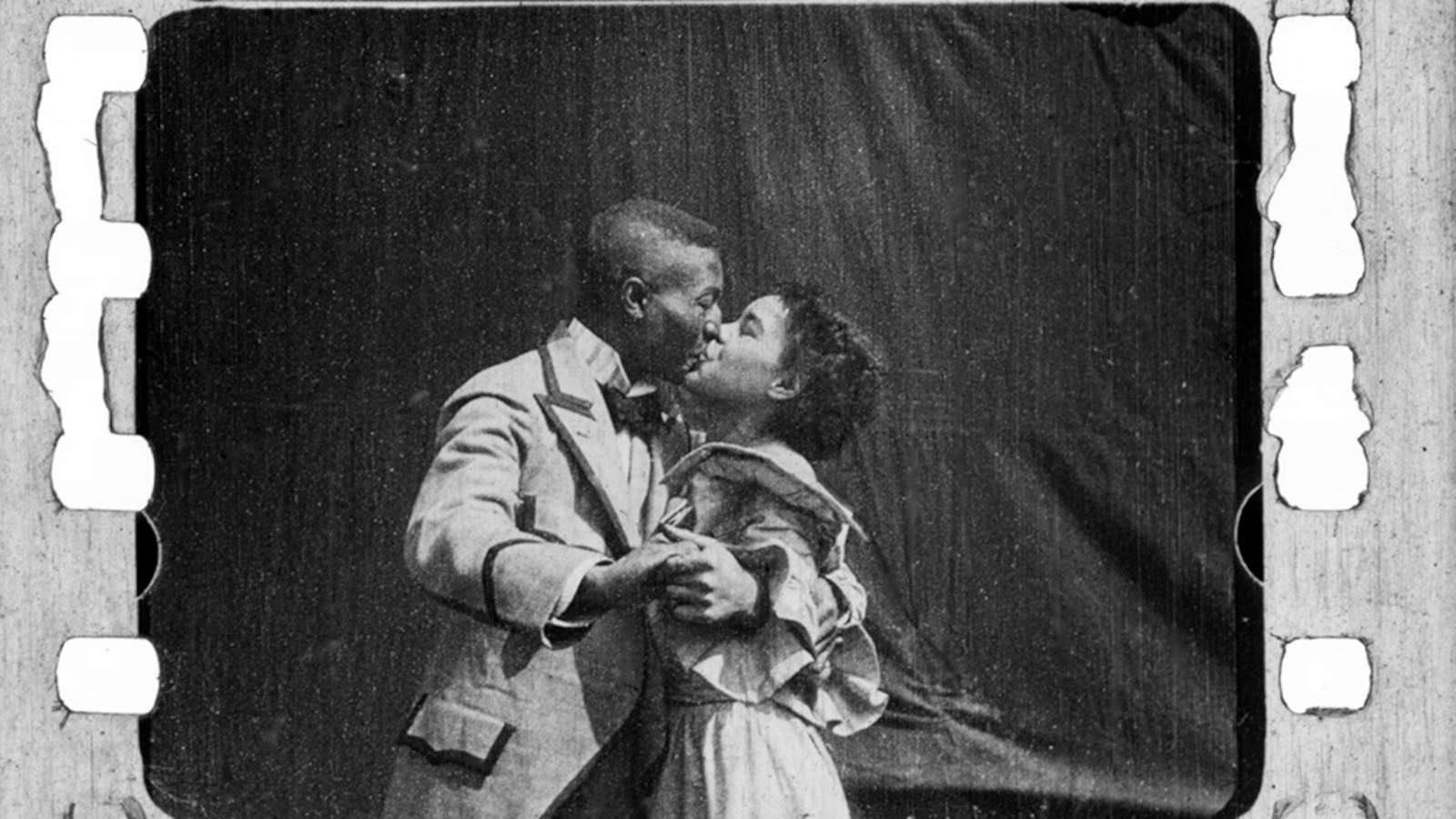
The discovery nearly ten years ago of Something Good: Negro Kiss, an 1898 short directed by William Selig and featuring vaudeville performers Saint Suttle and Gertie Brown playfully smooching, has led to a book, Acts of Love: Black Performance and the Kiss That Changed Film History. For the Los Angeles Review of Books, Robert Daniels talks with author Allyson Nadia Field about how, as she says, “it’s about not only the film but also how we understand the film. It’s about what the film meant then, which requires historical analysis. It’s about the performers and their lives and the other things that they did, and about the vexed world of turn-of-the-century Black performance. It’s about the cakewalk. It’s about the way these forms traveled into cinema. And ultimately, Something Good: Negro Kiss tells us a lot about Black performance and how we understand representation now, even though it’s a story from a hundred years ago.”
Artel Great—the author of The Black Pack: Comedy, Race, and Resistance, a history of collaborations between comedians Eddie Murphy, Paul Mooney, Keenan Ivory Wayans, Robert Townsend, and Arsenio Hall in the late 1980s and early ’90s—will be at the Billy Wilder Theater in Los Angeles on Saturday to introduce Townsend’s The Five Heartbeats (1991). On Sunday, Great will wrap the UCLA Film & Television Archive series The Black Pack: Rewriting American Comedy with a discussion of Murphy’s Harlem Nights (1989), and as Mark Olsen notes in the Los Angeles Times, further Black Pack programs are heading to Atlanta, San Francisco, and Chicago.
Ashley Clark has been talking about his new book, The World of Black Film: A Journey Through Cinematic Blackness in 100 Films, with Ella Kemp at Letterboxd and with Ife Olujobi at Screen Slate. “It’s so crazy that year on year,” Clark tells Olujobi, “whenever any awards season comes around, we’re still talking about the same things, about the same types of erasure. I wanted to step aside from all of that and present something which confirms a history and a proud lineage of Black filmmaking, often against the odds. It’s not intended to be canonical—I’m not saying these are officially the hundred greatest Black films ever made—but it’s an assertion of presence.”
Star-Maker Machinery
“The construction of celebrity has always been collaborative: a script written by producers, journalists, and audiences alike,” writes Candice Wuehle at the top of a brief historical overview of books that “explore the machinery” of fame for Literary Hub. Over the past few weeks, Lena Dunham has kicked that machinery into high gear with Famesick, which the New York Times’ Alexandra Jacobs calls “an earnest, exposing book; a portrait of a lady on fire (indeed, a candle mishap in a hotel room sends her to the burn unit). Its quick hits of wit, especially about rich hipsters—‘film bros in their 30s and their wanly supportive girlfriends’ or the ‘jaunty, Keebler Elfish cadence’ of the Tracy Anderson workout method—are like sniffs from an oxygen mask.” Famesick “has a whiff of the old Hollywood tell-all, indie edition, with trash bags for curtains in an Eagle Rock group house.”
You’ll find much more on Famesick just about anywhere you turn, but let’s stick to the essentials. The New Yorker has an excerpt, “How I Became a Filmmaker,” and the book has been reviewed by Madeline Leung Coleman (Vulture), Sophie Gilbert (the Atlantic), and Scaachi Koul (Slate). David Marchese interviews Dunham and Amanda Hess profiles her, both for the NYT, and Emma Brockes talks with her for the Guardian.
Reviewing Liza Minnelli’s memoir Kids, Wait Till You Hear This! for the New Yorker, Matt Weinstock writes: “Arranging her accomplishments on a single plane of vision is almost impossible, but what emerges in the attempt is a richly ouroboric body of work in which every concert alludes to her tabloid exploits and her tabloid exploits sometimes seem like guerrilla reenactments of things she’d done in her movies. As Minnelli once put it, ‘It’s a wacky career.’”
Kyle MacLachlan—FBI Special Agent Dale Cooper and the Mayor of Portlandia—has written a memoir. Fictional Selves will hit the shelves in October.
Tinseltown’s Golden Ages
Lea Jacobs’s John Ford at Work: Production Histories 1927–1939 “needs to be read slowly and carefully,” advises Kristin Thompson. “As Ford moves around among studios, different cinematographers, producers, script writers, and actors work with him from film to film, all having their influences . . . Jacobs accomplishes what most authors hope for: that the reader finishes by wanting to rewatch again films seen before, sometimes confident that her analyses will reveal them as much better than one had thought.”
Too often overlooked in discussions of what many claim to be the most golden year in Hollywood’s Golden Age, 1939, is George Cukor’s The Women, with its all-female cast featuring Norma Shearer, Joan Crawford, Rosalind Russell, Paulette Goddard, and Joan Fontaine. “Directing ensemble scenes with upwards of half a dozen divas is no easy feat,” writes Caroline Golum at Little White Lies. “Leave it to Cukor to corral this kind of star power into a two hour-plus film that never takes a break to powder its nose.” September will see the release of Illeana Douglas’s Jungle Red! The Making of MGM’s The Women.
Not quite two months before he died in February 1966 at the age of fifty-seven, playwright, screenwriter, and director Robert Rossen (All the King’s Men, The Hustler) gave his last interview to Daniel Stein. The conversation is now being republished in Persistence of Vision: A Collection of Film Criticism, edited by Joseph McBride, and Sabzian is running an excerpt. “This whole question of inner life,” said Rossen, wrapping an exchange about his final film, Lilith (1964), “I think there’s only one man that I know of in films that really and truly understands how to do it. And comes close, and that’s Bergman. I think Fellini’s a fake, totally and completely, a depraved—not depraved, that’s the wrong word—an Italian vaudevillian.” Rossen did like I vitelloni (1953), though. It “seemed realer.”
Reviewing David Streitfeld’s Western Star: The Life and Legends of Larry McMurtry for the Nation, Gus O’Connor writes that “Hollywood’s mythmaking machine was many things for McMurtry—a pain in the arse, an imperfect creative outlet, a curiosity, and, most importantly, a paycheck.” The author of the novels The Last Picture Show and Terms of Endearment and the cowriter of the screenplays for Lonesome Dove (with Peter Bogdanovich) and Brokeback Mountain (with Diana Ossana) “thought of himself, first and foremost, as a novelist and not a screenwriter. Yet one has to consider whether McMurtry’s films, more than his novels, have had a longer-lasting impact on popular culture, even if people have no idea he wrote those films. The question Streitfeld’s biography seems to orbit, then, is one about the connective tissue between the two mediums: how each of them informed the other and how, ultimately, the novel’s form was where McMurtry could best express his artistic and intellectual ideas.”
The “rampant consolidation” of the 1990s and early 2000s was a boon to the industry, as Thomas Schatz explains in Power Surge: Conglomerate Hollywood and the Studio System’s Last Hurrah: “Hollywood went on an absolute tear. Theater admissions in the U.S. spiked to their highest level in a half-century from 2002 to 2004, and all sectors were thriving—the major powers with their Harry Potter, Lord of the Rings, Shrek, and Spider-Man franchises; Indiewood with innovative gems like Lost in Translation (2003) and Eternal Sunshine of the Spotless Mind (2004); and the true independents with arthouse (and grindhouse) films and occasional runaway hits like My Big Fat Greek Wedding (2002), Fahrenheit 9/11 (2004), and The Passion of the Christ (2004). Not only was the movie industry booming, but it was striking a balance between art and commerce that hadn’t been seen since its vaunted Golden Age.”
New York, New York
Michael Lee Nirenberg’s Cinematic Immunity: An Oral History of New York Filmmaking as Told by the Crews that Got the Shot takes us to the on-location sets of John Schlesinger’s Midnight Cowboy (1969), William Friedkin’s The French Connection (1971) and The Exorcist (1973), Francis Ford Coppola’s The Godfather (1972), Walter Hill’s The Warriors (1979), and more gritty tales of the big city. At the Village Voice, R. C. Baker reintroduces an excerpt that ran a couple of years ago, a behind-the-scenes peek at the making of Joseph Sargent’s The Taking of Pelham One Two Three (1974).
“As a cornucopia of anecdotes, sassy portraits, and revealing asides, the book is unputdownably engaging,” writes the New Yorker’s Richard Brody. “Something that becomes apparent in Cinematic Immunity is that directors, for all their imaginative vision and dramatic sensibility, create, foremost, a social reality on the set, of which the events filmed—however artificial the design, however fantastic the story, however hyperbolic the performances—are a camera-angled slice of life. The views of the art of directing provided by the participants in Nirenberg’s book are exquisitely detailed and tangy with emotional immediacy.”
Michael Almereyda’s Writings and Relics: 1990–1995 chronicles a period when he shot Another Girl Another Planet (1992) in an East Village walk-up with a Fisher-Price PXL 2000 camera and directed the vampire movie Nadja (1994), which was “very much a neighborhood film,” as J. Hoberman wrote when a new restoration was released earlier this year. “Almereyda’s use of desolate downtown locations is reminiscent of Martin Scorsese’s in After Hours (1985). NoHo alleyways provide an instant netherworld and the illuminated windows of the old Tower Records on Broadway and East 4th Street are a notable effect. ‘The dead travel fast,’ Van Helsing [Peter Fonda] warns, and indeed, the woods of Transylvania feel but a subway ride away.”
Fiercely Independent
Jane Schoenbrun—whose third feature, Teenage Sex and Death at Camp Miasma, will open the Un Certain Regard program in Cannes next month—will also see their first novel released in October. Public Access Afterworld promises to be a “mesmerizing mashup of speculative fiction, horror, and conspiracy.”
Daniel Kraus—whose latest novel, Angel Down, was named one the ten best books of 2025 by the New York Times—has a new book out, Partially Devoured: How Night of the Living Dead Saved My Life and Changed the World. Kraus claims to have seen George A. Romero’s 1968 classic more than three hundred times. “He has visited the locations, gone to conventions, purchased any and all ancillary products, and watched every remake, sequel, and spinoff, to the extent that I, a total stranger, am concerned for his well-being,” writes Vince Keenan. “There is a close reading of a film, there is a love letter to one, and then there’s what Kraus achieves here, which is an exploration of a work of art so intimate that it borders on invasive . . . I devoured Partially Devoured, and when I was done I saw Night of the Living Dead through Kraus’s eyes, appreciating it anew for the masterwork it is.”
Sticking Place Books is celebrating two other independent spirits with the publication of Gone Beaver and My Girlfriend’s Girlfriend: Lost Screenplays of the 1970s by Jim McBride (David Holzman’s Diary, The Big Easy) and My Lunches with Henry Jaglom, a collection of interviews with the late director of Can She Bake a Cherry Pie? (1983) and Eating (1990) conducted by Daniel Kremer in the spirit of Jaglom’s own My Lunches with Orson. Kremer’s book features a foreword by Candace Bergen and an afterword by Noah Wyle.
En Avant
In 1983, Jane Brakhage, as she was known at the time, began interviewing her husband, experimental filmmaker Stan Brakhage, and within two years, the couple had a manuscript whose first title was The Autobiography of Stan Brakhage. The book project was set aside as the Brakhages’ marriage fell apart, but years later, the late P. Adams Sitney encouraged Jane Wodening, who had taken a new name and started a new life as a solitary writer in Colorado, to take a fresh look at the book—which was then published in 2015 as Brakhage’s Childhood. Sitney and David E. James then turned to further writing by and interviews with Wodening, and Sticking Place Books has just released The Autobiography of Jane Brakhage.
The Whole Shebang: Celebrating Ken and Flo Jacobs, a multi-venue series, carries on in New York through the end of the month. It coincides with the publication of I Walked Into My Shortcomings, a collection of Ken Jacobs’s writing and interviews edited by William Rose. Metrograph’s Journal is running an excerpt: “My early years were in a Yiddish speaking household in Williamsburg, where my grandfather took me by the hand to the Marcy on Sundays to see a Yiddish weepie double billed with a Hopalong Cassidy. Though I’d often be playing under the seats, some of the features had left impressions, mysterious disembodied cine-ghosts that I longed to meet with again.”
John Coulthart, in the meantime, flags the forthcoming publication this summer of Sophia Satchell-Baeza’s Sensual Laboratories: Light Shows, Experimental, Film and Psychedelic Art, featuring a foreword by Jarvis Cocker.
Kluge and Farocki
Since Alexander Kluge passed away last month, there have been remembrances to recommend from A. J. Goldman in the New York Times and Bruce Robbins in the Baffler, and Carl Wilson points us to the late Gary Indiana’s engaging interview with Kluge that ran in a 1989 issue of BOMB Magazine. “At one level,” writes Sukhdev Sandhu at 4Columns, “Intelligence Is the Art of Remaining Faithful under Shifting Circumstances, a collaboration with Anselm Kiefer, translated by Alexander Booth, is merely the latest in Kluge’s ongoing book-length dialogues with visual artists, among them Georg Baselitz, Thomas Demand, and Gerhard Richter. But his affinities with Kiefer run especially deep . . . It’s been claimed that Kluge’s work is cold and impersonal. He himself says he writes ‘antirhetorically.’ Yes—but really, no. Intelligence Is the Art—its depths and orbits, elastic latitudes, lived and speculated histories—is supremely thermal.”
“Harun Farocki’s film and video work is almost too interesting to be art,” wrote Ken Johnson in the New York Times in 2011. Ted Fendt has translated a 1969 essay by Farocki that will be included in a forthcoming book, and it’s now up at e-flux. “Agitation speaks because it has a goal in view, and when it speaks, it does not lose sight of that goal,” wrote Farocki. “The agitation film is not produced in the film’s sphere of production; it comes into being only in agitation.”
Endnotes
In the latest seasonal roundup for Sabzian, Tillo Huygelen has notes on new books on André Bazin, the French New Wave and the generation of filmmakers in France that followed it, Anne-Marie Miéville, Yasujiro Ozu, Satyajit Ray, Jocelyne Saab, Peter Watkins, and a whole lot more.
One of the most promising titles due this summer is The Edges of Cinema: Essays on Twenty-First Century Film Culture, a new collection and the sixth book by Erika Balsom (Ten Skies). May 11 will see the release of the critical anthology Art/Film, and Melissa Anderson has been talking with Film Comment Podcast hosts Clinton Krute and Devika Girish about her collection, The Hunger: Film Writing, 2012–2024.
Kier-La Janisse, the author of House of Psychotic Women and the director of Woodlands Dark and Days Bewitched: A History of Folk Horror, has been running an independent publishing imprint, Spectacular Optical, which is now branching out into theatrical, streaming, and home viewing distribution. The first release is slated for tomorrow, Earth Day. Christopher Morris’s A Year in the Field (2023) will screen in the evening at the Roxy Theatre in Saskatoon, Canada.
Unlike many directors, Kleber Mendonça Filho (The Secret Agent) seems to have had a blast spending nearly a full “truly great” year promoting his movie. As Rafa Sales Ross reports for Variety, Mendonça is “currently writing a book about the ‘crazy’ experience.”
Don’t miss out on your Daily briefing! Subscribe to the RSS feed.