Dark Room Full of Strangers
Share
In 1947, screenwriter Dalton Trumbo (Roman Holiday, Spartacus, Johnny Got His Gun) was summoned before the House Un-American Activities Committee along with nine other writers, directors, and producers. The Hollywood Ten, as they came to be known, refused to name names or answer questions about supposed communist propaganda surreptitiously woven into their movies. All ten were convicted of contempt of Congress, and Trumbo spent eleven months behind bars.
“As far as I was concerned, it was a completely just verdict,” Trumbo said in a 1976 interview. “I had contempt for that Congress and have had contempt for it ever since.” Many, many more than ten careers were ruined—and lives broken—at the height of the Red Scare sparked by the onset of the Cold War and spearheaded by Wisconsin senator Joseph McCarthy. With a program of films spotlighting talents at least somewhat thwarted if not outright snuffed—Trumbo, John Garfield, Joseph Losey, Dorothy Parker, Richard Wright, Charlie Chaplin—this year’s Locarno Film Festival (August 5 through 15) will revisit the era with its retrospective, Red & Black: Hollywood Left and the Blacklist.
The retrospective is curated by Ehsan Khoshbakht, one of the four directors of Il Cinema Ritrovato, the Cineteca di Bologna’s festival of new restorations and discoveries. Previewing the fortieth edition (June 20 through 28), the team has announced programs dedicated to Barbara Stanwyck, Mitchell Leisen, Luchino Visconti, Joséphine Baker, Daisuke Ito, Gunvor Nelson, Éric Duvivier, and the films of 1906 and 1926.
In New York, the Museum of the Moving Image has rolled out the lineup for First Look 2026, a showcase of “adventurous new cinema.” The fifteenth edition will open on April 23 with James N. Kienitz Wilkins’s The Misconceived, which Rory O’Connor at the Film Stage calls an “incisive, inventive movie about the anxieties faced by the never-quite-made-it creative class.”
The festival will wrap on May 3 with Moonglow, the fourth feature from Isabel Sandoval, who directs herself as Dahlia, a police officer assigned to investigate the heist she’s pulled off herself in 1970s Manila. Moonglow “demonstrates the command of not only a bona fide multi-hyphenate but a real movie star,” writes Lé Baltar at In Review Online.
This week’s highlights:
- Last week, when Jerry Lewis would have turned a hundred, R. Emmet Sweeney republished his 2017 remembrance. “The Lewis figure,” he wrote, “is in a natural state of apartness and is in a fraught, oft destructive battle to join to the main stem of society.” The Anthology Film Archives series Metaphysics of the Pratfall: Jerry Lewis and Jean-Luc Godard is on through Tuesday, and at The Theater of the Matters, programmers Edward McCarry and Ethan Spigland talk with Chris Fujiwara (Jerry Lewis), who notes that there is “a kind of violence in both filmmakers. Not violence like Sam Peckinpah, but a violence of thought, a violence of images clashing.” Godard “once said that if Lewis had been alive in the 1920s in the Soviet Union, he would have made revolutionary films—great masterpieces.” For more on Lewis, see Joshua Peinado on Three on a Couch (1966) and Will Sloan on Smorgasbord (1983) at Screen Slate.
- Another Anthology series, Revelations of the Middle Ages, is on through April 4. Guest programmer Caroline Golum has put together a selection of films that have informed her own second feature, Revelations of Divine Love, whose title is taken from the collected writings of fourteenth-century Catholic anchorite Julian of Norwich. Writing about this “remarkable” film at In Review Online, Michael Sicinski notes that in its “visual style, Revelations echoes the Brechtian approach of Manoel de Oliveira, with his clear signifiers of the period coexisting with a haunted, atmospheric modernity. But probably the most apposite points of comparison are the late educational films of Roberto Rossellini.” “Medieval art is all about taking the sublime and making it recognizable to the viewer,” Golum tells InRO’s Brandon Streussnig. “People are wearing fourteenth-century costumes, even in scenes of the Christ, which happened 1,400 years prior. It’s all about adapting things so that people understand what they’re looking at because they can situate it within their own everyday lives.”
- The weeklong series Farewell to Béla Tarr opens today at Film at Lincoln Center in New York, and in Prague, the National Film Archive is currently presenting Béla Tarr: Satan’s Tangos through April 11. The Archive’s Film Review is running a remembrance by cinematographer Fred Kelemen, who worked with Tarr from 1995 through The Turin Horse (2011) and who argues that the late director’s films “are not gloomy, they shine, and their darkness allows us to see.” Jonathan Rosenbaum, whose new column Moving Places is now running exclusively at his site, has several stories to tell and focuses primarily on film.factory, the workshop Tarr established in Sarajevo. After one screening of Sátántangó (1994), Tarr delivered “a fascinating four-and-a-half-hour lecture (with two intermissions, like the film) about how it was filmed,” writes Rosenbaum, “shot by shot and take by take, using a kind of post-it storyboard on a blackboard as a narrative thread. Typically, he was explicit and precise about the film’s technique and had almost nothing to say about its meaning—although he agreed with me when I described it as a comedy.”
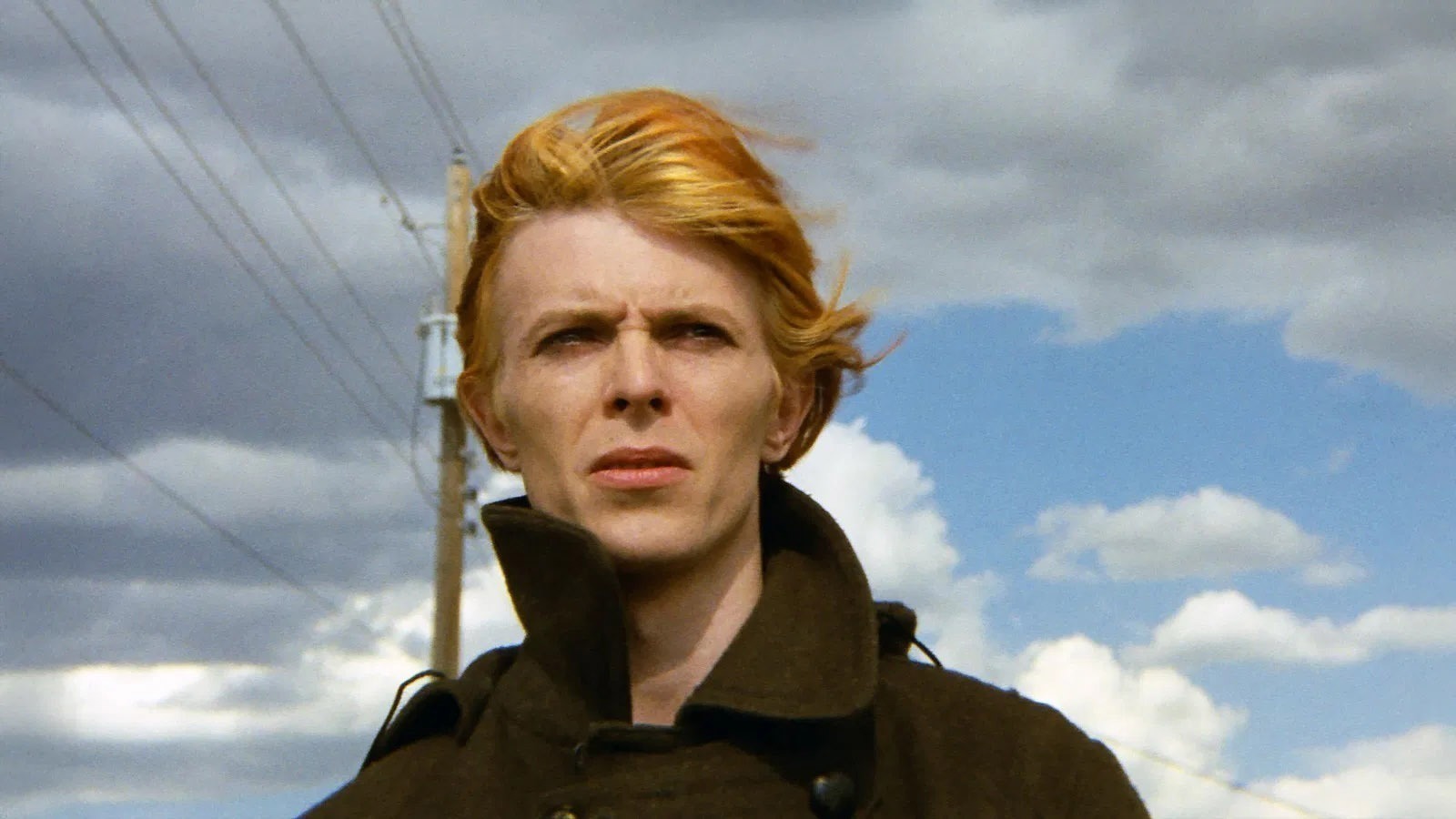
- The BFI’s Alex Ramon is spotlighting “ten great British films of 1976,” and one of them is Nicolas Roeg’s The Man Who Fell to Earth: “David Bowie—trailing Ziggy Stardust memories and Berlin-era vibes—is ideally cast as Newton, the extraterrestrial who splashes down in a lake in the U.S. southwest in search of water for his drought-afflicted planet, only to be distracted and damaged.” Sight and Sound has republished Tom Milne’s 1976 essay in which he proposes that “the way to tame The Man Who Fell to Earth is not by trying to perceive an intellectual logic which isn’t there, but by following the tangential, emotional continuity that orders its ideas into a tightly woven structure.” At Little White Lies, Payton McCarty-Simas surveys the initial (and rather perplexed) critical response to the film and suggests that “as the years pass, its vision of lost innocence, corporate greed, political corruption, and imminent climate apocalypse only feels more topical.”
- Club Ciné founding editor Tom Macklin has been in touch with “fifteen people whose taste I trust completely”—including Bruce LaBruce, Hari Nef, Nia DaCosta, and Wagner Moura—to gather their thoughts on upcoming films they’re looking forward to. The gist here, notes Macklin, is that “cinema’s libido is back, loudly and unapologetically, after what felt like a long, anxious absence.” Gen Z “has grown up bathing in images of desire while drifting further from touch, risk, embarrassment, breath, presence, and all the raw human static that makes desire real in the first place,” writes Megan Hullander. “That’s why films like Babygirl and Pillion hit with such force. They drag bodies back into the picture. They fill the screen with want, shame, heat, and hesitation. Then they throw all of it into a dark room full of strangers.”
Don’t miss out on your Daily briefing! Subscribe to the RSS feed.