The Fantastic Realism of Georges Franju
Share
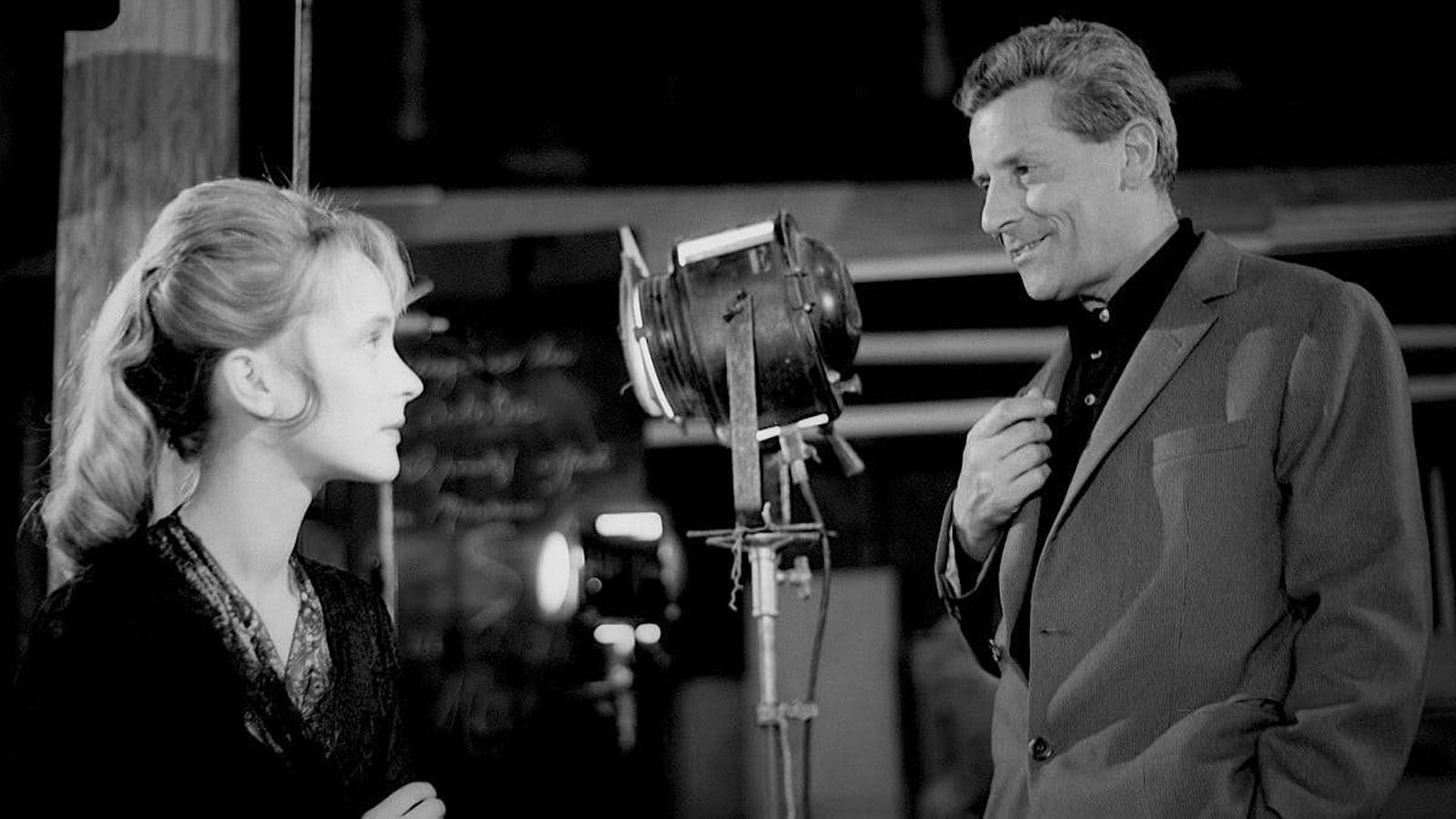
In the mid-1930s, Georges Franju teamed up with Henri Langlois to codirect a short documentary, Le métro, and launch a movie magazine and a film club that eventually led to the founding of the Cinémathèque française. “A surrealist fellow traveler,” Franju “was drawn to taboo material and social violence, with a personality to fit the crime,” wrote J. Hoberman in the Village Voice in 2008, adding that critic Ian Sinclair once described Franju as “a man of torrential vehemence, spitting out excremental expletives like a tracer-stream of olive pits.”
The Fantastic Realism of Georges Franju, a retrospective presented by L’Alliance New York, runs each Tuesday evening from tomorrow through April 14. And there’s something of a bonus evening, too, a selection of documentary shorts screening on Friday, March 20. The program includes Le métro (1935), My Dog (1955), Notre-Dame, Cathédrale de Paris (1957), and The First Night (1958) as well as one of the most impactful films Franju made before turning to fiction, Blood of the Beasts (1948).
“Many filmmakers have shot scenes or complete films in slaughterhouses,” wrote filmmaker James Marsh (Man on Wire) for Documentary Magazine in 2010, “but what distinguishes Franju’s film is its heightened aesthetics and its utter lack of sentiment. The film is quite simply sublime, in its truest sense.”
Cowritten with Jean Painlevé and shot in black and white by Marcel Fradetal, Blood is “a study of textures, movement, and light,” wrote Marsh. “There are glistening rivers of dark blood, steaming carcasses, radiant white offal—and most striking of all, the post-mortem dance of the slaughtered animals. There is a scene towards the end of the film showing the wriggling and twitching of a half-dozen freshly decapitated lambs that resembles the choreography in a Hollywood musical. It is one of the strangest, most beguiling images I’ve ever seen.”
Tomorrow’s opening night film is Head Against the Wall (1959), Franju’s first fictional feature. Future filmmaker Jean-Pierre Mocky stars as François, a twenty-five-year-old who ticks off his father to such a degree that the old man has him institutionalized. The cast includes Pierre Brasseur as a severe doctor, Paul Merurisse as a more compassionate one, Charles Aznavour as a fellow inmate, and Anouk Aimée as the love interest waiting on the outside.
“What makes it play so beautifully, aside from the precision of the performances, is Franju’s eerie command of atmosphere,” wrote Glenn Kenny for Notebook in 2009. “When need be, it can be as stark and realistic as Truffaut's treatment of the horrible home for juveniles in the final quarter of The 400 Blows. But when it pleases him, Franju gives things a little twist, injecting notes of strangeness, horror, the irrational. Whether it’s the weird, eerily erotic gaze of a female inmate or a strange gathering of doves or a cityscape by night that seems as dank and claustrophobic as the asylum walls themselves, Franju’s mastery and palpable adoration of effect is ever evident.”
Eyes Without a Face (1960), a Halloween perennial, is surely Franju’s best-known feature. Frequent collaborator Edith Scob stars as Christiane Génessier, the daughter of a mad scientist (Brasseur) responsible for the accident that has left her without a face. Dr. Génessier has his assistant, Louise (Alida Valli), lure young women to his secluded château, where he conducts his horrifying skin-grafting experiments.
“Eyes Without a Face has its share of scares, but its overall effect is of the haunting variety,” wrote Reverse Shot’s Jeff Reichert in 2014, observing that Franju himself “felt the story, from a novel by Jean Redon, had an uneasy relation to horror as it’s generally conceived of. He notes: ‘It’s a quieter mood than horror . . . more internal, more penetrating. It’s horror in homeopathic doses.’”
With Spotlight on a Murderer (1961), Franju “staged one of the most beautiful and graceful of all genre parodies, achieving an ideal balance in which horror and humor feed one another in a self-perpetuating loop,” wrote Chuck Bowen at Slant in 2017. An old count on the verge of certain death hides himself away in his castle so that his heirs can’t claim his body—or their inheritance. As the search wears on, the body count rises. “Franju’s command of his medium doomed him to be taken for granted,” wrote Bowen, and “his film’s playfulness subtly distracts from its underbelly of roiling terror and despair.”
Thérèse Desqueyroux (1962), an adaptation of François Mauriac’s novel, stars Emmanuelle Riva as a woman suffocating in the provinces, despising her husband (Philippe Noiret), and envying the life of her sister-in-law (Scob). “Building on Mauriac's austere parable,” writes Philip Kemp for Film Reference, “Franju constructs his own humane vision: a lucid, grave, and compassionate study of isolation, rich in visual metaphor, which vividly conveys the emotional turbulence beneath its cool surface. In Franju’s intense, idiosyncratic, and often uneven output, Thérèse Desqueyroux stands as perhaps his finest, most fully achieved film.”
Starring American illusionist Channing Pollock, Judex (1963) is an homage to Louis Feuillade’s 1916 silent serial. “Where Feuillade moves at a relaxed trot,” wrote Geoffrey O’Brien in 2014, “Franju extracts the imagistic essence of every plot turn, so that his movie seems all high points, every shot climactic, with no downtime whatsoever.” Judex “has always seemed to me a movie out of time, a movie made despite time. It is neither of 1916 nor 1963, and while we are watching it, we seem to be living in an alternate dream time not measurable by the clock.”
Based on a novel by Jean Cocteau and narrated by Jean Marais, Thomas the Impostor (1965) stars Riva as a widowed princess helping to evacuate wounded soldiers from the front during the First World War. During one return trip to Paris, she’s stopped by authorities, but when they mistake sixteen-year-old Thomas (Fabrice Rouleau) for the nephew of a popular general, he is able to secure passage for the princess and her party. “Franju gives the flickering fable a mordant reading, dismay and splendor imprinted on every composition,” writes Fernando F. Croce.
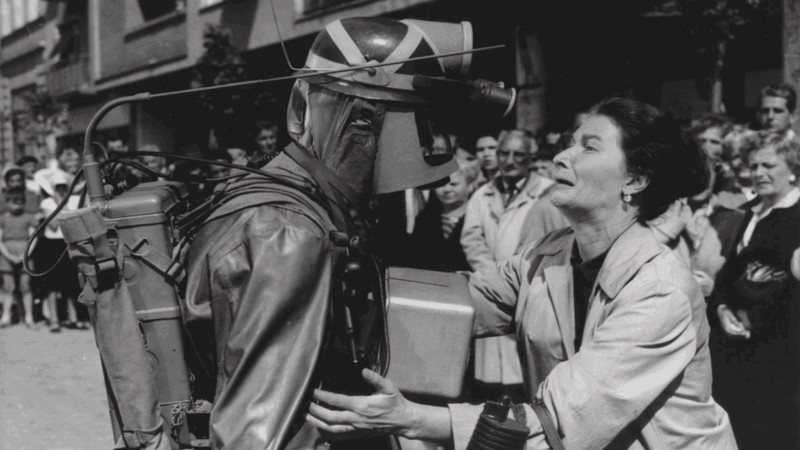
The L’Alliance series will wrap with Franju’s final feature, Nuits rouges (1974). “If Franju’s Judex captured the mystery and poetic magic of Feuillade,” wrote Ed Howard in 2010, “this later tribute is all about the pulpy delights of Feuillade, the over-the-top pleasures of a ludicrous, convoluted narrative, secret conspiracies, spies and killers in stylized costumes . . . Quite frankly, this movie is nuts,” but Franju “has so much obvious fun with this material that Nuits rouges is a purely joyous experience.”
Don’t miss out on your Daily briefing! Subscribe to the RSS feed.