Alexander Kluge, Polymathic Giant
Share
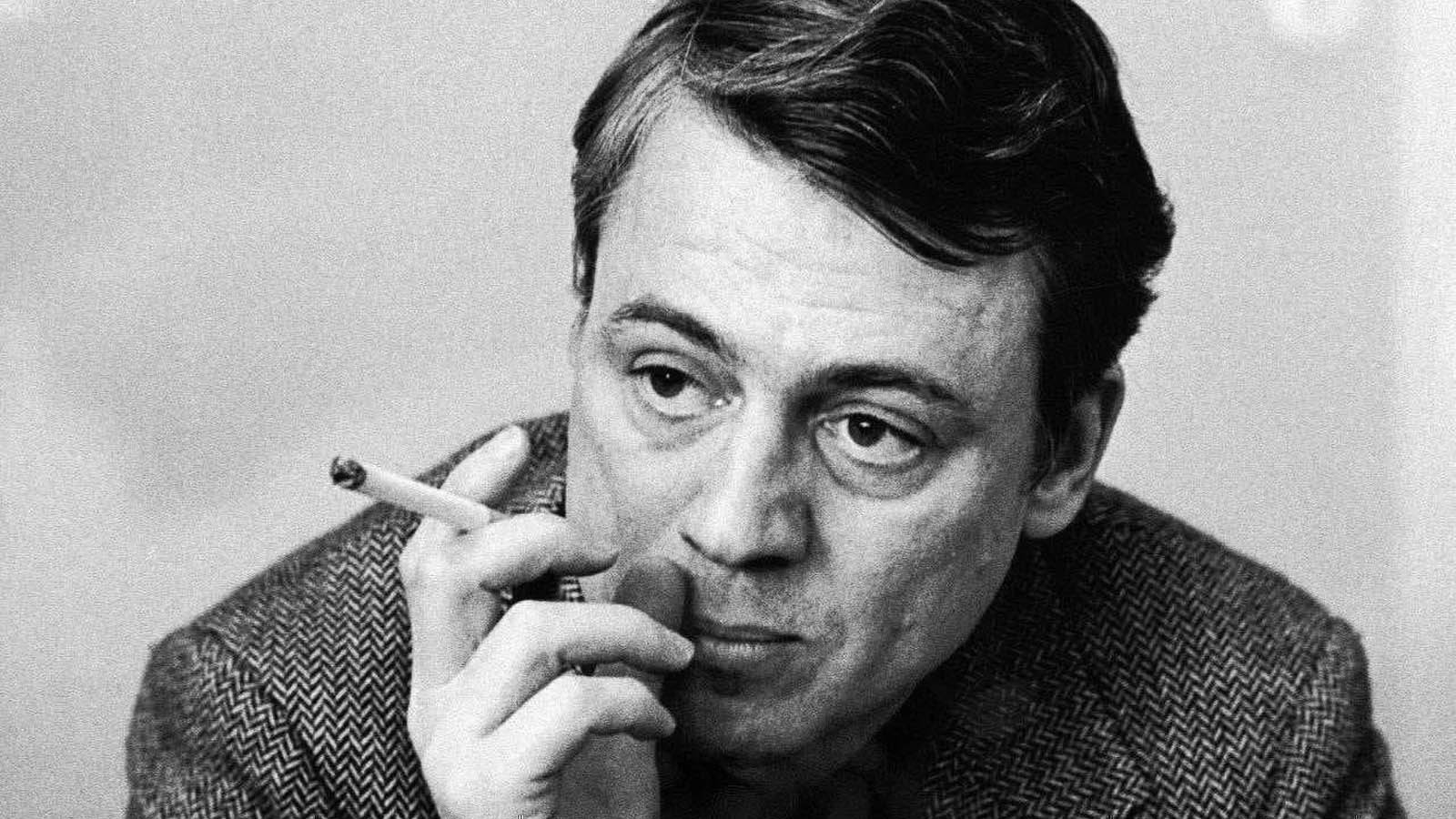
Just last week, Alexander Kluge was talking to Peter Neumann in Die Zeit about the loss of a close friend, Jürgen Habermas, a towering figure in the political and cultural history of postwar Germany. For filmmaker Christoph Hochhäusler, Kluge—who passed away on Wednesday at the age of ninety-four—was himself something of a Leibniz of the Federal Republic, a writer, artist, philosopher, film director, and television producer “who shaped and guided the intellectual life in this country like no other.”
As Philip Oltermann notes in the Guardian, Kluge was thirteen when he “narrowly survived” the bombing of Halberstadt by Allied forces in 1945. In the late 1950s, Kluge was a legal consultant for the Frankfurt School, and it was his mentor, Theodor Adorno, who introduced him to Fritz Lang. As an apprentice, Kluge worked on Lang’s The Tiger of Eschnapur (1959), and the following year, he made his own first short film, Brutality in Stone (1960), codirected with Peter Schamoni.
Writing for the Los Angeles Review of Books in 2018, Celluloid Liberation Front points out that this twelve-minute study of fascist architecture includes sequences focusing on “the Albert Speer–designed Reichsparteitagsgelände, a ‘building which was notoriously intended to last for a thousand years’ and on whose ruins the film comes to an end. Through the observation of this decayed temple of National Socialism, interspersed with photographs of Hitler, Kluge comments dryly on the catastrophic failure of Nazism and its granitic persistence.”
In 1962, Kluge and twenty-five other filmmakers signed the Oberhausen Manifesto, which declared: “Conventional film is dead. We believe in the new film.” In retrospect, the Manifesto has been seen as a sort of unofficial launch of the New German Cinema.
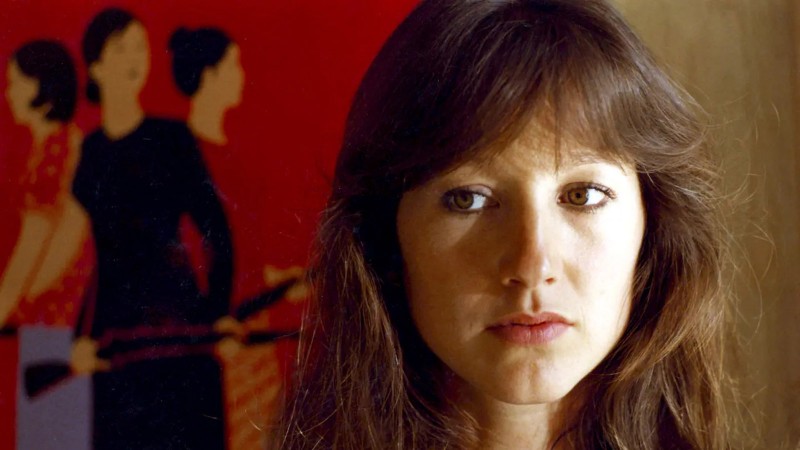
Writing in 2009 about Kluge’s first feature, Yesterday Girl (1966), an adaptation of his own short story starring his sister, Alexandra Kluge, Ed Howard called it “a quickly paced collage, a jittery, jazzy patchwork that augments its sparse central narrative with myriad diversions and non sequiturs.” Noting the influence of Jean-Luc Godard, Howard added that Kluge’s “rhythms are his own, as is his sense of playfulness, his unexpected detours into surrealism and absurdist farce.”
Yesterday Girl, discussed at length in Jan Dawson’s 1974 interview with Kluge for Film Comment, won a Silver Lion in Venice. In 1968, Kluge’s Artists Under the Big Top: Perplexed, which the Hollywood Reporter’s Scott Roxborough calls “an experimental collage of a film, integrating newsreels and interviews exploring societal ideals and protest movements,” won the Golden Lion. A decade later, Kluge helped spearhead Germany in Autumn (1978), an anthology of urgent commentary from eleven filmmakers—including Kluge, Rainer Werner Fassbinder, Volker Schlöndorff, and Edgar Reitz—on the crisis sparked by left-wing violence and the state’s response in the fall of 1977.
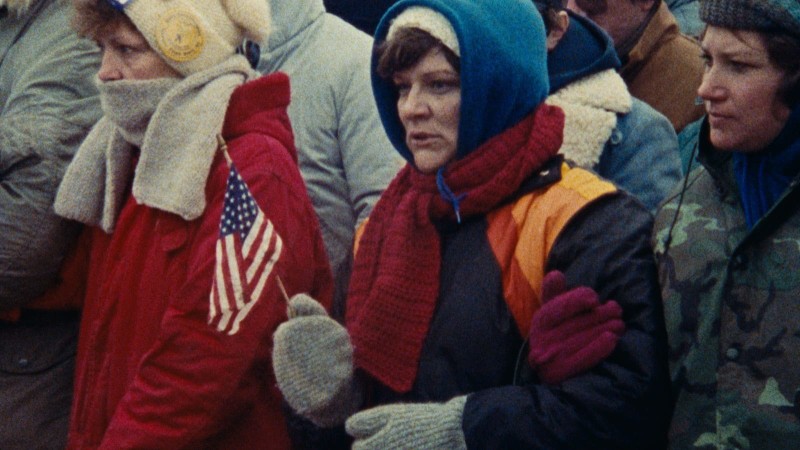
Sabzian has gathered notes of four of Kluge’s films, including The Power of Emotion (1983), a “subtly interconnecting mosaic of staged vignettes, nonfiction footage, archival prints, and found film excerpts,” as Acquarello has written, adding that the film is “an organic, densely layered meditation on the intangible (and often irrational) essential mechanism of human emotion.” Kluge’s “cinematic practice would be unthinkable without his very particular and idiosyncratic contribution to film theory,” wrote Michelle Langford in a 2003 survey for Senses of Cinema in which she discusses “some of his most important theoretical concepts: montage, Phantasie, history/story, and the development of a counter-public sphere through film.”
In the late 1980s, Kluge launched a production company, DCPT, and anyone zapping through the channels at night in Germany over the next several years would likely come across an interview with one of the day’s prominent cultural figures conducted by an off-screen, quietly attentive Alexander Kluge. In 2008, Kluge completed the nine-and-a-half-hour News from Ideological Antiquity: Marx-Eisenstein-Capital, and in 2018, it screened as part of the Anthology Film Archives series Karl Marx on Film.
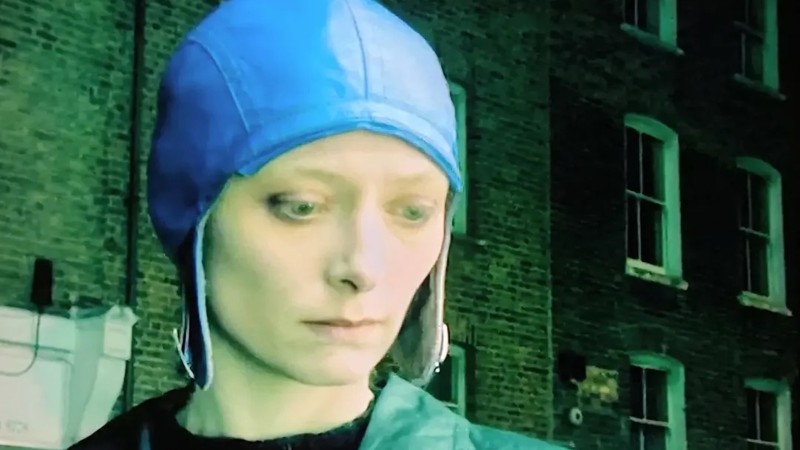
“Any project inspired both by Eisenstein’s dream of filming Capital and that Soviet filmmaker’s meeting with James Joyce is going to be dense and daunting,” wrote Sukhdev Sandhu for 4Columns. “But News from Ideological Antiquity, which encompasses science, poetry, oral history, and striking graphics, is also a wonderfully delirious work of associative montage. Omnivorous, at times barely coherent, sometimes possessed—it’s the one film in this series that is not so much about Marx as a channeling of him.”
In a 2013 Senses of Cinema review of Alexander Kluge: Raw Materials for the Imagination, an anthology edited by Tara Forrest, Daniel Fairfax wrote that all of Kluge’s audiovisual output had been “accompanied by the discharging of literally thousands of short stories” and theoretical texts. “This is not to mention his participation in a prodigious number of lectures, debates, and interviews,” added Fairfax. “Had Kluge’s talents been so fecund in only one of these domains, he would still provoke a sense of astonishment from his public. That he has managed the feat in such varied disciplines has, simply put, no comparison in the contemporary era. We would have to go back to the polymaths of earlier times—Goethe, Voltaire, Leonardo—to find equivalents.”
Don’t miss out on your Daily briefing! Subscribe to the RSS feed.