Two Sides of Brigitte Bardot
Share
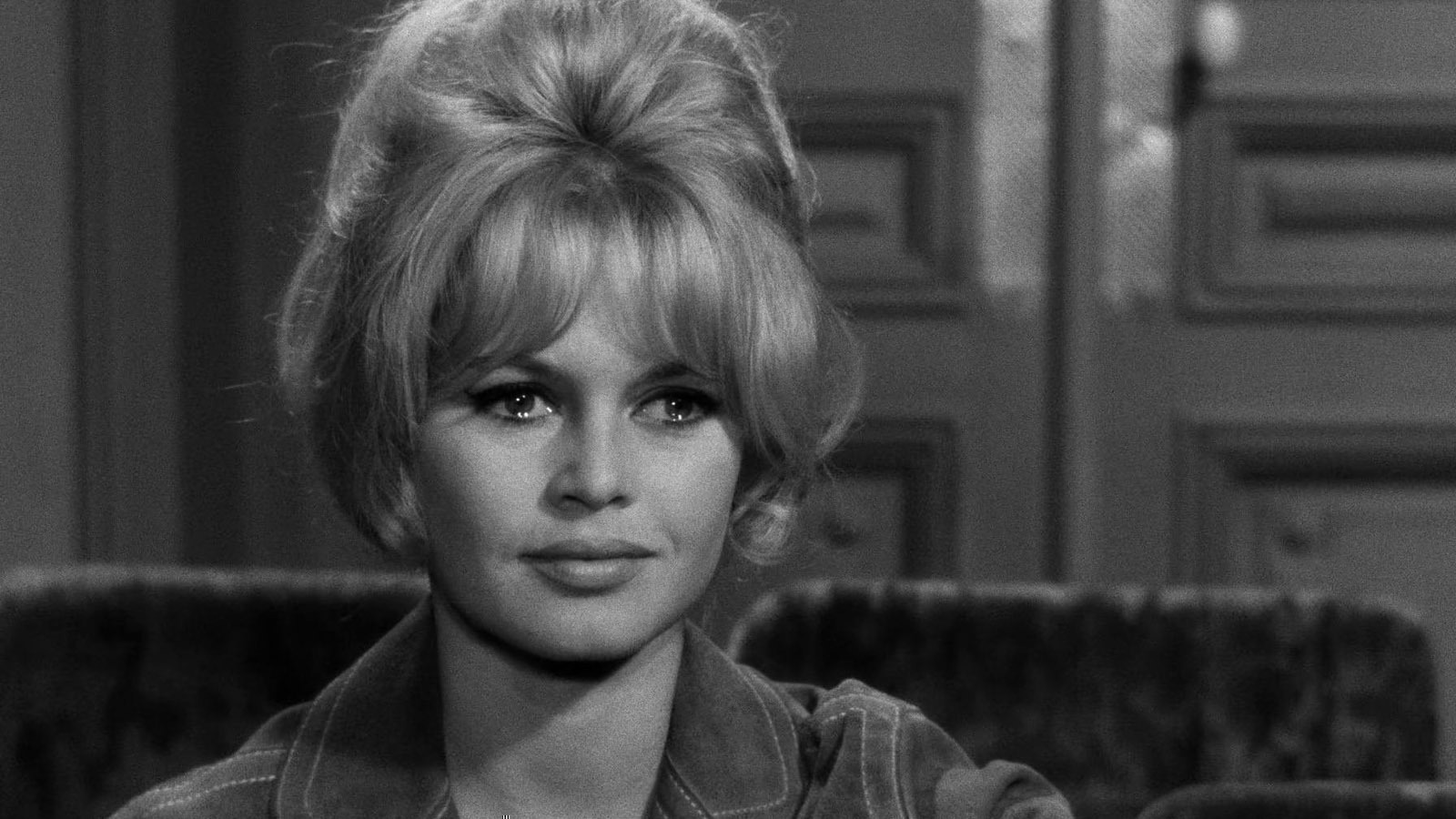
The entire cover of last Monday’s edition of the French daily newspaper Libération was given over to a black-and-white photo of the young Brigitte Bardot in all her strikingly seductive beauty. The sparse headline telegraphed the left-leaning paper’s stand on Bardot, whose passing at the age of ninety-one had been announced the day before: There was an “A-side” and a “B-side” to B.B., as she was known around the world.
Pronounced bébé (the French word for baby), Bardot’s nickname may sound, as the Guardian’s Peter Bradshaw puts it, like “a bit of weirdly infantilized tabloid pillow-talk,” but it also encapsulates an essence Simone de Beauvoir famously attempted to define, defend, and maybe even heroicize in her 1959 essay “Brigitte Bardot and the Lolita Syndrome”: “B.B. has not been marked by experience. Even if she has lived—as in [Claude Autant-Lara’s 1958 film In Case of Adversity, also known as Love Is My Profession]—the lessons that life has given her are too confused for her to have gotten anything out of them. She is without memory, without a past, and, thanks to this ignorance, she retains the perfect innocence that is attributed to a mythical childhood.”
For Beauvoir, there was “a kind of spontaneous dignity,” a defiant and protofeminist independence that drove both Bardot and the characters she played to do and take whatever was wanted at any given moment. In her 1975 book Brigitte Bardot, Françoise Sagan wrote: “She was success, money, love incarnated and she didn’t see why and who she should reimburse. She wasn’t ashamed of herself, she didn’t apologize for her absolute triumph whereas so many others apologized for their half-victories. And this is why she scandalized everyone.”
She scandalized traditionalists, yes, but for a roughly twenty-year period beginning in the mid-1950s, much of the world was enthralled by this sexually liberated blonde with her liner-accentuated eyes and impetuous pout. In 1968, André Malraux, then France’s minister of cultural affairs, successfully lobbied to have Bardot become the official face of Marianne, the national emblem of the Republic since the Revolution, arguing that she was “the best-known French actress on the planet, and she earned more money for France last year than Renault.” As Veronica Horwell points out in the Guardian, at the peak of Bardomania, “a survey claimed that forty-seven percent of all French conversation was about Bardot and only forty-one percent about politics.”
That was the A-side. The flip over to the B-side began in 1973 when Bardot, at the age of thirty-nine, retired from acting. She became an animal-rights activist, auctioning off her jewelry and other personal items to establish the Fondation Brigitte Bardot in 1986. Alan Riding noted in a 1994 New York Times profile that Bardot’s “list of enemies is long: the Japanese and Norwegians for hunting whales; the Spanish for fighting bulls; the Russians for killing baby seals; the Filipinos for eating dogs; the Chinese for not stopping tiger hunting; pharmaceutical companies for vivisection, and furriers, hunters, and circus operators the world over.”
In 1992, Bardot married her fourth husband, Bernard d’Ormale, a former advisor to Jean-Marie Le Pen, the founder of the National Front, the far-right political party that changed its name to the National Rally in 2018. Bardot was an outspoken supporter of both Le Pen and his successor, his daughter Marine Le Pen, “the only woman,” according to Bardot, “who has balls.” Bardot was tried, convicted, and fined several times for inciting racial hatred in her denunciations of Muslims, the “invasion” of immigrants to France, and the “savages” living on the French island of Réunion. She found the #MeToo movement absurd, clamoring to the defense of Gérard Depardieu—who in 2021 was found guilty of sexually assaulting two women—and all other “talented people who grab a girl’s bottom.”
The elder daughter of conservative Catholics, Bardot grew up in a well-appointed seven-bedroom apartment in the 16th arrondissement of Paris. She attended ballet classes taught by Russian choreographer Boris Knyazev, and when she was fifteen, she posed for a cover of Elle, catching the eye of director Marc Allégret and his assistant, Roger Vadim. She fell hard for Vadim. “He looked at me, scared me, attracted me, and I didn’t know where I was anymore,” she later recalled. Bardot’s strict parents objected to the relationship, but when she threatened to kill herself, they relented—while also insisting that the two wait to marry until Bardot turned eighteen. They did.
Another Elle cover in 1952 landed Bardot her first small role in a movie, Jean Boyer’s Crazy for Love. Willy Rozier’s Manina, the Girl in the Bikini (1952) followed, and after a few more comedies and a tiny role in Anatole Litvak’s romantic drama Act of Love (1953), starring Kirk Douglas, Bardot drew her first crowd of photographers as she ran and jumped along the beach in Cannes. She carried on working steadily in films by Allégret, René Clair, and Robert Wise before starring in Naughty Girl (1956), directed by Michel Boisrond and cowritten with Vadim—who was about to stage her international breakthrough, And God Created Woman (1956).
“To be fair,” Bardot once said, “if Vadim discovered and manufactured me, I created Vadim.” And Vadim decoded the electric allure of Bardot’s on-screen presence more succinctly than Simone de Beauvoir: “She doesn’t act. She exists.” At twenty-one, Bardot played an eighteen-year-old spinning heads in Saint-Tropez and driving her young husband (Jean-Louis Trintignant) mad as she dances with erotically charged abandon during a band’s rehearsal in an empty bar. A hit at home, And God Created Woman went on to earn more at the U.S. box office than any other foreign-language film had before.
In Vadim’s films with Bardot, Jean-Luc Godard “claimed to have found—as he had in the collaborations between Frank Tashlin and Jayne Mansfield—a truly modern cinema,” wrote Chuck Stephens in 2000. “More a force against reason, or a blinding special effect—not unlike Einstein’s equations, or Elvis’s pelvis—Bardot warped cultural memory as easily as she bent a projector-beam of light. ‘She comes,’ Vadim later wrote, ‘from another dimension. [Once] people spotted her, they couldn’t take their eyes off of her. That’s down to her presence, which comes from outer space somewhere.’ Super-abundant and extraterrestrial, Bardot was far too human, yet far beyond ‘real.’ Once seen, she could not be unseen, and in And God Created Woman, she was seen as never before.”
In Boisrond’s Une parisienne (1957), Bardot stars as a woman married to an unapologetic womanizer. “The format is very much that of classic French farce, mixing and matching married men and women, lovers and mistresses, as they alternate between pursuing and avoiding each other,” writes Elisabeth Vincentelli in the New York Times. “Elevating pouting into an art form, Bardot gives a typically spirited performance as the prime minister’s daughter, Brigitte—another instance where the boundaries between her persona and her character were purposely blurred. Her staid paramours, played by Henri Vidal and Charles Boyer, don’t stand a chance against this tornado.”
Claude Autant-Lara’s Georges Simenon adaptation In Case of Adversity stars Bardot as a petty thief who makes an immodest proposal to a lawyer played by Jean Gabin, and for François Truffaut, this was her “best film since And God Created Woman—an anti-Sabrina, anti–Roman Holiday, anti-Anastasia movie that is truly republican.” Bardot remains fully clothed throughout Christian-Jaque’s Second World War comedy Babette Goes to War (1959), but she coyly tantalizes viewers of Henri-Georges Clouzot La vérité (1960). “Bardot’s favorite among her films and, for many, her best, it is also Clouzot’s last masterpiece,” writes Bardot biographer Ginette Vincendeau.
Bardot’s Dominique is accused of killing her boyfriend (Sami Frey), and “Clouzot uses Dominique’s case file to interrogate France’s obsession with Bardot, making La vérité a metatextual work that thrives on blending the two threads together in often imperceptible ways,” writes Clayton Dillard at Slant. “Indeed, much of the film places Bardot in positions—naked under a bed sheet, in a vaguely concealing shower, in a state of undress—that echo those of Roger Vadim’s And God Created Woman, the film that created Bardot’s ‘sex kitten’ persona. The difference here is the camera’s somewhat distanced treatment of the actress’s body, gesturing to the desire to look at Bardot as much as to her body itself.”
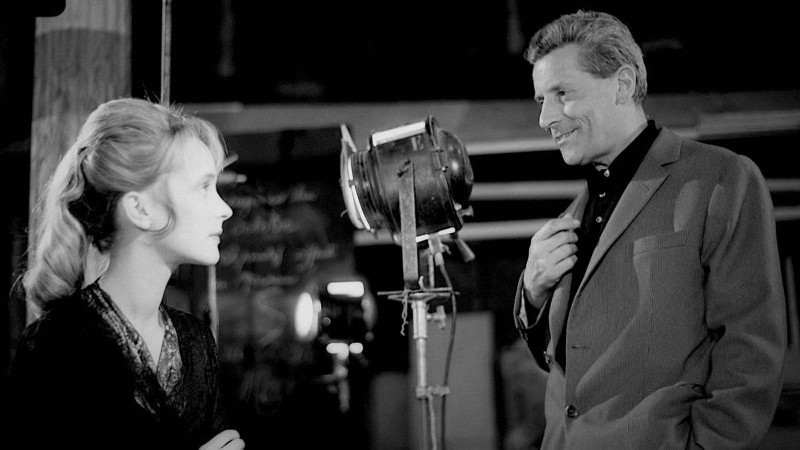
A new restoration of Louis Malle’s A Very Private Affair (1962), featuring Bardot as a movie star who falls for an older man (Marcello Mastroianni), opened L’Alliance New York’s Version restaurée series a few months ago. Malle’s fourth film is his “least acknowledged, but under reconsideration, his greatest French-language film,” declared programmer Jake Perlin. “With A Very Private Affair, Malle begins to deconstruct the Bardot myth the year before Godard would with Contempt.”
“In her best acting performance,” wrote Phillip Lopate in his 2002 essay on Contempt, Bardot is “utterly convincing as the tentative, demure ex-secretary pulled into a larger world of glamour by her husband [a screenwriter played by Michel Piccoli]. Despite Godard’s claim that he took Bardot as ‘a package deal,’ and that he ‘did not try to make Bardot into Camille, but Camille into Bardot,’ he actually tampered with the B.B. persona in several ways. First he toyed with having her play the entire film in a brunette wig—depriving her of her trademark blondeness—but eventually settled for using the dark wig as a significant prop. More crucial was Godard’s intuition to suppress the sex kitten of And God Created Woman or [Allégret’s Plucking the Daisy (1956)], and to draw on a more modest, prudishly French-bourgeois side of Bardot for the character of Camille. In her proper matching blue sweater and headband, she seems a solemn, reticent, provincial type, not entirely at ease with the shock of her beauty.”
Highlights in the filmography after Contempt are few, and most are notable for pairing Bardot with another star, such as Jeanne Moreau in Malle’s Viva Maria! (1965), Alain Delon in Malle’s segment of the omnibus film Spirits of the Dead (1968), Sean Connery in Edward Dmytryk’s 1968 western Shalako, Claudia Cardinale in Christian-Jaque’s The Legend of Frenchie King (1971), and Jane Birkin in Don Juan, or If Don Juan Were a Woman (1973), Bardot’s fifth and final feature directed by Roger Vadim. By this point, Bardot was already drawing up plans to retire: “I decided to leave cinema just as I have always left men: first.”
Don’t miss out on your Daily briefing! Subscribe to the RSS feed.