Ways of Seeing 2025
Share
Whether or not the headline is hers, “2025 Was David Lynch” does make you want to see what Jessica Winter is up to in her latest piece for the New Yorker. Lynch died on January 16, and four days later, on what would have been Lynch’s seventy-ninth birthday, Trump was inaugurated for the second time. “As the ghastly year dragged on,” writes Winter, “these streams of art and life kept converging. If, for example, you sensed that your corner of the world was being run by a psychopath and a cabal of goons who enjoy nothing so much as tearing an immigrant mother away from her child, your impressions would be reflected in Blue Velvet (1986).”
Winter draws further parallels between goings-on over the past twelve months and films such as Twin Peaks: Fire Walk with Me (1992), Mulholland Dr. (2001), and The Elephant Man (1980), which “on a belated second viewing, struck me as not merely a very good film but a perfect one, an overwhelming emotional experience, discordantly beautiful and transcendently sad—a pure distillation of its director’s sensibilities and a complete rejection of our ugly, fake, and barbarous moment.”
That’s one way of seeing 2025. For the New York Times’ Alissa Wilkinson, who has been looking back on some of the year’s big movies, it has “seemed as if, at last, Hollywood’s storytellers were wrapping their heads around how to explain this period and reflect it back to us. They looked to a variety of genres, and thought metaphorically, mythologically, and historically.” She’s thinking of Ari Aster’s Eddington, Ryan Coogler’s Sinners, James Gunn’s Superman, Rian Johnson’s Wake Up Dead Man, and, of course, Paul Thomas Anderson’s One Battle After Another, a film “about what it means for political activism to evolve over generations.”
One Battle tops IndieWire’s poll of 148 critics and has been named the best film of the year by critics’ organizations in Seattle and Dallas–Fort Worth as well as by contributors to the A.V. Club. The Boston Society of Film Critics, though, has gone all in for Sinners, giving it awards for Best Film, Best Director, Best Cinematography (Autumn Durald Arkapaw), and Best Score (Ludwig Göransson).
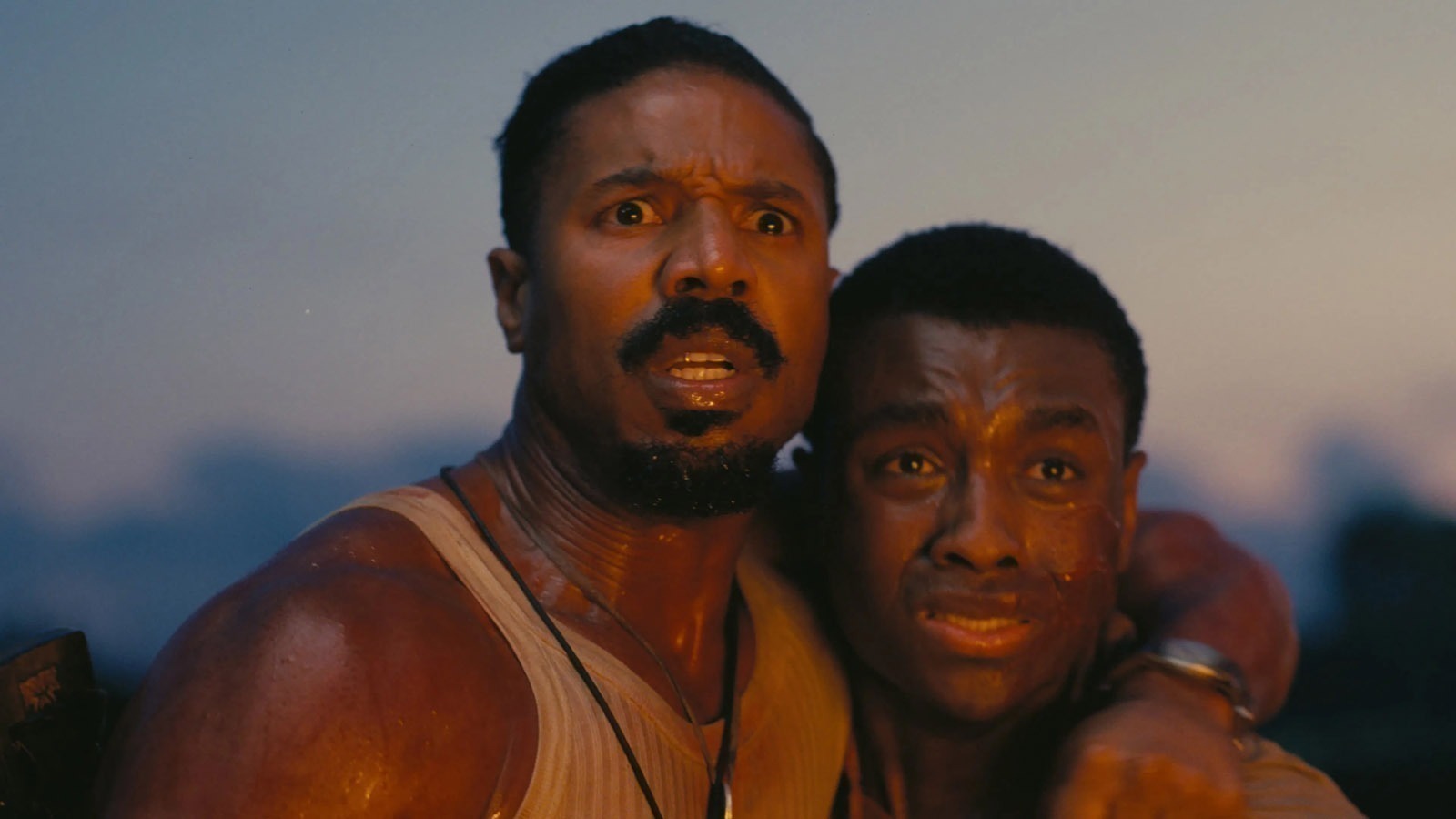
Sinners isn’t just Coogler’s “flavorfully claustrophobic monster movie,” writes A. A. Dowd in an excellent piece for the American Prospect, “but also his Prohibition-days crime picaresque, his action-packed western, his Southern Gothic soap opera, his ensemble portrait of a Delta town under the shadow of the KKK, and even his own bluesy riff on an MGM toe-tapper, complete with numbers that span a century of Black musical expression, like the cinematic equivalent of OutKast’s ‘B.O.B.’ Forget ‘best.’ Sinners may well be the most movie of 2025.” And yet it’s also “the giant hit that Hollywood didn’t want.” Sinners is “a threat to a business model built only on regurgitation, on endless return trips to Jurassic World, on more Toy Stories and feature-length toy commercials.”
Best-of-2025 Potpourri
Since we last checked in on the year-end lists and polls, Film Comment has posted its contributors’ individual ballots and Screen Slate has gathered more than three hundred lists of favorite “First Viewings and Discoveries” from its writers and editors as well as from dozens of filmmakers, including Bi Gan, Jafar Panahi, Kahlil Joseph, Park Chan-wook, Julia Loktev, Lav Diaz, Isabel Sandoval, Athina Rachel Tsangari, and Alain Guiraudie.
Film Comment has also posted a series of short best-of pieces, including Michael Koresky’s on three performances: David Strathairn in Angus MacLachlan’s A Little Prayer, Kathleen Chalfant in Sarah Friedland’s Familiar Touch, and Amy Madigan in Zach Cregger’s Weapons. To return to Sinners for a moment, the New Yorker’s Michael Schulman has Michael B. Jordan, who plays twins, on his list of great performances, noting that “Jordan infused his dual role—the practical Smoke and the wily Stack—with subtle variations on his megawatt charisma, clearly relishing the task.” For Time’s Stephanie Zacharek, it’s Delroy Lindo’s Delta Slim who is “the movie’s steady heartbeat, sturdier and more reliable than a metronome.” Cannonball host Wesley Morris discusses his favorite turns, and you’ll find more lists of top performers at the Film Stage and the Hollywood Reporter.
FC’s Devika Girish writes about three of the year’s best scenes—she’s found them in Neo Sora’s Happyend, Kelly Reichardt’s The Mastermind, and Kleber Mendonça Filho’s The Secret Agent—while at the Ringer, Adam Nayman zeroes in on specific shots. Beneath the sights, the sounds: New York Times pop-music critic Lindsay Zoladz samples five of her favorite scores, while the Film Stage goes for twenty-five. And Notebook contributor Robert Barry reflects on “quite a year for avant-garde music at the cinema.”
Notebook is also running a series of short essays on some of the year’s most notable restorations that so far includes Imogen Sara Smith on Jocelyne Saab’s The Razor’s Edge (1985) and Robert Rubsam on Ardak Amirkulov’s The Fall of Otrar (1991). Gina Telaroli has several more at Film Comment, noting that “the work of the organizations and individuals behind these restorations is nothing short of heroic.” FC also has Gavin Smith on ten repertory highlights in New York and Inney Prakash on ten short films “that are worth your time, and which don’t require much of it.”
One of Notebook’s great annual features is Adrian Curry’s sumptuous gallery of his ten favorite movie posters (plus twenty runners-up), and there’s more to look at from Daniel Benneworth-Gray at the Creative Review and Tim Grierson in the Los Angeles Times. Sight and Sound has called on seventy-two people who know their way around a video essay to help put together a showcase of 255 of the year’s best.
Let’s wrap with notes on films still seeking distribution and dozens more that haven’t even been made yet. FC has polled contributors who have voted Kamal Aljafari’s With Hasan in Gaza to the top of a list of the best undistributed films of 2025. “Rarely in cinema is Gaza granted the care of close, tender observation that seeks to know the place from the perspective of a neighbor and friend rather than a journalist or emergency worker,” writes Kareem Estefan. Writers at IndieWire and the Film Stage flag more homeless films.
Seventy-four unproduced screenplays have made this year’s Black List, an annual poll of five hundred industry insiders. Nearly half of the screenplays that have made the list in the past have been picked up and produced, including Spotlight (2015), written by Josh Singer and director Tom McCarthy, and Hell or High Water (2016), written by Taylor Sheridan and directed by David Mackenzie.
“This year’s scripts, probably unsurprisingly,” says Black List founder Franklin Leonard, “seemed preoccupied with what happens when the systems we live in—economic, political, algorithmic—stop working the way they’re supposed to and, fortunately, with how we might build something better anyway. Suffice it to say that they resonate deeply. Here’s to a better tomorrow for us all.”
Don’t miss out on your Daily briefing! Subscribe to the RSS feed.