December Books
Share
Let’s open this month’s roundup on new and noteworthy titles with a pointer to another one, Tillo Huygelen’s winter overview for Sabzian. Huygelen has notes on new books by or about Jean-Luc Godard, John Ford, Orson Welles. Charlie Chaplin, Pier Paolo Pasolini, Andrei Tarkovsky, Lucrecia Martel, Derek Jarman, Robert Kramer, and others. He also flags the new anthology Annette Michelson and the Radical Aspiration in American Avant-Garde Cinema, which explores the work of the critic who edited special film issues of Artforum before cofounding October, and My Life Is the Cinema, a collection of memoirs and selected writings by Esfir Shub translated and edited by media artist and theorist Keith Sanborn.
A pioneer of the compilation documentary, Shub was an early Soviet filmmaker best known for The Fall of the Romanov Dynasty (1927), a film that—like Sergei Eisenstein’s October: Ten Days That Shook the World (1928)—was commissioned to mark the tenth anniversary of the October Revolution. Soviet critics preferred Shub’s version, and yet she’s far less familiar to most cinephiles than either Eisenstein or another contemporary, Dziga Vertov.
“While historical sexism and anti-Semitism could have contributed to this lamentable situation,” wrote Anastasiya Osipova for the Brooklyn Rail in 2011, “I would argue that it is the subtle and challenging mode of her realism—ideologically driven, yet not interested in streamlining emotions in the service of propaganda; evoking sympathy, yet precluding gratuitous identification; committed to presenting the material in all its complexity, while at the same time maintaining a framework of sociohistorical awareness—that made it difficult for her work to be reduced to a personal style.”
Events
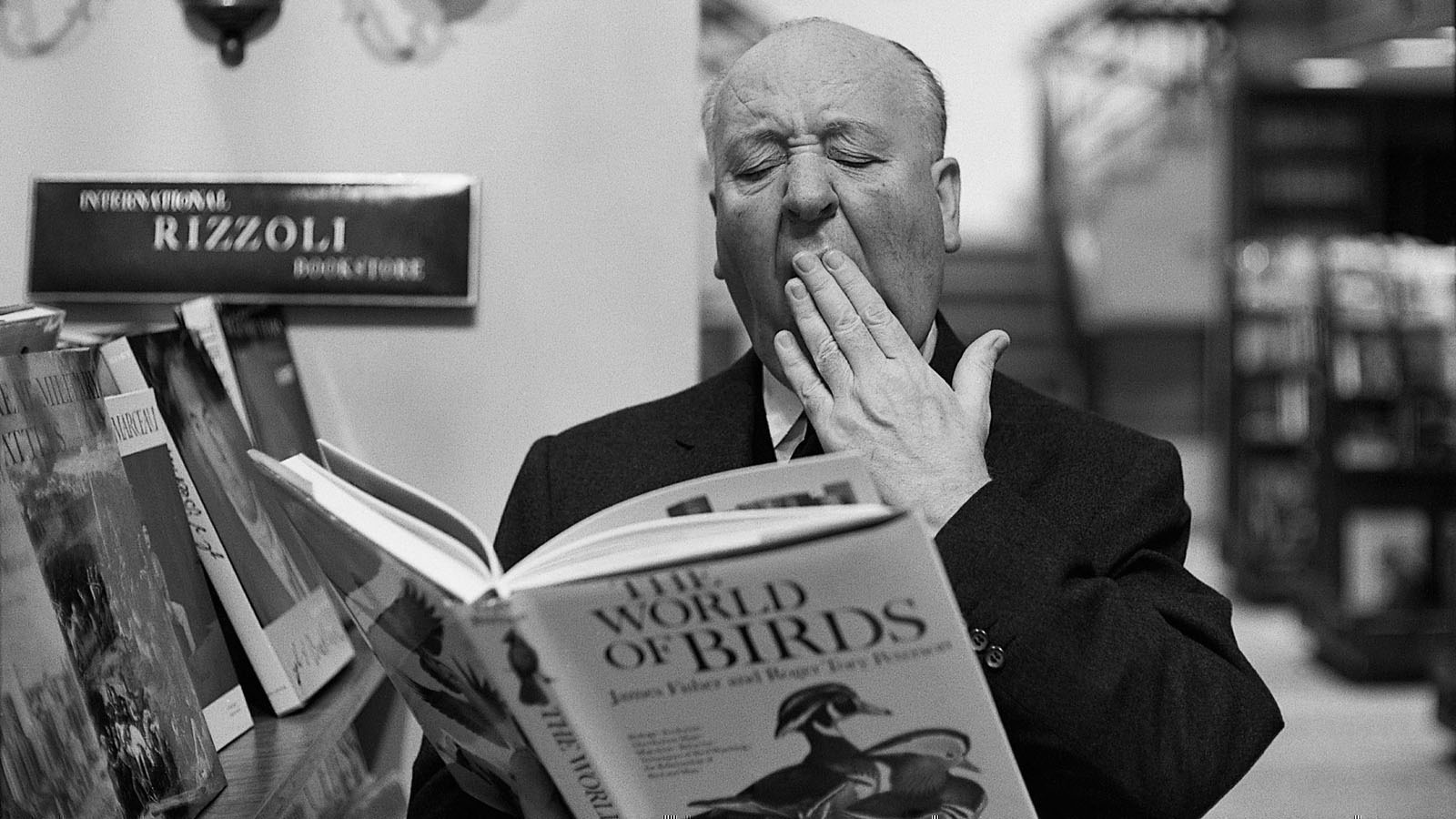
Christopher Schobert’s latest books roundup at the Film Stage includes notes on Jay Glennie’s The Making of Quentin Tarantino’s Once Upon a Time in Hollywood, “easily the most lovingly designed, readable, and in-depth account of a Tarantino project to date”; Sheila O’Malley’s Frankenstein: Written and Directed by Guillermo del Toro, which “greatly enhances the experience of watching” the film; and Steven C. Smith’s Hitchcock and Herrmann: The Friendship and Film Scores That Changed Cinema, “an often emotional account of the collaboration between Alfred Hitchcock and the composer Bernard Herrmann. The duo had many successes together, but the most compelling part of the book is the tale of their breakup, when Hitchcock was angered over Herrmann’s score for the drippy Torn Curtain.”
“Hitchcock and Herrmann is a painstakingly detailed history of two geniuses working first together and then at cross-purposes,” writes Ty Burr for the Wall Street Journal. “When it dives deep into the scoring itself, it’s a musicological feast that even tin-eared lay readers can appreciate.” In New York, the Film Forum series Hitchcock & Herrmann will wrap this evening, but Smith will be in Los Angeles on February 15 to deliver an illustrated talk before a screening of Psycho (1960).
On January 24, Melissa Anderson will be at Film at Lincoln Center to introduce a screening of Laura Citarella’s Trenque Lauquen (2022) and sign copies of her new book, The Hunger: Film Writing, 2012–2024, which we featured at the top of last month’s roundup. Talking with Anderson for Interview, Nolan Kelly asks her about describing herself as an “acteurist film critic.” Anderson notes that “of the pieces that I decided to put in this collection, a thread that connects them is that there’s a focus on the actor . . . A lot of my cinephilia is about being besotted or entranced by the bodies, by the humans I see in front of me, what they do and how they move and how they talk. That, for me, is often the element that is most hypnotizing.”
A. S. Hamrah will be at Porter Square Books in Cambridge, Massachusetts, on January 28 to talk with Sean Burns about his two new books, Algorithm of the Night: Film Writing, 2019–2025—the introduction is up at the New York Review of Books—and Last Week in End Times Cinema. “With deadpan sobriety,” writes Carlos Valladares in the Brooklyn Rail, Hamrah “reveals just how awful the landscape of art and politics today has become. Crucially, though, Hamrah also writes without a Sontagian gloom about the decline and death of his chosen subject: film. It’s in decline whenever you read entertainment news headlines, sure, but not in Hamrah’s termite-festered, fugitive margins, which is where art and humanity will always flourish. Hamrah’s bitterness brings me hope.”
Starting Friday, New York’s Metrograph will present a weeklong run of a new restoration of Luc Moullet’s A Girl Is a Gun (1971), starring Jean-Pierre Léaud as Billy the Kid. This is “a western like no other,” writes Philippa Hawker in Metrograph’s Journal, “shot in France’s Southern Alps (the Alpes-de-Haute-Provence), caught literally between a rock and hard place, propelled by wild swings and random bursts of energy.” The Journal is also running Ted Fendt’s translation of a chapter from Moullet’s Mémoires d’une savonette indocile, in which the director writes about on-set shenanigans and alarming injuries and maps out an “abundance of references” in A Girl Is a Gun to films by King Vidor, Nicholas Ray, Sam Fuller, Josef von Sternberg, and Robert Bresson.
Interviews
In the summer of 2011, screenwriters John August (Go, Big Fish) and Craig Mazin (Chernobyl, The Last of Us) launched Scriptnotes, a podcast in which they discuss their craft with guests that have included Christopher Nolan, Greta Gerwig, Rian Johnson, and many, many others. August and Mazin have now sorted through these conversations and arranged relevant passages into an overall guide, Scriptnotes: A Book About Screenwriting and Things That Are Interesting to Screenwriters. “Hard as it is to imagine a book that radically condenses fourteen years of spirited discussion on all imaginable aspects of the craft and industry into a highly accessible, easy to deep-dive manual, it’s here,” writes Ritesh Mehta in the introduction to his interview with August for Filmmaker.
At the Reveal, Scott Tobias talks with cinematographer Roger Deakins—and with his wife and cohost of the Team Deakins podcast, James Ellis Deakins—about Reflections: On Cinematography, “a sumptuous new book that’s full of illustrative detail about his work but accessible to a broader readership.” And Writers on Film host John Bleasdale chats with Mike Miley about his new book, David Lynch’s American Dreamscape.
Two Novels
In the New York Times, Alexandra Jacobs reviews Lauren Rothery’s “funny, thinky” novel Television, which “alternates between three characters’ internal monologues, like channels.” Verity is an actor starring as “a green super-creature in the fifth installment of an action franchise,” Helen is “a struggling playwright—not to be redundant,” and Phoebe is “a struggling screenwriter—not to be redundant again.” Rothery “renders the strange textures of LA so wonderfully—the smell of a swimming pool ‘Clorox Jell-O in a cream tile dish’; the immersive theater of a carwash; the ‘touchy, sulfuric’ plumbing in one of those slapped-up apartments—that the trip to France is like flipping to PBS.”
Daniel Kehlmann’s The Director, a novel based for the most part on the life of G. W. Pabst, has made the lists of the top ten books of the year from both the Atlantic and the New York Times. “Kehlmann’s complex portrait, brightened by caustic humor and memorable historical cameos (and fluidly translated from the German by Ross Benjamin), presents an intriguing test of integrity in a fracturing world,” writes the NYT. “The timing couldn’t have been better.”
Updates on Four Lives
Four books previously mentioned in these roundups are still in the conversation. Writing for Notebook, Dylan Adamson finds Abel Ferrara’s Scene “peppered” with “intrusions from a more somber, sober Ferrara into his junkie’s memory, like the edge of a mirror creeping into the frame . . . A force of gravity tugs mightily on every sober day, and Ferrara’s effort to stand upright, even as he plunges headfirst into the past, lends his memoir its strange, discordant harmony. His reality may have changed, but his commitment to it has not.”
In the New Yorker, Helen Shaw writes that her “favorite parts” of Robert M. Dowling’s “striking new biography,” Coyote: The Dramatic Lives of Sam Shepard—there’s an excerpt up at Literary Hub—take place in the East Village in the early 1960s, “when a counterculture Shepard, zooted out of his mind on various chemicals, hadn’t yet settled on the clenched jaw and thousand-yard stare of his later, dead-eyed Sam persona . . . According to Dowling, Shepard knew himself to have a profoundly divided self—abrasive, hot-tempered, prone to crises of ‘depersonalization.’ Shepard wrestled with a sensation of doubleness, this ‘feeling of separation between my body and “me,”’ he wrote in a letter to the experimental theater titan Joe Chaikin, a dear friend of his. Dowling considers his masculine playacting a necessary unifying armature, something powerful enough to bind together these splintering parts.”
The Guardian’s Kathryn Hughes wishes there were more to Marisa Meltzer’s It Girl: The Life and Legacy of Jane Birkin, and there might have been if Meltzer had gotten any of Birkin’s friends or family to talk to her. “It says much for the affection and loyalty in which Birkin is held that, two years after her death at the age of seventy-six, her inner circle remains tight-lipped,” writes Hughes. “She was romantic yet raunchy, British yet French, an idealized woman yet a self-described ‘garçonne.’ Jane Birkin contained multitudes, and until we have an account that dives deeper than this one, she will remain tantalizingly elusive.”
Robbie Robertson’s memoir Insomnia focuses on a period in the 1970s when he and Martin Scorsese “became what Robertson describes as a ‘whacked out new version of The Odd Couple’ for a lost weekend that lasted about a year and a half,” writes Sean Burns at Crooked Marquee. The book tells “a love story about two best friends who not-so-secretly want to be each other. Scorsese has always shot and cut his movies like a frustrated musician, while Robertson’s richly cinematic songs for The Band were written and ‘cast’ with roles for the group’s three singers. The two are desperately hungry to learn more about each other’s disciplines, and both are natural born curators. One of the things that comes through most powerfully in the book is the thrill of turning a pal on to something you love that you know they’re gonna dig. Come for the coke binges and gorgeous gals, stay for the lengthy digressions about Sam Fuller and the Staple Singers.”
Don’t miss out on your Daily briefing! Subscribe to the RSS feed.