Encounters with Straub and Huillet and Costa
Share
The final feature Jean-Marie Straub and Danièle Huillet completed before Huillet passed away in 2006, These Encounters of Theirs (2005) is “a courageous confrontation with mortality and a grand summation of a lifetime of work and thought,” writes the New Yorker’s Richard Brody. “It may be the most religious film yet made by Communists.” On Wednesday, the Theater of the Matters and Archipelago Books will celebrate the publication of Minna Zallman Proctor’s new translation of Cesare Pavese’s The Leucothea Dialogues with a screening of Encounters on 35 mm at the Brooklyn Academy of Music.
Written between 1945 and 1947, the book that Pavese had with him when he committed suicide in 1950 is a series of twenty-seven conversations among figures from Greek mythology. Straub and Huillet first drew from The Leucothea Dialogues in From the Clouds to the Resistance (1979), and for Encounters, they had ten nonprofessional actors from the Teatro Francesco di Bartolo—a working-class theater in the small Tuscan town of Buti—live with the texts of the five final dialogues for a year before they began filming in the forests of Mount Pisano.
When Encounters screened in Venice, Catherine Deneuve’s jury gave it a special Lion for “innovation in the language of cinema.” Writing about the film in 2007, Acquarello noted that a pair of siblings “attempt to come to terms with the ephemeral nature of divine will, a young couple discusses the nature of human fragility that propels its eternal quest for enduring legacy, an older couple wistfully observes the exhilaration of wide-eyed discovery and new sensations, an artist and his muse contemplate the integral friction and trauma intrinsic in the artistic process (an idea that evokes Straub’s impassioned, if abstracted monologue in Pedro Costa’s Where Does Your Hidden Smile Lie?), and two men—perhaps warriors—reflect on the simple pleasures of human contact.”
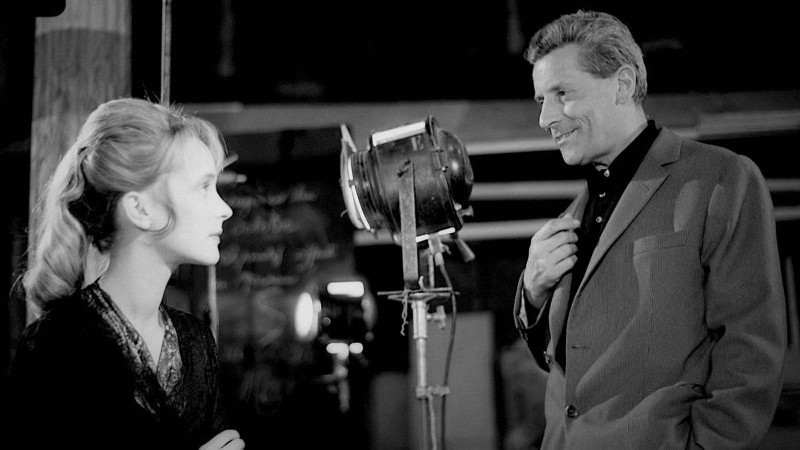
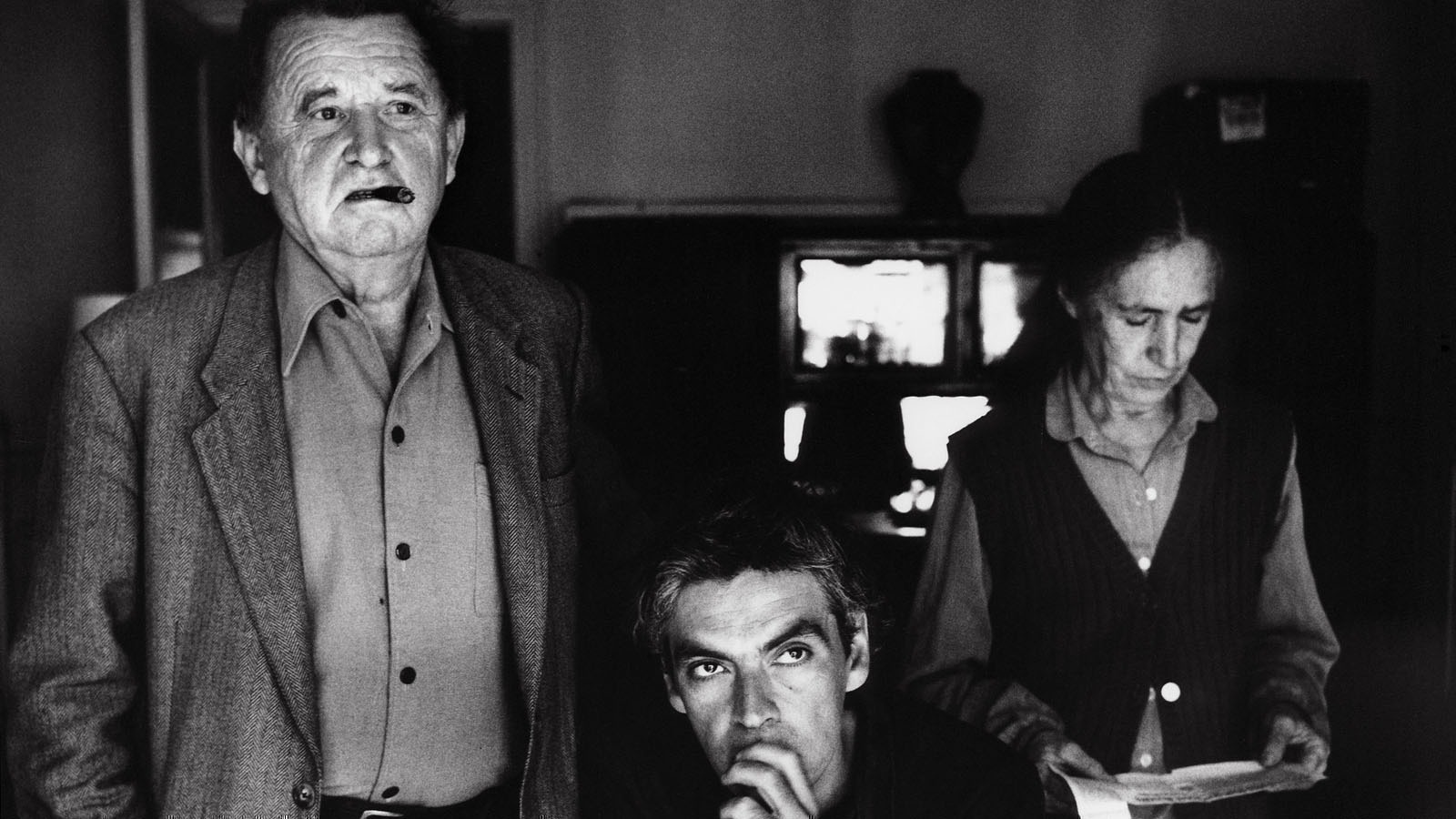
Originally planned as an episode of Cinéastes de notre temps, Costa’s Where Does Your Hidden Smile Lie? (2001) hunkers down with Straub and Huillet as they set out to edit a new version of Sicilia!, their 1999 adaptation of Elio Vittorini’s anti-fascist novel Conversations in Sicily—and also, as it happens, their first of their many collaborations with the Teatro Francesco di Bartolo. Smile “builds something magical and immense from its miniature, material means,” wrote Ryland Walker Knight for Slant in 2008. “This is a film about film, of course, but it understands film as a conversation—about searching, about understanding—as an opportunity for philosophy, we might say—and how all these elements build a working picture of marriage, too. It’s Costa’s version of the romantic comedy.”
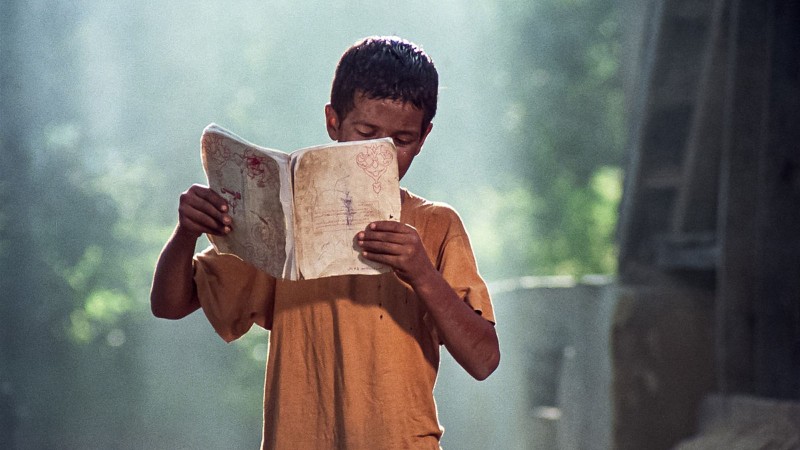
From Friday through Sunday, Costa will be in Copenhagen, where Tusind sole will present A Thousand Shadows, a series of six films—three by Costa and three that he’s selected. The weekend of screenings and talks begins with Colossal Youth (2006), the third feature Costa shot in Fontainhas, which Cyril Neyrat has described as “a Lisbon neighborhood that no longer exists, that was demolished, a squalid outlying area, a mix of casbah and shantytown, where a population of Portuguese subproletarians and Cape Verdean immigrants once tried to scrape by. In discovering these people and this neighborhood and setting up camp there, Costa became who he is and found his own territory, both in life and in film.”
On Saturday, Sicilia! and Where Does Your Hidden Smile Lie? will follow a screening of Kenji Mizoguchi’s Flame of My Love (1949), starring Kinuyo Tanaka as a Meiji-era teacher who becomes an activist for the Liberal Party. Screenwriters Kaneto Shindo and Yoshikata Yoda—and famed Ozu collaborator Kogo Noda, who wrote the story—drew from the autobiography of Hideko Fukuda, a late nineteenth-century pioneer in the fight for women’s rights in Japan.
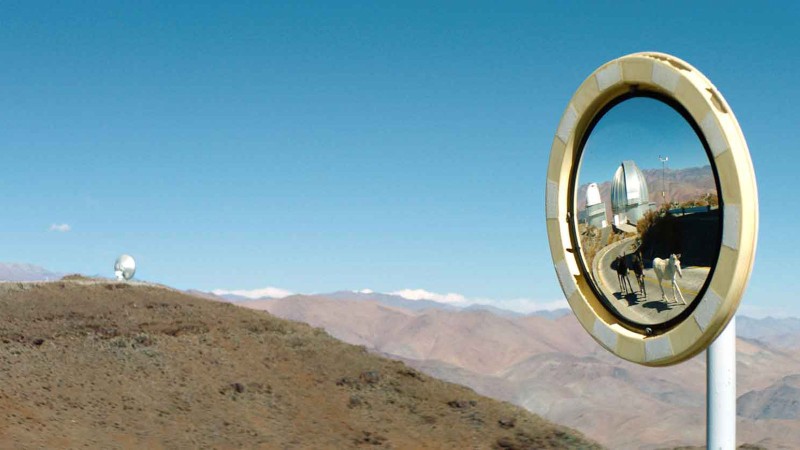
On Sunday, Jacques Tourneur’s The Fearmakers (1958), a Cold War noir starring Dana Andrews, will be followed by Costa’s Horse Money (2014), a return to memories of Fontainhas. “Fleeter and more mobile than Colossal Youth, with a structure built on what Murnau eloquently described as ‘the most fleeting harmonies of atmosphere,’” wrote Kent Jones for Film Comment ten years ago, “Horse Money finds its way into the centrifugal force that Charles Olson identified in Melville, the sense of the ‘inertial structure’ of the revolving world itself.”
Don’t miss out on your Daily briefing! Subscribe to the RSS feed.