Present Past 2025
Share
Parisians will be facing some tough choices once the Cinémathèque française launches Restaurations et raretés, Best of 2025 this evening with a presentation of Alfred Hitchcock’s North by Northwest (1959) on 70 mm. Forty more films will screen within just five days. The pace in Los Angeles will be more manageable when the Academy Museum rolls out Present Past 2025: A Celebration of Film Preservation, a program of twenty-four films opening tomorrow with the world premiere of a new 35 mm print of Robert Downey Sr.’s Putney Swope (1969) and running through December 22.
Putney Swope is “a clattering, joke-stuffed satire both hilarious and exhausting,” wrote R. Emmet Sweeney a few years ago. “It begins as a spoof of ad agency racism and keeps widening its targets until it takes itself down, a circular firing squad of comedy. Downey wanted his audiences to leap out of their seats, preferably with shock and disgust, and so it includes a horny and despotic little person president, an office flasher, and the takeover of an ad agency by Black militants who get co-opted by the business they wanted to overthrow. No one gets away unscathed.”
Friday brings the North American premiere of a new restoration of Floating Clouds (1955), which Ian Johnston, writing for Not Coming to a Theater Near You in 2007, called Mikio Naruse’s “single defining masterpiece.” We should note here that the BAMPFA series Mikio Naruse: The Auteur as Salaryman is currently running through December 21, while New York’s Metrograph will present Early Naruse: Five Silents and a Talkie this coming weekend.
On Sunday, the Academy Museum will present the world premiere of a new restoration of William Wyler’s Glamour (1934), an adaptation of a story by Edna Ferber. Constance Cummings stars as an ambitious chorus girl who latches onto a talented composer only to dump him and their child for a handsome leading man. Comeuppance is assured.
Hell’s Angels (1930), Howard Hughes’s directorial debut, “heralded a shift in the cinematic portrayal of war, from rah-rah sentimentalism to jaundiced realism,” writes Fred Kaplan. Also screening next week will be In the Wink of an Eye (1981), which Filipino critic Oggs Cruz has called Mike de Leon’s “masterpiece”; Luis Sérgio Person’s São Paulo, Sociedade Anônima (1965), which has drawn comparisons to Tomás Gutiérrez Alea’s Memories of Underdevelopment (1968) and Michelangelo Antonioni’s La notte (1961) from Walter Salles; and Konrad Wolf’s final feature, Solo Sunny (1980), an East German production—written by codirector Wolfgang Kohlhaase—that became a cult hit on both sides of the Berlin Wall.
Sunday, December 14, is packed with screenings of a program of six short films directed by women; Robina Rose’s Nightshift (1981), “an extraordinary work of oneiric imagination, punkish sensibility, and a requiem to women’s labor in the hazy terrain of night work,” as Elena Gorfinkel put it earlier this year in Notebook; and Ramesh Sippy’s Sholay (1975), “the greatest popular Hindi film ever made,” according to Uday Bhatia, who wrote about the enduring appeal of the movie on its fiftieth anniversary for Film Comment.
Sholay is “often called a ‘curry western,’” noted Bhatia in October, “but a more fitting nomenclature might be ‘masala western.’ The Hindi term for mixed spices has long been used as a descriptor for the kind of popular movies made here. Masala films are strong, flavorful, and suited to robust palates, blending melodrama, music, romance, poetry, comedy, and action in ever-varying combinations. From its inception, Sholay was designed as the masala film, an entertainment on a scale no one had seen before.”
Further Present Past 2025 highlights include the world premieres of restorations of Lloyd Corrigan’s Anna May Wong vehicle Daughter of the Dragon (1931), John M. Stahl’s pre-Code melodrama Only Yesterday (1933), and George Marshall’s Incendiary Blonde (1945), starring Betty Hutton. U.S. premieres include Alfredo B. Crevenna’s My Wife and the Other One (1952), Sumitra Peries’s The Girls (1978), and Pedro Almodóvar’s Matador (1986).
“I remember when I worked at my Manhattan Beach video store, Video Archives, and talked to the other employees about the types of movies I wanted to make, and the things I wanted to do inside of those movies,” wrote Quentin Tarantino in his 2022 book Cinema Speculation. “And I would use the example of the opening of Almodóvar’s Matador . . . As I watched my heroes, the American film mavericks of the 1970s, knuckle under to a new way of doing business just to stay employed, Pedro’s fearlessness made a mockery of their calculated compromises.”
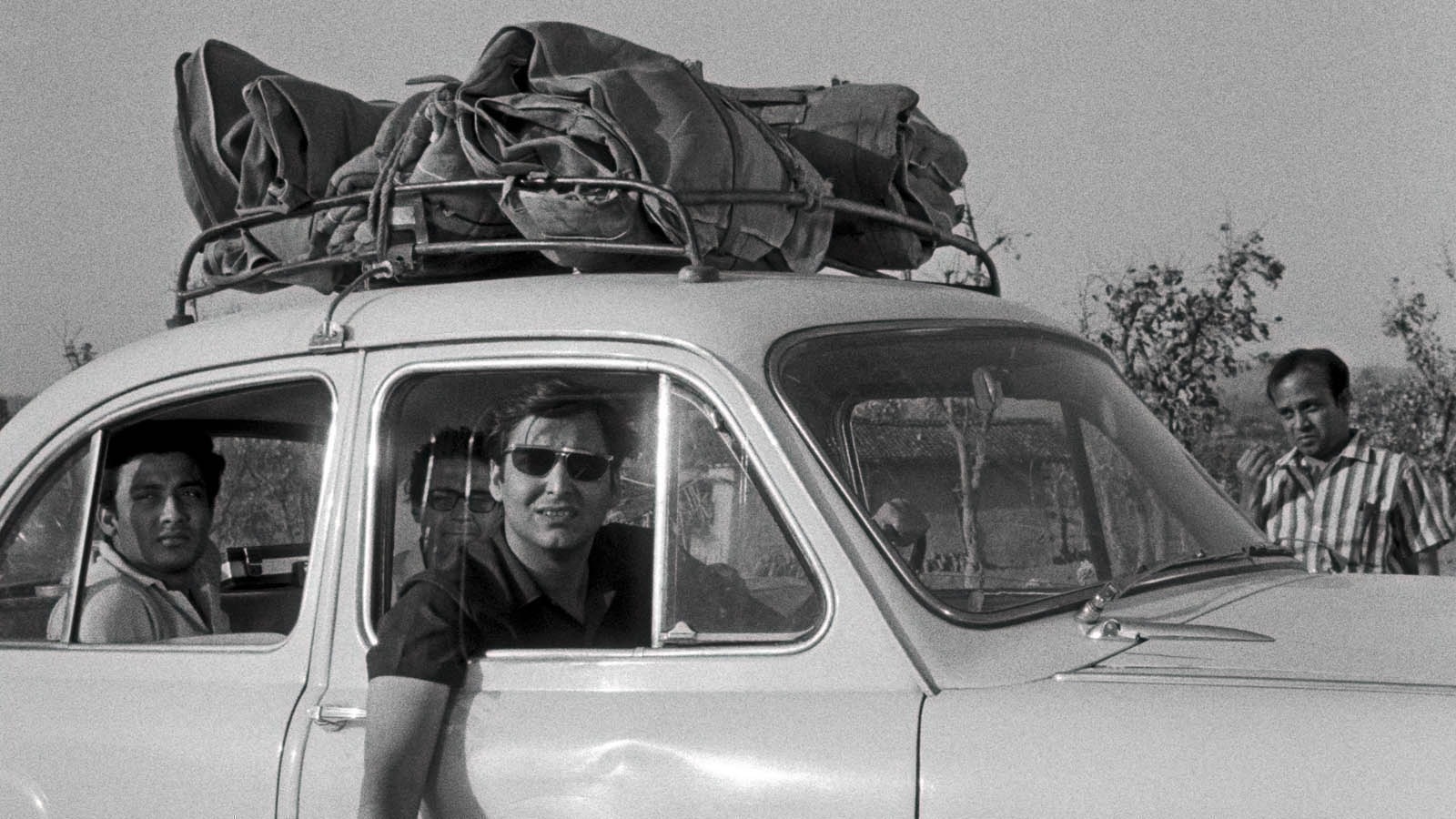
The series will wrap with Satyajit Ray’s Days and Nights in the Forest (1970). Four friends set out from the big city to the Indian countryside to get away from it all but soon enough become entangled with the beautiful women residing in a nearby estate. “Ray contrives an extraordinary world, at once Arcadian and yet possessed of utter, unforced naturalness and reality,” wrote the Guardian’s Peter Bradshaw in 2002. “Ray's language of cinema is a kind of miraculous vernacular, all his own. It has mystery, eroticism, and delight. Critics have compared this film to Renoir and Chekhov. To those two masters I am inclined to add a third: Shakespeare. The phrase ‘must see’ is bandied about very casually—but this deserves it.”
Don’t miss out on your Daily briefing! Subscribe to the RSS feed.