The Unsettling Charisma of Udo Kier
Share
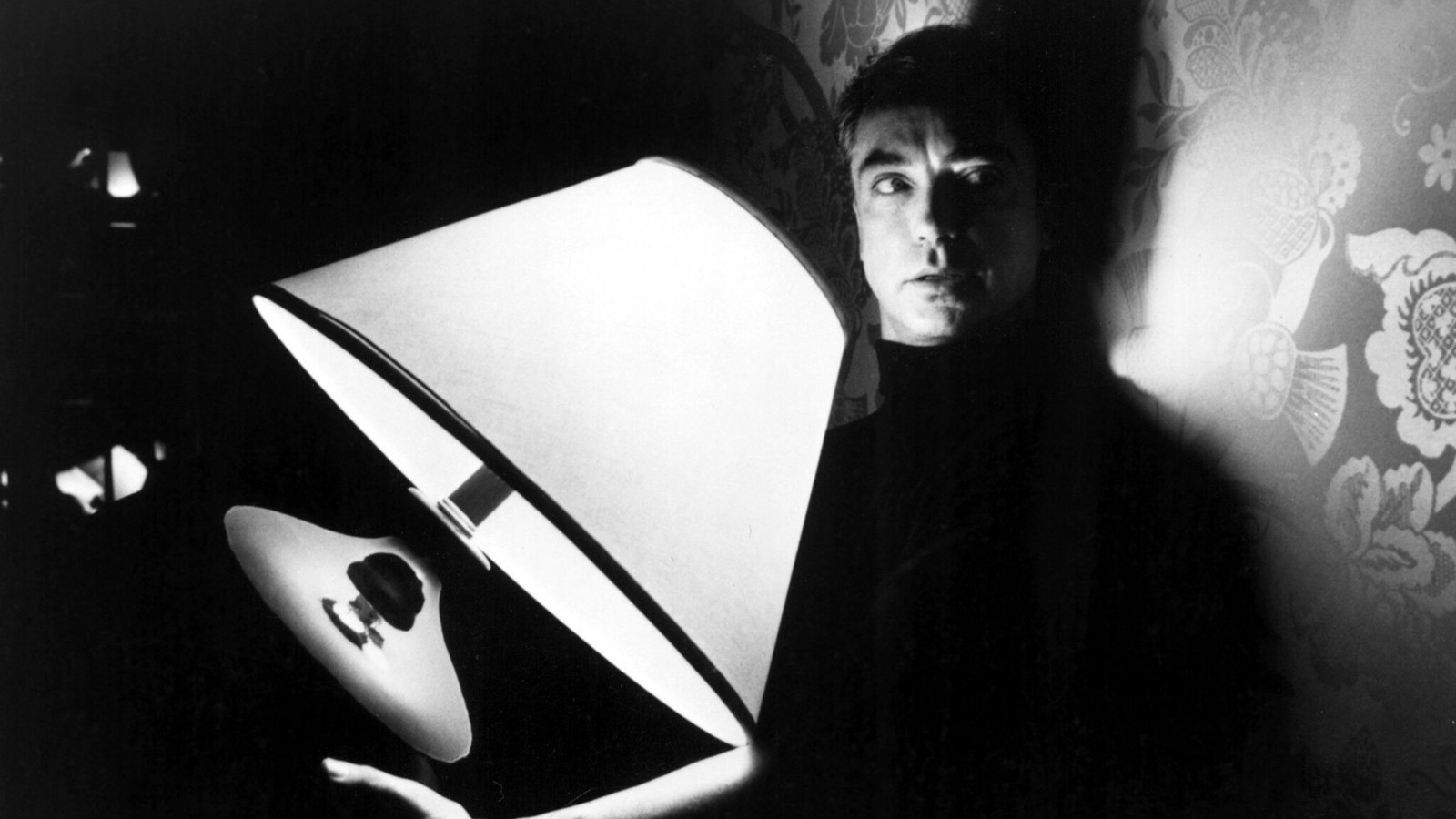
No writer could dream up a more fittingly over-the-top first day on the planet for Udo Kier. On October 14, 1944, the hospital in Cologne where the future star of films by Paul Morrissey, Rainer Werner Fassbinder, and Lars von Trier had just been born was bombed by the Allies.
“The nurse was collecting newborn babies from their mothers to clean and wash them,” Kier told Brian Bromberger in a 2021 interview for the Bay Area Reporter. “My mother’s bed was in the corner and she asked the nurse if she could have me a little longer. The nurse said okay. Soon after, the walls came tumbling down, which killed all the babies in the nursery. My mother and I survived the blast. She forced her hand through the rubble which people saw and they dug us out after three hours.”
Kier, who passed away on Sunday at the age of eighty-one, never knew his father. “There was nothing to eat after the war ended,” Kier told Bromberger. “Everything had been destroyed. My mother was sewing dresses for women so we could afford something to eat. Those experiences permanently influenced my life.”
Young Udo was an altar boy and an occasional model. At sixteen, he hung out in a bar with a friend, Fassbinder, a year younger, drinking Cokes until they got tossed out every night at ten. At nineteen, Keir moved to London, where his strikingly sleek physique and those searing blue eyes caught the attention of singer, actor, and director Michael Sarne, who cast Kier in his 1966 short, Road to Saint Tropez.
Minor roles followed in mostly forgettable European productions, the one standout being Michael Armstrong’s garishly violent Mark of the Devil (1970), featuring Kier as Count Christian von Meruh, a witch hunter in eighteenth-century Austria. But Kier could justifiably introduce himself as an actor when he found himself seated on a plane next to a stranger who claimed to be making movies for Andy Warhol. Paul Morrissey wrote Kier’s number down on the last page of his passport, and a few weeks later, he actually called with an offer, the title role in Flesh for Frankenstein (1973).
“Morrissey’s grotesque, ravishing film situates the Frankenstein story squarely in the world of the Freudian uncanny,” wrote Leo Goldsmith twenty years ago for Not Coming to a Theater Near You. “It is notable that most adaptations of Frankenstein portray the doctor as a man whose dedication to science and lust for professional glory take him too far. In Flesh for Frankenstein, the Baron (played by the infectiously demented Udo Kier) is just looking to rule the world by creating a new species of human that will obey his every whim.” And as Fernando F. Croce points out, “Kier delivers the punchline (‘To know death, you must fuck life . . . in the gallbladder’) with ripe gravity.”
In 2002, the Guardian’s Steve Rose noted that Morrissey’s immediate follow-up, Blood for Dracula (1974), had become “a horror milestone, thanks partly to its Marxist overtones and a bizarre cast including eminent directors Roman Polanski and Vittorio De Sica, but primarily due to Kier’s highly original interpretation of Count Dracula. Kier portrays him as a sickly, pathetic creature, whose futile quest for ‘wirgins’ ultimately results in his grisly dismemberment.”
Kier’s old friend Fassbinder came calling, offering Kier a role in Fox and His Friends (1975). When Kier turned him down, they fell out, but the rift didn’t last long. Kier took a small role in The Stationmaster’s Wife (1977), and for a while, the director and actor shared an apartment. In The Third Generation (1979), Kier played Edgar Gast, a man described by Adam Lehrer in Tablet as “a conflicted bourgeois anarchist and composer who funnels money to the film’s titular anarchist terror cell while being cuckolded as his wife sleeps with his industrialist father. Too emasculated to become a militant himself, Gast prefers to contribute to the cause by quoting Schopenhauer and little else.”
Kier went on to appear in Fassbinder’s Berlin Alexanderplatz (1980), Lili Marleen (1981), and Lola (1981). “Working with someone like Fassbinder was a twenty-four-hour job,” Kier told Steve Rose. “You had to be part of the family, and play his games. It just became more and more intense. I moved out because he was burning himself up in such a destructive way. I didn’t want to be part of it. He threw my suitcases down the stairs because he wanted to say that he’d thrown me out. He died two months later.”
Of the well over two hundred films Kier appeared in during his six-decade career, “one hundred movies are bad,” he told Variety’s Peter Debruge last year, “fifty movies you can see with a glass of wine, and fifty movies are good.” Just Jaeckin’s Story of O (1975) might call for two glasses of wine, but Dario Argento’s Suspiria (1977) is one of the good ones, and so, too, is Miklós Jancsó’s Hungarian Rhapsody (1979). Mileage varies when it comes to Walerian Borowczyk’s The Strange Case of Dr. Jekyll and Miss Osbourne (1981), but Henri de Corinth’s 2017 Notebook piece might pique further interest.
Lars von Trier’s The Element of Crime (1984) wowed Kier when he saw it at a festival, and the director and actor struck up a lasting friendship (Kier is the godfather to von Trier’s son). Keir plays a version of himself in Epidemic (1987) and the doomed older brother of Barbara Sukowa’s Katharina in Europa (1991). “For von Trier, ‘the past and the image of an actor mean a great deal,’” notes Howard Hampton, “so associations are piled up in tottering wedding-cake layers: Udo Kier not only stands in for Peter Lorre, he brings with him a bread-crumb trail of Fassbinder and Warhol (well, Paul Morrissey) connections.”
In von Trier’s Breaking the Waves (1996), Kier plays “a sadistic sailor on a dilapidated ship that Bess [Emily Watson] visits on the lookout for sex,” writes David Sterritt. “Her first encounter with him is so terrifying that she flees for her life; her second is a deliberate choice, meant to punish herself. Played with disturbing power by Kier, the sailor is among the most sinister figures in all cinema. He erases the last vestiges of Bess’s physical and spiritual equilibrium, providing the film’s one instance of completely unambiguous badness.”
Gus Van Sant cast Kier as Hans, a somewhat mysterious man who picks up River Phoenix’s Mike and Keanu Reeves’s Scott in My Own Private Idaho (1991). Kier found a suitcase at a flea market that he decided Hans should have with him at all times for no discernible reason, a touch that Van Sant immediately warmed up to. My Own Private Idaho was the film that brought Kier to the States, where he eventually set up a uniquely renovated home in a former library in Palm Springs.
Roles in Hollywood fare such as Ace Ventura: Pet Detective (1994), Johnny Mnemonic (1995), Armageddon (1998), and Blade (1998) bankrolled further renovations and Kier’s art collection, while allowing him to carry on working with von Trier (Dogville, Manderlay), Wim Wenders (A Trick of Light, The End of Violence), Werner Herzog (Invincible; My Son, My Son, What Have Ye Done?), E. Elias Merhige (Shadow of the Vampire), and Guy Maddin (Keyhole, The Forbidden Room).
In 2014, writer Kim Morgan, who worked on The Forbidden Room, wrote about wandering around Palm Springs with Kier and noted that her friend was “lucky in that, as he gets older, he never loses his Udo-ness, it just seems to increase. He’s too interesting a person, too unique, too vital, too great an actor, too smart for anything like beauty to fade. I’m not flattering him. It’s just too obvious. Every place I’ve been with him, Paris or Winnipeg or Los Angeles or in the middle of a dirty thrift store in Morongo Valley, people look at him, things shift, the room temperature changes. Charisma.”
“Kier has one of those faces that can turn from angelic to demonic in an instant,” wrote Glenn Kenny in the New York Times in 2021. “His eyes are in part heavenly lapis lazuli, in part impenetrable quartz. He’s an invariably uncanny presence.”
Kenny was reviewing Todd Stephens’s Swan Song, which stars Kier as Pat Pitsenbarger, a real-life flamboyant hairdresser living in a nursing home in the modest town of Sandusky, Ohio. Pat is pulled out of retirement to style a former friend for her funeral, and for many, Kier delivers one of his finest turns. “One could say he’s a revelation,” wrote Kenny, “but longtime Udo partisans always knew he had this kind of performance in him.”
Don’t miss out on your Daily briefing! Subscribe to the RSS feed.