Sentimental Value Leads the EFA Nominations
Share
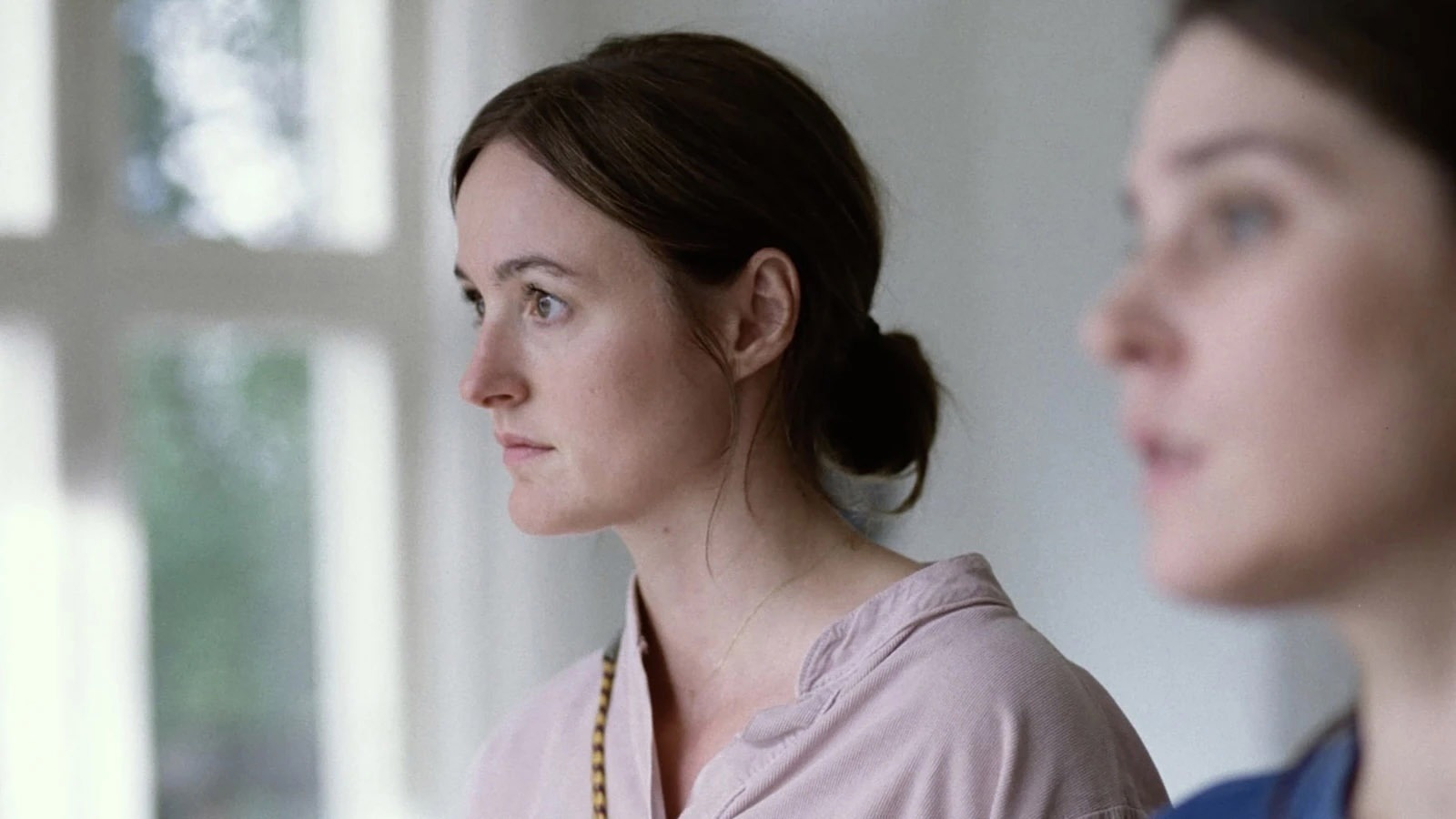
All four frontrunners in the race for this year’s European Film Awards won top prizes when they premiered at the Cannes Film Festival six months ago. Jafar Panahi’s It Was Just an Accident, the winner of the Palme d’Or, has scored three nominations, and so, too, has Mascha Schilinski’s Sound of Falling, which shared the Jury Prize with Oliver Laxe’s Sirāt, the searing road movie up for four EFAs. Leading this tight pack with five nominations is the winner of the Grand Prix, Joachim Trier’s family drama Sentimental Value.
At Crooked Marquee, Jason Bailey notes that “the best movies are those that start about one thing, and by their end, you realize they’re about every thing. Sentimental Value is about family, yes. And then it’s also about depression and art and God and resentment and sex and longing and love and beauty and movies.”
Profiling Trier for the New Yorker, Margaret Talbot goes long, talking not only with the Norwegian director best known for his Oslo trilogy—Reprise (2006), Oslo, August 31st (2011), and The Worst Person in the World (2021)—but also with the leading cast and crew members on the set of Sentimental Value, cowriter Eskil Vogt, Trier’s close friend Mike Mills (Beginners), and one of his most esteemed admirers, writer Karl Ove Knausgård. Talbot begins with a description of the house than anchors Sentimental Value: “Clad in dark wood with a steeply gabled roof, it has squiggles of cherry-red trim, like decorations on a birthday cake. Norwegians call such architecture dragestil, or ‘dragon style,’ a late-nineteenth-century aesthetic recalling Viking ships and wooden-stave churches.”
The current owner of the house hasn’t lived there for years. Gustav Borg (Stellan Skarsgård) is a renowned film director hoping to put an end to a fifteen-year dry spell with a movie based on the trauma of losing his mother when he was still a boy. During the Nazi occupation of Norway, his mother was a resistor, and the torture she endured led her to hang herself in the family home.
Gustav, too, has abandoned his family—but in stages. Long before he left his wife, Sissel (Ida Marianne Vassbotn Klasson), and their two daughters, Nora (Renate Reinsve) and Agnes (Inga Ibsdotter Lilleaas), he was an absent father, always working on a distant film set or secluded in his study, writing his next project.
“The question of whether Gustav is an emotional terrorist, a control freak, or simply a spectacular asshole—and whether those qualities are necessarily commensurate with being a successful filmmaker—is at the heart of Sentimental Value, which gets considerable mileage out of Skarsgård’s status as probably the most decorated Scandinavian actor since Max von Sydow,” writes Adam Nayman for the New Republic. “His credits working for the mercurial likes of Lars von Trier and Bergman—whom the actor derided as ‘manipulative’ during the movie’s press tour—serve elegantly as shorthand for the idea of the director as a sacred monster, and Skarsgård gives a marvelously jagged, high-comic performance, all good spirits and bad vibes.”
When Sissel dies, Nora and Agnes host a memorial get-together in the house that Agnes, her husband (Andreas Stoltenberg), and their son (Øyvind Hesjedal Loven) have made their home. Uninvited and certainly unexpected, Gustav shows up with a screenplay, and he wants Nora, now a star on the Norwegian stage, to play his mother. Reinsve’s Nora, already teetering on the brink of an emotional breakdown, unequivocally turns her estranged father down.
Margaret Talbot notes that after Reinsve won the Best Actress award in Cannes for her performance in The Worst Person in the World, Alexander Payne (The Holdovers) wrote to Trier, “asking, ‘Is there nothing she cannot do, no emotion she cannot feel and show?’ Payne has cast her in his next film, which will shoot in Denmark next year. ‘You see thoughts ripple across her face,’ he said. ‘She does the whole transition of one thought to the next with all the micro-thoughts in between.’”
Snubbed, Gustav casts Rachel Kemp (Elle Fanning), an American star of a hit series, to play his lead. “The American actress in over her head is the kind of character who would typically be presented as a figure of fun, or maybe even a threat like Chloë Grace Moretz in Olivier Assayas’s similarly themed Clouds of Sils Maria,” writes Sean Burns for WBUR. “But Trier is too compassionate a filmmaker for that and Fanning is too generous a performer, playing Rachel not as a superficial ditz, but as a deeply sincere person coming to realize that she doesn’t have what it takes.”
Agnes decides that she can’t bear to see her father fail and takes his screenplay to Nora, gently insisting that she actually read it rather than dismiss it out of hand. The sisters’ relationship “adds several dimensions to the family,” writes Mark Asch. “It’s intriguing, and pays off, that Agnes and not Nora was the child star of Gustav’s best movie (and, when we see a clip of it, it feels just right that the movie is pretty good, an impressively made and manipulative Holocaust-era movie in the shadow of Agnieszka Holland).”
Acclaim for Sentimental Value is widespread but not universal. “Scene by scene,” writes the New Yorker’s Justin Chang, “it’s impeccably crafted, flawlessly acted, and emotionally anesthetized. Trier can do restraint beautifully—Oslo, August 31st is an addiction tale of shattering stillness—but Sentimental Value mistakes whispery sedateness for maturity. It sets up understatedly fraught situations, plants meaningful glances and allusive ambiguities everywhere, and assumes our tears will trickle forth.”
Among the film’s champions, though, is the New York Times’ Manohla Dargis. “A meticulous craftsman,” she writes, “Trier seems incapable of making an ugly image, though it’s his restless engagement with the medium’s plasticity—especially with how movies can translate the seemingly ineffable into concrete sights and sounds—that makes his work exciting. There’s a searching quality to his filmmaking, a restiveness that’s shared by his memorably unsettled characters. One difference is that while they don’t always seem wholly aware of their own search, Trier’s is right there on the screen.”
Don’t miss out on your Daily briefing! Subscribe to the RSS feed.