Tatsuya Nakadai, Superstar Craftsman
Share
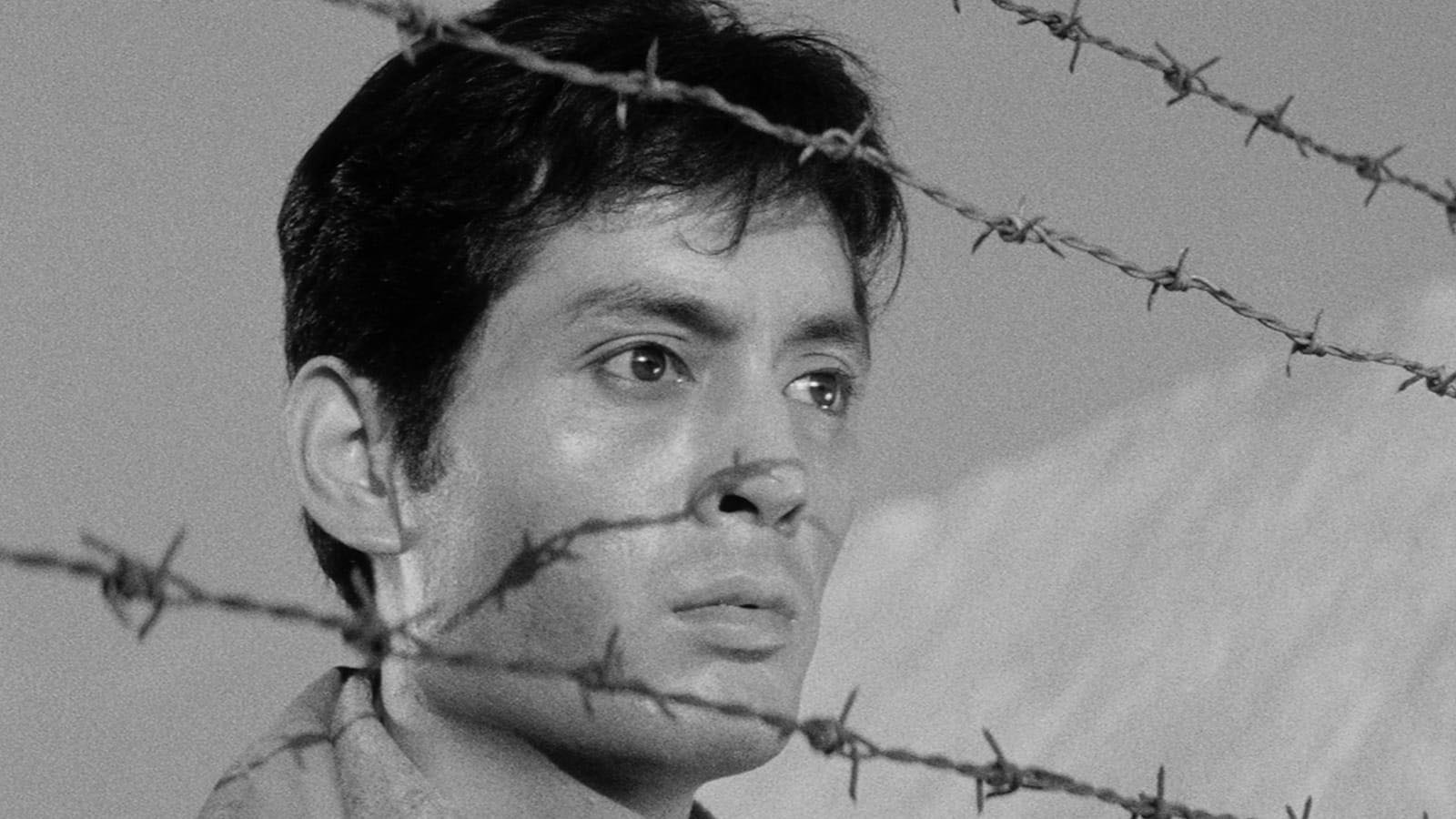
“I figured I just wasn’t cut out to be a film actor,” recalled Tatsuya Nakadai when Aaron Gerow spoke with the Japanese superstar in 2016 about five of the great directors he’d worked with—Akira Kurosawa, Masaki Kobayashi, Kihachi Okamoto, Mikio Naruse, and Hiroshi Teshigahara—over the course of a storied career spanning seven decades. Nakadai, who passed away over the weekend at the age of ninety-two, had studied drama for three years before joining the renowned Haiyuza Theatre Company in Tokyo. “During that time,” he remembered with a laugh, “I struck out at nine film auditions.”
But when word got out that Kurosawa had issued an open casting call for Seven Samurai (1954), Nakadai and several other members of the company decided to give it a shot. Nakadai scored a tiny nonspeaking role as a samurai passing through town. All he had to do was walk through the frame. But Kurosawa was not won over by Nakadai’s gait. One take followed another. It cost the production an entire day to nail the shot, which was eventually edited down to a mere three seconds.
The experience was so humiliating that Nakadai swore to himself that he’d never work on another Kurosawa film again. Kurosawa’s team wound up offering the role of Unosuke, the gun-toting gangster in Yojimbo (1961), three times before Nakadai accepted.
There is another origin story behind this legendary career. As a young theater actor struggling to make ends meet, Nakadai was clerking in a modest shop when Kobayashi strolled in and struck up a conversation. Kobayashi was impressed enough to cast Nakadai as a former soldier who had fought in the Second World War but was now serving time for following his superior’s command to shoot an Indonesian civilian.
The Thick-Walled Room, completed in 1953 but not released until 1956, was one of the first Japanese films to deal with the country’s wartime legacy. “Based on the diaries of real-life prisoners,” writes Michael Koresky, The Thick-Walled Room “treats the low-ranking soldiers not as innocents but as dupes of a system that will not assume responsibility for its actions.”
“Whether or not the shop clerk story is true,” writes Chuck Stephens, “Nakadai was scarcely green when Kobayashi first encountered him, and it was his training as a stage actor specializing in Shingeki (the Japanese New Theater movement, which rejected the traditions of Noh and Kabuki in favor of Western ‘realism’) as much as his fresh-faced photogeneity that quickly endeared the young actor to directors and audiences.” For Stephens, “the qualities that truly define him are those that seem sprung from electrifying forces deep within—a stentorian baritone that might belong to the devil’s own ventriloquist dummy, and a pair of orb-wide eyes, as alabaster as snake’s eggs, so eerily inner-illuminated they threaten to rupture into liquid light.”
The eleven features Nakadai made with the socially committed Kobayashi attest to the actor’s versatility. After playing Killer Joe, a mid-level yakuza, in Black River (1957), Nakadai took the lead in Kobayashi’s ambitious adaptation of Junpei Gomikawa’s best-selling 1958 novel, The Human Condition. In three features shot over four years, the six-part WWII story traces the journey of Kaji, a naive pacifist who starts out as a labor camp supervisor before becoming an Imperial Army soldier captured and held prisoner by the Soviets.
Kobayashi identified with Kaji to such a degree that Nakadai would study his director’s face to glean hints at how to go about playing certain scenes. “I almost feel as if I stole the character from Kobayashi,” he told Aaron Gerow. Kaji is an “embodiment of the conflicted Japanese conscience,” suggests Philip Kemp, and Nakadai “dominates the action with a performance of burning conviction. Nakadai is rarely absent from the frame throughout the film’s epic length. Repeatedly, Kobayashi emphasizes Kaji’s psychological isolation and the hopelessness of his moral stance by situating him in expanses of bleak, sterile terrain—the ravaged mining landscape, the battlefield, the final pitiless snowstorm—which exploit Yoshio Miyajima’s monochrome widescreen photography to powerful effect.”
Of all the more than 160 films Nakadai appeared in, Kobayashi’s Harakiri (1962) was his personal favorite. He stars as Tsugumo, a poverty-stricken samurai who, in 1630, confronts the clan that forced his son-in-law to commit ritual suicide. “In the scene where Nakadai examines the bamboo sword that his son-in-law was forced to use to end his life,” writes Joan Mellen, “he weeps, ‘The stupid thing was too dear to me . . . and I clung to it!,’ revealing a range worthy of Marlon Brando.”
Nakadai found that Kurosawa lived up to his nickname. “Yes, he was the Emperor, but in the best sense of the word,” he told Gerow. Following up on his “great bad-guy role” in Yojimbo, Nakadai faced off against Toshiro Mifune again in the sequel, Sanjuro (1962), which gave us one of his most shocking death scenes. Geoffrey O’Brien has floated the idea that in High and Low (1963), “the tormented young policeman played by Mifune in Stray Dog (1949) has grown up, perhaps, to be the coolly restrained detective embodied by Tatsuya Nakadai: seeing everything but keeping his judgments to himself until he really can’t take it anymore.”
Nearly two decades passed before Kurosawa called on Nakadai again. Shintaro Katsu, best known to fans as Zatoichi, had been cast as the petty thief hired to impersonate a dying feudal lord in Kagemusha (1980), but Katsu, a good friend of Nakadai’s, simply could not bend to Kurosawa’s will. Shooting had already begun when Nakadai was brought in to replace Katsu, and he found that “my performance became somehow Katsu-like!”
After Kagemusha won that year’s Palme d’Or (tied with Bob Fosse’s All That Jazz), Kurosawa cast Nakadai as Ichimonji Hidetora in Ran (1985), the director’s retelling of King Lear. Nakadai “never seized the center of Kurosawa’s world as did Takashi Shimura, with his pure humanity, and the swaggering Toshiro Mifune,” wrote Michael Wilmington in 2005. “But, in a way, his greater fragility and good looks (even tortured into Hidetora’s Noh mask of a face) fit the sense of tenuousness and impermanence that the film everywhere projects.” Nakadai “makes us see something crucial: the inevitability of Hidetora’s fate and of the decline of the world he created and that will destroy him.”
Naruse’s world was a galaxy away. Looking back on his role opposite Hideko Takamine in When a Woman Ascends the Stairs (1960), Nakadai recalled the director telling him specifically to avoid acting as he did in Kurosawa’s films. “‘Be natural,’ he’d say. ‘What does that mean?’ I’d ask. ‘Just stand there. You don’t have to do anything.’ As a theater actor, I was prone to always be doing something. He said, ‘I’ll convey everything through the editing.’”
In Okamoto’s The Sword of Doom (1966), Nakadai’s samurai Ryunosuke is “at once hero and villain, demon and potential bodhisattva, and Tatsuya Nakadai's stunning performance incarnates perfectly the paradox at the heart of the character,” writes Geoffrey O’Brien. And for Bruce Eder, Ryunosuke is “one of the screen’s more memorable psychopaths, a passive-aggressive whose bloodlust is portrayed with dead calm, revealed by the tiniest motion of an eye, the trace of a smile, or the tense position of his body as he ponders killing.”
Okamoto’s Kill! (1968) is “a running (and sometimes standing very still, chewing the fat) commentary on the vagaries, foibles, and pleasures of the swordplay genre,” wrote Howard Hampton in 2005. Nakadai’s Genta, a disillusioned samurai, is “a marvel of casual, winning subterfuge, all-knowing one moment, dropping fifty IQ points in a sleepy blink the next, a go-between paddling through multiple backgrounds, eavesdropping on treachery, manipulating sticky situations with a guileless, helpful grin.”
“As a screen presence,” added Hampton, “Nakadai resembles a Japanese Alain Delon, though his striking matinee idol features (those cheekbones could shave glass) come with more disparate, adaptable traits.” Nakadai’s “intense part, as the man with the surgically devised mask-visage, in Teshigahara’s The Face of Another [1966] is an apt metaphor for his acting career in many respects: he adopts different looks, expressive methods, and strategies for presenting himself from one film to the next. Unlike the proverbial swordsman who sticks to a single school, he has been more of a self-effacing craftsman who uses whatever technique seems appropriate to the context at hand.”
Don’t miss out on your Daily briefing! Subscribe to the RSS feed.