Oliver Laxe’s Sirât
Share
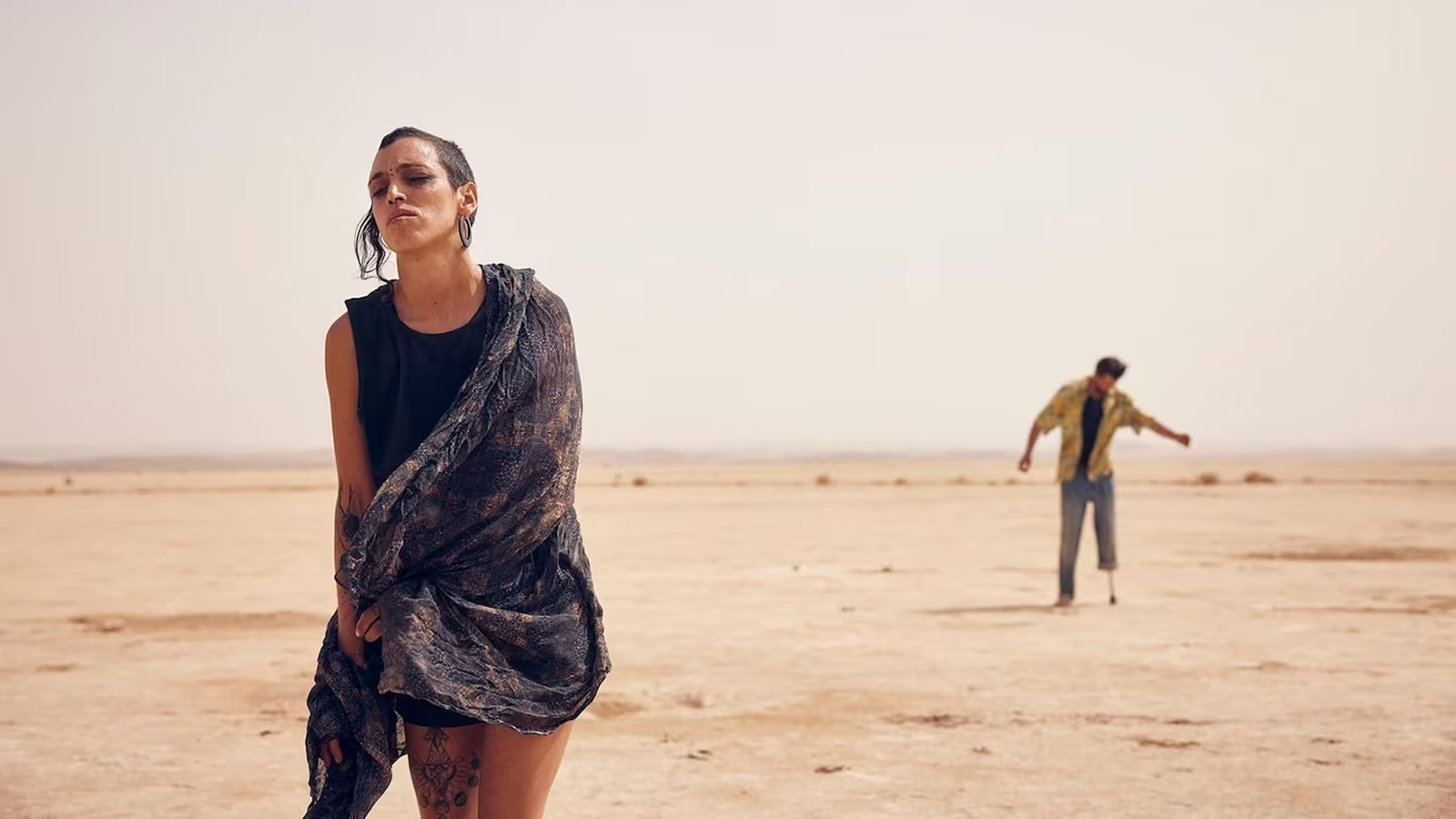
Starting Thursday in New York and then on Friday in Los Angeles, Oliver Laxe will take part in Q&As during weeklong runs of his fourth feature, Sirât, the winner—along with Mascha Schilinski’s Sound of Falling—of the Grand Prix at Cannes. Propelled by the driving beats and spacious soundscapes of David Letellier, a.k.a. Kangding Ray, and shot in the sun-parched deserts of Morocco on 16 mm by Mauro Herce, Sirât is a sensorily enveloping trip that takes a gut-churning lurch midway through.
Early reviews have drawn comparisons to Henri-Georges Clouzot’s The Wages of Fear (1953), William Friedkin’s Sorcerer (1977), and George Miller’s Mad Max: Fury Road (2015), but as Adam Nayman writes at the Ringer, Sirât is “not a thrill ride, exactly: The wide-screen images of vehicles being swallowed up by a merciless, sun-baked landscape are torqued for existential despair. There’s a stretch in the middle of the movie that constitutes some of the most authentically white-knuckle filmmaking in recent memory. When it comes to working the audience over, Laxe is ruthless. Sirât is an arduous viewing experience—one moment made me look away—but it’s also touched by grace, at times feeling less like a movie than a conjuring.”
Luis (Sergi López), a middle-aged Spaniard, wanders into a rave throbbing in the middle of nowhere with his son, Esteban (Bruno Núñez), in search of the daughter he hasn’t heard from in five months. When the military rolls in, dropping hints that somewhere beyond the infinite horizon a third world war has broken out, five of the ravers—Jade (Jade Oukid), Tonin (Tonin Janvier), Josh (Joshua Liam Henderson), Steff (Stefania Gadda), and Bigui (Richard Bellamy)—break away from the caravan, and Luis and Esteban follow them in their van. Tragic turns await.
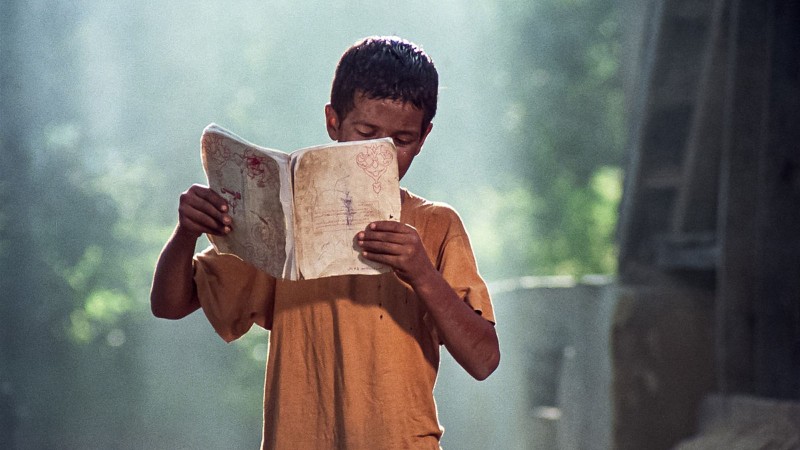
Laxe’s “previous films have also unfolded as shapeshifting journeys,” notes Leonardo Goi at Reverse Shot. “In You All Are Captains [2010], the director starred as a self-described ‘neocolonialist’ filmmaker who travels to Tangiers to hold film workshops for local school children; Mimosas (2016) followed a caravan of nomads escorting a dying sheikh to his final resting place on the other side of the Atlas Mountains. Even Fire Will Come (2019), Laxe’s only feature not set in his adoptive Morocco, dogged a middle-aged loner as he returned to his native hamlet in Galicia after serving time for an arson incident.”
“The sources of Sirât’s anxiety and anguish are, in purely narrative terms, easy to pinpoint,” writes Nick Schager at the Daily Beast. “Yet the material’s existential dread is so epic as to feel unfathomable.” For the New Yorker’s Justin Chang, “Laxe’s movie is both a nightmarish experience and an exhilarating one—a pitiless ordeal that is nonetheless underpinned by extraordinary love and tenderness.”
“The resilience of this group,” writes Filmmaker editor Scott Macaulay, “their small-scale collectivism, and the way in which dance, and drugs, are a kind of social and even spiritual practice, as opposed to simple escapism, made me think of the late Mark Fisher’s final unfinished work, ‘Acid Communism,’ and his thinking here is an analogue to the movie’s techno-scored hedonic flow: ‘The crucial defining feature of the psychedelic is the question of consciousness, and its relationship to what is experienced as reality. If the very fundamentals of our experience, such as our sense of space and time, can be altered, does that not mean that the categories by which we live are plastic, mutable?’”
“Sirât is a very different kind of postapocalyptic narrative,” writes Michael Sicinski. “We are not all going to die at once. There will be losses, and sacrifices, and some new form of the will to live will emerge out of the ruins. This isn't good news or bad news for civilization. It just is, and Laxe offers us a vision of a permanently traumatized future, without monsters or zombies or roving death squads. Fighting against assailants isn't easy but it is instinctual. Stumbling ahead into indefinite void requires new forms of subjectivity we cannot begin to fathom.”
Talking to Jordan Cronk in Film Comment, Laxe calls Sirât “a jump into the abyss, a celebration of the end. It’s the end of the world, but keep dancing. You could be screaming, crying, but, as a raver always says, keep dancing.”
Don’t miss out on your Daily briefing! Subscribe to the RSS feed.