Dying Worlds: Adoor Gopalakrishnan’s Dramas of Cosmic Disorder
It was a Saturday afternoon in Calcutta in 1989. I was eleven years old, home alone. The government-run TV channel was showing a film set in a village in South India, where they spoke a language that sounded as foreign to my Bengali ears as Chinese. I followed the action—or what little there was of it—by reading the English subtitles. In the middle of the movie a man got upset with the village landlord and called him a word that the subtitles translated as “bastard.”
This was not a word that I had ever heard before at my English-medium school. The next day, during our lunch break, I came back to class to find that all the desks and benches were overturned and in disarray. I was furious. The moment the culprit appeared, that word came into my brain.
“You bastard!” I said to him.
The only problem was that I had no idea what the word “bastard” literally meant, and the boy was the son of the school’s principal.
Over the next few days, I begged the boy not to tell his parents. Then finally, terrified that I would be thrown out of school and join the myriad children begging on Calcutta’s streets, I confessed to my mother.
Where had I learned that word? She asked me.
How could I explain to her that I had learned to curse from an art film by the Kerala director Adoor Gopalakrishnan?
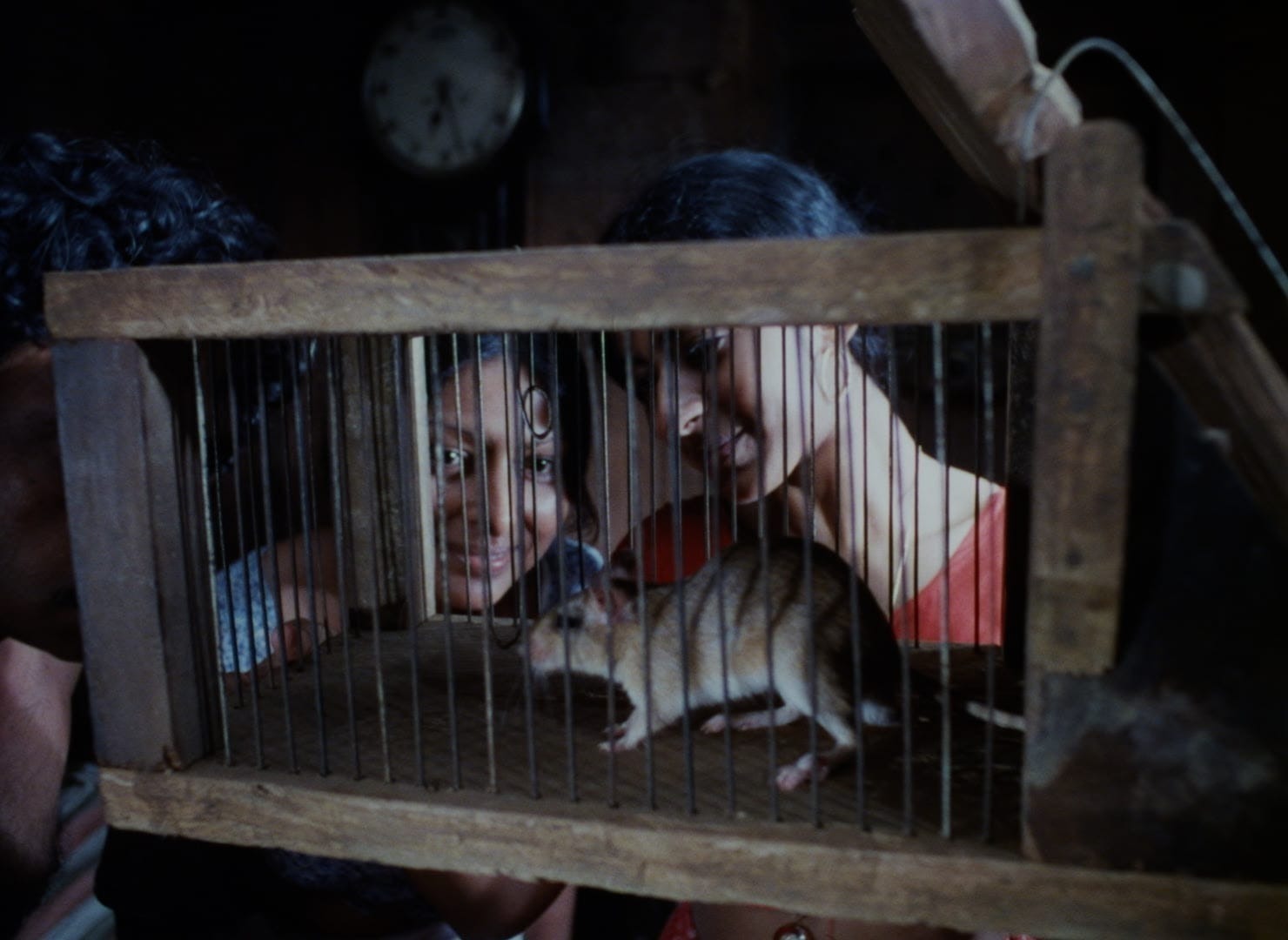
Authority and the forces that challenge its rule are among the central themes in Gopalakrishnan’s work. Rat Trap (1982) is about a declining feudal landlord (Karamana Janardanan Nair) who is at once immensely powerful and powerless in the face of larger change. At home he is a tyrant over his two unmarried younger sisters. Thieves steal their coconuts. Rats eat into his shirts. Cows wander into their garden and chew up the plants. Whatever happens, he looks up from his newspaper and calls one of his sisters to do something about it and keeps reading. But his despotism will not last. The rumble of jet engines passes overhead. Former peasants are now returning from stints in West Asia, smelling of cologne and eyeing the landlord’s sisters. The old peasants neither fear nor follow his orders. Sometimes they steal, and at other times they defy him openly. Even his older sister, who is married with her own family, is demanding her share of the land.
The scene that had nearly gotten me expelled happens late in the movie. The landlord is walking down a village path at night when he encounters a peasant. Instead of deferentially stepping aside, the villager calls the landlord a “bastard” (or “son of a bitch,” in the subtitle translation that accompanies the restoration now showing on the Criterion Channel) and walks on with no consequences. From that exchange, I must have learned how the weak stood up to tyrants.

Like Rat Trap’s protagonist, Gopalakrishnan came from a feudal family of the Nair caste, which was the dominant landowning community in Kerala. The Nairs were traditionally matrilineal: for centuries, property was passed from mother to daughter. Children lived in large homesteads with courtyards like the one in Rat Trap, with their mothers and myriad aunts and cousins. Fathers were visitors rather than permanent presences, and maternal uncles were the heads of families.
Changes in colonial law imposed the patriarchal family structure—where land is passed from father to son, with the father as the head of a family unit—on the Nairs in the twentieth century. For the Nairs, monogamy and marriage had both been flexible arrangements. Now monogamy became the norm, with the father as the new head of the bourgeois nuclear family. After Indian independence, new federal laws to end landlordism created another major social transformation as the large feudal holdings were redistributed to landless sharecroppers of laboring castes. Kerala’s Communist-led state government championed this process of land redistribution. The protagonist of Rat Trap and his sisters languish in their feudal household, caught in these profound and complex changes in class and gender roles, which they have no way to navigate. The trio have no partners and no nuclear families of their own. For them, the old order is dying and the new one cannot be born. They are trapped like rats.
When India became independent in 1947, the Hindi film industry was already thriving in Bombay (now Mumbai). Other industries had also developed in Calcutta (now Kolkata), Madras (now Chennai), and Kerala. The films mimicked popular theatrical forms—such as the Nautanki, the Ramlila or the Yatra drama—that dramatized mythological tales from the Ramayana and the Mahabharata or historical narratives of emperors and princesses and included dances, songs, romance, and melodramatic plots. Like the plays of the Elizabethan stage, these performances often mixed bawdy humor and garish costumes with serious themes to appeal to a broad range of public tastes. The Hindi films made in Bombay—what would later become known as Bollywood—followed a similar formula to maintain a firm grip on commercial success.
But in that key year of 1947, the first film society was established in Calcutta with a different kind of cinema in mind. Among its founders were Satyajit Ray and critic Chidananda Dasgupta, who saw the three-hour-long song-and-dance extravaganzas that ran in Indian cinemas as the fruit of “cynicism, ignorance, and cultural underdevelopment.” The Calcutta Film Society not only showed films; its members soon began to create a “parallel cinema” of art films, which were screened at festivals abroad. In the 1950s and ’60s, films by Satyajit Ray, Mrinal Sen, and Ritwik Ghatak were already garnering international attention.
Aiming to encourage a form of cinema that would burnish the country’s reputation in the cultural capitals of Europe, the Indian government established the Film and Television Institute of India (FTII) in Pune in 1960. Among the first batches of students at FTII was a young film buff from Kerala named Adoor Gopalakrishnan. At around the same time, another Malayali, P. K. Nair, arrived in Pune to become the head of the new government-run National Film Archive of India (NFAI), dedicated to the preservation of Indian films and also to the dissemination of foreign films to an Indian audience. In 1965, Gopalakrishnan returned to Kerala and set up the Chitralekha Film Society in the sleepy state capital of Trivandrum on the southern tip of India. With the NFAI and Nair’s help, the society would screen the best of world cinema for discerning viewers in the city.
In Kerala, the film-society movement that Gopalakrishnan had begun exploded beyond its urbane origins. This was in part due to the state’s unique politics. A leftist coalition led by the Communist Party of India came to power in 1957 and was returned to office routinely in the decades that followed. Social movements agitated for the redistribution of feudal land to sharecroppers, food rations to prevent hunger, mass public education, and free libraries and health care. As a result of these struggles, the quality of health and education in Kerala is now light years ahead of much of India and resembles that of Western Europe.
From the 1950s onwards, writers, poets, playwrights, and filmmakers were at the forefront of these movements for social change. They aimed to create a new culture based on the shared Malayalam language and a set of modern cosmopolitan values that transcended the old feudal divisions of class and caste. Amid this cultural ferment, more than a hundred film societies sprung up across villages and small towns in Kerala. At the Film Archive, Nair sent films by train from Pune to remote corners of his home state. Bergman and Eisenstein were being shown in outdoor cinemas beneath coconut trees and in fallow fields. Fishermen and toddy tappers were having heated discussions about the role of fantasy and realism in European masterworks.
Following the example of their counterparts in Calcutta, Gopalakrishnan and his fellow film buffs at the Chitralekha Film Society soon began the Chitralekha Film Cooperative to fund and produce films. The group’s first effort was Swayamvaram (a.k.a. One’s Own Choice, 1972), about a couple from differing backgrounds who strike out on their own. It was Gopalakrishnan’s directing debut, and it broke new ground as one of the first Malayalam films shot on location with sync sound. Gopalakrishnan, Govindan Aravindan, and John Abraham (another FTII graduate) soon became the three leading directors of the new parallel cinema in Kerala. These artists challenged not only the way that stories were told, but also the ways in which movies were funded and produced. Abraham, the most iconoclastic of the three, founded the Odessa Collective, a group that even crowdfunded its films’ budgets from audience members.
Gopalakrishnan’s films were often funded by the central or state governments. Unlike the fare produced by the commercial film industry, his films drew a lineage from European art cinema shown at film societies and the work of Bengali filmmakers like Ray, Ghatak, and Sen. Monologue (1987) is perhaps the most experimental in form. Like Akira Kurosawa’s Rashomon (1957), it narrates the same story more than once. Unlike that film, Monologue has only a single unreliable narrator, who tells the story of his life twice, with radically different outcomes.
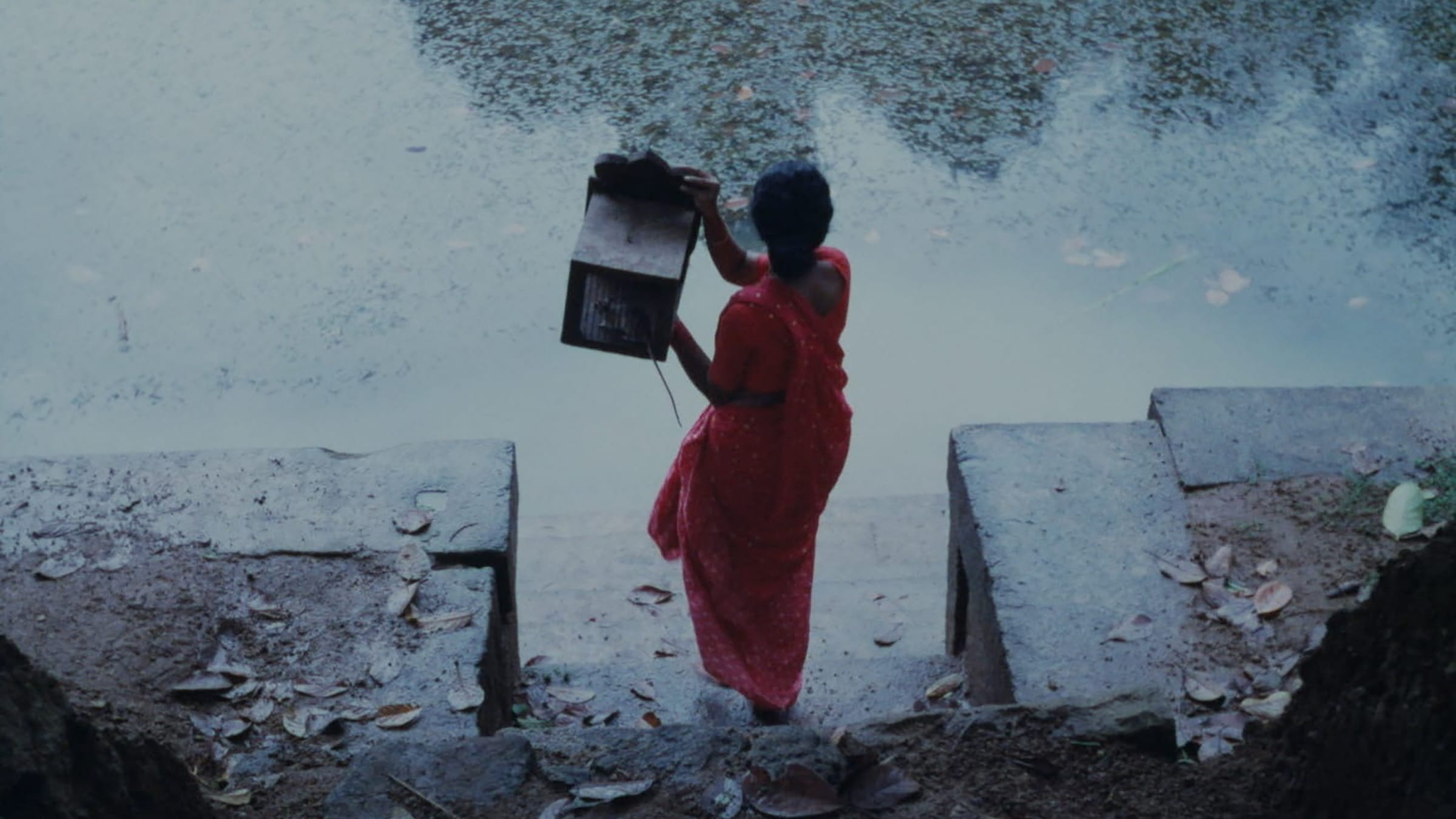
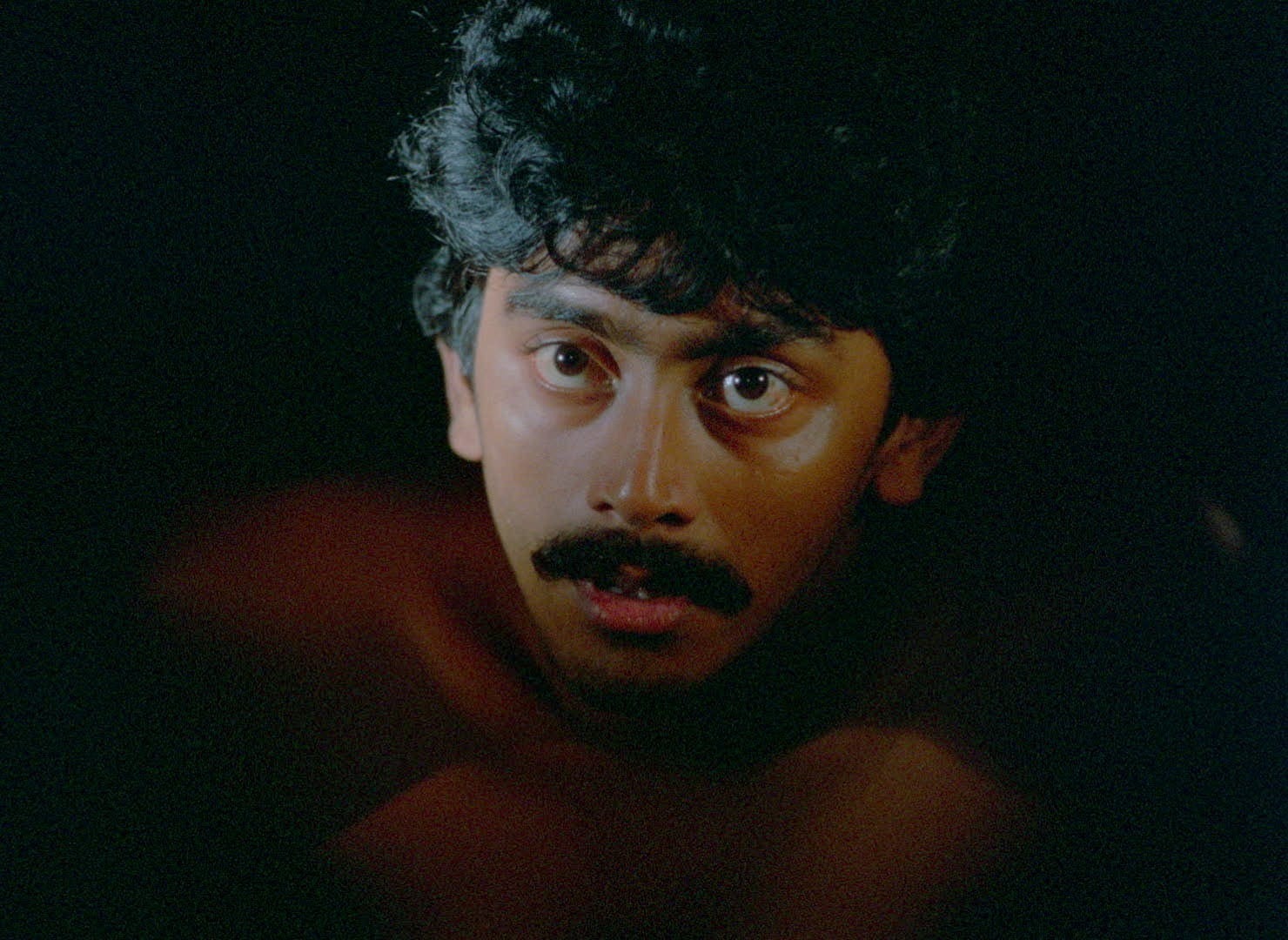
At one level, Monologue is an exploration of schizophrenia, of a man whose hold on reality unravels due to mental illness. The first telling introduces Ajayan (Ashokan) as an orphan raised by a kindly widowed doctor alongside the doctor’s own son, Balu (Mammootty). Ajayan is extremely gifted but also troubled. Tormented by lust for Balu’s wife, Suma (Shobana), he leaves home and commits suicide. In the retold version, the same characters appear but with different attributes. Ajayan is now an introvert and a layabout possessing no intellectual gifts or moral qualms. He grows up at the mercy of three servants who menace him with ominous supernatural threats. When he leaves home to go to college, a woman identical to Suma named Nalini (also Shobana) initiates a relationship and then abandons him. Are they the same woman? The first version may be reality and the second a delusion, but what if both are equally true? What if there are two sides to every story, even the story we tell ourselves about our own lives?
This experiment with form draws on mythological stories of brothers separated at birth and doomed to different fates, like Karna and Arjuna in the Mahabharata. Doppelgangers, twins, and other doubles are a timeless theme in mythological dramas and in commercial Hindi films as well, often used to explore the twin facets of a split personality: a Jekyll and a Hyde, a Karna and an Arjuna, or the two Ajayans. Yet Monologue shuns the melodrama typically associated with those forms. There is no singing and dancing, no humor or appealing costumes—none of the punctuations and pauses in high drama that were part of the structure of popular Indian cinema.
The line between commercial and art film in Kerala, however, was breached by some of the biggest commercial film stars. In between playing swashbuckling action heroes and swoon-worthy love interests, the megastar Mammootty also acted in three of Gopalakrishnan’s films, including as Balu in Monologue. The doctor’s biological son grows up to be the model of a well-adjusted bourgeois patriarch in late-twentieth-century Kerala. He too is a doctor with a thriving practice and a beautiful wife, who is kind and generous toward his wayward brother. He is all that Ajayan cannot be, right down to his physical form: Balu is tall, well-built, and handsome, where Ajayan is short and slight with shifty eyes. While nearly every other character shifts in important ways between the two tellings, Balu doesn’t change. He remains the same commanding but kind modern man in both. How do the two different Ajayans refract off the shining symbol of manhood that is his brother? Gopalakrishnan draws on Mammootty’s leading-man status to use him expertly as both hero and foil. Perhaps Balu stands for all that is virtuous in the stable social order, or perhaps he is the source of Ajayan’s descent into madness.
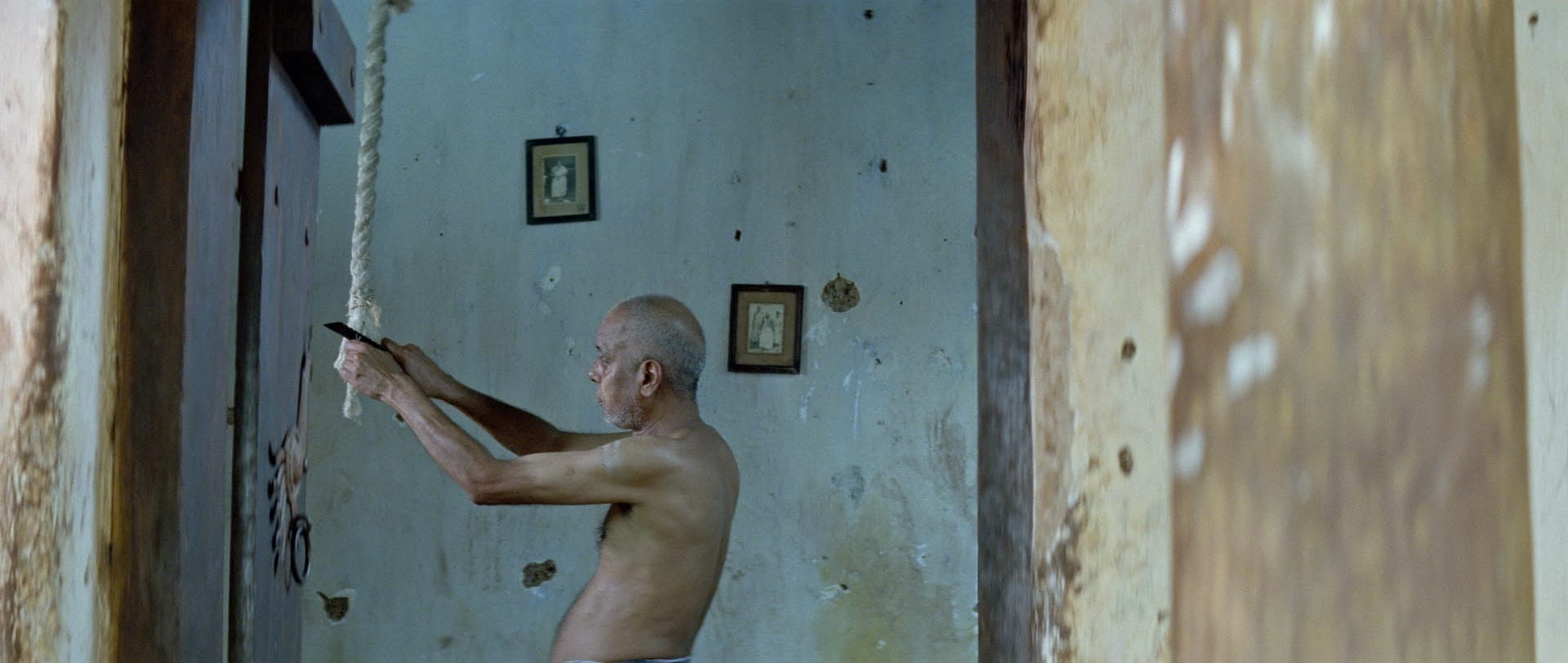
There is a sense of cosmic disorder lurking beneath these films. Kerala’s deep matriarchal religious culture is associated with powerful mother goddesses—female manifestations of the divine such as Kali, the mother protector who shelters her devotees while unleashing fury and violence upon the world. In her iconic form, Kali is black and nude, with four arms, two of which carry weapons and one the decapitated head of a victim. Beneath her feet is her husband Shiva. The story goes that she was once on a rampage and no one could stop her until Shiva fell at her feet. Kali stepped on his chest, and suddenly realizing what she had done, she stuck out her red tongue to acknowledge her error and the killing spree stopped. But the world of twentieth-century Kerala in Gopalakrishnan’s films is no longer protected by fierce mother warriors. In Shadow Kill (2002), a Kali-worshipping hangman or executioner comes to stand for a wider crisis in the face of political and social change.

The film takes place in the 1940s on the eve of Indian independence, in the southern part of Kerala, which at that time was ruled indirectly by the British through a local king. The protagonist is the king’s hangman (Oduvil Unnikrishnan), shown repeatedly performing the ritual pujas to worship Kali. Each time, he burns a piece of noose rope and gives the ash as an offering to the deity. The violence that he has to perform fills him with regret; he drinks to build up courage, and he prays. Kali gives him strength even if she cannot save him, guiding him in what he ought to do. But who will protect his children? His daughter is being molested by her brother-in-law, and his son (Narain)—a modern man, a Gandhian believer in nonviolent resistance, and an activist for Indian independence—can do nothing. Eventually, the son becomes complicit in his ailing, drunken father’s sins, helping him kill one last time. Once again, the old world is gone and the new one cannot yet be born.
In 2017, I spent a year traveling through Kerala while doing research for a book on its dramatic social transformation in the twentieth century. In the twenty-first century, the protected industry of parallel cinema in which Gopalakrishnan flourished had largely disappeared, or changed to adapt to the global festival circuit. India was no longer a closed economy. The new world, it seemed, had been born and reborn many times over.
That winter, I attended the International Film Festival of Kerala in Trivandrum. A burly mustached bus driver accosted me one afternoon to ask if I had registered yet for the festival. He was on his way there. Local restaurants were teeming with customers as waiters debated this year’s movies alongside students, social workers and journalists. During the previous year’s festival, the chief guest, the Korean director Kim Ki-Duk, had been mobbed on the streets of Trivandrum. Stunned, Kim admitted that he had never been treated as such a rock star anywhere else on Earth. In the throng of cinephiles, I spotted Gopalakrishnan with his long silver mane down to his shoulders, a face among many others. Of the three giants of parallel cinema in Kerala, only Gopalakrishnan was still alive. The festival in many ways was the apotheosis of the film-society movement in Kerala that he began six decades earlier.
Today, Kerala arguably has the most talented filmmakers in India and also the most discerning audiences. Six decades of seeing, critiquing and creating world cinema has produced a public that reliably turns out at the box office to watch, appreciate, and debate all types of films, no matter how difficult or far from the standard modes of narration or pacing. They are fluent in the myriad dialects of contemporary world cinema. That perhaps is Gopalakrishnan’s lasting legacy.
More: Features
Blossoms Shanghai: An Introduction
Beginning on November 24, the Criterion Channel will exclusively premiere the long-awaited television series from visionary director Wong Kar Wai.
Mutation as Metaphor: Body Horror’s Visceral Transformations
Classics of the genre—including Andrzej Żuławski’s Possession and David Cronenberg’s The Fly—explore the gory extremes of corporeal experience.
The Politically Trenchant Fables of Animation Pioneer Moustapha Alassane
The self-trained filmmaker examined postindependence Nigerien society in morality tales that showcased his visual ingenuity and sly sense of humor.
Jean Rollin, Poet of the Fantastique
This French art-horror master shocked audiences with a string of sexy vampire movies often centered on complex female friendships and women-ruled fantasy worlds.