Peter Watkins: Prescience and Punishment
Share

When the late, great independent distributor New Yorker Films began releasing the work of Peter Watkins on DVD in the mid-2000s, Amy Taubin wrote in Artforum that “at long last,” the moment may have come for “the most prescient, innovative, and accomplished of overlooked English-language movie masters.” Watkins passed away last Thursday, one day after turning ninety and twenty-five years after completing his last major work, La commune (Paris, 1871).
Running nearly six hours, La commune represents a culmination of the methods Watkins introduced in his early landmark productions for the BBC, Culloden (1964) and The War Game (1966). With a cast of more than 220, Watkins restaged the formation of the Paris Commune in the spring of 1871 on sets built in an abandoned factory in Montreuil, the former site of Georges Méliès’s studio.
Actors, most of them nonprofessionals, were selected less for their thespian chops than for the alignment of their own political beliefs with those of their characters. Dressed in period costumes, the players are interviewed by contemporary—and competing—news teams, discussing their hopes and fears for the society they and their fellow communards were creating in the bleak wake of the Franco-Prussian War.
“While the official word from Versailles’s oppressive, pandering, state-run TV news consistently reminds France’s haves that the have-nots in Paris are perpetually mere days away from being run down by Prussians, intercommunity squabbles, or sheer, disorganized incompetence,” wrote Eric Henderson for Slant in 2006, “the first-person Commune TV (think PBS, only giving itself over to nothing but breaking news) presents, well, pretty much the same story, only with a lot more nuance and political fire and brimstone. It’s a brilliantly simple conceit that creates an instantaneous beehive of colliding concepts. As McLuhan himself might quip, it strikes while the media’s hot.”
Two months into the utopian experiment in self-governance, Versailles forces reentered and slaughtered anywhere between twenty and thirty thousand Parisians. “A remarkable master technician and social visionary whose early work is filled to the brim with focused rage,” wrote Jonathan Rosenbaum in the Chicago Reader when La commune screened in 2002, Watkins “has created some of the most troubling, thought-provoking, even shattering films I know.”
Raised in the southeastern English county of Surrey, Watkins studied at Cambridge and the Royal Academy of Dramatic Arts in London, where he began working as an assistant producer and editor while making his first short films with a local troupe of actors. “He liked to use everyday faces to emphasize and bring home the legacies of violent conflict” and to use “handheld cameras and tight framing to generate immediacy,” writes William Fowler for the BFI. The Forgotten Faces (1961) “transposed the Hungarian Revolution of 1956 onto the streets of Canterbury and posed the radical question: What would the oppressed do in the shoes of the oppressors?”
The critical success of The Forgotten Faces led to an invitation from the BBC. For his first feature, Culloden, Watkins tracked a fictional team of documentary filmmakers as they waded into the final battle between the Jacobite Scottish Highlanders and the English Army on Culloden Moor in 1746.
“If conventional war coverage in all its forms—from the univocal perspective of propaganda films to the blinkered embedded journalism of our own times—intends to provide an authoritative, singular vision of the conflict at hand, Watkins’s film strategically intersects a series of equally plausible and often conflicting points of view,” wrote Leo Goldsmith for Not Coming to a Theater Near You in 2006. “In Culloden, there is no consensus, no authority, and no televisual ‘voice of God’; rather, the ‘you’ of the television audience is left to grasp at the event as a complex and incommensurable whole.”
With The War Game, Watkins retained his unique approach to cataclysmic events but shifted his focus from historical conflict to a terrifyingly possible but barely imaginable near future. Sparked by a Chinese invasion of South Vietnam, a spiral of alerts leads to an all-out, global nuclear war. Watkins concentrates on the county of Kent, where a smallish, one-megaton warhead misses its target and explodes in midair about six miles from Canterbury, where the resulting heat wave is severe enough to melt eyeballs and the subsequent firestorm sucks homes and their inhabitants into its flames.
“They should string up bedsheets between the trees and show The War Game in every public park,” wrote Roger Ebert in 1967. “It should be shown on television, perhaps right after one of those half-witted war series in which none of the stars ever gets killed.” The film was to have been shown on television on October 6, 1965, but the BBC declared it “too horrifying for the medium of broadcasting.” In 1966, the Corporation gave it a limited theatrical run in London and then whisked it off to Venice, where it won a Special Prize. In 1967, it won the Oscar for Best Documentary Feature.
Watkins had been gearing up for a confrontation with the BBC well before The War Game was banned from British airwaves until 1985. “The problems will start when the hierarchy sees it, which should be in about two weeks’ time,” he told James Blue and Michael Gill in a 1965 issue of Film Comment. “I have prepared myself. I’ve got all sorts of counterarguments, and I think I’m going to get them into a very difficult position.”
But it was Watkins who never really got over being canceled. “To this day,” he wrote years later on his website, “the BBC formally deny that the banning of The War Game was due to pressure by the government, but a review of now available documents reveals that there was (is) much more to this affair than was admitted publicly. What is even less known publicly, are the measures the BBC then took to marginalize me as a filmmaker, both within and outside my profession.”
At the time, though, he bounced back quickly with his first feature intended solely for theatrical release, Privilege (1967), the story—once again, presented as a fake documentary—of a rock star (Manfred Mann frontman Paul Jones) whose fame is exploited by the state to distract the masses. “Unabashedly didactic, at times acutely moralistic, Privilege nonetheless remains hard to shake,” wrote 4Columns film editor Melissa Anderson in 2022. In a similar vein, The Gladiators (1969) plays like a Watkinsized cross between Rollerball (1975) and The Hunger Games (2012).
In Punishment Park (1971), peaceniks, feminists, and leftists are rounded up during a state of emergency declared by President Richard M. Nixon. The convicted are granted a choice. They can serve out their full sentences in federal prison or spend three days in Punishment Park, a vast, baking plateau of California desert where they will be chased by armed National Guardsmen and other officers-in-training—and killed unless they reach the American flag at the end of the course first.
“What is striking is the deeply familiar sense of a house divided running off the rails, and an authoritarian government utilizing calls for law and order,” wrote Saul Austerlitz when he revisited Punishment Park for Reverse Shot in 2004. “The faux-documentary strategy allows us to hear from both the radical know-it-alls who have a cure for all that ills America, and their pursuers, the police officers sent to chase them through Punishment Park. Punishment Park is like the 1968 Chicago convention turned into a theme park—‘Watch the Hippies Run!’”
Jonathan Rosenbaum found that, with The Gladiators and Punishment Park, Watkins proved that he “had the courage to imagine the worst things possible and to refuse to make them palatable in any of the usual ways—with characters who are easy to identify with or with messages that are easy to digest. At their worst, [these films] had the sort of monotony one associates with most monomaniacal works, rarely deviating in tempo or emotional tone, but they still said things no other films were saying, with passion and force.”
Watkins’s overall project was to interrogate and counter what he called the monoform, the prevailing mode of popular cinema and television, “a kind of media language that favored a rapidity of editing, sound, and image that overwhelmed the viewer, preventing them from fully interpreting the political ideology being transmitted,” as David Hering describes it. And there was more to this project than brute confrontation.
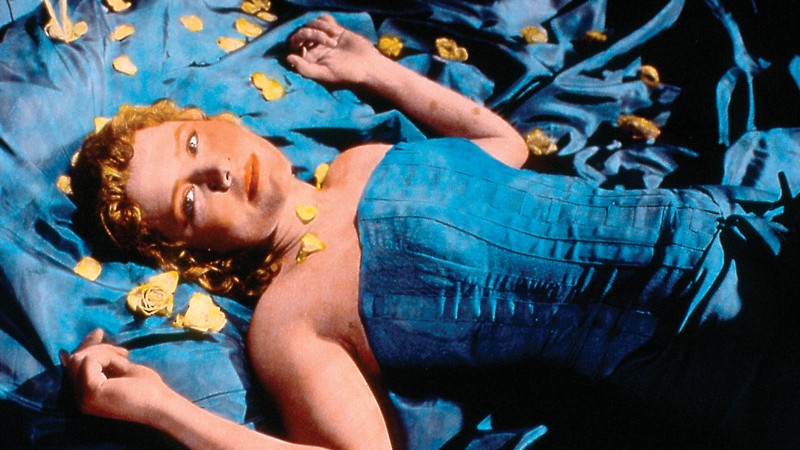
For Hering, Edvard Munch (1973), based on the life of the Norwegian painter, is “an extraordinarily tender film, and—at risk of a reductive reading—it’s not hard to see an afterimage of Watkins in this portrait as an artist roundly attacked, boycotted, and misunderstood, constantly revising and rethinking his methodology.” In a 2005 review for the New York Times, Manohla Dargis called Edvard Munch “a meditation on sex and death, repression and liberation, the spiritual and the material, and the world as we see it and as we experience it within, and it is riveting from first moment to last.”
“When Watkins is at his best, few other filmmakers could shoot a historical reenactment with such attention to what it would have been like to be there in a particular studio, bedroom, café, or bar, struck by a particular barrage of smells, proximities, blushes, emanations, fragments of music, and casts of light,” wrote Max Nelson for Film Comment in 2015. Which brings us back to La commune.
Days prior to the premiere in Paris, the late Irish journalist and filmmaker Peter Lennon (Rocky Road to Dublin) scored a rare interview with Watkins. “It is futile to pretend that Peter Watkins handles the media well,” wrote Lennon, who considered his subject to be an “outlawed genius.”
“The discussion about my position must be in a broader context,” Watkins told Lennon in the Guardian. “Not just about somebody who produced a film on nuclear weapons which was squashed. Basically I am someone who has been working for thirty years to help shift the power balance between public and TV . . . I have no doubt that had TV taken an alternative direction during the 1960s and 1970s and worked in a more open way, global society today would be vastly more humane and just.”
Paul Duane, another Irish filmmaker and a friend of Lennon’s, noted over the weekend that Lennon “respected” Watkins “but regarded him as a crank. If you check out Watkins’s website you might agree. He descended into bitterness and isolation in the years after La commune. But most of what he said about where we’re headed was correct.” For Duane, Watkins was “a prophet in the wilderness, crying that our media was softening us up for fascism. Was he wrong?”
Don’t miss out on your Daily briefing! Subscribe to the RSS feed.