Moullet and Much More
Share
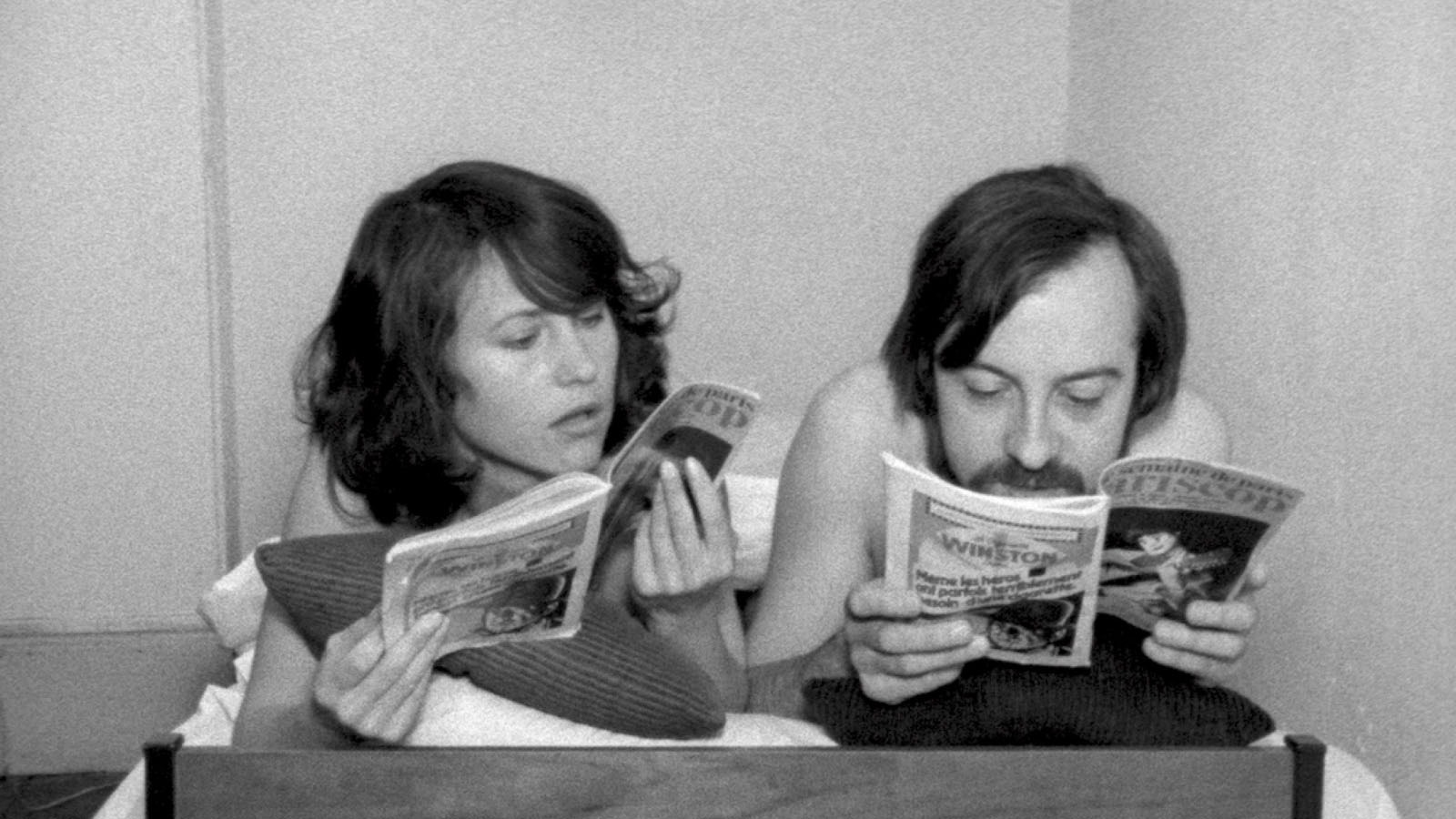
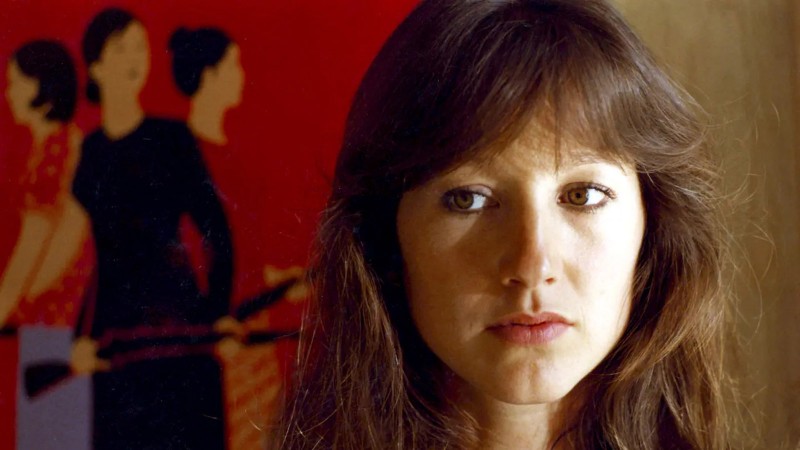
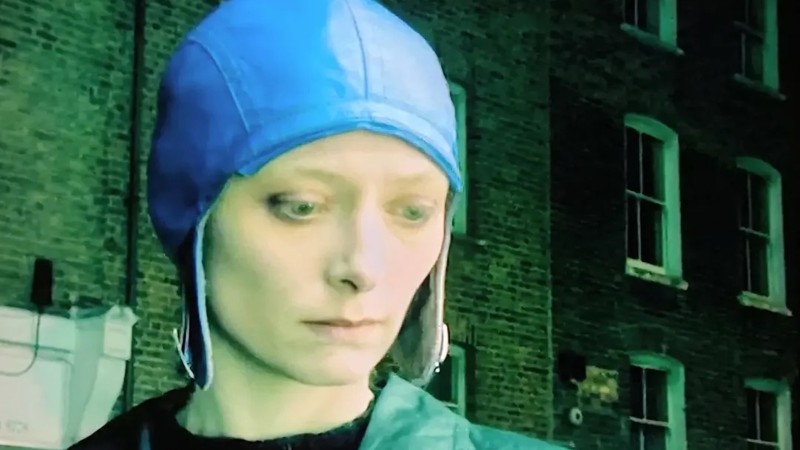
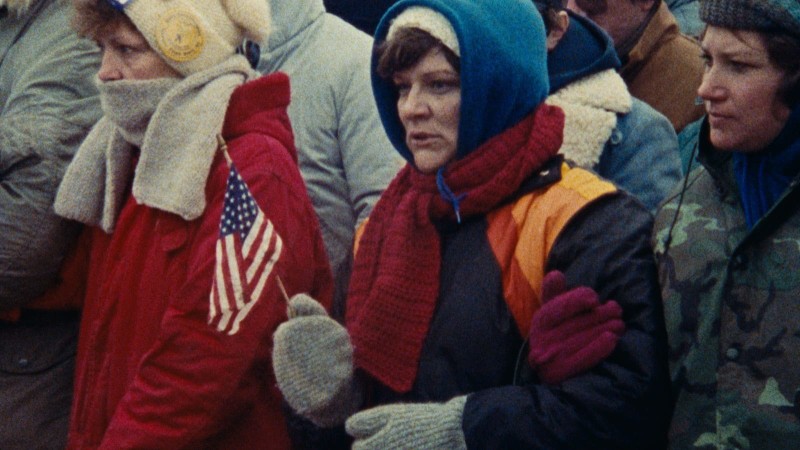
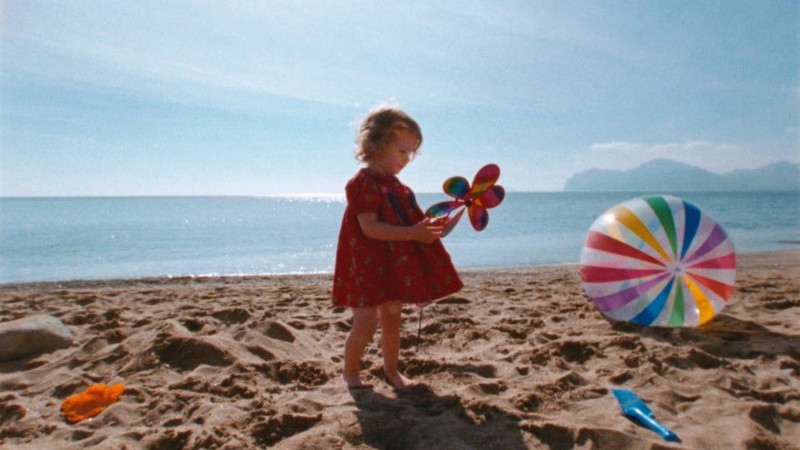
Tuesday had New York cinephiles filling up their calendars. On the same day that the New York Film Festival rolled out its lineup for this year’s Main Slate, both the Museum of Modern Art and the Museum of the Moving Image announced major retrospectives. From September 11 through October 16, MoMA will present Chantal Akerman: The Long View—more than forty features and several rarely screened short films—and Terence Davies: Time Present and Time Past, MoMI’s complete retrospective, will run from September 12 through 21.
New Yorkers won’t have to wait until next month to begin juggling screening times and travel routes. August is already offering Restored & Renewed, a series of eleven new and recent restorations opening tomorrow at the Brooklyn Academy of Music and running through August 14, followed by an Andrei Tarkovsky series (August 15 through 21). Film at Lincoln Center presents Scary Movies XIII from August 15 through 21, and as a chaser, an M. Night Shyamalan retrospective (August 22 through September 4).
Each Monday this month, IFC Center is marking thirty-five years of Milestone Films with a screening of a 35 mm print, and from August 15 through 28, IFC Center will present Hong Kong Cinema Classics. Metrograph is celebrating the thirtieth anniversary of Killer Films as well as the work of Olivier Assayas and cinematographer Néstor Almendros, and the Akira Kurosawa restorations have been held over through August 14 at Film Forum, where Women in Action—Maggie Cheung, Pam Grier, Gena Rowlands, Michelle Yeoh, Sigourney Weaver, Joan Crawford, Barbara Stanwyck, and more—will take over the following day.
On the latest Film Comment Podcast, the magazine’s Devika Girish and Michael Blair and guests Gina Telaroli and Benjamin Crais discuss “the admittedly enviable problem of too many things going on at the same time as well as what it means to see works made defiantly outside of institutional structures at august institutions.” The conversation is sparked by Mark Asch’s recent report on three new screening venues recently or about to be added to the New York landscape: the Low Cinema in Ridgewood, the Metro Theater on the Upper West Side, and a full-time, year-round cinematheque in Queens that the organizers of the Rockaway Film Festival are working on.
The focus of the podcast episode, though, is on three series. Performa Presents: Occasionally Humane, exploring the “less-expected dimensions of immigration,” returns to Anthology Film Archives from August 14 through 17. Parallel Days/Bollywood Nights is on at Asia Society through August 23, and the Film at Lincoln Center tribute series Luc Moullet: Anarchy in the Alps opens tomorrow and runs through August 14.
Comedian and Critic
Moullet will turn eighty-eight in October. Ever the trooper, he’ll be in New York to take part in Q&As and—with the editors of the new quarterly magazine Narrow Margin—he’s coprogrammed a short series running at Anthology Film Archives from Monday to next Thursday. Moullet himself will introduce Monday’s screening of King Vidor’s The Fountainhead (1949), the subject of his 2009 monograph—which was translated in 2021 by Srikanth Srinivasan as part of a heroic effort to introduce Moullet’s wide-ranging criticism to an English-speaking readership.
Moullet was eighteen when his first piece for Cahiers du cinéma, a biography and filmography of Edgar G. Ulmer, was published in 1956. In 1977, Jonathan Rosenbaum noted in an essay for Film Comment that Moullet went on to champion “the causes of Buñuel, Cottafavi, Godard, Hawks, Mizoguchi, Sirk, Solntseva, Ulmer, Vidor, and above all Fuller, timing the long takes of Verboten! with his waterproof, antimagnetic Reglia wristwatch; wrote Fritz Lang for the Seghers series, 1963, a book that Brigitte Bardot can be seen reading in the bathtub in Godard’s Contempt.”
The FLC series begins with Moullet’s first feature, Brigitte et Brigitte (1966), a story of two young women from provincial towns who become friends while studying in Paris. Godard declared that the film was “revolutionary,” and the cast features Cahiers cohorts Claude Chabrol and Eric Rohmer as well as a young André Téchiné and a much older Samuel Fuller.
A western shot in the Alps and featuring Jean-Pierre Léaud as Billy the Kid, A Girl Is a Gun (1971) is “a comedy of camera mismanagement in which every 1.85:1 aspect ratio framing is ever so precisely wrong—or fails, rather, to be in the ‘right’ place,” wrote Nick Pinkerton for Reverse Shot in 2015. “Watching it, one is acutely aware of the thin line that separates classical screen grammar from gobbledygook, and the effect is a bit like seeing well-wrought prose suddenly stripped of all punctuation. Only with closer scrutiny does it become apparent that Moullet’s seemingly slapdash approach conceals a sort of precision.”
Moullet, argues Pinkerton, “knows exactly what he is doing, and uses this control to constantly reinforce the impression that he has no idea. Outside of George and Mike Kuchar in the United States, I am hard-pressed to name another filmmaker whose career has so fully embodied a lifelong dedication to the values of amateurism as Moullet’s has.”
Introducing his 2019 Notebook interview, Jordan Cronk noted that by the mid-1970s, Moullet had forged “a newly personal form of filmmaking that combined elements of fiction and documentary into strange metatextual objects in which the director himself often starred as the hapless protagonist, such as in the scathingly self-reflexive Anatomy of a Relationship (1975), codirected by Moullet’s partner and longtime collaborator Antonietta Pizzorno, or the endlessly inventive short Barres (1984), in which a succession of Parisian locals find increasingly clever ways to jump the turnstiles in the Paris Metro. For Moullet, who once wrote that ‘the filmmaker criticizes, and the critic praises,’ these ingenious hybrid films act as their own kind of criticism, effortlessly embodying the director’s longstanding concerns for the economic and bureaucratic nuances of a socially engaged film practice.”
“My films have less success than those of Godard and Truffaut because I do not have their genius,” Moullet told Daniel Kasman and David Phelps in a 2009 Notebook interview. “I was a follower to them, a groupie, a fan. And all those who came after the Big Five of the New Wave had great difficulties during their—I mean Hanoun, Pollet, me, Eustache, Vecchiali, Straub, Rozier, Garrel. The audience had enough with the Big Five. We came too late, some months after, but it was too late.” But for Kasman and Phelps, Moullet is “one of the very best directors to come out of the French New Wave . . . You will never find craggier, funnier, more brilliantly lo-fi and completely idiosyncratic comedies.”
Don’t miss out on your Daily briefing! Subscribe to the RSS feed.