Kiyoshi Kurosawa’s Summer Tour
Share
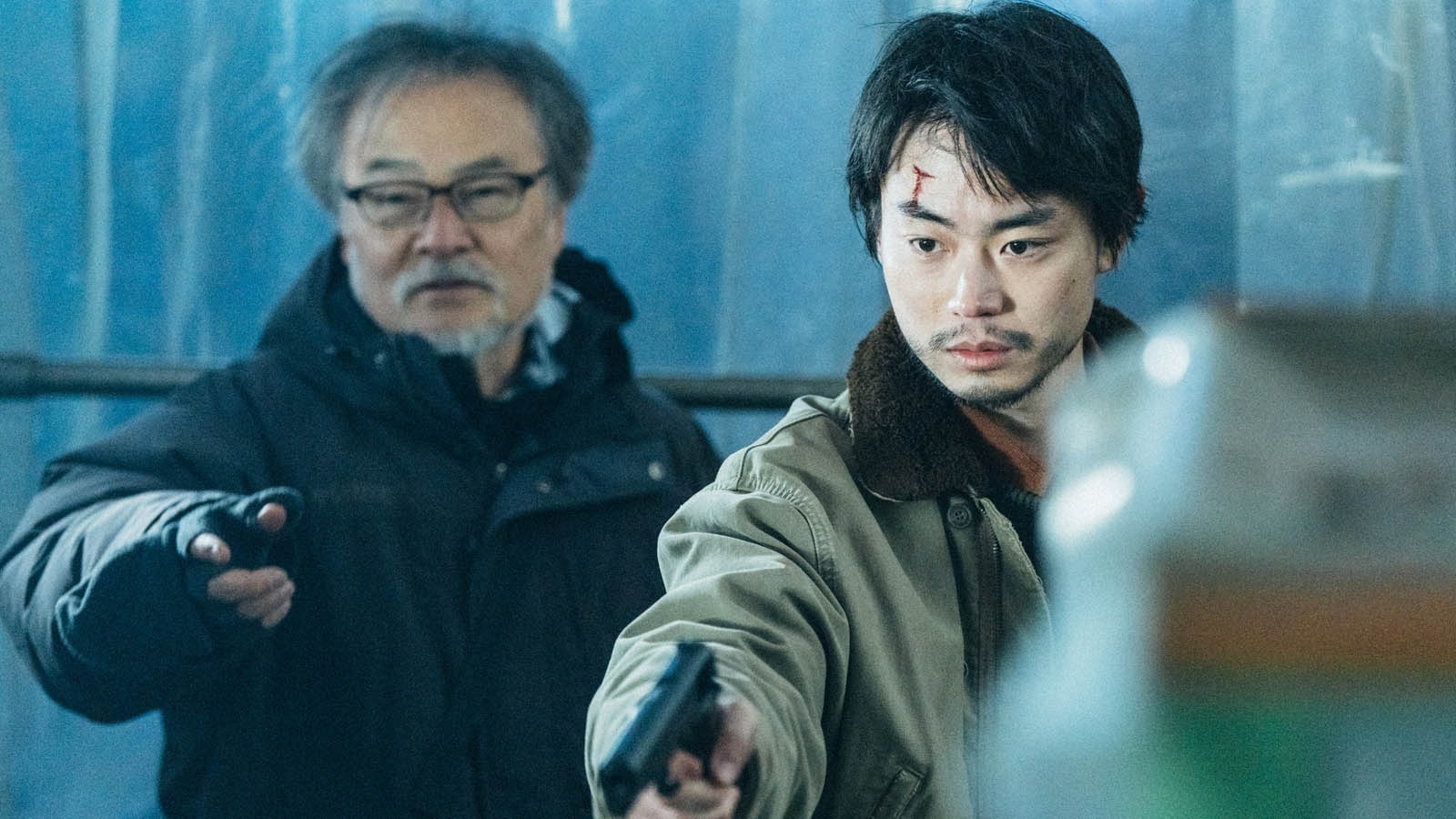
Last fall found us marveling at the terrific year Kiyoshi Kurosawa was having. Cloud had just premiered in Venice, and at the Film Stage, Rory O’Connor called it “a cold thriller with a dark, satirical edge that shows the master filmmaker at his leanest and meanest.” This year, Kurosawa’s summer is shaping up to be pretty dazzling as well.
He’ll be in New York to receive the Cut Above Award for Outstanding Achievement in Film during this year’s Japan Cuts, which opens Thursday and runs through July 20. When Japan Society hosts the New York premiere of Cloud next Wednesday, Kurosawa will take part in one Q&A, and then on the following Friday and Saturday, two more at Film at Lincoln Center, where Cloud begins its theatrical run in the U.S.
Japan Cuts will open with Yasuhiro Aoki’s ChaO, which won the Jury Award at this year’s Annecy International Animation Film Festival. The lineup includes Daihachi Yoshida’s Teki Cometh, the winner of three top awards in Tokyo last year; Blazing Fists, which has reminded Sean Gilman at In Review Online that Takashi Miike “remains one of the most technically proficient and gifted craftsmen in world cinema”; and two films Kurosawa made in 1998, the year after he “brought to Cure, the film that won him international attention and set the pattern for his subsequent career, a sense of the contradictions within Japanese society and a confident understanding of how they can be addressed within genre cinema,” as Chris Fujiwara wrote in 2022.
At Midnight Eye in 2001, Tom Mes wrote that “despite dealing with such potentially weighty subjects as the disintegration of the family and a comatose man’s loss of his past, License to Live creates more laughs than tears.” Japan Cuts will screen License to Live from a 35 mm print, and Serpent’s Path, which Mes called “a provocative examination of human psychology built on a genre entertainment,” has been newly restored.
Serpent’s Path was also remade last year by Kurosawa himself—in France, and for the most part, in French. Japan Cuts will screen this new version as well. In the Japan Times, Mark Schilling writes that “the earlier film, which features yakuza genre star Show Aikawa and the Kabuki-trained Teruyuki Kagawa at the top of their respective games, is a cult classic. The new film, which stars Ko Shibasaki in the Aikawa role, delivers the requisite shocks and chills, while probing the depths of human deception and depravity with an unblinking gaze.”
If Cure was Kurosawa’s international breakthrough, Pulse (2001) solidified his reputation as a maestro of existential dread. Pulse screens at the end of this month as part of International Horror, the summer series at the Wexner Center for the Arts in Columbus, Ohio. Opening Thursday with Mario Bava’s Black Sunday (1960) and including screenings of Jack Clayton’s The Innocents (1961) and Ingmar Bergman’s Hour of the Wolf (1968), International Horror wraps on August 14 with Claire Denis’s Trouble Every Day (2001).
Reviewing Cloud for Little White Lies, Josh Slater-Williams first reaches back to Pulse, which “portrayed the still young internet as a means through which spirits of the dead could transmute themselves from the finite limits of limbo: breaking into the land of the living like static interference to exacerbate already widespread alienation and sow seeds of destruction. Nearly twenty-five years later, in the doomscrolling and enshittification era, the internet has since been confirmed as a portal to hell.” Cloud is Kurosawa’s “latest rumination on this idea, and is less concerned with supernaturally-assisted depression and more with how online identities and the capitalist grindset have drained people of their humanity. If you’ve ever wished ill towards a scalper, Kurosawa has the film for you.”
Masaki Suda stars as Yoshii, a lone entrepreneur picking up merchandise on the cheap and reselling it online at exorbitant prices. Business booms. But then his suppliers and customers find each other online and decide to put an end to the operation—and possibly to Yoshii as well. As Slater-Williams puts it, “Cloud deftly shifts into both home-invasion horror and bleakly funny action movie.”
From July 18 through August 6, Vancouver’s Cinematheque will present Cloud along with Kurosawa’s Creepy (2016) and To the Ends of the Earth (2019). In Creepy, a former detective, Koichi Takakura (Hidetoshi Nishijima), and his wife, Yasuko (Yuko Takeuchi), move into a new neighborhood and soon suspect that the guy next door, Masayuki Nishino (Teruyuki Kagawa), is up to something less than good.
Kurosawa is “a complete classicist in the importance he puts on staging,” wrote Ignatiy Vishnevetsky at the A.V. Club in 2016, “and the influence of the tough-guy genre movies of Don Siegel, Richard Fleischer, and Robert Aldrich—often cited by Kurosawa as personal favorites—is plainly obvious in the way he frames Takakura and his former colleagues. But his sense of emphasis is inverted: What other filmmakers do with close-ups or shadows, he does with wide shots, ellipses, and empty space. And the more successfully Creepy rationalizes itself, the more irrational it becomes.” Creepy is “a vision of absolute evil that somehow becomes more disquieting and suggestive as it becomes more obvious and literal.”
Atsuko Maeda stars in To the Ends of the Earth as Yoko, the host of a Japanese travel program currently touring Uzbekistan. “A lot of her time is spent waiting around, texting her boyfriend back in Tokyo, and patiently enduring the erratic decisions and curt manners of her director, Yoshioka (Shota Sometani),” wrote Justin Chang in the Los Angeles Times in 2020. “Despite or perhaps because of its lightly sketched premise, To the Ends of the Earth emerges as the director’s most gracefully assured work in a while, though his natural gift for building tension is still made subtly manifest.”
“During the early days of the pandemic,” recalls Amy Taubin in a piece for Metrograph Journal, “I pulled out my collection of Kurosawa DVDs and found in Pulse the perfect mirror for the terrifying isolation I felt while sitting in front of my computer screen. A devastating horror film, Pulse suggests that loneliness is not only a condition of the way we live now, but that it follows us to the grave and beyond. To the Ends of the Earth is an antidote to Pulse.”
Don’t miss out on your Daily briefing! Subscribe to the RSS feed.