Anora’s Big Night
Share
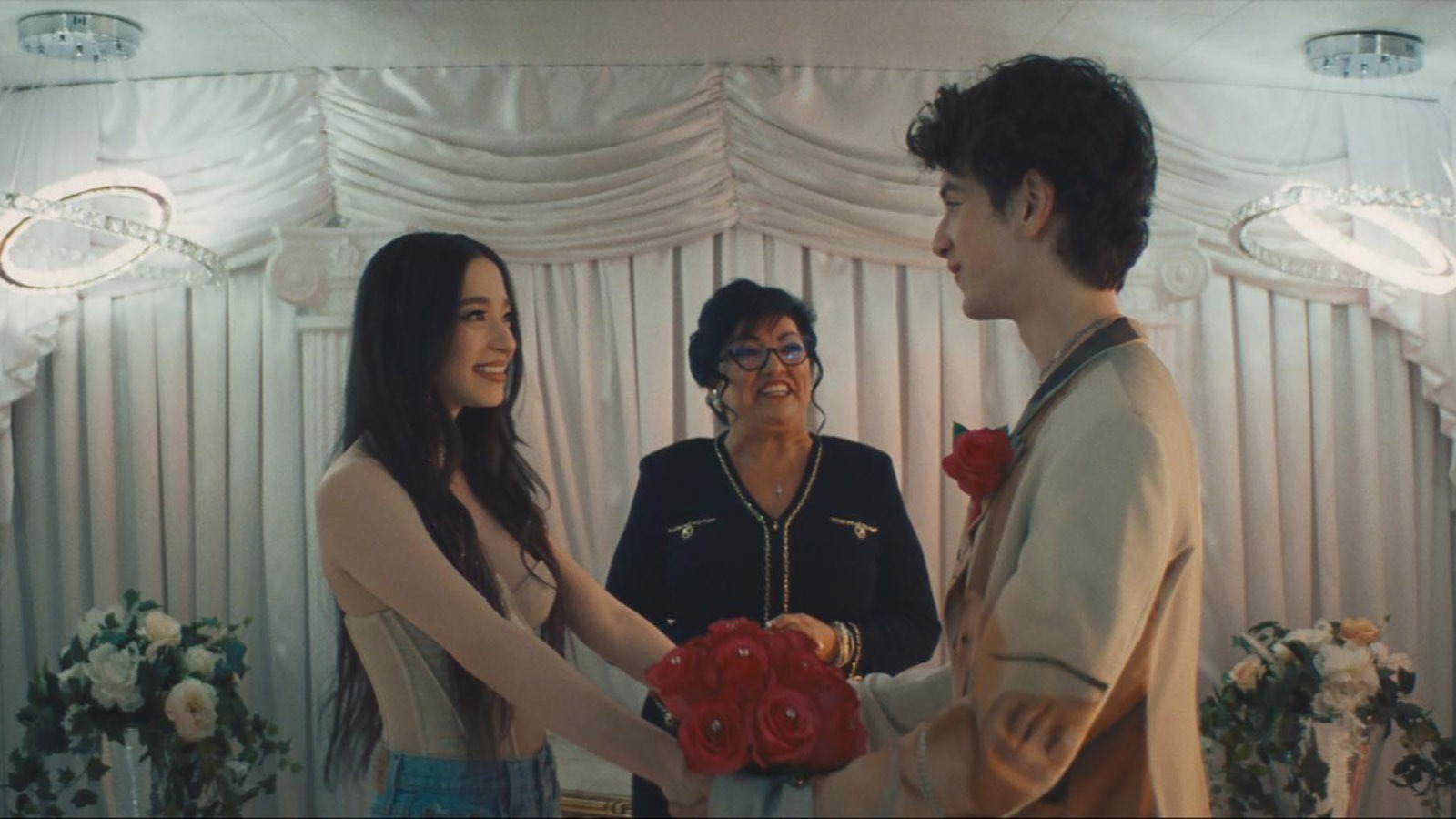
During what Vulture’s Alison Willmore calls “the most solid Oscar broadcast in years,” Anora triumphed with five big wins. The first was writer and director Sean Baker’s first Oscar ever. Accepting the award for Best Screenplay, Baker thanked his cast and crew as well as “the sex worker community. They have shared their stories, their life experience with me over the years. They have my deepest respect. I share this with you.” Soon enough, Baker was back on stage to accept his second Oscar: Best Editing. “I saved this film in the edit, trust me,” he joked. “That director should never work again.”
By the time it came to announce the final three awards, the evening belonged to Anora. Quentin Tarantino presented Best Director to Baker, and Emma Stone handed the Oscar for Best Actress to Mikey Madison for her portrayal of an erotic dancer who fights back after a Russian oligarch’s son whisks her off to Vegas, marries her, and then flees when his family swoops in to kick her out of their lives. The ninety-seventh Academy Awards wrapped with Anora’s win for Best Picture.
“A strip-club dramedy that hadn’t blown up the box office, from a director whose films had never been embraced by Oscar before?” marvels Vulture’s Nate Jones. “Alongside Moonlight, Parasite, and Everything Everywhere All at Once, Anora will instantly go down as a ‘new Academy’ pick—films that never would have won had the Academy not expanded their membership in the wake of the #OscarSoWhite scandal.” But Jones also notes that even EEAAO “ends with a hug; Anora ends on a muted, downbeat note that’s hard to pin down—and equally hard to shake.”
“There’s never been a Best Picture winner so upfront about sex, so explicit in its portrayal of sex, so forthright about the woman at the center using sex as a tool,” writes Dan Kois at Slate. “Anora isn’t a movie about a woman’s sexual pleasure, really—remember poor Ani trying to get Vanya to slow down for once?—but it is a movie about a woman’s sexual agency, and in that respect, its Best Picture victory is one for the ages. Best Pictures have contained war, gore, jokes, songs, fish-men, and birdmen. Comedies have won Best Picture, as have horror movies, fantasy movies, thrillers, science fiction, kitchen-sink realism, gay dramas, and Birdman. But you know what hasn’t ever won Best Picture? A movie about a woman and her sex life.”
Acting Accolades
Surprising no one, Adrien Brody went long when he thanked the Academy for giving him a second Best Actor Oscar for playing a Holocaust survivor, first in Roman Polanski’s The Pianist (2002), and this year in Brady Corbet’s The Brutalist. “I’m here once again to represent the lingering traumas and the repercussions of war and systematic oppression and of antisemitism and racism and othering,” he said. “And I believe if the past can teach us anything, it’s a reminder to not let hate go unchecked.”
Zoe Saldaña delivered an emotionally rousing speech when she won Best Actress in a Supporting Role for her turn in what many regard as the leading character in Jacques Audiard’s Emilia Pérez. “I am the proud child of immigrant parents with dreams and dignity and hard-working hands,” she declared to a cheering audience, “and I am the first American of Dominican origin to win an Academy Award and I know I will not be the last.”
In one of the least predictable awards seasons in recent memory, fortunes seemed to switch hands every other weekend. Only Kieran Culkin sailed on through, winning nearly every award he was nominated for. Last fall, the New York Times’s Manohla Dargis wrote that Culkin is “shockingly great” as Benji, who tours Poland with his cousin, David, played in A Real Pain by writer and director Jesse Eisenberg. Culkin, notes Dargis, “articulates Benji’s inner turmoil—he’s a pain, he is in pain—through a transparently readable, sometimes viscerally destabilizing performance.”
Documentary, International, and Animated Features
No Other Land, documenting the Israeli military’s destruction of Palestinian homes in the West Bank and directed by two Palestinians (Basel Adra and Hamdan Ballal) and two Israelis (Yuval Abraham and Rachel Szor), won the Oscar for Best Documentary Feature more than a year after the film premiered in Berlin and won that festival’s top award for a nonfiction film. As Sam Adams points out at Slate, that first win kicked up a storm of protest when the directors pointed out that Abraham enjoys far more freedom of movement and expression than Adra, but in Los Angeles, “the crowd, which leapt to its feet when the award was announced, seemed firmly on the filmmakers’ side.”
Five Brazilian films were nominated for Best International Feature before Walter Salles’s I’m Still Here, the sixth, became the first to win. Fernanda Torres stars as Eunice Paiva, the lawyer and activist who challenged the Brazilian military dictatorship when her husband, Rubens Paiva, was taken from his family and never returned. “This goes to a woman who, after a loss suffered during an authoritarian regime, decided not to bend and to resist,” said Salles as he accepted the award.
Gints Zilbalodis’s Flow, the first Latvian feature to be nominated in any category, won Best Animated Feature. The dialogue-free story centers on a cat who learns to team up with a dog, a capybara, a secretary bird, and a ring-tailed lemur to survive a flooded world where it seems all the humans are gone. “We’re all in the same boat and we must find ways to overcome our differences and find ways to work together,” said Zilbalodis. And then, with a nod to Paul Giamatti, he and his team celebrated by heading to the nearest In-N-Out for burgers and fries.
Don’t miss out on your Daily briefing! Subscribe to the RSS feed.