Olivia Laing’s Top10
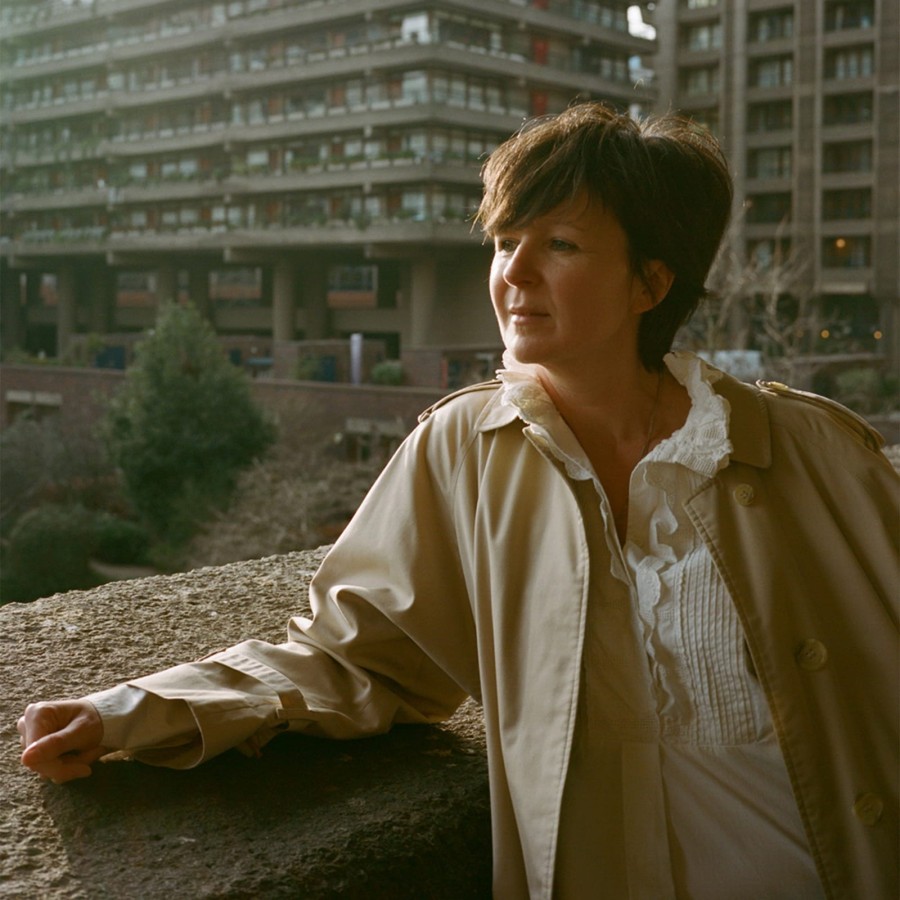
Olivia Laing is a writer and critic. Their books include The Lonely City, Funny Weather, and Crudo. Their latest novel, The Silver Book, is about the making of Federico Fellini’s Casanova and Pier Paolo Pasolini’s apocalyptic masterpiece, Salò, or The 120 Days of Sodom.
Photo by Sophie Davidson
-
1
Federico Fellini
La dolce vita
Was there ever a screen idol like Marcello Mastroianni? Exquisite in his passivity, elegant and anxious, infinitely attractive and yet strangely incapable of consummation, he is the perfect proxy for Fellini himself. His pure presence glues this episodic film together. One of the delights of Marcello’s long journey through the night world of Rome is spotting unlikely cameos, including a pre–Velvet Underground Nico, armor-clad at a palazzo party, and Iris Tree declaiming poetry at a pseudo–avant garde salon. The end is to my mind the greatest three minutes in cinema. A dissipated Marcello, his sober dark suit exchanged for decadent white, tumbles out of a party at dawn with his drunken fellow revelers. They find a hideous fish on the beach. Marcello wanders away from the crowd and sees an angelic girl he previously encountered in a beach café. But he can’t understand what she’s saying. He shrugs—weary, regretful, self-indulgent, his sweet promise all spoiled—and goes back to the party. The film was released in 1963, but all the disappointments of that hopeful decade were already contained within it.
-
2
Wim Wenders
Paris, Texas
While I have a suspicion that cinema ended in 1979, there are films that challenge my theory. I first saw this as a teenager, and it kindled a long-running Wim Wenders obsession (Alice in the Cities and The American Friend could also have made my list). From the moment Harry Dean Stanton appears in the desert, in a filthy suit and red baseball cap, I was hooked. I watched it over and over, but it took me years to realize how much the film is in conversation with the paintings of Edward Hopper. The lonely hotels and bars and highways, the chilly green neon saturating everything, and especially the climactic scene of Nastassja Kinski islanded behind a one-way mirror all belong to Hopper’s vision of American urban isolation. At the same time, it’s hyper-verbal, language-rich, and full of monologues, from the apocalyptic rant of a man on a bridge to the famous story Stanton tells Kinski about the wreckage of their love. “I knew these people, these two people.” I think I could still recite it now, all the way to the cowbell on her ankle and the tears that run down Kinski’s lovely, made-for-cinema face.
-
3
Nicolas Roeg
Don’t Look Now
Donald Sutherland has a speaking part in my new novel, The Silver Book. It’s set in 1975 and is about the making of Pasolini’s Salò and Fellini’s Casanova, in which Sutherland took the title role. He suffered under Fellini’s dictatorial direction. What Fellini really wanted was a puppet in the Mastroianni mold. Instead, he got one of the most intense and intellectually engaged actors around. Sutherland fared much better in Nicolas Roeg’s sublime meditation on loss, made three years earlier. He plays the grieving father in a deserted, off-season Venice, disturbed by his wife’s growing conviction that their dead daughter is still in ghostly contact. Roeg communicates in flares of color—red for death, earthy brown for life, and purple for the psychic who operates in-between. He pioneered the jump cut and the montage, and I still see this film in compelling flashes: Julie Christie’s pursed mouth as she paints on postcoital lipstick, the psychic’s blind eyes in the mirror, and above all the black gondola piled with funeral flowers, wending its way through a city of mist.
-
4
Luchino Visconti
Death in Venice
Oh, Dirk! His memoir Snakes and Ladders is very funny about the making of Death in Venice. That cadaverous pancake makeup he wore in the final scene stung him strangely. After the shoot was over, he discovered it was cleaning fluid. It was an example of Visconti’s ruthless commitment to the visual spectacle, never mind the human cost. Bogarde also said that every drawer and wardrobe in the Polish family’s hotel rooms was filled with gorgeous, historically accurate clothes, none of which were seen in a single shot. The audience, Visconti said, would know they were there. Last summer, I went swimming on Lido at dusk, right where Bogarde’s dying Aschenbach watches Tadzio cavorting on the sand. The hotel has been closed for a long time now. I lay in the warm green water and thought of that final scene: a funny cousin, it strikes me now, to La dolce vita. Two men in white suits on a beach, gazing at beautiful blondes who cannot offer them any kind of redemption. Aschenbach expires with his hair dye running. Marcello, you feel, would control his self-image to the bitter end.
-
5
Donald Cammell and Nicolas Roeg
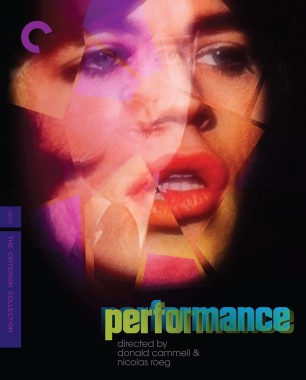
Performance
If we’re talking about the souring of the 1960s, there is no better account than Performance, a gangster film drenched in paranoia that is really about the untethering of identity itself. Mick Jagger is good as Turner, the androgynous rock star losing himself in sex and drugs in a grubby West London pad, but he pales in comparison to James Fox as Chas, a psychopathic gangland enforcer forced into hiding after a murder. The two men spar, caught in a doomed spiral of mutual fascination. Identities slip-slide, people tumble into bed and play dress-up and mimic one another. It could be very silly indeed, were it not for the permanent menace of Fox and the unstaged, almost home-movie seediness of Cammell and Roeg’s London, with its crumbling bedsits and grimy baths and sixpence for the phone (one of the best exchanges is between Fox in his bath and a small Cockney child eating what I think is a plate of beans on toast while lugubriously recounting Turner’s chart hits). Fly agaric mushrooms, red as Chas’s dyed hair, contribute to the disruption of reality. Eros gives way to Thanatos, sex to death. Turner might have burrowed deep into a dreamworld, but the air is growing fetid and only one person is going to make it back into the light.
-
6
Jonathan Demme
The Silence of the Lambs
Hannibal Lecter does nothing for me, and I don’t care one way or another about Clarice Starling in her sweatpants on the gun range. What I do care about, and what I’ve watched a hundred times as grainy YouTube footage, is Buffalo Bill’s dance, to that most beautiful and melancholy of all movie songs: “Goodbye Horses” by Q Lazzarus (who sang the song to director Jonathan Demme when she picked him up while working as a taxi driver). Bearing in mind Bill is a serial killer bent on making himself a skin suit constructed from the women he’s slaughtered, this movie might seem a funny pick for a trans person. No matter how carefully Lecter explains that Buffalo Bill is not himself transgender, the film encapsulates the kind of ugly prejudices about trans people—the idea that they are freakish, grotesque, dangerous—that are spreading like wildfire once again. But that one scene floored me when I first saw it, and on every viewing since. Bill’s dance and Lazzarus’s yearning, grieving vocals together encapsulate the pure longing for bodily transformation that cuts to the heart of my experience as a trans person.
-
7
Pier Paolo Pasolini
Salò, or The 120 Days of Sodom
While I definitely prefer the joy and zest of Trilogy of Life, this icy spectacle of horror and abasement is Pasolini’s masterpiece. Anguished, absent of hope, and yet totally controlled and formally perfect, it’s a Sadean fairy tale set in the Northern Italian countryside in the final days of the Second World War. When I was writing The Silver Book, I picked it apart practically frame by frame, identifying locations and reimagining in particular the travails of Danilo Donati, the costume designer responsible for providing the libertines and victims with their respective uniforms, the Prada-esque cream-colored dresses and sinister dressing gowns. The film was fed by deep wellsprings of political fury and personal despair. Pasolini had lost his lover, Ninetto Davoli, to marriage. He had grown up during the horrors of fascism and was increasingly obsessed with the idea that it would return in a new form, grotesquely melded with capitalism. Salò was his warning. Those shit-eating victims: why are they so incapable of resistance or defiance? Pasolini’s real focus is on the dangers of compliance and complicity, of being a sleepwalker at a time of crisis, which makes it all the more urgent for viewers now. It was still being edited when he was brutally murdered in Ostia on November 2, 1975, a probable political assassination, though the details remain murky. The shit in Salò might have been made from chocolate and broken biscuits, but the dangers it describes are all too real.
-
8
Michael Powell and Emeric Pressburger
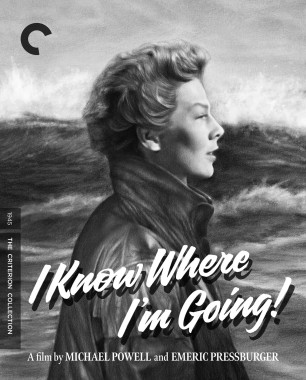
I Know Where I’m Going!
I could also have picked A Canterbury Tale or The Life and Death of Colonel Blimp from the Powell and Pressburger canon, but I Know Where I’m Going! edges ahead for sheer buoyancy. It’s a fairy tale really, of the opposite kind to Salò, in that its faith in human nature is pretty much undimmed. Wendy Hiller is tough, ultra-independent Joan Webster, on her way to Scotland to marry a rich and much older industrialist on Kiloran, the remote island he has rented to sit out the war. Roger Livesey is Torquil MacNeil, a naval officer on leave and, despite his self-deprecating ways, the true Laird of Kiloran. The demands of the genre decree that this sparring twosome be trapped together on Mull by the weather. We all know what inadvertent close proximity will do, especially with someone as resplendent in an oilskin as Livesey. But this is as much a moral tale as a romance, in that Hiller must learn hard lessons regarding those communally minded virtues of restraint and humility before she can find true love. That a key part of her education takes place in an obviously studio-bound version of the Corryvreckan whirlpool does not distract an ounce from its emotional power.
-

9
Basil Dearden
Victim
Back to Dirk Bogarde, in what must be his most courageous role. Despite being in a long-term relationship with his manager, Anthony Forwood, Bogarde never admitted to his sexuality, remaining in the closet all his life. But in film after film —The Servant, Accident, The Night Porter—he used his ambiguity, the lurking sense that he was a man with a secret, to powerful performative ends. This is the frankest and the most explicitly political: a pre-Stonewall, pre–gay liberation attempt to defy the stifling atmosphere of homophobia in England. Bogarde plays the barrister Melville Farr, whose career, marriage, and reputation are imperilled when a young boy he’s been seeing kills himself in police custody, rather than reveal that he is being blackmailed over evidence of their relationship. In the face of this enormous sacrifice, Farr decides to take on the blackmailers, come what may. One of the best scenes is between Farr and his wife, played by Sylvia Syms, in which she pushes him to admit the nature of his secret relationship. Bogarde’s mask of careful composure slowly cracks under the pressure, until at last he can no longer hold back the confession he could never quite make in real life. “I stopped seeing him because I wanted him, do you understand”, he says, his voice rising to a shout. “I wanted him!” So much pent-up desire in those three words.
-
10
Nicolas Roeg
The Man Who Fell to Earth
The third Roeg film on my list, and that doesn’t even include Walkabout. In the midseventies, David Bowie was deep into his Thin White Duke persona. By casting him as the extraterrestrial Thomas Jerome Newton, Roeg capitalized on the strung-out alien he was embodying at the time. Easy to imagine him as an exile trapped on an unfamiliar planet, lonely and homesick, the only one of his kind. In fact, you could boil it down to a single scene. Bowie is lounging on a bed in a tight white t-shirt, head cradled on one skinny arm, his tangerine fringe falling over an impossibly pale and perfect face. “What do you do,” asks Mary-Lou, the lost girl who has picked him up. “For a living I mean?” He raises his head, startled, then sets it back on the pillow. A cat’s smile steals across his face. “Oh, I’m just visiting.”