King Princess’s Top10
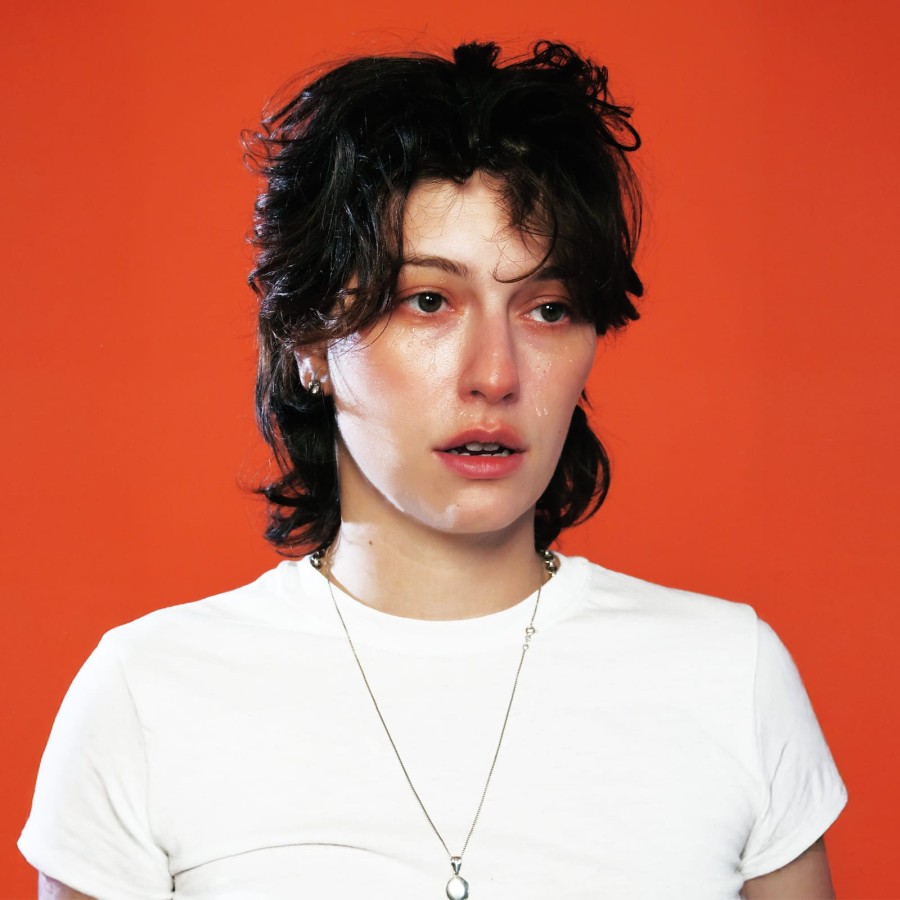
King Princess—the project of Brooklyn-based vocalist, multi-instrumentalist, songwriter, producer, and actor Mikaela Straus—released her triumphant third record, Girl Violence, this month. Straus has also recently made her television debut in the new season of Hulu’s Nine Perfect Strangers, and later this year, she will make her feature-film debut in Song Sung Blue.
-
1
John Cameron Mitchell
Hedwig and the Angry Inch
Before I was even allowed to watch Hedwig and the Angry Inch, I would listen to the soundtrack in the car every day with my mom. I loved singing the final number, “Midnight Radio.” When I finally watched the movie for the first time, I was floored by it. It had such a unique vision and personal story; you could feel it was someone’s dream to make. It’s a scrappy movie but so beautifully crafted—the staging, the production design, Arianne Phillips’s costuming. I remember watching it and thinking that if these people could get together and make a piece of art of this quality for so little money, then I want to do that too. I love John Cameron Mitchell and have become close with him. He’s just a genius.
-
2
Rob Reiner
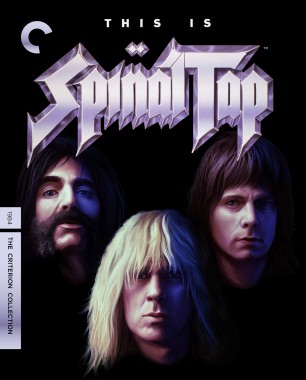
This Is Spinal Tap
Making fun of the music industry never gets old, and This Is Spinal Tap is so comically accurate. When I watched it as a kid, I thought it was so fucking cool and was amazed by how funny and lovable these deranged characters were, these rock-and-roll divas. But now that I’ve been making music myself, the movie seems even more accurate—or maybe I’m just modeling my life after it. I can totally see something like the Stonehenge incident happening in my life. I’ve taken a lot from Nigel Tufnel, emotionally and spiritually.
All the performances are great, and I love the cameos, like Fran Drescher as the manager. It’s just a brilliant movie.
-
3
Lana Wachowski and Lilly Wachowski
Bound
Bound has always just sung to me. It’s a really interesting noir and lesbian romance with a great plot twist. It’s sexy and dangerous, and it has queer characters who are villains you root for. It’s rare to see queer people placed in positions of power in a narrative like this. The costumes and production design are also both on ten. If you go back and watch a lot of the Wachowskis’ early work, you will see they were the blueprint for a lot of what is being made today.
We need to talk more about the impact of Gina Gershon as Corky, because every lesbian in Brooklyn—including myself—has stolen her look. She is the OG dyke diva. That white tank top with those tattoos and messy hair—she’s just undeniably hot. She really did influence the community! When you go to a gay party now, there are at least thirty Corkys there. Jennifer Tilly is also so great. What a nuanced queer dynamic between those two.
-
4
John Waters
Multiple Maniacs
When I was just out of college, my friend and I went to a John Waters marathon at IFC Center, and I saw Multiple Maniacs for the first time. I remember being shocked by the strong imagery of Divine getting assaulted by a lobster. That cuckoo-bananas vibe has stuck with me and influenced a lot of my own drag and art and the absurdity I put into my videos. Waters is always a reference.
When I’m making music, I think more about film and television than about other music. What makes those visual mediums so beautiful is how they evoke emotion—even just the color of a wall on-screen can blossom into something else for the viewer. You have a kind of time stamp in your mind, reminding you of when you first saw that thing and how it made you feel something. I was a really lonely gay kid, and when I needed to feel community I went to television and film. I wanted to see people I wanted to look like, or people who looked like me and represented a strength I didn’t yet have. Acting and making music are so similar for me, because they’re both about encapsulating emotion in something that wasn’t there before. Whether it’s in a three-minute song or a scene, you have a mission statement that you’re trying to get across. You’re replicating feelings, and those feelings become real through being replicated.
-
5
Céline Sciamma
Portrait of a Lady on Fire
As far as tragic lesbian narratives go, this one is at the top of my list. It’s the kind of tragic queer movie where no one wins, and it’s just a lot of finger-touching for two and a half hours, with one crazy sex scene thrown in. That’s my origin story.
The film is photographed in these super-wide shots. I thought that was interesting. When a director portrays a time period when queer people weren’t allowed to be close and intimate, they have a lot of opportunities to use the camera to show that space and coldness—whether within a landscape or a house. I thought it was brilliant to show these vast rooms and how people are positioned within them. The blocking here is so important because as a viewer you’re forced to address the space that they’re in—how large it is, and how small they seem. There are a million ways to tell this story, but it’s interesting to me that the director thought about what it meant to be queer in this period, down to the camera movements.
-
6
Bob Fosse
All That Jazz
I’m a huge Bob Fosse nerd. Cabaret was my introduction to him, and I dug myself into that movie. I related to this idea that there’s a club where you can go to find freedom when the world’s burning around you, where you congregate to find like-minded people. It’s beautiful.
I love the Bob Fosse–Gwen Verdon lore surrounding All That Jazz. I love the way they were muses to each other. Typically, people think Gwen was Fosse’s muse, but she pushed him to do some of his best work and was backseat-driving most of his good decisions.
The way Fosse uses the stage in the film is brilliant. I love when movies are shot as stage productions. It’s so much fun and harks back to a different era, when everything was shot on a set. Here, instead of hiding the fact that it’s a set, they play into it.
All That Jazz falls into a similar category as Spinal Tap and Hedwig—there’s a self-awareness to it, a wink and a nod that make it autobiographical to some degree. All of these films are about creating a character that is a part of yourself, a piece of strength you put on-screen.
-
7
Wes Anderson
The Life Aquatic with Steve Zissou
The common thread through all of the films on this list is great character actors, people who jump off the screen. I love Wes Anderson as much as the next guy, but I have to give it up for Cate Blanchett. She is delicious in this, as is Bill Murray.
This movie is so much fun, and it’s really delightful filmmaking. I love the pseudo-animated aesthetic—is it real or is it not?—that they used on the submarine. It’s whimsical and bizarre.
-
8
Alfred Hitchcock
Rebecca
I’m a glutton for anything scary. I want to be horrified. Unfortunately, I have become desensitized, so it’s rare that I actually get that feeling. My uncle was a big Hitchcock guy, and because I was very intrigued by horror movies as a child, we watched a lot of the classics. Rebecca is an interesting one, because what’s so scary about it is that the title character is a terrifying femme haunting a man’s life. I think a terrifying femme is the scariest thing you can be.
Just thinking about Rebecca when putting together this list made me remember the time and place where I watched it for the first time. It brought me so deeply into this memory of feeling both scared and horny.
-
9
Lars von Trier
Antichrist
Fabulous. I love Lars von Trier, and I love Willem Dafoe. I love anyone whose mind can make movies this sick and twisted. Lars always embeds some metaphor into his movies that has nothing to do with what the plot might be. It can be so self-indulgent and ridiculous, but there’s part of me that adores that self-indulgence.
-
10 (tie)
-
Gus Van Sant
To Die For
I had to pick two Nicole Kidman films. I went on a binge of her movies before working with her on Nine Perfect Strangers. I was determined to watch as many of her performances as I could before I went to set.
The Others is an interesting and weird movie that feels like it exists both in every time period and in no time period. I enjoyed it from start to finish. I mentioned that I love when people use a stage to tell a story, and it’s similar when you have a set that’s just one house. It reminds me of Rebecca, which has a beautiful set—those curtains and candelabras and chandeliers.
When I worked with Nicole, I was in awe of her the whole time and just excited to be there. When you watch somebody your entire life and then get to work with them, the best thing you can do is go into it with adoration. She is undeniably one of the world’s great movie stars, so acting alongside her forced me to level up. In The Others, she plays this very frightening woman. I think this was her first foray into being a troubled housewife on-screen. I see a through line between her role in this film and her roles in shows like The Undoing and Big Little Lies.
To Die For is another fabulous movie of hers. Her role as a deranged newscaster with a gorgeous wig is incredible. Obviously, Joaquin Phoenix is such a heartthrob in this. I think you can always feel when there’s a queer director behind the camera. To Die For isn’t explicitly queer, but it’s a Gus Van Sant movie. There’s something implanted within the feeling of the film, and I sense it strongly in Nicole’s character—the diva behavior, the styling, the makeup and hair. It feels like the story is being captured through the eyes of a gay person. Nicole is playing this broken, malfunctioning character holding it together by a thread, and it’s scary to watch.